Munitions

KM-8 Gran

Also known as
  • Gran
  • KM-8 Gran guided weapon system
  • KM-8 Gran mortar bomb
  • Gran 120 mm guided mortar round
  • Gran guided mortar projectile
  • КМ-8 Грань
  • Грань

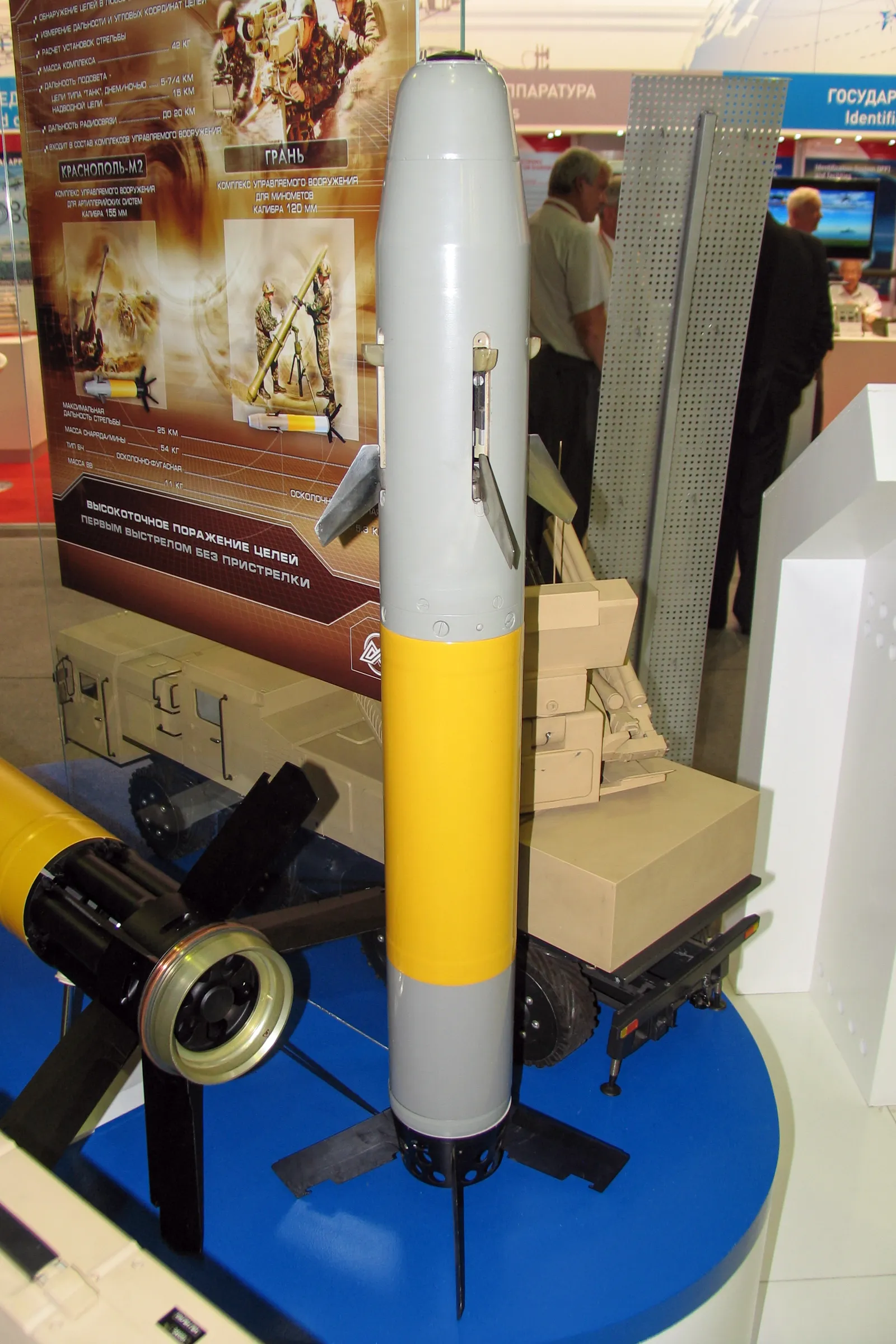
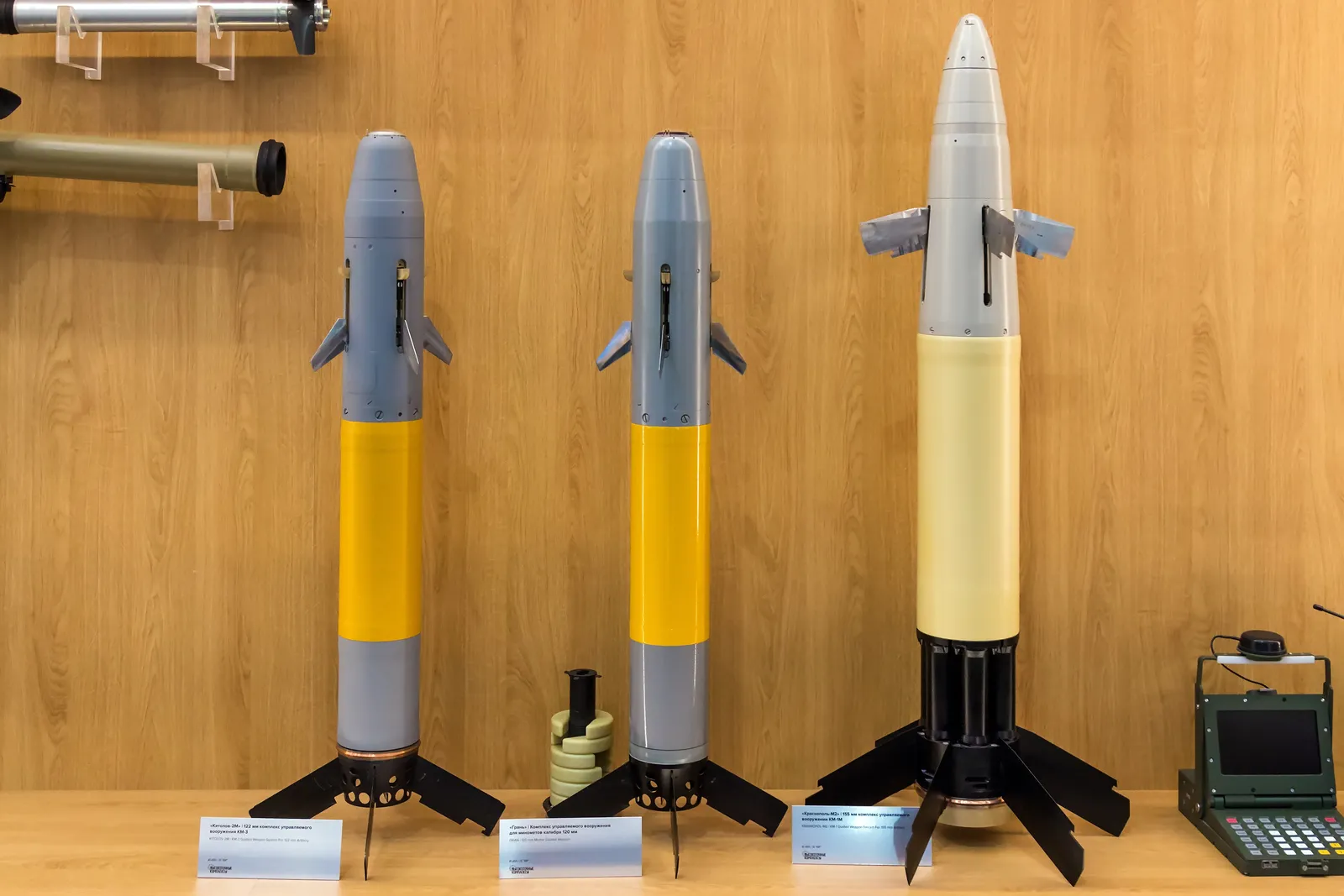
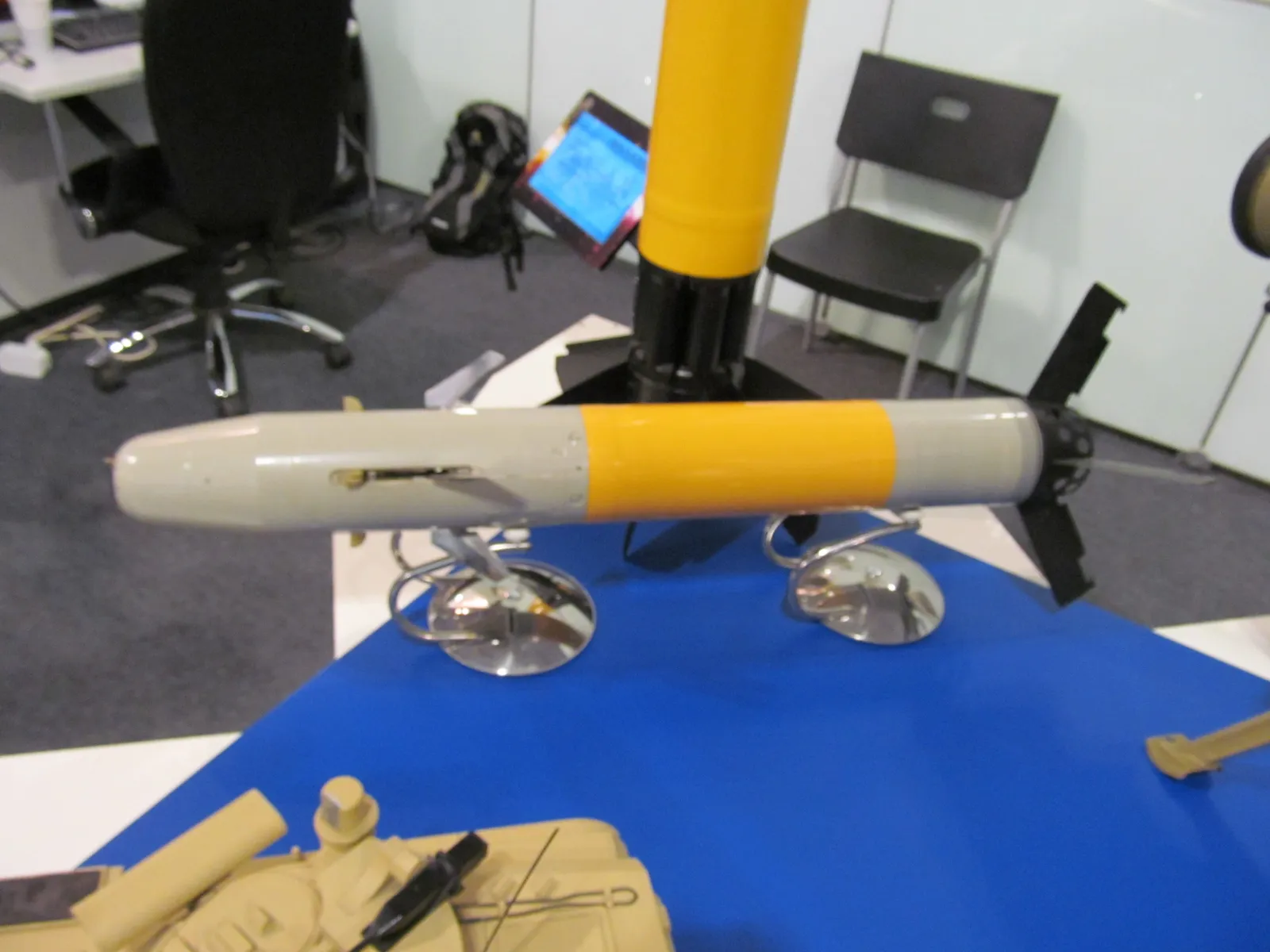
The KM-8 Gran is a Russian 120 mm semi-active laser-guided mortar round from KBP Instrument Design Bureau. Rosoboronexport's catalog describes it as a 27 kg HE-fragmentation projectile with an 11.2 kg warhead, a 5.3 kg propellant charge, and a 1.5-9 km range for smooth-bore and rifled 120 mm mortars, while Ukrainian and Russian reporting both place Gran systems or projectiles in the 2014 Russia-Ukraine War.

Role in Conflicts

Side
Russia

Ukraine's NSDC reported Russian use of KM-8 Gran systems with guided 120 mm mortar bombs and Malakhit fire-control equipment in Donbas in July 2016; TASS later reported Russian forces using Gran precision-guided mortar projectiles in Ukraine in July 2022.

Role details
Profile / Specs

Specifications

Caliber
120 mm
Guidance
Semi-active laser homing
Range
1.5-9 km
Weight
27 kg
Warhead
11.2 kg HE-fragmentation
Propellant charge
5.3 kg
Length
1,200 mm
Compatibility
Smooth-bore and rifled 120 mm mortars
Firing Weapons

KM-8 Gran is documented as a guided 120 mm mortar munition for smooth-bore and rifled mortars; U.S. Army Infantry coverage of Russian upgraded mortars specifically places Gran in the 2S12A Sani ammunition context.

Firing weaponWeapon typeFiring evidence
2S12 Sani, 120 mm heavy mortar system, Artillery2S12 Sani120 mm mortar system

U.S. Army Infantry says 2S12A Sani mortars use the KM-8 Gran guided-projectile system, while the export-catalog source supports broader smooth-bore and rifled 120 mm mortar compatibility.

Sources: Infantry Spring 2022 Russian Upgraded Mortars, Rosoboronexport Land Forces Weapons Export Catalogue

Guidance And Firing Chain

Gran is best read as a guided mortar round plus target-designation chain, not just a 120 mm bomb body. The available sources tie the round to smooth-bore and rifled 120 mm mortars, laser homing, and Malakhit fire-control equipment.

Firing weapons

U.S. Army Infantry describes 2S12A Sani mortars using the KM-8 Gran guided-projectile system, and Rosoboronexport describes Gran compatibility with smooth-bore and rifled 120 mm mortars.

Sources: Infantry Spring 2022 Russian Upgraded Mortars; Rosoboronexport Land Forces Weapons Export Catalogue.

Target designation

The Infantry article describes Gran with a 9E430 laser-guided self-homing seeker and Malakhit automated fire-control system, while TASS describes Gran-class projectiles homing on laser-designated targets.

Sources: Infantry Spring 2022 Russian Upgraded Mortars; TASS Gran and Kitolov in Ukraine.

Adjacent family context

KBP's guided-munition line also appears in catalog records for Kitolov-2 and Kitolov-2M, but those pages should not be treated as interchangeable with Gran.

Use exact designation sourcing when comparing the 120 mm mortar round with Kitolov-family projectiles.
Timeline

KM-8 Gran Key Events

  1. Ukrainian NSDC reports Gran use in Donbas

    Ukraine's NSDC said Russian occupation troops had used KM-8 Gran mortar systems with 120 mm guided bombs and Malakhit fire-control equipment against Ukrainian forces in July 2016.

    Sources: NSDC Ukraine KM-8 Gran in Donbas

  2. TASS reports Gran projectile use in Ukraine

    TASS cited a security source saying Russian armed forces were using Gran precision-guided mortar projectiles, along with Krasnopol and Kitolov guided projectiles, during operations in Ukraine.

    Sources: TASS Gran and Kitolov in Ukraine

Media
Related Weapon Systems
9K25 Krasnopol laser-guided projectile, 152/155 mm laser-guided artillery projectile, MunitionsMunitions9K25 Krasnopol laser-guided projectile152/155 mm laser-guided artillery projectileThe 9K25 Krasnopol family is a Russian laser-guided artillery projectile line built around semi-active laser homing for precision tube-artillery fire. KBP-origin projectiles in the family include Soviet-era 152 mm rounds, shorter Krasnopol-M designs compatible with the 2S19 Msta-S autoloader, and Krasnopol-M2 rounds documented in Russian use in Ukraine. The projectile depends on a target being illuminated by ground or airborne laser designators, making Orlan-30 and similar target-acquisition systems part of the weapon's practical employment chain.
BEKM-82 cumulative mine, 82 mm HEAT-fragmentation mortar projectile, MunitionsMunitionsBEKM-82 cumulative mine82 mm HEAT-fragmentation mortar projectileThe BEKM-82 is a Hungarian 82 mm HEAT-fragmentation mortar projectile developed for automatic and conventional 82 mm mortars. HM Haditechnikai Intézet describes it as a dual-purpose anti-armor and fragmentation round: a 3.1 kg projectile with a shaped-charge effect rated for 100 mm of armor penetration. The page remains relationship-only because the public sources identify design, compatibility, and later Iraqi transfer context, but not direct BEKM-82 firing in a named conflict.
3VOF54 / 3OF49 high-explosive fragmentation round, 120 mm rifled gun-mortar HE-fragmentation semi-fixed round and projectile family, MunitionsMunitions3VOF54 / 3OF49 high-explosive fragmentation round120 mm rifled gun-mortar HE-fragmentation semi-fixed round and projectile familyThe 3OF49 is the HE-fragmentation projectile used in Soviet and Russian Nona-family 120 mm semi-fixed ammunition. METIS distinguishes the projectile from complete rounds: 3VOF54 combines 3OF49 with the 3V35 impact fuze, while 3VOF54-1 uses the AR-5 radio/proximity fuze. Belspetsvneshtechnika lists both fuze configurations for the 2S9 Nona-S, and VPK attributes Nona ammunition development to Basalt.

Sources