Aircraft & UAVs

Orlan-30

Also known as
  • Orlan 30
  • Orlan-30 UAV
  • Orlan-30 UAS
  • Orlan-30 unmanned aircraft system

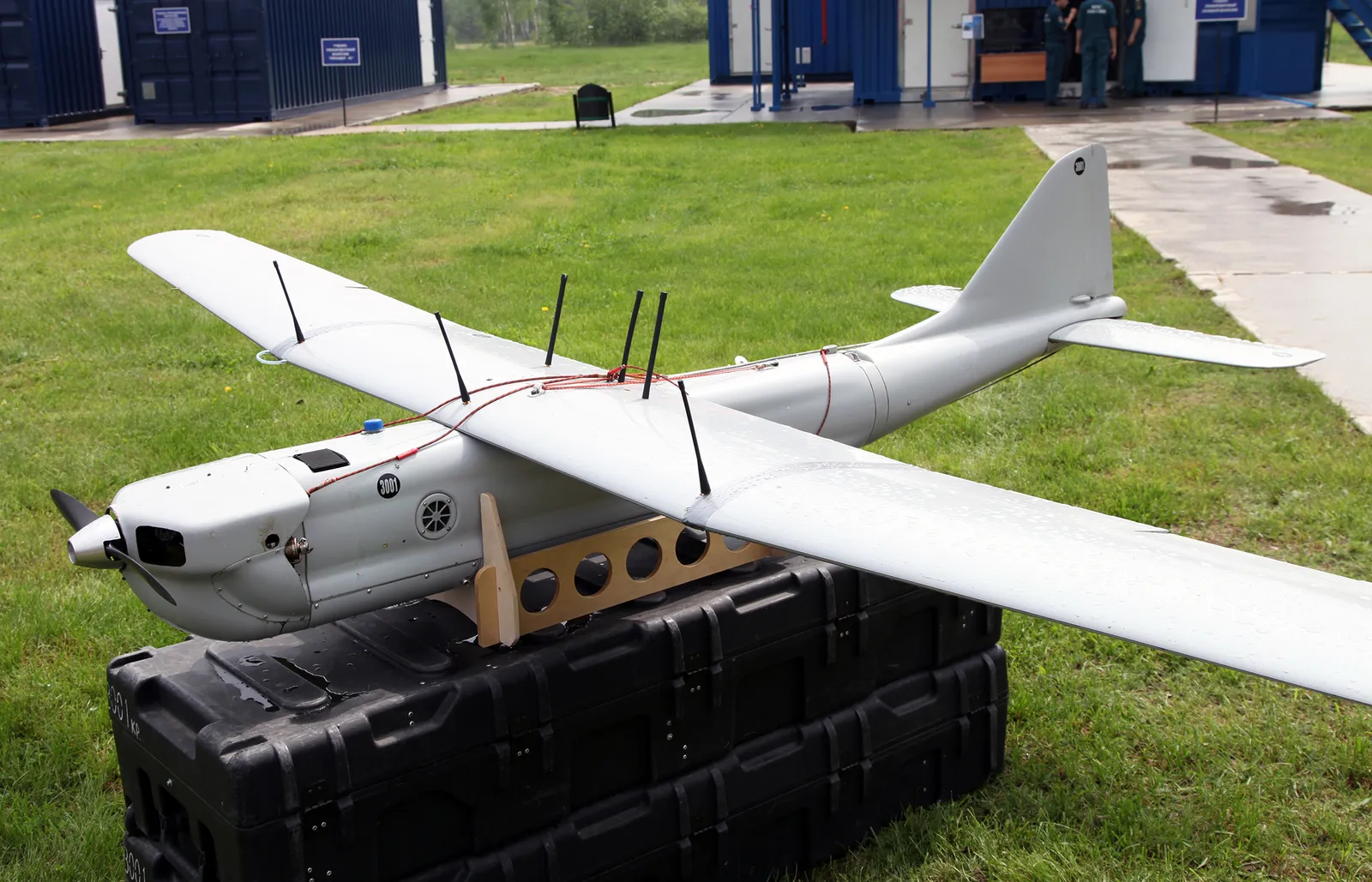
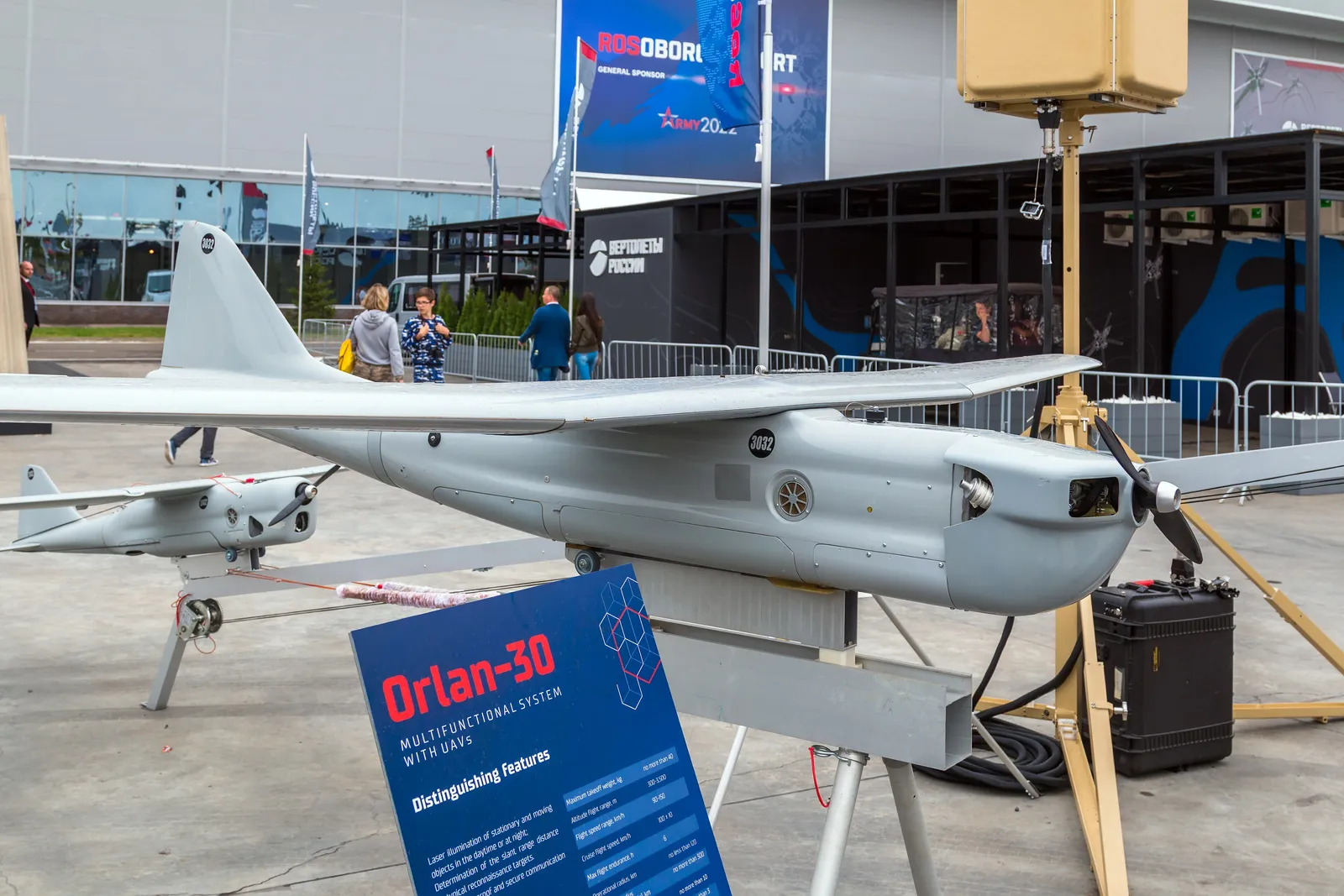
The Orlan-30 is a Russian Orlan-family unmanned aircraft built around reconnaissance, electro-optical surveillance, and laser target designation for precision weapons. Official export material describes an eight-hour UAV system with a laser rangefinder-designator, while U.S. Army operational analysis identifies its Ukraine role in Russian sensor-to-shooter workflows for Krasnopol artillery rounds and Kh-38ML missile strikes.

Role in Conflicts

Profile / Specs

Profile

Origin
Russia
Type
Reconnaissance and laser target-designation UAV
Service note
Entered Russian service after late-2010s trials; heavily associated with the full-scale 2014 Russia-Ukraine War
Designer
Special Technology Centre
Designed
Late 2010s
Produced
Batch production announced after flight trials completed in 2019

Specifications

Role
Reconnaissance, monitoring, and target designation for high-precision weapons
Maximum takeoff weight
No more than 40 kg in Rosoboronexport export data; other open sources report about 30 kg for displayed systems
Flight endurance
Up to 8 hours
Speed
90-150 km/h in Rosoboronexport export data
Radio-control radius
Up to 120 km via radio channel
Autonomous range
300 km reported by EDR Magazine for autonomous mode
Payload
Electro-optical payload with laser rangefinder-designator; War & Sanctions lists up to 12 kg declared target load
Launch and recovery
Catapult or hand launch in Rosoboronexport data; parachute recovery listed by War & Sanctions and EDR Magazine
Ground control
EDR Magazine reports a ground remote control station able to control data channels, route planning, payload operation, data recording, and up to four UAVs
Variants

The Orlan-30 sits in the same STC Orlan UAV family as the smaller Orlan-10 and the heavier Orlan-50, with the Orlan-30 distinguished in public sources by its laser target-designation payload.

VariantConfigurationDesignation notes
Orlan-10, Medium-range reconnaissance and electronic-warfare UAV, Aircraft & UAVsOrlan-10Smaller Orlan-family reconnaissance and EW UAV

T2COM treats Orlan-10 and Orlan-30 as the two primary Orlan UAS types seen in Ukraine, with the Orlan-30 carrying heavier payloads including laser designators.

Sources: Russia Struggling To Integrate Its Most Effective Unmanned System

Orlan-50Heavier Orlan-family UAV

War & Sanctions lists Orlan-50 alongside Orlan-10 and Orlan-30 among STC LLC Orlan-family products.

Sources: Orlan-30 - War & Sanctions

Laser-Designated Munitions

The Orlan-30 does not fire these munitions; public sources describe it as the airborne target-designation node that can illuminate targets for laser-guided weapons.

Compatible itemItem typeCompatibility evidence
9K25 Krasnopol laser-guided projectile, 152/155 mm laser-guided artillery projectile, Munitions9K25 Krasnopol laser-guided projectileSemi-active laser-guided artillery projectile

T2COM describes Orlan-30s designating targets for Krasnopol artillery rounds in Ukraine, improving Russian artillery accuracy when the sensor and firing unit are successfully integrated.

Sources: Russia Struggling To Integrate Its Most Effective Unmanned System

Target-Designation Workflows

Open operational reporting separates the Orlan-30's laser-designation role from the weapons that actually fire or release the munition.

WorkflowOrlan-30 roleDocumented context
Krasnopol artillery fireLaser target designationT2COM describes Orlan-30s designating targets for laser-guided Krasnopol rounds used by Russian artillery in Ukraine.
Kh-38ML missile strikesAirborne laser illuminationT2COM says September 2023 Kh-38ML strikes from Su-34 aircraft against bridges in Kharkiv were guided by Orlan-30 laser designators.
Conventional artillery and one-way attack dronesReconnaissance and target handoffT2COM says the wider Orlan complex more commonly passes target positions to Russian cannon artillery, rocket artillery, Lancet-3 operators, and Shahed-136 operators.
Timeline

Orlan-30 Key Events

  1. Flight trials completed

    Open defense reporting said Russian Ministry of Defence flight trials had been completed and batch production had begun, with first deliveries expected in 2020.

    Sources: Russian army to get Orlan-30 drones

  2. Official export video published

    Rosoboronexport published an official video presenting the Orlan-30 system and its aerial reconnaissance and laser target-designation role.

    Sources: Orlan-30 - Rosoboronexport

  3. Reported Kh-38ML target designation in Ukraine

    U.S. Army analysis says Russian Kh-38ML missile strikes on bridges in Kharkiv were guided by laser target designators carried by Orlan-30 UAVs.

    Sources: Russia Struggling To Integrate Its Most Effective Unmanned System

  4. ADEX 2024 display

    EDR Magazine reported Rosoboronexport presenting the Orlan-30 in Baku and described its reconnaissance, laser-illumination, payload, range, and ground-control-station details.

    Sources: ADEX 2024 - Rosoboronexport showcases the Orlan-30 UAV

Media
Related Weapon Systems
9K25 Krasnopol laser-guided projectile, 152/155 mm laser-guided artillery projectile, MunitionsMunitions9K25 Krasnopol laser-guided projectile152/155 mm laser-guided artillery projectileThe 9K25 Krasnopol family is a Russian laser-guided artillery projectile line built around semi-active laser homing for precision tube-artillery fire. KBP-origin projectiles in the family include Soviet-era 152 mm rounds, shorter Krasnopol-M designs compatible with the 2S19 Msta-S autoloader, and Krasnopol-M2 rounds documented in Russian use in Ukraine. The projectile depends on a target being illuminated by ground or airborne laser designators, making Orlan-30 and similar target-acquisition systems part of the weapon's practical employment chain.
LITENING Advanced Targeting Pod (AN/AAQ-28), Electro-optical targeting pod, Support EquipmentSupport EquipmentLITENING Advanced Targeting Pod (AN/AAQ-28)Electro-optical targeting podThe LITENING Advanced Targeting Pod (AN/AAQ-28) is a Rafael-designed, Northrop Grumman-supported electro-optical/infrared targeting pod family for precision targeting, surveillance, reconnaissance, and laser-guided weapon support. Manufacturer material describes a modular multispectral pod integrated across many aircraft types, while RAND's Libya air-war study documents LITENING pods supporting NATO strike and imagery workflows in the 2011 First Libyan Civil War.
UJ-22 Airborne, Multi-purpose fixed-wing unmanned aircraft system, Aircraft & UAVsAircraft & UAVsUJ-22 AirborneMulti-purpose fixed-wing unmanned aircraft systemThe UJ-22 Airborne is a Ukrainian UkrJet fixed-wing unmanned aircraft system that bridges reconnaissance, payload carriage, and long-range strike adaptation. Manufacturer material describes a reusable UAS with interchangeable payloads, a ground-control station, tracking antenna, autonomous flight planning, and a 20 kg payload limit; wartime reporting links identified UJ-22 airframes to Ukrainian deep-strike attempts and Russian claims of air-defense engagements during the 2014 Russia-Ukraine War.
Orion, Medium-altitude long-endurance reconnaissance-strike UAV, Aircraft & UAVsAircraft & UAVsOrionMedium-altitude long-endurance reconnaissance-strike UAVOrion, also known as Inokhodets, is a Russian medium-altitude long-endurance unmanned aircraft developed by Kronstadt for persistent reconnaissance and precision strike missions. Its export Orion-E baseline is advertised with a 250 kg payload and up to 30 hours of endurance, while combat reporting links Russian-service Orions to Syria trials, limited Ukraine-war strikes, wartime losses, and a sanction-relevant production chain.
Long Range Advanced Scout Surveillance System, Long-range electro-optical scout surveillance and target-location system, Support EquipmentSupport EquipmentLong Range Advanced Scout Surveillance SystemLong-range electro-optical scout surveillance and target-location systemThe Long Range Advanced Scout Surveillance System, commonly LRAS3, is a U.S. Army scout and observer sensor suite for long-range reconnaissance, surveillance, target detection, identification, geolocation, and target handoff. Army and Raytheon sources describe FLIR, day-camera, GPS, laser-rangefinder, tripod, vehicle, mast, tower, remote-operation, and networked sensor-to-shooter roles, with direct public records for LRAS3 use in Iraq and Afghanistan.

Sources