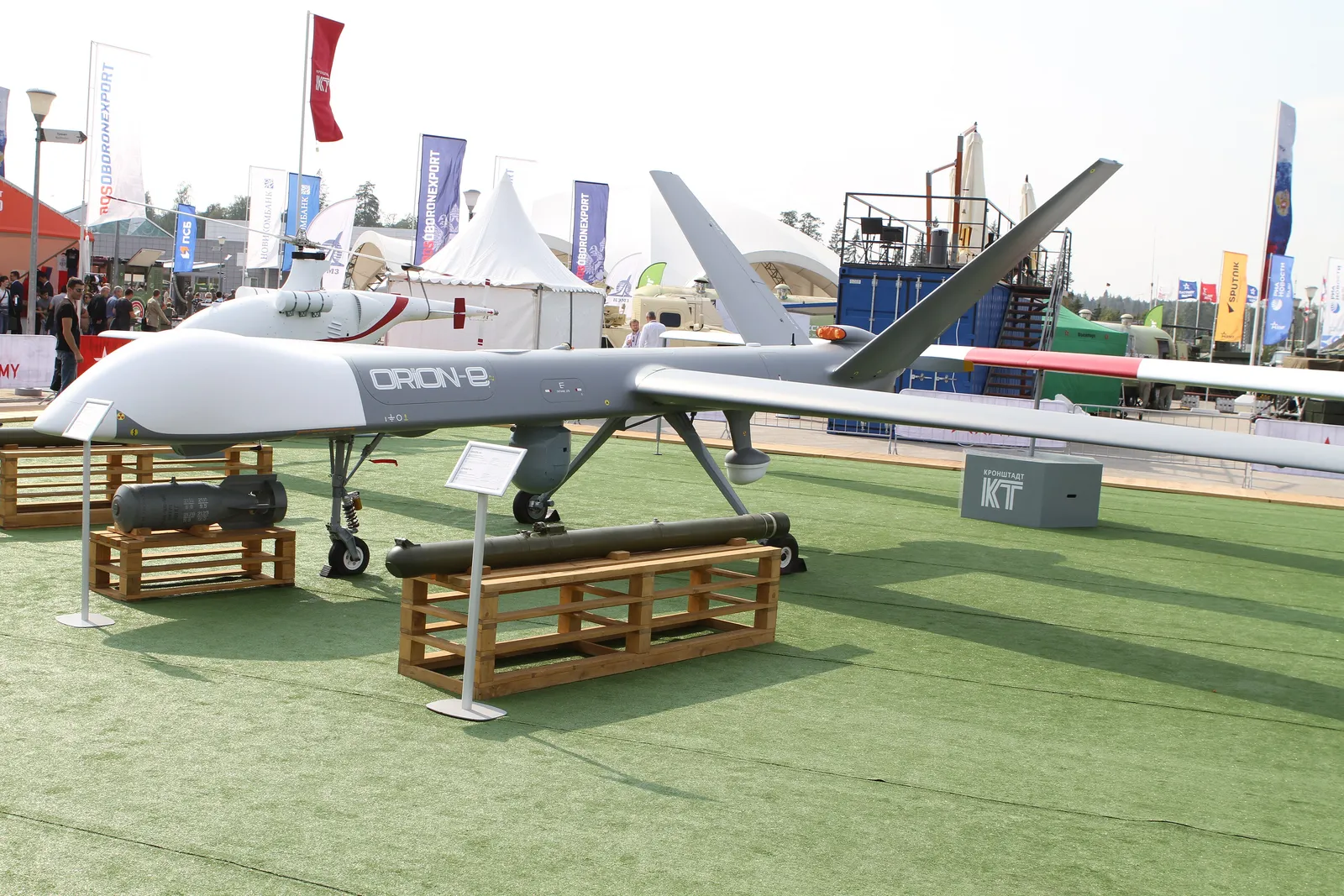
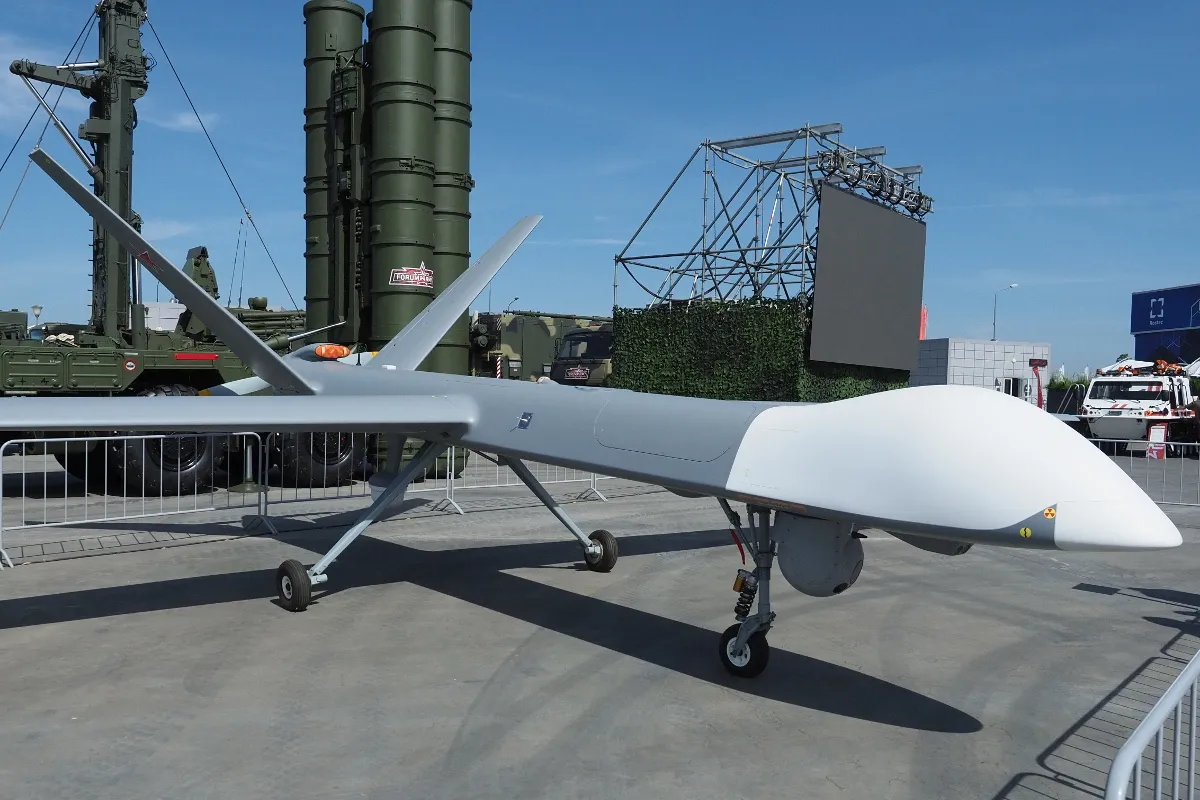
Orion, also known as Inokhodets, is a Russian medium-altitude long-endurance unmanned aircraft developed by Kronstadt for persistent reconnaissance and precision strike missions. Its export Orion-E baseline is advertised with a 250 kg payload and up to 30 hours of endurance, while combat reporting links Russian-service Orions to Syria trials, limited Ukraine-war strikes, wartime losses, and a sanction-relevant production chain.
Operated by Russian forces as a reconnaissance-strike UAV during the full-scale invasion; Oryx documented Orion-attributed strikes on Ukrainian vehicles and artillery, Ukrainian intelligence identified the type in wartime component work, and June 2026 Ukrainian reporting described strikes on rare Orion UAVs in Crimea.
Fielded by Russian forces supporting the Syrian government; Russian reporting and defense analysis described Orion combat trials from Syria, including reconnaissance sorties and strike missions.
Initial Russian military handover reported in 2020; production and supply-chain reporting continued during the 2014 Russia-Ukraine War
Specifications
Crew
Uncrewed aircraft with ground control station
Maximum takeoff weight
1,150 kg for Orion-E
Payload
250 kg maximum payload; 200 kg maximum combat payload for Orion-E
Endurance
Up to 30 hours for Orion-E
Speed
200 km/h cruise speed for Orion-E
Ceiling
7,500 m maximum flight altitude for Orion-E
Operating radius
250 km for Orion-E export configuration
Mission equipment
Optical-electronic, infrared, radio, and radar reconnaissance payload options with air-to-ground weapons capability
VariantsShowHide
The public record most often separates the Russian-service Orion/Inokhodets system from the export-marketed Orion-E configuration; available sources support Orion-E as an export baseline rather than a separate conflict-use row.
Variant
Configuration
Designation notes
Export reconnaissance-strike configuration
Export system baseline
Rosoboronexport markets Orion-E as an export MALE UAV system with reconnaissance payload options and air-to-ground weapons capability, using the 1,150 kg maximum-takeoff-weight and 250 kg payload baseline used in this entry's specifications.
Oryx described KAB-20 as part of Orion's tentative armed-drone arsenal, and TWZ noted a Russian Ministry of Defence calendar image depicting an Orion with KAB-20 guided bombs.
Orion is most useful to read as a reconnaissance aircraft with a limited precision-strike package: export specifications establish the payload class, while conflict reporting shows a smaller set of weapons actually documented in service or trials.
Aspect
Sourced point
Reader takeaway
Export baseline
Rosoboronexport lists Orion-E with a 250 kg payload, 200 kg combat payload, 30-hour endurance, and 7,500 m maximum altitude.
The advertised system sits in the MALE UAV class rather than the small tactical-drone category.
Guided-bomb load
Open reporting ties Orion-family UAVs to KAB-20 guided bombs and other light air-to-ground stores.
The strike role depends on compact munitions suited to a 250 kg payload class.
Missile integration
Army Recognition reported 2025 imagery of an Orion carrying two Kh-BPLA laser-guided missiles.
The public loadout picture is still developing, so unlinked missile mentions stay as context rather than catalog relationships.
Production chain
Ukrainian intelligence and defense-media reporting identify Orion as a Russian UAV with a sanction-relevant supplier and component network.
Production context matters because wartime availability appears more constrained than for Russia's smaller reconnaissance UAVs.
TimelineShowHide
Orion Key Events
Syrian trial footage reported
TWZ reported that Russian video and open-source analysis tied Orion combat-evaluation footage to Syria, including reconnaissance and strike mission markings from the 2018 trial period.
Sources: Russia Provides A Glimpse Of Its Orion Drone Executing Combat Trials In Syria
Ukraine-war strikes and losses documented
Oryx published an early 2014 Russia-Ukraine War assessment documenting Orion-attributed strikes and visually confirmed Orion losses.
Sources: Nascent Capabilities: Russian Armed Drones Over Ukraine
Kh-BPLA missile carriage reported
Army Recognition reported imagery of an Orion carrying two Kh-BPLA missiles, adding a current open-source datapoint for guided-missile integration.
Sources: Russia's Orion Drone Seen Carrying Kh-BPLA Missiles
Orions hit in Crimea
Ukrainska Pravda reported Ukrainian General Staff claims that rare Orion UAVs were among Russian targets hit in Crimea.