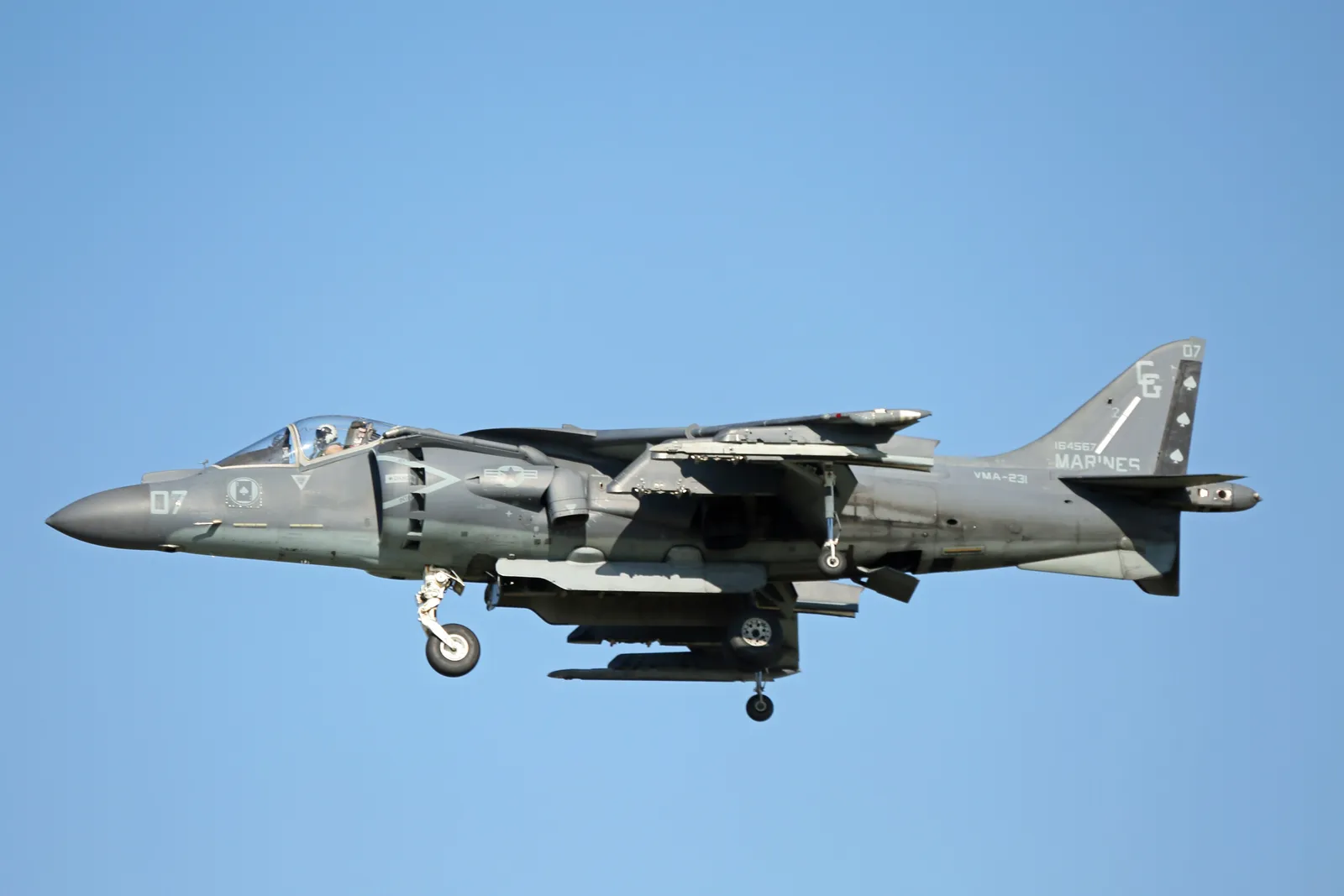

Usado por tripulaciones de AV-8B Harrier de VMA-211 desde el USS Makin Island y emplazamientos desplegados avanzados en operaciones de combate contra ISIL en Irak y Siria entre octubre de 2014 y marzo de 2015.
Role detailsAeronaves y UAV
AV-8B Harrier II
Also known as
- AV-8B
- Harrier II
- AV-8B Harrier
- AV-8B II+
- AV-8B Harrier II+
- AV-8B Harrier II Plus
- Harrier II Plus
- AV-8B Night Attack
- AV-8B(NA)
- TAV-8B
- TAV-8B Harrier II
- avión de despegue vertical Harrier
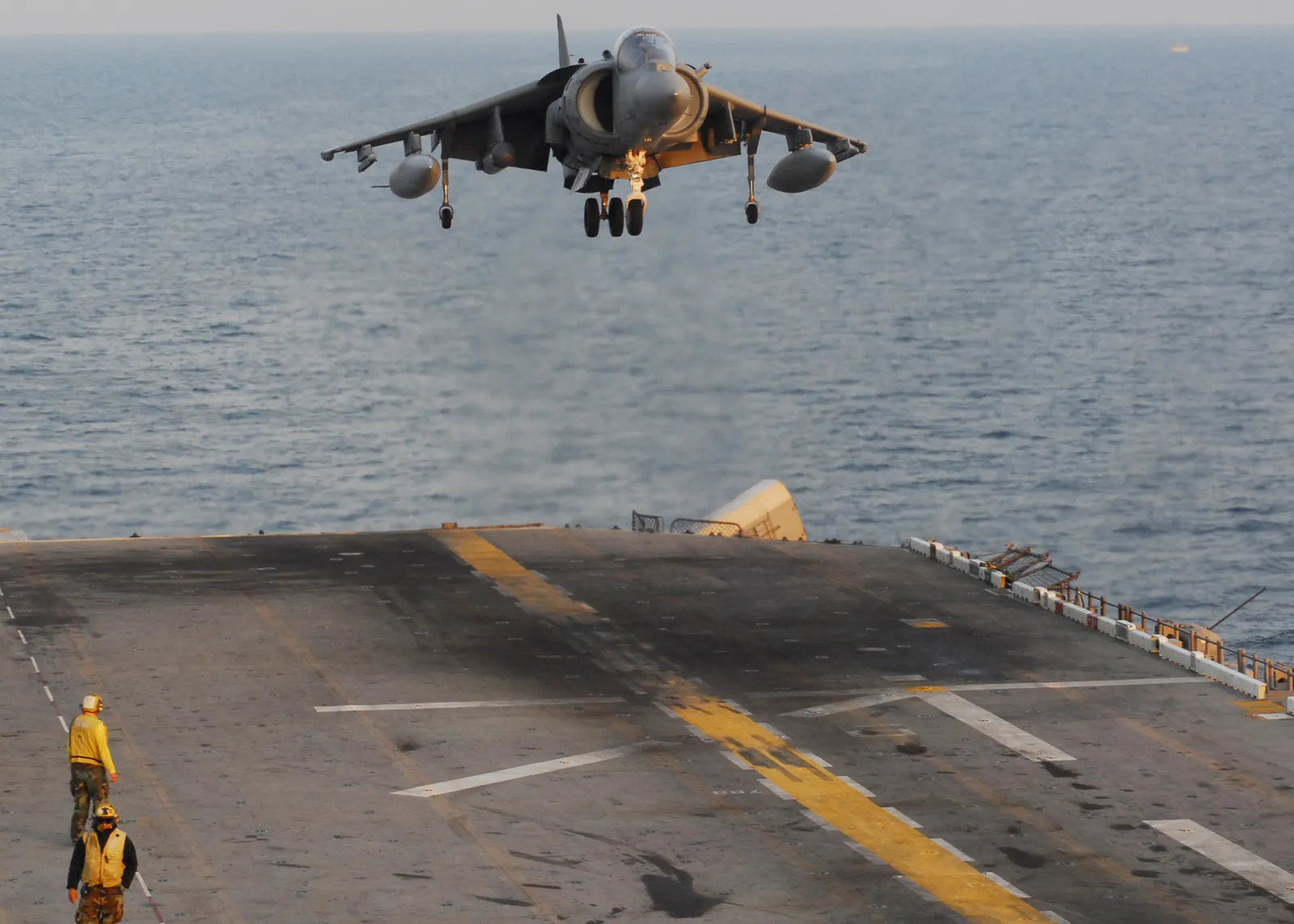
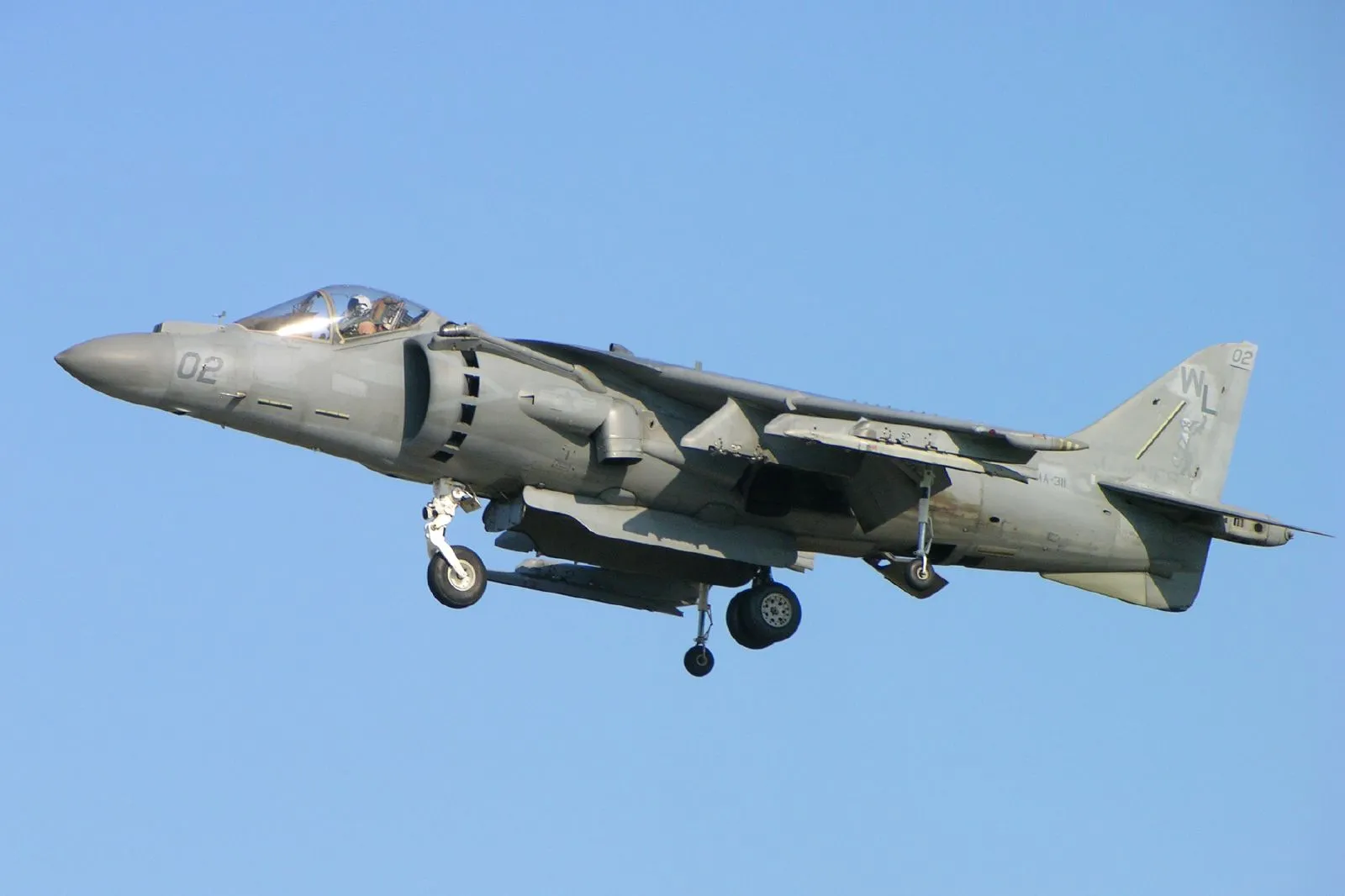
El AV-8B Harrier II es un Harrier de segunda generación construido en torno a misiones de ataque ligero V/STOL con empuje vectorial: apoyo aéreo cercano expedicionario, reconocimiento armado, interdicción, ataque desde buques y operaciones dispersas desde bases avanzadas. Desarrollado por McDonnell Douglas con participación de British Aerospace, incorporó un ala compuesta de mayor tamaño, mejores prestaciones impulsadas por Pegasus y, posteriormente, configuraciones Night Attack y Harrier II Plus con radar. El U.S. Marine Corps retiró formalmente el tipo en Cherry Point el 3 de junio de 2026, mientras que los Harrier navales italianos y españoles seguían siendo una salvedad de servicio separada.
Role in Conflicts
- Side
- United States and Libyan Government of National Accord


Usado por tripulaciones de AV-8B Harrier II de la 22nd MEU desde el USS Wasp durante ataques aéreos de precisión de Operation Odyssey Lightning contra objetivos de ISIL en Sirte, Libia.

Usado por tripulaciones de AV-8B Harrier II de la 22nd MEU desde Al Dhafra Air Base en abril de 2019 mientras apoyaban Operation Freedom's Sentinel y el apoyo al Afghan National Army a través de la coalición estadounidense.
Role detailsProfile / Specs
Profile
- Origin
- Estados Unidos
- Built by
- McDonnell Douglas; Boeing
- Built in
- United States
- Type
- Avión ligero de ataque y apoyo aéreo cercano V/STOL
- Service note
- 1985-2026 en servicio AV-8B del U.S. Marine Corps; aún en servicio naval italiano y español a junio de 2026
- Designer
- McDonnell Douglas y British Aerospace
- Designed
- Década de 1970-1981
- Unit cost
- No publicado de forma fácilmente accesible para el AV-8B Harrier II como cifra común de flota
- Produced
- 1981-2003
- Number built
- 340 aeronaves entregadas, incluidos aviones de ataque AV-8B, entrenadores TAV-8B y prototipos YAV-8B
Specifications
- Tripulación
- 1 en variantes de ataque AV-8B; 2 en el entrenador TAV-8B
- Función principal
- Apoyo aéreo cercano, interceptación de alcance intermedio y misiones de ataque
- Bases
- Portaaviones y otras plataformas marítimas adecuadas, bases avanzadas, aeródromos expedicionarios y zonas tácticas remotas de aterrizaje
- Motor
- Un turbofan Rolls-Royce Pegasus F402 de empuje vectorial
- Empuje Day Attack
- Aproximadamente 20.280 lb de empuje con F402-RR-406
- Empuje Night Attack / radar
- Aproximadamente 22.200 lb de empuje con F402-RR-408A
- Envergadura
- 30 ft 4 in (9,25 m)
- Longitud
- 46 ft 4 in (14,12 m)
- Altura
- 11 ft 8 in (3,55 m)
- Velocidad máxima
- 630 mph
- Alcance de traslado
- 1.700 millas náuticas sin reabastecimiento
Variants
La familia AV-8B comenzó como un Harrier rediseñado de segunda generación para misiones de ataque ligero V/STOL del Marine Corps, y luego pasó de aeronaves Day Attack a configuraciones Night Attack, Harrier II Plus equipada con radar y entrenamiento biplaza TAV-8B.
| Variant | Configuration | Designation notes |
|---|---|---|
| YAV-8B | Prototipo | McDonnell Douglas propuso el AV-8B en mayo de 1975, y el prototipo YAV-8B voló por primera vez el 9 de noviembre de 1978. Sources: Boeing Last AV-8B Harrier Jet |
| AV-8B Harrier II Day Attack | Variante inicial de ataque monoplaza | NAVAIR describe el AV-8B como sustituto del AV-8A y el A-4M; las aeronaves Day Attack usaban el motor F402-RR-406 y posteriormente pasaron a ser candidatas para remanufactura. Sources: NAVAIR AV-8B Harrier, NAVAIR AV-8B Litening II |
| AV-8B Night Attack | Variante de ataque con capacidad nocturna | La configuración Night Attack usaba el motor F402-RR-408A de mayor empuje y aviónica de ataque nocturno. Sources: NAVAIR AV-8B Harrier |
| AV-8B Harrier II Plus | Configuración nocturna/con radar equipada con radar | Estados Unidos, España e Italia desarrollaron la versión Plus en la década de 1990; voló por primera vez el 22 de septiembre de 1992, y NAVAIR identifica el radar APG-65 y la ruta de remanufactura a partir de aeronaves Day Attack. Sources: Boeing Last AV-8B Harrier Jet, NAVAIR AV-8B Harrier, NAVAIR AV-8B Litening II |
| TAV-8B | Entrenador biplaza | NAVAIR identifica el TAV-8B como la versión de entrenamiento biplaza del AV-8B; el programa de modernización añadió compatibilidad con visión nocturna, motores Pegasus 408, mejoras estructurales y software de misión para entrenamiento representativo de la flota. Sources: NAVAIR First Upgraded TAV-8B |
Carried Missiles and Guided Bombs
The Harrier's published AV-8B fact file and U.S. Air Force JDAM fact sheet document representative air-to-air and precision air-to-ground stores.
| Carried item | Item type | Carriage evidence |
|---|---|---|
 | Short-range air-to-air missile | The AV-8B PDF fact file lists Sidewinder missiles among the Harrier's carried air-to-air weapons. Sources: NHHC AV-8B PDF Fact File |
 | Air-to-surface guided missile | The AV-8B PDF fact file lists the AGM-65 Maverick among the Harrier's carried attack weapons. Sources: NHHC AV-8B PDF Fact File |
 | 500-pound laser-guided bomb | The AV-8B PDF fact file lists GBU-12 among the Harrier's air-to-ground weapons, and this catalog entry represents the Mk 82/Paveway-Lizard guided-bomb family that includes the GBU-12 configuration. Sources: NHHC AV-8B PDF Fact File |
 | 1,000-pound laser-guided bomb | The AV-8B PDF fact file lists GBU-16 among the Harrier's air-to-ground weapons. Sources: NHHC AV-8B PDF Fact File |
 | JDAM guided-bomb family | The Air Force JDAM fact sheet lists JDAM as currently compatible with the AV-8B and identifies GBU-31, GBU-32, and GBU-38 JDAM variants. Sources: Air Force JDAM Fact Sheet |
 | 2,000-pound hard-target JDAM | The Air Force JDAM fact sheet lists GBU-31 as part of the JDAM family and identifies JDAM as compatible with the AV-8B. Sources: Air Force JDAM Fact Sheet |
 | 1,000-pound JDAM bomb | The AV-8B PDF fact file lists GBU-32 among the Harrier's air-to-ground weapons. Sources: NHHC AV-8B PDF Fact File |
 | 500-pound JDAM bomb | The Air Force JDAM fact sheet lists GBU-38 as part of the JDAM family and identifies JDAM as compatible with the AV-8B. Sources: Air Force JDAM Fact Sheet |
 | 500-pound dual-mode guided bomb | The AV-8B PDF fact file lists GBU-54 among the Harrier's air-to-ground weapons. Sources: NHHC AV-8B PDF Fact File |
Rocket Stores
The Harrier's air-to-ground stores list includes unguided 2.75-inch and 5-inch rockets, while NAVAIR documents later fixed-wing APKWS fielding on AV-8B Harriers.
| Carried item | Item type | Carriage evidence |
|---|---|---|
 | Unguided 2.75-inch rocket family | The Navy fact file lists 2.75-inch rockets among the AV-8B's air-to-ground stores. Sources: NHHC AV-8B PDF Fact File |
 | Laser-guided 2.75-inch rocket family | NAVAIR reported that the Navy delivered the first fixed-wing APKWS variant to VMA-223 operating AV-8B Harriers in theater in March 2016. Sources: NAVAIR APKWS fixed-wing AV-8B |
 | Unguided 5-inch rocket family | The Navy fact file lists 5-inch rockets among the AV-8B's air-to-ground stores. Sources: NHHC AV-8B PDF Fact File |
Incendiary Bomb Stores
The Harrier's air-to-ground stores list also includes Mk-77 fire bombs.
| Carried item | Item type | Carriage evidence |
|---|---|---|
 | Incendiary bomb family | The Navy fact file lists Mk-77 (Mod 2/4) fire bombs among the AV-8B's air-to-ground stores. Sources: NHHC AV-8B PDF Fact File |
Targeting Pods
The Harrier II Plus transformation adds extended war-fighting capability with LITENING II Targeting Pods.
| Carried item | Item type | Carriage evidence |
|---|---|---|
 | Targeting pod | NAVAIR described the AV-8B Harrier II Plus configuration as gaining extended war-fighting capability with LITENING II Targeting Pods. Sources: NAVAIR AV-8B Litening II |
Timeline
AV-8B Harrier II Key Events
AV-8B propuesto
McDonnell Douglas propuso el AV-8B como nuevo avión ligero avanzado de ataque V/STOL con empuje vectorial.
Sources: Boeing Last AV-8B Harrier Jet
Primer vuelo del YAV-8B
El prototipo YAV-8B voló por primera vez, dando inicio al programa AV-8B Harrier II.
Sources: Boeing Last AV-8B Harrier Jet
Primer escuadrón operativo de AV-8B
VMA-331 se convirtió en el primer escuadrón operativo de AV-8B del Marine Corps.
Sources: USMC VMA-223 Harrier Sundown
Primer vuelo del Harrier II Plus
El AV-8B Harrier II Plus voló por primera vez como esfuerzo estadounidense, español e italiano de modernización de radar y aviónica.
Sources: Boeing Last AV-8B Harrier Jet
Fin de la producción
La producción terminó con la entrega del último AV-8B a España; Boeing contabiliza 340 aeronaves entregadas, incluidos aviones de ataque, entrenadores y prototipos.
Sources: Boeing Last AV-8B Harrier Jet
Retiro del Harrier del Marine Corps
El Marine Corps celebró la ceremonia oficial de retirada del AV-8B en MCAS Cherry Point cuando VMA-223 concluyó las operaciones finales con Harrier.
Sources: USMC AV-8B Harrier Sundown Ceremony, USMC VMA-223 Harrier Sundown
Media
AV-8B Harrier II Images
Related Weapon Systems


Sources
Air Force JDAM Fact SheetPublisher: U.S. Air Force | Note: Supports JDAM compatibility with the AV-8B Harrier II. | Accessed: 2026-07-04NAVAIR AV-8B HarrierPublisher: Naval Air Systems Command | Note: Supports AV-8B mission tasks, ship and expeditionary basing, Harrier II Plus APG-65 radar background, contractor context, engine thrust, and core dimensions. | Accessed: 2026-07-04Boeing Last AV-8B Harrier JetPublisher: Boeing | Note: Supports AV-8B development chronology, Harrier II Plus first flight, 340-aircraft delivery count, 2003 production end, June 2026 U.S. Marine Corps sundown, and continuing Italian and Spanish naval service caveat. | Accessed: 2026-07-04NHHC AV-8B Harrier IIPublisher: Naval History and Heritage Command | Note: Supports the AV-8B Harrier II's U.S. Navy/Marine Corps inventory description and core specifications such as wingspan, length, speed, ferry range, and power plant. | Accessed: 2026-07-04NHHC AV-8B PDF Fact FilePublisher: Naval History and Heritage Command | Note: Supports the AV-8B Harrier II as a single-seat close-air-support light attack aircraft with V/STOL capability, plus the published built count and air-to-ground stores list that includes 2.75-inch and 5-inch rockets and Mk-77 (Mod 2/4) fire bombs. | Accessed: 2026-07-04AGM-65 Maverick Guided MissilePublisher: U.S. Navy | Note: Supports AV-8 family carriage of the AGM-65E Maverick and related carrier-platform background. | Accessed: 2026-07-04Marines AV-8B Harrier LegacyPublisher: U.S. Marine Corps | Note: Supports the AV-8B Harrier's Marine Corps service history and January 1985 initial operating capability. | Accessed: 2026-07-04USMC AV-8B Harrier Sundown CeremonyPublisher: U.S. Marine Corps | Note: Supports the official June 3, 2026 AV-8B Harrier sundown ceremony date at Marine Corps Air Station Cherry Point. | Accessed: 2026-07-04USMC VMA-223 Harrier SundownPublisher: U.S. Marine Corps | Note: Supports the VMA-223 final Harrier squadron context, June 3, 2026 sundown event, and the transition from AV-8B Harrier II to F-35B/C. | Accessed: 2026-07-04VMFA-211 Squadron HistoryPublisher: U.S. Marine Corps | Note: Supports 2014 War Against the Islamic State direct conflict use under Operation Inherent Resolve: Supports 2014 Operation Inherent Resolve: used by VMA-211 AV-8B Harrier crews from USS Makin Island and forward-deployed sites in combat operations against ISIL in Iraq and Syria from October 2014 to March 2015. | Accessed: 2026-07-04Operation Odyssey Lightning B-RollPublisher: Defense Visual Information Distribution Service | Note: Supports 2016 U.S. Campaign Against ISIS in Libya: used by the 22nd MEU AV-8B Harrier II operations from USS Wasp in support of Operation Odyssey Lightning against ISIL targets in Sirte. | Accessed: 2026-07-04Operation Odyssey Lightning Launch PrepPublisher: Defense Visual Information Distribution Service | Note: Supports 2016 U.S. Campaign Against ISIS in Libya: used by Marines preparing an AV-8B Harrier II for launch from USS Wasp during precision air strikes against Daesh targets in Sirte, Libya. | Accessed: 2026-07-0422nd MEU at ADABPublisher: Defense Visual Information Distribution Service | Note: Supports 2001 War in Afghanistan: used by 22nd MEU AV-8B Harrier II crews from Al Dhafra Air Base in April 2019 while supporting Operation Freedom's Sentinel and Afghan National Army support through the U.S. coalition. | Accessed: 2026-07-04Wikimedia Commons AV-8B Harrier II imagePublisher: Wikimedia Commons | Note: Supports image provenance for a CC BY 2.0 Flickr-sourced AV-8B Harrier II photograph hosted on Wikimedia Commons. | Accessed: 2026-07-04Wikimedia Commons AV-8B on USS EssexPublisher: Wikimedia Commons | Note: Supports image provenance for a public-domain AV-8B Harrier II carrier-deck photograph. | Accessed: 2026-07-04Wikimedia Commons AV-8B hoveringPublisher: Wikimedia Commons | Note: Supports image provenance for a CC BY 2.0 Flickr-sourced AV-8B Harrier II hovering photograph hosted on Wikimedia Commons. | Accessed: 2026-07-04NAVAIR AV-8B Litening IIPublisher: Naval Air Systems Command | Note: Supports AV-8B remanufacture from Day Attack aircraft to night attack/radar Harrier II Plus configuration, APG-65 radar, LITENING II Targeting Pods, and JDAM provisions. | Accessed: 2026-07-04NAVAIR First Upgraded TAV-8BPublisher: Naval Air Systems Command | Note: Supports TAV-8B two-seat trainer identity and upgrade program details including night-vision compatibility, Pegasus 408 engines, structural enhancements, and mission software. | Accessed: 2026-07-04NAVAIR APKWS fixed-wing AV-8BPublisher: Naval Air Systems Command | Note: Supports AV-8B carriage and fielding of fixed-wing APKWS 2.75-inch guided rockets with VMA-223 in March 2016. | Accessed: 2026-07-04