- Side
- Israel

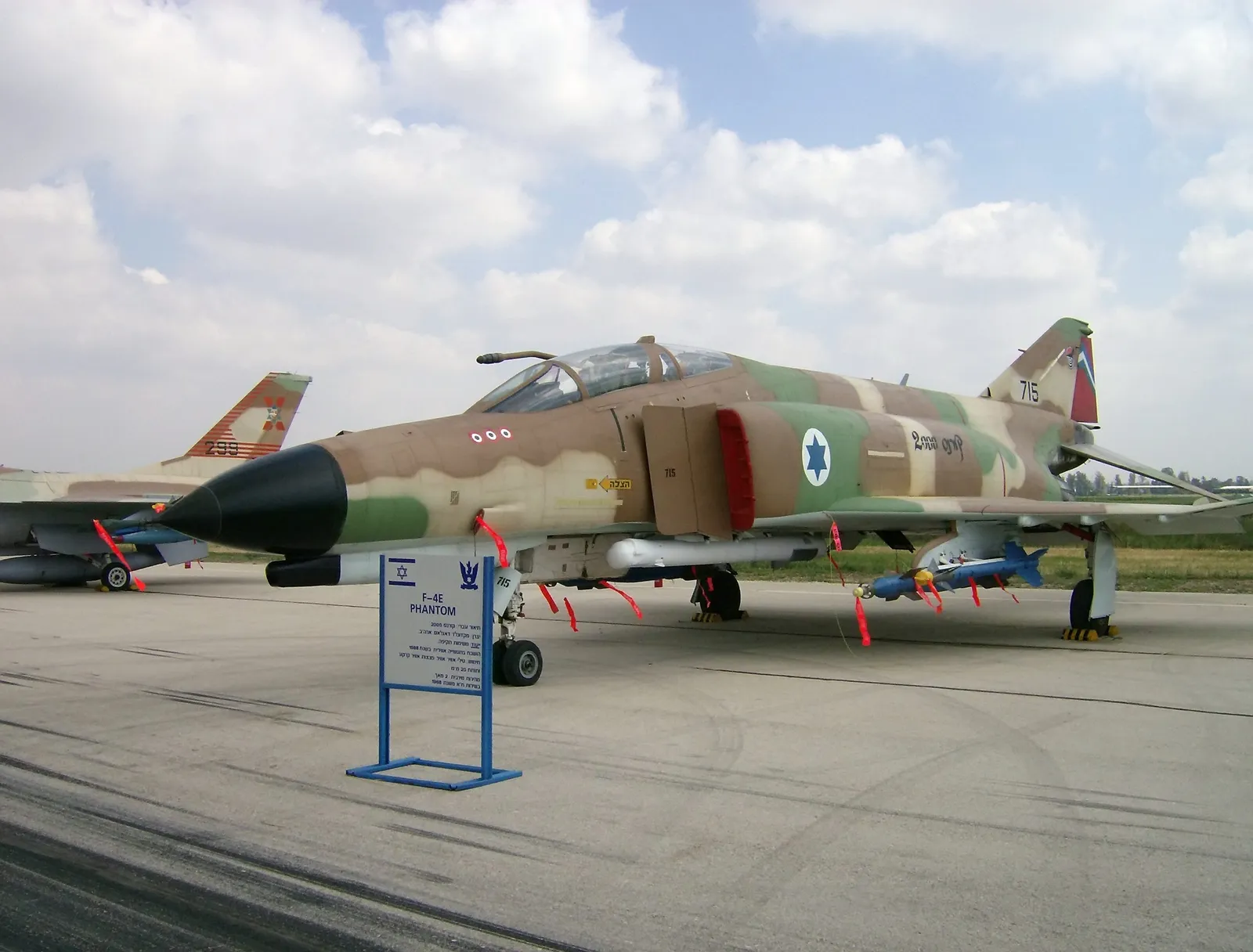
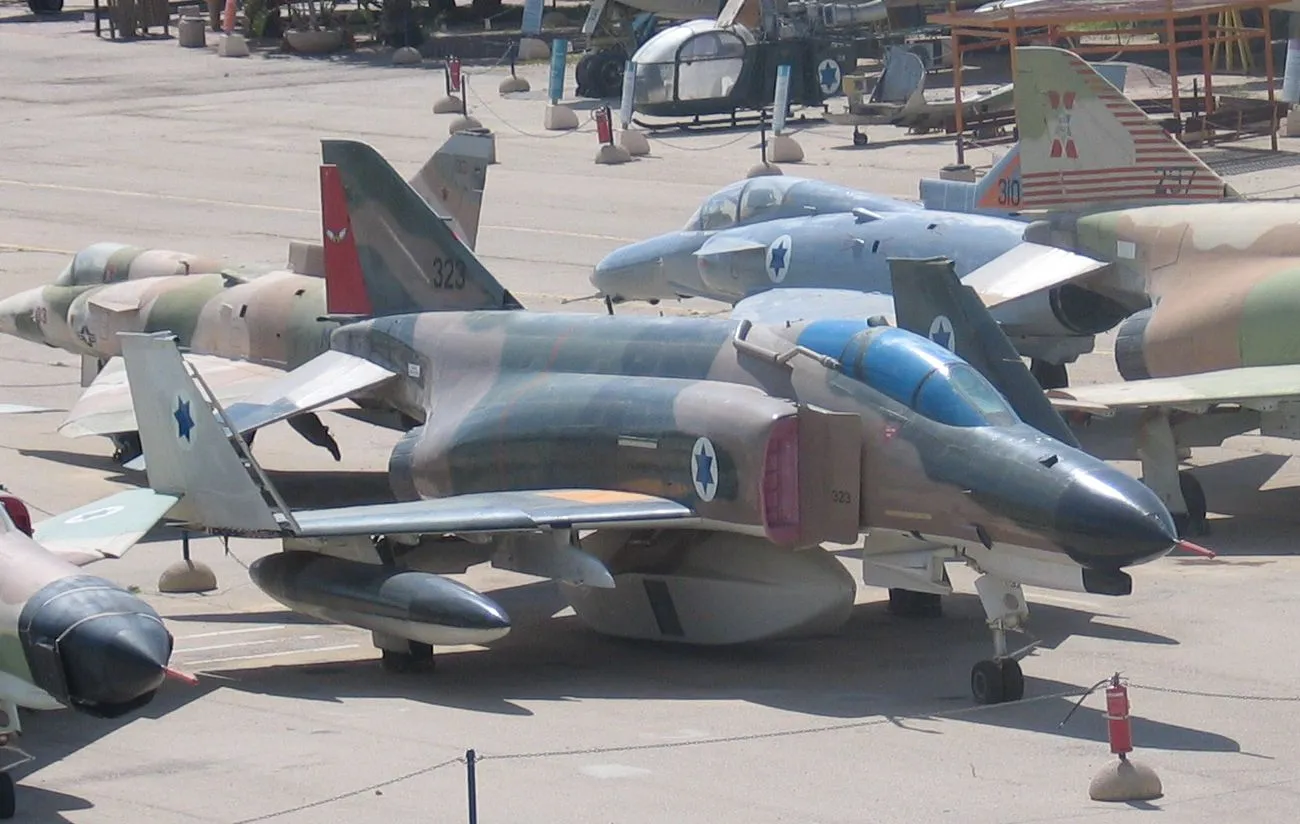
Aeronaves israelies F-4 Phantom II llegaron durante la Guerra de Desgaste y participaron en misiones de ataque profundo de Operation Priha contra objetivos egipcios.
El F-4 Phantom II es un cazabombardero supersonico estadounidense, bimotor y biplaza, desarrollado por McDonnell para la defensa de flota de la U.S. Navy y posteriormente adoptado por fuerzas aereas estadounidenses y aliadas para funciones de interceptacion, ataque, reconocimiento y guerra electronica. Se construyeron mas de 5.000 unidades, con uso de catalogo respaldado por fuentes que abarca ataques israelies en la Guerra de Desgaste, misiones estadounidenses F-4G Wild Weasel en la Guerra del Golfo, ataques turcos con F-4E 2020 contra objetivos del PKK, la perdida turca de un RF-4E durante la crisis siria y ataques anti-ISIS en Irak atribuidos a Iran.
Aeronaves israelies F-4 Phantom II llegaron durante la Guerra de Desgaste y participaron en misiones de ataque profundo de Operation Priha contra objetivos egipcios.
El F-4G Wild Weasel, una conversion del Phantom II derivada del F-4E, volo misiones estadounidenses de supresion de defensas aereas enemigas durante Operation Desert Storm.
Role detailsAeronaves turcas F-4E 2020 participaron junto con F-16 y drones no tripulados en ataques aereos de noviembre de 2015 contra objetivos del PKK en las montanas Qandil del norte de Irak.
Una aeronave turca de reconocimiento RF-4E Phantom II fue derribada por Siria en junio de 2012, lo que documenta directamente al Phantom en los incidentes de defensa aerea entre Turquia y Siria durante la guerra civil siria.
Role detailsFuncionarios estadounidenses e informes de defensa atribuyeron a Iran ataques aereos con F-4 Phantom II en la provincia iraqui de Diyala a finales de 2014, mientras que funcionarios iranies negaron haber realizado los ataques anti-ISIS.
Role detailsLas designaciones Phantom II cubren configuraciones de caza, cazabombardero, reconocimiento y guerra electronica especificas de cada servicio; nombres posteriores de modernizacion nacional, como Kurnas 2000 y Terminator 2020, identifican programas de actualizacion de operadores en lugar de celulas nuevas.
| Variant | Configuration | Designation notes |
|---|---|---|
| F-4C | Cazabombardero de la USAF | El F-4C fue la primera version del Phantom II de la U.S. Air Force; volo por primera vez en mayo de 1963 y las entregas de produccion comenzaron seis meses despues. Sources: McDonnell Douglas F-4C Phantom II | National Museum of the United States Air Force |
| F-4D | Cazabombardero de la USAF | La historia del Phantom II de Tinker Air Force Base identifica al F-4D como una version de la Air Force posterior al F-4C inicial. |
| F-4E | Cazabombardero con canon interno | El pie de foto del F-4E del National Museum identifica un F-4E con armamento AIM-7 Sparrow, AIM-4D Falcon y M61A1 Vulcan. Sources: McDonnell Douglas F-4E | National Museum of the United States Air Force |
| RF-4E | Phantom de reconocimiento | La cobertura de CFR y NATO sobre el derribo de 2012 identifica la aeronave perdida por Turquia como un Phantom de reconocimiento vinculado a la crisis siria. Sources: CFR - Turkey: Phantom Shoot-Down?, NATO - NAC Statement on Turkish Aircraft Shootdown |
 | Conversion de guerra electronica y SEAD | El F-4G fue una conversion Wild Weasel de la celula F-4E usada para localizar y suprimir defensas aereas guiadas por radar. Sources: McDonnell Douglas F-4G Wild Weasel | National Museum of the United States Air Force |
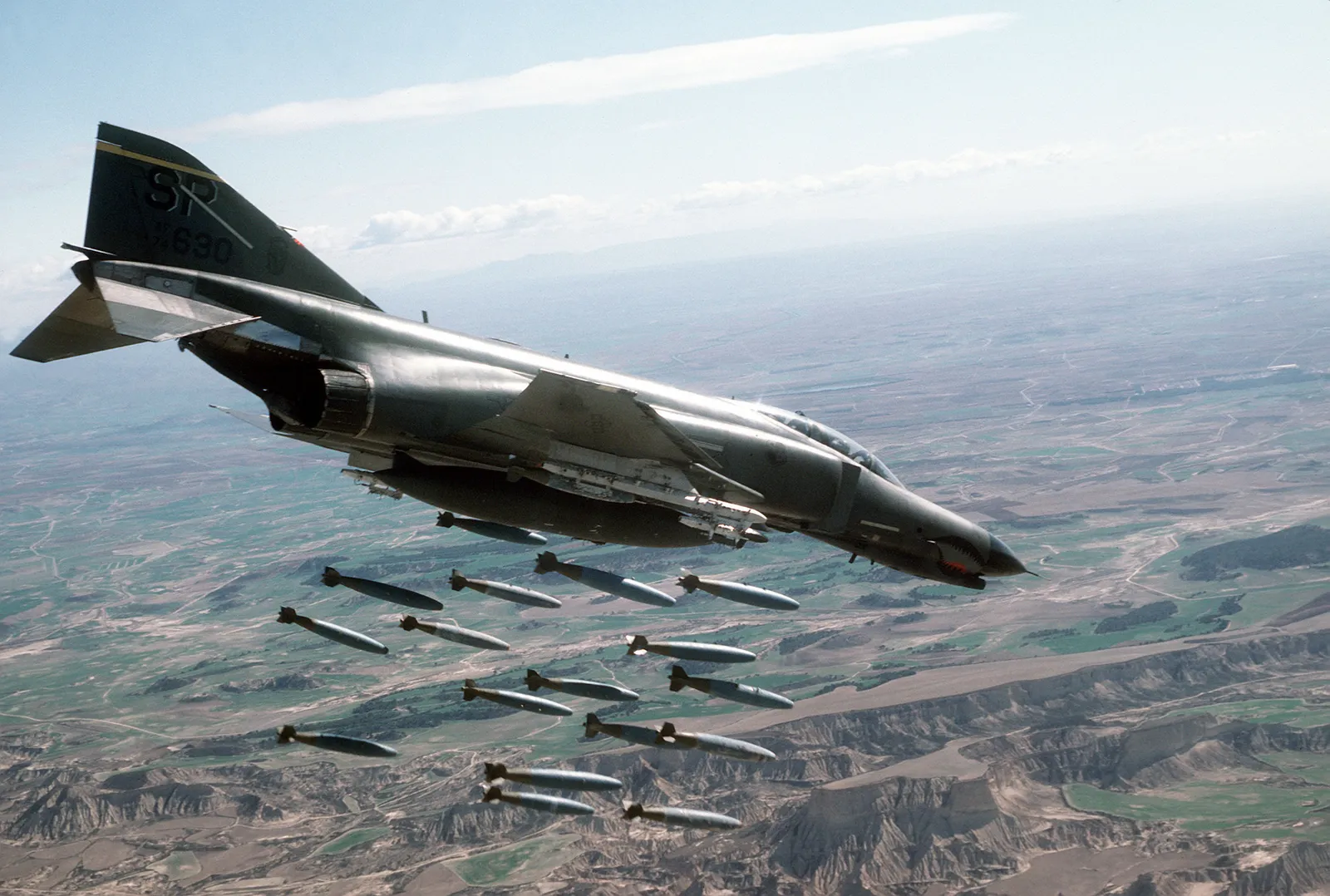
The Phantom II family is documented with short-range air-to-air missiles, iron bombs, and later Wild Weasel armament options across its F-4C, F-4E, and F-4G variants.
| Carried item | Item type | Carriage evidence |
|---|---|---|
 | Anti-ship cruise missile | Iran Press says the Qader anti-ship cruise missile can be installed on aircraft such as the F-4 Phantom fighter. Sources: Qader anti-ship missile capable against coastal targets, boats |
 | Short-range air-to-air missile | The F-4C fact sheet lists four AIM-9B Sidewinder missiles in a typical 1967 loadout. Sources: McDonnell Douglas F-4C Phantom II | National Museum of the United States Air Force, AIM-9 Sidewinder |
 | Medium-range air-to-air missile | NAVAIR identifies U.S. Air Force and Navy F-4 Phantoms as heavy AIM-7 Sparrow users during the missile's first combat use in Vietnam. Sources: AIM-7 Sparrow - NAVAIR |
 | Infrared air-to-air missile | The National Museum photo caption identifies an F-4E Phantom II carrying four AIM-4D Falcon missiles. Sources: McDonnell Douglas F-4E | National Museum of the United States Air Force |
 | 750-pound general-purpose bomb | The F-4C fact sheet lists eight 750-pound Mk 117 bombs in a typical 1967 loadout. Sources: McDonnell Douglas F-4C Phantom II | National Museum of the United States Air Force, M117 General Purpose Bomb |
 | Tactical air-to-surface missile | The F-4G Wild Weasel fact sheet lists AGM-65 Maverick missiles among its armament options. Sources: McDonnell Douglas F-4G Wild Weasel | National Museum of the United States Air Force, AGM-65 Maverick Fact Sheet |
 | Anti-radiation missile | The F-4G Wild Weasel fact sheet lists AGM-45 Shrike among the Phantom-derived Wild Weasel armament options. Sources: McDonnell Douglas F-4G Wild Weasel | National Museum of the United States Air Force |
 | High-speed anti-radiation missile | The F-4G Wild Weasel fact sheet lists AGM-88 HARM missiles among its armament options. Sources: McDonnell Douglas F-4G Wild Weasel | National Museum of the United States Air Force, AGM-88 HARM |
 | Television-guided glide bomb | The National Museum Walleye I fact sheet says USAF F-4s used the television-guided Walleye glide bomb starting in 1967. Sources: Martin Marietta AGM-62 Walleye I - National Museum of the USAF |
Museum loadout evidence documents the F-4C with podded electronic-countermeasures equipment in addition to weapons.
| Carried item | Item type | Carriage evidence |
|---|---|---|
 | Electronic countermeasures pod | The National Museum of the U.S. Air Force lists one ALQ-87 pod on the right inboard pylon in a typical 1967 F-4C loadout. Sources: McDonnell Douglas F-4C Phantom II | National Museum of the United States Air Force |
| Ammunition | Ammunition type | Firing evidence |
|---|---|---|
 | 20 mm aircraft cannon | The National Museum F-4E photo caption identifies the aircraft with an M61A1 Vulcan 20 mm cannon, and the M61A1 fact sheet says the Vulcan was carried internally on the F-4E Phantom II. Sources: McDonnell Douglas F-4E | National Museum of the United States Air Force, M61A1 Vulcan Cannon | National Museum of the United States Air Force |
El Phantom II volo por primera vez en mayo de 1958 tras ser desarrollado para la defensa de flota de la U.S. Navy.
Sources: McDonnell Douglas F-4C Phantom II | National Museum of the United States Air Force
La primera version F-4C de la USAF hizo su primer vuelo en mayo de 1963, y las entregas de produccion comenzaron seis meses despues.
Sources: McDonnell Douglas F-4C Phantom II | National Museum of the United States Air Force
La Israeli Air Force dice que el Phantom llego durante la Guerra de Desgaste de 1969 y participo en la actividad de ataque de Operation Priha contra objetivos egipcios.
Sources: Operation “Priha” - The Israeli Air Force
Tripulaciones de F-4G Wild Weasel usaron la celula del Phantom II para misiones estadounidenses de supresion de defensas aereas durante Operation Desert Storm.
Sources: McDonnell Douglas F-4G Wild Weasel | National Museum of the United States Air Force
NATO condeno el derribo sirio de una aeronave turca, mientras que CFR identifico el incidente como la perdida de un F-4 turco de reconocimiento no armado.
Sources: CFR - Turkey: Phantom Shoot-Down?, NATO - NAC Statement on Turkish Aircraft Shootdown
RFE/RL y USNI informaron de la atribucion por funcionarios estadounidenses de ataques con F-4 Phantom II contra objetivos del Islamic State en Irak, junto con negaciones iranies.
Sources: RFE/RL - Iran Denies F-4 Air Strikes on Islamic State, USNI - Iran Denies ISIS Airstrikes, Pentagon Says Different
Hurriyet Daily News informo de aeronaves turcas F-4E 2020, F-16 y drones en una campana transfronteriza contra objetivos del PKK en las montanas Qandil del norte de Irak.
Sources: Hurriyet Daily News - Turkish Military Hit 44 PKK Targets