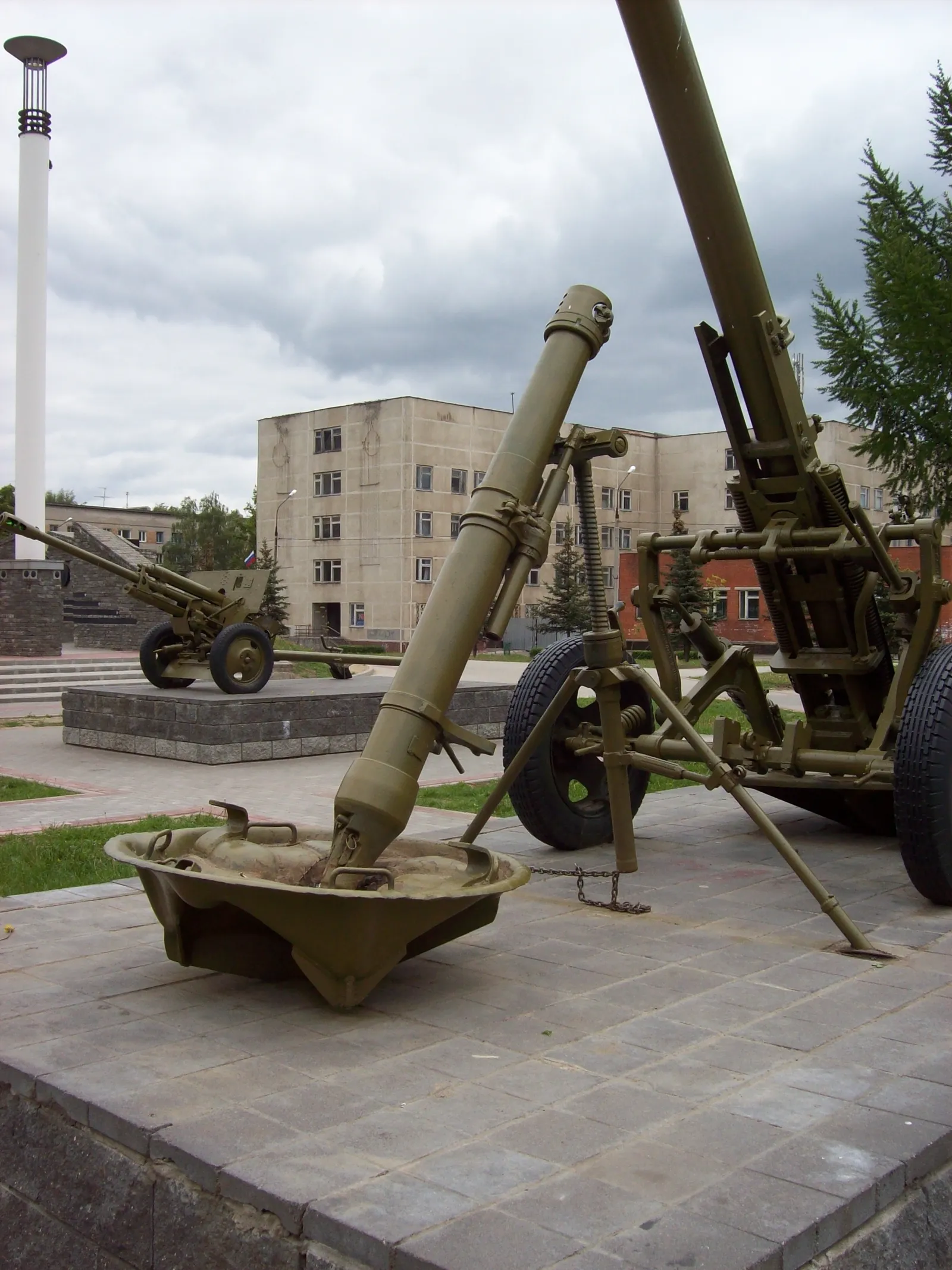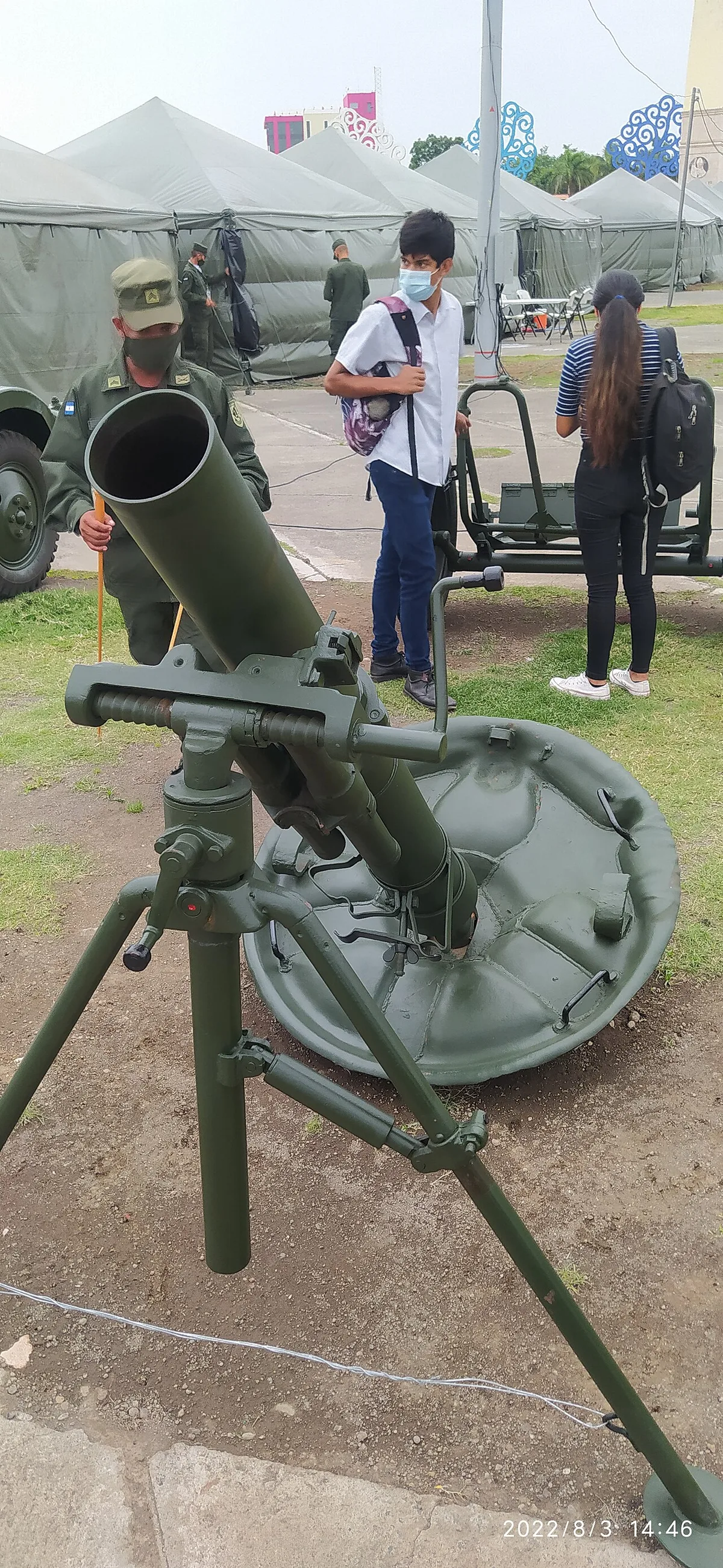
- Side
- North Vietnam and Viet Cong

HistoryNet's M-43 profile describes the mortar as a North Vietnamese regimental and divisional support weapon around Dak To in 1967, used against fire-support bases and special forces camps.
The PM-43 is a Soviet 120 mm smoothbore heavy mortar, introduced in 1943 as a wartime development of the PM-38 and kept in service through exports, local copies, and legacy stocks. Direct conflict references place the M-43/PM-43 family with North Vietnamese forces in Vietnam, in Syrian Civil War mortar inventories, with Haftar-aligned forces in Libya, and in a Russian-controlled area of Luhansk during the 2014 Russia-Ukraine War.
HistoryNet's M-43 profile describes the mortar as a North Vietnamese regimental and divisional support weapon around Dak To in 1967, used against fire-support bases and special forces camps.
MilitaryFactory says the PM-43 saw some of its last notable combat service during the 1979 Soviet-Afghan War.
AOAV's Syria wide-area impact report identifies M-1943/M43 120 mm heavy mortars in Syria and discusses mortar use by Syrian army forces and Islamic State-aligned fighters.
Role detailsThe 2022 UN Panel of Experts report on Libya lists a 120mm 120-PM-43 M1943 mortar with HAF as end user on 15 November 2020.
The OSCE Special Monitoring Mission recorded one probable PM-43 120 mm mortar in violation of withdrawal lines near Dachne, west of Luhansk, in a non-government-controlled area on 22 September 2021.
Role detailsOpen references use PM-43, 120-PM-43, M-43, and M1943 for the Soviet 1943 120 mm mortar family, with later Chinese and Egyptian local-copy designations attached to the same pattern.
| Variant | Configuration | Designation notes |
|---|---|---|
 | predecessor 120 mm mortar | MilitaryFactory and WeaponSystems.net describe the PM-43 as a wartime development of the earlier PM-38 120 mm mortar family. Sources: M1943 120mm (120-PM 43) Heavy Field Mortar, 120mm PM-43 |
| Type 53 | Chinese copy designation | WeaponSystems.net and the 120-PM-43 reference table list Type 53 as a Chinese copy designation for the PM-43 pattern. Sources: 120mm PM-43, 120-PM-43 Mortar Wikipedia |
| Type 55 | Chinese copy designation | ODIN describes the Type 55 as a Chinese version of the Russian M1943 120 mm mortar, with a heavier, more robust carriage than the Type 53. Sources: Type 55 Chinese 120mm Mortar |
| Helwan Model UK2 | Egyptian local variant | MilitaryFactory and the 120-PM-43 reference table list the Helwan Model UK2 as an Egyptian local PM-43 variant. Sources: M1943 120mm (120-PM 43) Heavy Field Mortar, 120-PM-43 Mortar Wikipedia |
 | successor 120 mm mortar family | WeaponSystems.net describes the 2B11 Sani as a Soviet 120 mm mortar developed to replace older PM-38 and PM-43 mortars. Sources: 120mm 2B11 Sani |
MilitaryFactory describes the PM-43 as a 120 mm heavy mortar that fired HE and HE-fragmentation projectiles, while the ammunition table links the PM-43 family to the 3OF34 HE-fragmentation mortar bomb.
| Ammunition | Ammunition type | Firing evidence |
|---|---|---|
 | 120 mm mortar bombs | MilitaryFactory's description of HE and HE-fragmentation projectile use places the PM-43 in the standard 120 mm mortar-bomb family. |
| HE-fragmentation mortar bomb | The 120-PM-43 ammunition table lists 3VOF53 / 3OF34 as a 16.1 kg high-explosive fragmentation round for the PM-43, with a 5.7 km maximum range. Sources: 120-PM-43 Mortar Wikipedia |
PM-43, 120-PM-43, M-43, and M1943 identify the Soviet 1943 mortar family, while Type 53, Type 55, and Helwan UK2 mark national copy or local-variant names.
| Designation | Relationship | Catalog note |
|---|---|---|
| Predecessor family | Reference sources describe the PM-43 as a wartime development from the PM-38 120 mm mortar line. |
| Type 53 / Type 55 | Chinese copy designations | Open reference tables list these as Chinese PM-43-pattern mortar designations, with Type 55 treated as the later heavier version. |
| Helwan Model UK2 | Egyptian local variant | Reference sources list UK2 as an Egyptian local PM-43 variant rather than a separate Soviet model. |
| Later Soviet 120 mm mortar family | The later 2B11/Sani line is best handled as a linked successor family, not as another PM-43 alias. |
MilitaryFactory dates the PM-43 to 1943 and describes it as a wartime development based on the PM-38.
Sources: M1943 120mm (120-PM 43) Heavy Field Mortar
HistoryNet's M-43 profile describes the 120 mm mortar as the most powerful North Vietnamese support arm around Dak To in 1967.
Sources: HistoryNet M-43 Vietnam
AOAV's Syria wide-area impact report included M-1943/M43 120 mm heavy mortars among explosive weapons documented in the Syrian Civil War.
Sources: AOAV Syria Wide-Area Impact Report
The UN Libya Panel of Experts table listed a 120mm 120-PM-43 M1943 mortar with HAF as end user.
Sources: UN Libya Panel S/2022/427
OSCE SMM Daily Report 224/2021 recorded a probable PM-43 120 mm mortar near Dachne, west of Luhansk, in a non-government-controlled area.
Sources: OSCE SMM Daily Report 224/2021