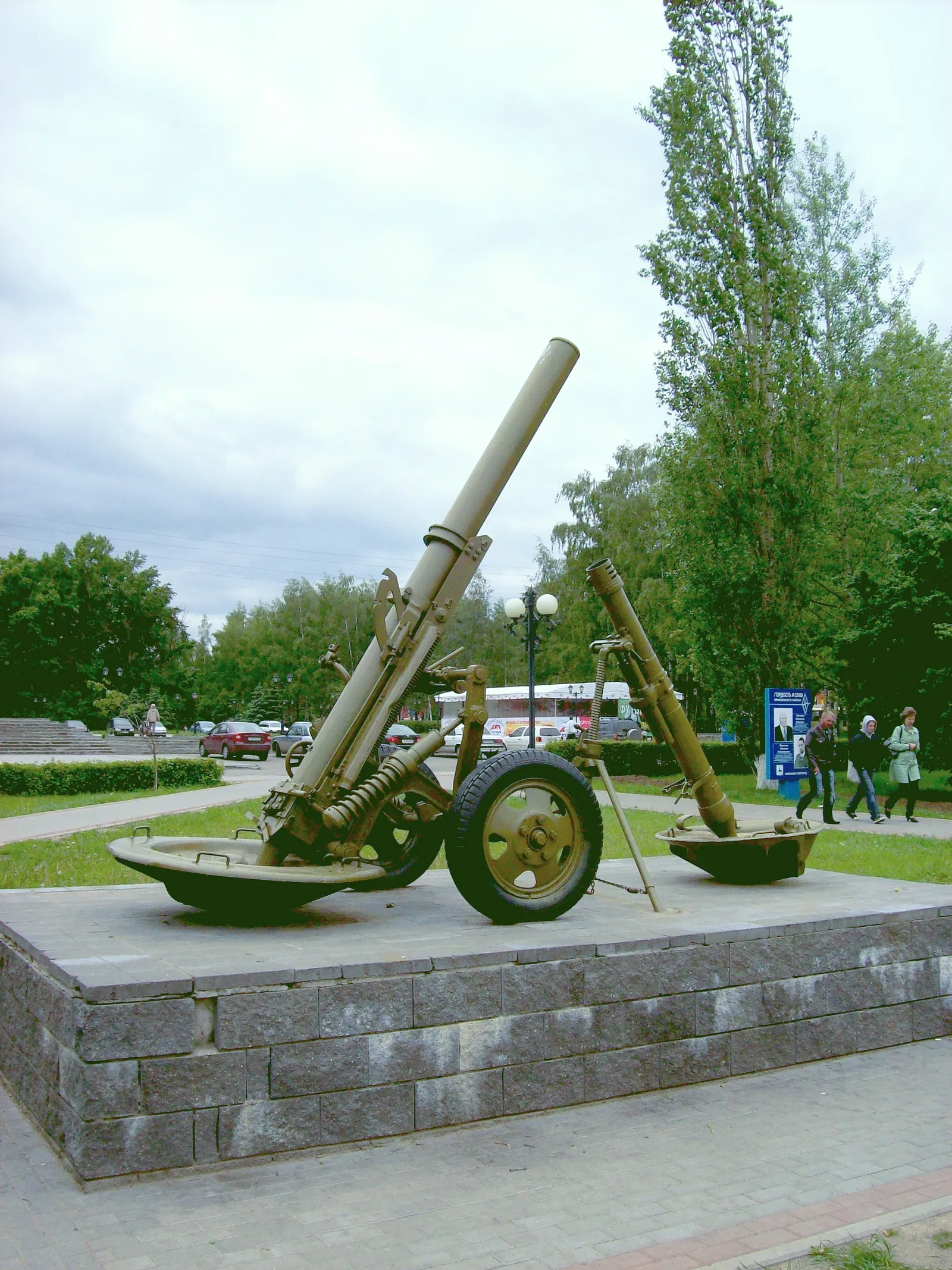
WeaponSystems.net says the 160-PM-43 was used by Egypt in the 1967 war with Israel.
Artillery
160mm PM-43
Also known as
- 160-PM-43
- 160 mm PM-43
- 160mm PM43
- 160 mm mortar M1943
- M1943 160mm mortar
- M1943 160 mm mortar
- MT-13
- M-43 160 mm mortar
- 52-M-852
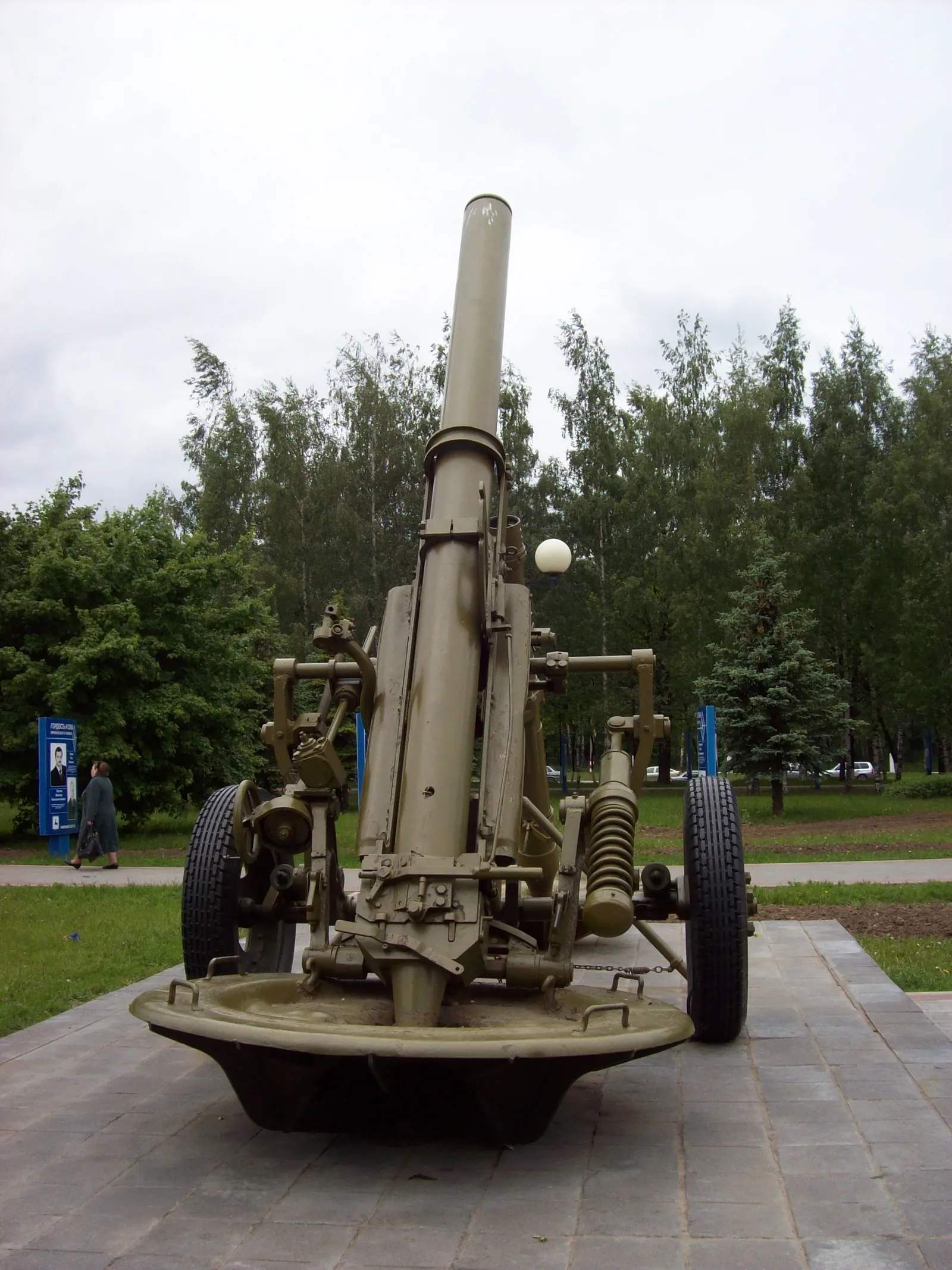
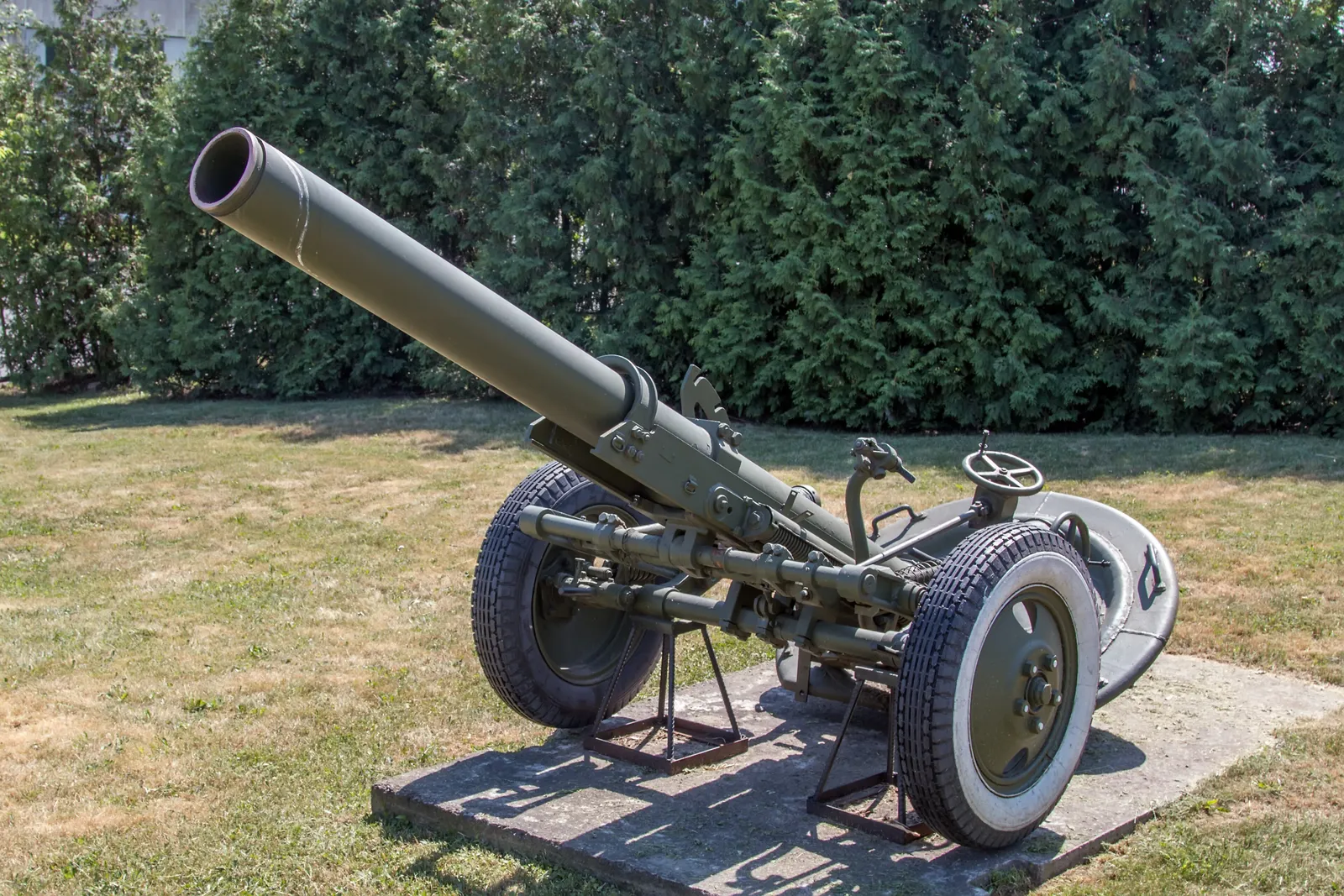
The 160mm PM-43, also known as the 160-PM-43 or MT-13, is a Soviet breech-loading heavy mortar developed from the idea of scaling up the 120 mm mortar family. Its hinged barrel let crews load a roughly 40 kg bomb from the rear, giving Soviet forces a short-range but very heavy indirect-fire weapon in the final stages of the Second World War before the longer-ranged M-160 replaced it in postwar Soviet service; open references also place Egyptian 160-PM-43 use in the 1967 and 1973 wars with Israel.
Role in Conflicts
WeaponSystems.net says the 160-PM-43 was used by Egypt in the 1973 war with Israel.
WeaponSystems.net says the 160-PM-43 was adopted by the Soviet Union and used in the final stages of the Second World War; the Victory Museum describes MT-13 heavy mortar brigades in Red Army breakthrough artillery, and Military Factory specifically places M1943/MT-13 use with Soviet forces during the Berlin fighting.
Profile / Specs
Profile
- Origin
- Soviet Union
- Built by
- Tulamashzavod
- Type
- 160 mm towed heavy mortar
- Service note
- Introduced in 1944 after 1942-1943 development; produced through August 1947 and later supplemented by the M-160
- Designer
- G. D. Shirenin's Soviet ordnance research group, later led by I. G. Teverovsky with prototype engineering by L. G. Shershenn
- Designed
- 1942-1943
- Produced
- January 1944-August 1947
- Number built
- 1,557 total; open sources differ on 1944 output, with National Defence University of Ukraine listing 593 by year-end and the Victory Museum listing 350 by year-end
- Developed from
- 120-PM-38 / 120 mm Soviet mortar lineage
- Developed into
- M-160 160 mm heavy mortar
Specifications
- Caliber
- 160 mm
- Weapon type
- Smoothbore breech-loading heavy mortar
- Barrel length
- 3.03 m
- Crew
- 7 in WeaponSystems.net data; NDU Ukraine lists 6
- Weight
- 1,170 kg in firing position; 1,270 kg in travel configuration
- Bomb weight
- About 40.8 kg / 90 lb
- Maximum range
- 5,150 m
- Minimum range
- 630 m
- Rate of fire
- 3 rounds per minute
- Muzzle velocity
- 140-245 m/s depending on charge
- Elevation
- +45 degrees to +80 degrees
- Traverse
- 25 degrees
- Road speed
- Up to 50 km/h when towed, according to the Victory Museum
- Mobility
- Towed behind a truck or tracked prime mover; too heavy for infantry manhandling in the field
- Carriage
- Two-wheel fixed carriage with the wheels acting as a bipod in firing position
Breech-Loading Layout
The 160mm PM-43 solved the practical problem of loading a 40 kg-class mortar bomb into a long tube by hinging the barrel forward for rear loading. The Victory Museum describes the MT-13 as a rigid smoothbore mortar on a wheeled carriage, with recoil forces driven into the baseplate rather than handled like a conventional gun carriage.
Loading method
The barrel pivots forward so the crew can insert the bomb from the rear before returning the tube to firing position.
Tactical niche
Shorter-ranged than divisional guns, but capable of delivering a much heavier mortar bomb against fortified or urban positions.
Lineage
WeaponSystems.net describes the 160-PM-43 as an upscaled 120-PM-38 concept, while the Victory Museum traces the longer-ranged M-160 to the follow-on SKB-21 design selected after MT-13D modernization work.
Variants
Open sources use 160-PM-43, PM-43, M1943, M-43, and MT-13 for the wartime 160 mm breech-loading mortar; M-160 is the later longer-ranged successor rather than the same weapon.
| Variant | Configuration | Designation notes |
|---|---|---|
| MT-13 | factory/project designation | National Defence University of Ukraine identifies MT-13 as the factory index for the 160 mm mortar of the 1943 model. Sources: NDU Ukraine M-160 Mortar |
| 160-PM-43 | service and reference designation | WeaponSystems.net lists 160-PM-43 and MT-13 as designations for the same Soviet 160 mm heavy mortar. Sources: 160mm PM-43 |
| MT-13D | 1945 experimental modernization | The Victory Museum describes the MT-13D as a summer 1945 modernization attempt with a barrel extended by 50 mm and a reported 7.4 km range, but the M-160 successor was selected instead. Sources: Victory Museum MT-13 Mortar |
 | postwar successor | WeaponSystems.net describes the M-160 as the successor to the 160-PM-43, and the Victory Museum says the 1949 M-160 won the follow-on competition as a longer-ranged 160 mm divisional mortar. Sources: 160mm PM-43, Victory Museum MT-13 Mortar |
Timeline
160mm PM-43 Key Events
Development begins
National Defence University of Ukraine and the Victory Museum trace development of the 160 mm shell-firing mortar to early 1942 under Soviet ordnance research leadership.
Sources: NDU Ukraine M-160 Mortar, Victory Museum MT-13 Mortar
Adopted for service
The Ukrainian military university account says the 160 mm mortar of the 1943 model was adopted on January 17, 1944, while the Victory Museum describes January 1944 acceptance into Red Army service.
Sources: NDU Ukraine M-160 Mortar, Victory Museum MT-13 Mortar
Production starts at Plant No. 535
NDU Ukraine says production began at the Tula Machine-Building Plant on January 22, 1944; the Victory Museum also places MT-13 production at Tula Machine-Building Plant No. 535, though the two sources give different 1944 output totals.
Sources: NDU Ukraine M-160 Mortar, Victory Museum MT-13 Mortar
Used by Soviet forces in late-war fighting
WeaponSystems.net, the Victory Museum, and Military Factory place the 160-PM-43/M1943 in Soviet service during late Second World War operations, including urban fighting in Military Factory's Berlin account.
Sources: 160mm PM-43, Victory Museum MT-13 Mortar, MT-13 M1943 Long-Range Towed Heavy Mortar
MT-13D modernization tested
The Victory Museum says Teverovsky began a summer 1945 modernization effort called MT-13D that lengthened the barrel and sought a longer 7.4 km range, but the later SKB-21 M-160 was chosen for production.
Sources: Victory Museum MT-13 Mortar
Wartime-pattern production ends
NDU Ukraine, the Victory Museum, and WeaponSystems.net describe production continuing after the war and ending in August 1947, with 1,557 total MT-13/160-PM-43 mortars produced.
Sources: NDU Ukraine M-160 Mortar, Victory Museum MT-13 Mortar, 160mm PM-43
Related Weapon Systems


Sources
160mm PM-43Publisher: WeaponSystems.net | Note: Supports 160-PM-43/MT-13 identity, Soviet origin, development and production timeline, Tula production attribution, specifications, relationship to 120 mm PM-series mortars and M-160, direct Second World War service with Soviet forces, direct Egyptian use in the 1967 Six-Day War, and direct Egyptian use in the 1973 Yom Kippur War. | Accessed: 2026-07-13Victory Museum MT-13 MortarPublisher: Victory Museum / Central Museum of the Great Patriotic War 1941-1945 | Note: Supports MT-13 identity, specifications, breech-loading and carriage design, Tula Machine-Building Plant No. 535 production attribution, total production, MT-13D modernization context, M-160 successor context, and direct Second World War use by Red Army heavy mortar brigades. | Accessed: 2026-07-13NDU Ukraine M-160 MortarPublisher: National Defence University of Ukraine | Note: Supports the MT-13 and 52-M-852 designations, 1942-1944 development and adoption chronology, Plant No. 535 production start, production totals, and selected technical data. | Accessed: 2026-07-13MT-13 M1943 Long-Range Towed Heavy MortarPublisher: Military Factory | Note: Supports MT-13/M1943 identity, breech-loading design context, 160 mm ammunition role, postwar export context, and direct Second World War use by Soviet forces including Berlin fighting. | Accessed: 2026-07-13160 mm Mortar M1943 WikipediaPublisher: Wikipedia | Note: Baseline terminology source for the 160 mm mortar M1943 / MT-13 designation, service name, and lead references checked during initial research. | Accessed: 2026-07-13160mm Mortar M1943 003.jpgPublisher: Wikimedia Commons | Note: Image provenance and licensing page for the primary 160 mm mortar M1943 photograph, released to the public domain by the uploader. | Accessed: 2026-07-13160mm Mortar M1943 001.jpgPublisher: Wikimedia Commons | Note: Image provenance and licensing page for an additional public-domain 160 mm mortar M1943 photograph. | Accessed: 2026-07-13160 mm mortar model 1943 in the Great Patriotic War MuseumPublisher: Wikimedia Commons | Note: Image provenance and licensing page for the gallery photograph of a 160 mm mortar model 1943 in the Great Patriotic War Museum. | Accessed: 2026-07-13