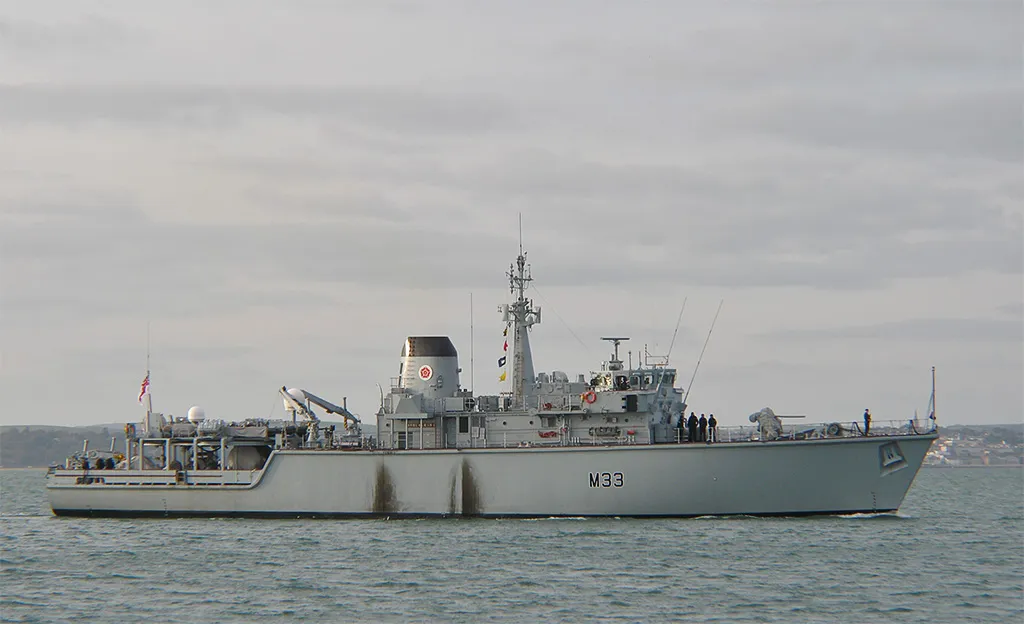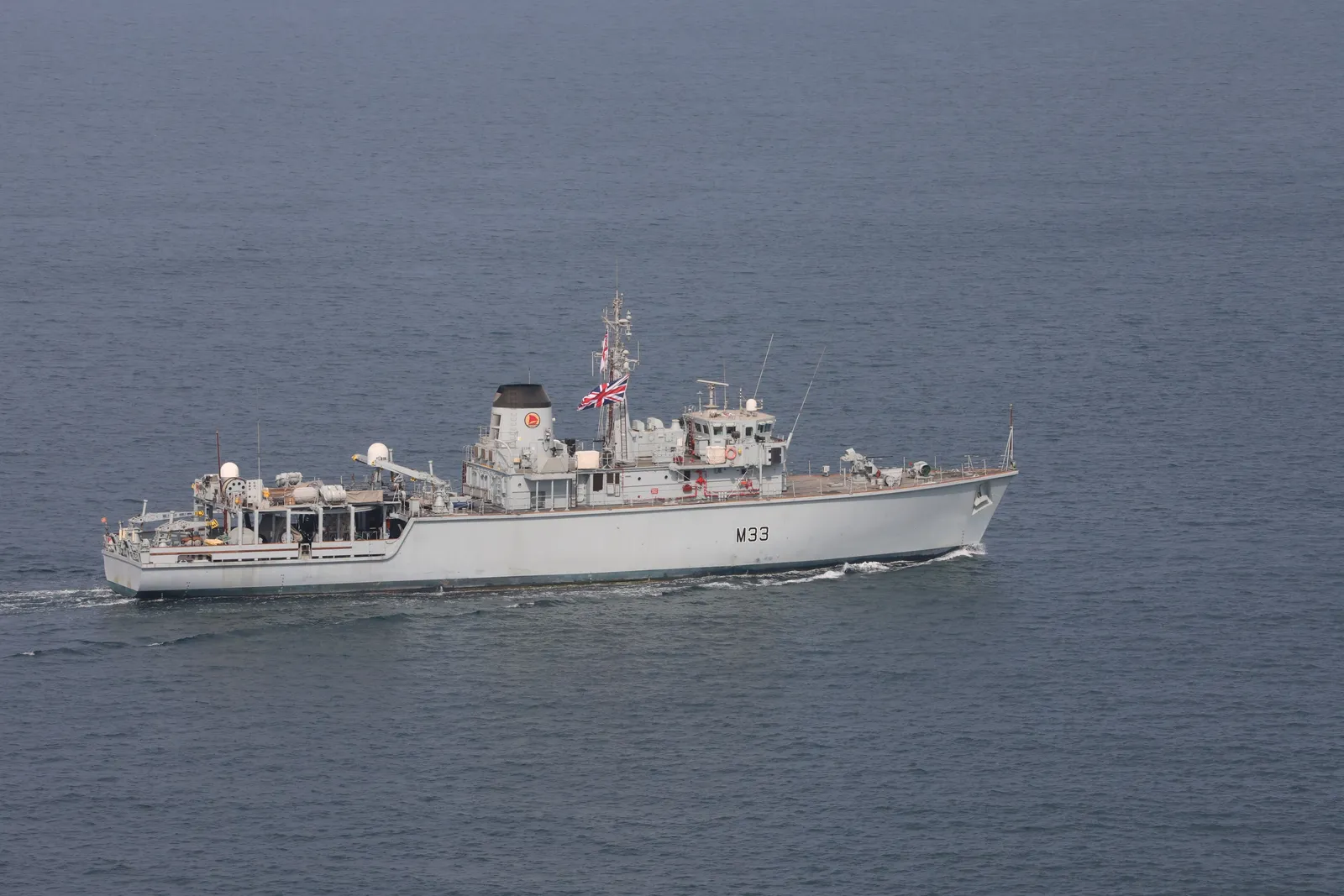
- Side
- Coalition forces

Brocklesby helped clear shipping routes from the Northern Gulf to Kuwaiti ports after the 1990 Gulf War.
Role detailsThe Hunt class is a British mine countermeasures vessel class built by Vosper Thornycroft and Yarrow Shipbuilders for low-signature minehunting, route clearance, and coastal patrol work. Royal Navy and Ministry of Defence sources document HMS Brocklesby clearing mined approaches in the Gulf, Iraq, and Libya, while the remaining Royal Navy ships use sonar, clearance divers, glass-reinforced plastic hulls, and SeaFox mine-disposal vehicles to find and neutralize mines.
Brocklesby helped clear shipping routes from the Northern Gulf to Kuwaiti ports after the 1990 Gulf War.
Role detailsRoyal Navy and VOA reporting identify Brocklesby as a coalition minehunter that cleared a mined channel into Umm Qasr for port access.
Role detailsGOV.UK says Brocklesby used sonar and the SeaFox mine disposal system to clear a buoyant mine near Misurata after pro-Gaddafi forces laid mines by the port.
Hunt-class combat use in this record centers on keeping maritime approaches open rather than striking land or sea targets. The cited cases involve HMS Brocklesby clearing or searching mined waters so coalition, humanitarian, and port traffic could move through threatened channels.
Royal Navy reporting records Brocklesby in postwar Gulf route-clearance work from the Northern Gulf toward Kuwaiti ports.
During the 2003 Iraq War, Brocklesby was identified in coalition mine-clearance work opening the mined channel into Umm Qasr.
In 2011, Ministry of Defence reporting said Brocklesby located and destroyed a buoyant mine near Misurata after mines were laid near the harbour entrance.
The Hunt class is designed around low-signature minehunting rather than direct gun combat. Royal Navy sources describe a glass-reinforced plastic hull, high-definition sonar, clearance divers, and the SeaFox mine disposal system as core parts of the class's mine-clearance method.
High-definition sonar searches the seabed for mines and lost explosives; Royal Navy material says the sonar can classify football-sized objects at up to 1,000 metres.
Clearance diving teams or the onboard SeaFox mine disposal system destroy identified mines after detection and classification.
The glass-reinforced plastic hull is intended to reduce vulnerability around mines while keeping the vessel suitable for close minehunting work.
The Royal Navy currently lists six Hunt class mine countermeasure vessels in service.
| Ship | Pennant | Note |
|---|---|---|
| HMS Ledbury | M30 | One of the six current Royal Navy Hunt class vessels. |
| HMS Cattistock | M31 | One of the six current Royal Navy Hunt class vessels. |
| HMS Brocklesby | M33 | Used in Gulf, Iraq, and Libya mine-clearance operations and listed by the Royal Navy as a current unit. |
| HMS Middleton | M34 | One of the six current Royal Navy Hunt class vessels. |
| HMS Chiddingfold | M37 | One of the six current Royal Navy Hunt class vessels. |
| HMS Hurworth | M39 | One of the six current Royal Navy Hunt class vessels. |
The current HMS Brocklesby was launched on 12 January 1982, beginning the modern Hunt-class line still in Royal Navy service.
Sources: HMS Brocklesby (M33) | Royal Navy
Royal Navy unit history says Brocklesby was accepted into service on 25 October 1982 and commissioned on 3 February 1983 at HMS Vernon.
Sources: HMS Brocklesby (M33) | Royal Navy
Royal Navy reporting says Brocklesby and sister ships helped clear shipping routes from the Northern Gulf to Kuwaiti ports after the 1990 Gulf War.
Sources: Navy News August 1992 Gulf mine clearance report
Royal Navy and VOA reporting place Brocklesby in the coalition mine-clearance work that opened a mined channel into Umm Qasr.
Sources: HMS Brocklesby (M33) | Royal Navy, Iraq's Umm Qasr Port Demining Process Well Under Way - VOA
GOV.UK says Brocklesby used sonar and SeaFox to locate and destroy a buoyant mine near Misurata after pro-Gaddafi forces laid mines close to the harbour entrance.
Sources: HMS Brocklesby returns from Libya mission - GOV.UK, HMS Brocklesby rewarded for part in Libya mission - GOV.UK
A UK Parliament written answer said current plans had Hunt-class mine countermeasures vessels leaving service between 2029 and 2031.
Sources: UK Parliament written answer on Hunt class out-of-service dates
The class has been kept relevant through machinery, radar, and mine-warfare updates while the Royal Navy moves toward autonomous mine-hunting. BAE Systems described a re-propulsion programme for eight Hunt-class vessels, GOV.UK placed the class inside the SharpEye navigation-radar rollout, and UK Parliament stated in 2021 that Hunt-class mine countermeasures vessels were then planned to leave service between 2029 and 2031.
BAE Systems' Hunt re-propulsion work covered engines, gearboxes, bow thrusters, propellers, and machinery-control systems to improve availability and reliability.
The MOD navigation-radar programme included Hunt and Sandown mine countermeasure vessels in the fleetwide SharpEye radar installation plan.
DE&S describes the Royal Navy transition from conventional ship-based mine clearance toward autonomous mine-hunting systems with uncrewed vessels, remote command centres, and host platforms.