Naval Systems

HMS Stirling Castle

Also known as
  • Specialist mine hunting ship
  • Mine Hunting Capability host platform
  • MHC host platform
  • MCM MAS mothership
  • HMS Stirling Castle M01
  • RFA Stirling Castle
  • MV Island Crown
  • Island Crown

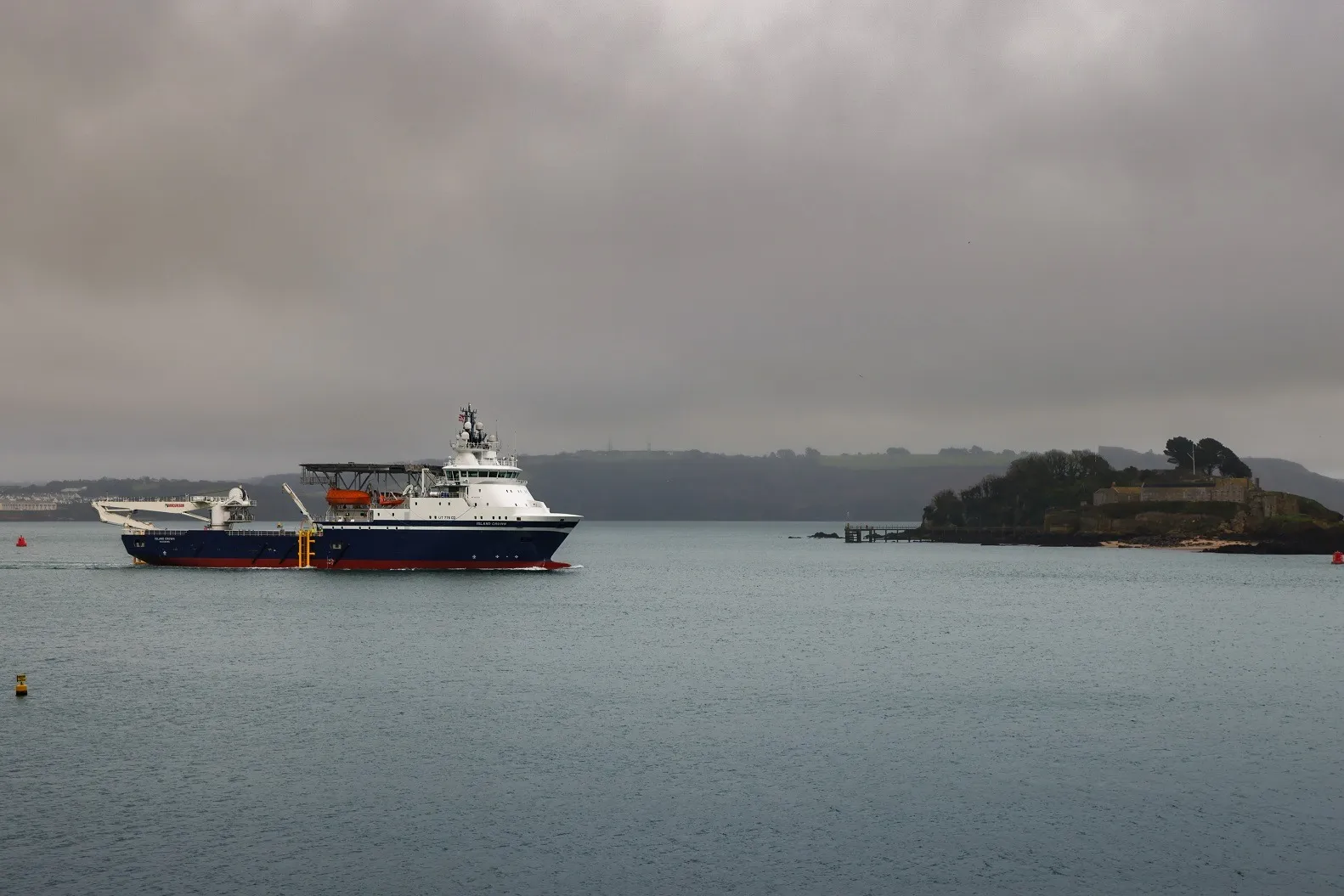
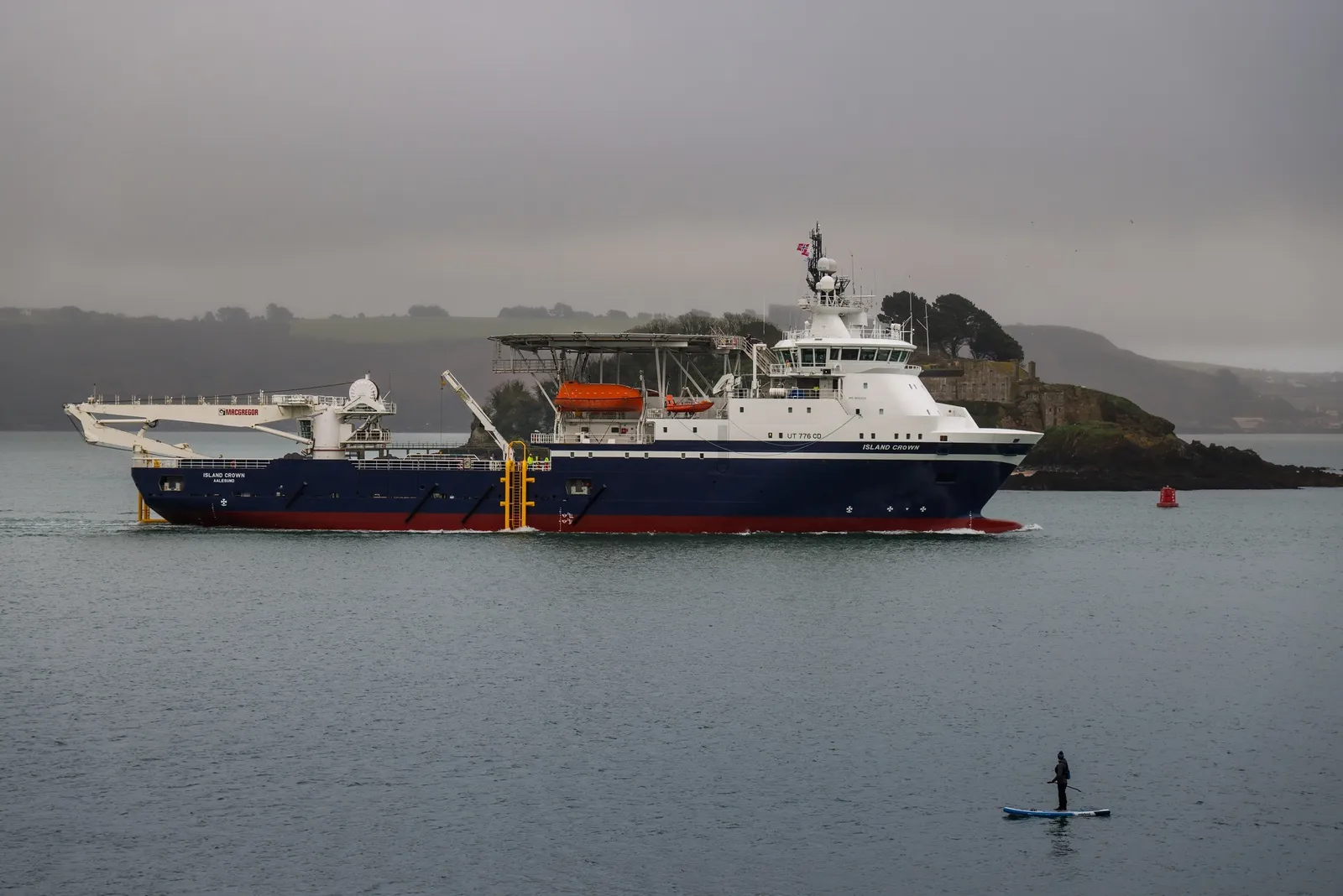
HMS Stirling Castle is the Royal Navy's specialist mine countermeasures mothership, converted from the former offshore support vessel Island Crown to host autonomous mine-hunting systems rather than conduct mine clearance with a traditional crewed minehunter. Built by Vard Brevik in Norway and based at Portsmouth, the ship stores, prepares, deploys, recovers, and transports uncrewed surface vessels, underwater vehicles, remote command equipment, and mission containers for the Royal Navy's Mine Hunting Capability programme.

Profile / Specs

Profile

Origin
Norway-built; United Kingdom mine-countermeasures conversion and service integration
Built by
Vard Brevik
Built in
Norway
Type
Mine countermeasures mothership
Service note
2013-present
Designer
Rolls-Royce
Designed
2010s
Produced
Delivered as Island Crown in 2013; acquired for UK mine-hunting service in 2023; redesignated HMS Stirling Castle in 2025
Number built
1 converted
Developed from
Island Crown platform supply vessel

Specifications

Length
96.8 m
Beam
20 m
Draught
6 m
Deadweight
3,110 t in VARD platform-supply-vessel specifications
Displacement
About 6,000 tonnes in Royal Navy and DE&S reporting
Crew
45 sailors and officers
Accommodation
100 persons
Pennant number
M01
Original vessel type
UT 776 CD platform supply vessel
Mission role
Store, prepare, deploy, recover, and transport autonomous mine-warfare boats and underwater systems
Supported systems
MMCM, WILTON, SWEEP, and SEACAT are listed by DE&S within the Mine Hunting Capability programme
Crane
100-tonne mission crane
Home port
HM Naval Base Portsmouth
Autonomous Mine-Hunting Role

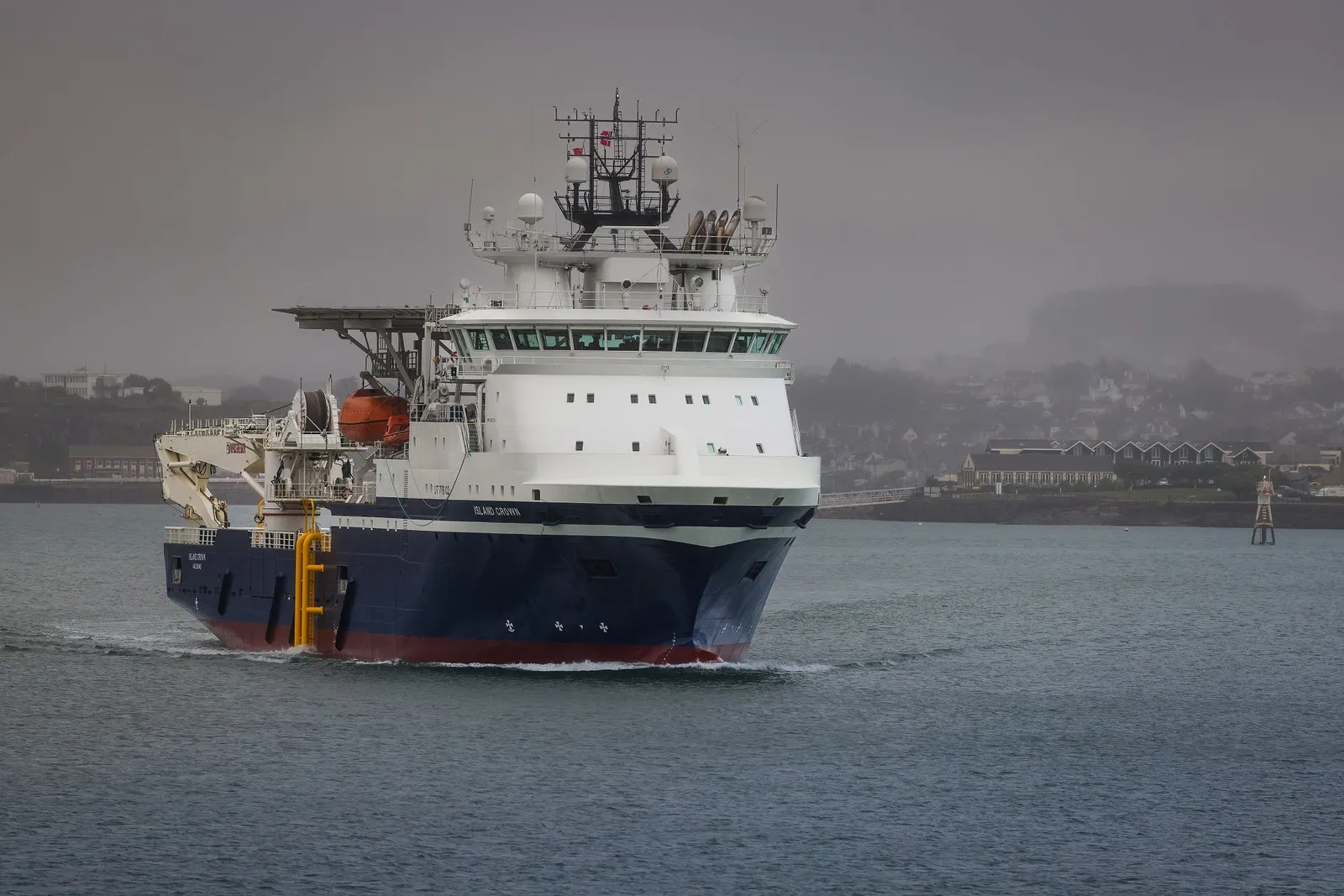
Stirling Castle is a support ship for off-board mine countermeasures rather than a classic minehunter with a permanently installed mine-hunting sonar suite. The public Royal Navy and DE&S descriptions place the ship in a host-platform role: it provides deck space, accommodation, command-space options, launch-and-recovery support, and transport capacity for autonomous surface and underwater systems.

Host-platform function

Stores, prepares, deploys, recovers, and transports autonomous mine-warfare boats, underwater systems, remote command equipment, and containers.

Program context

DE&S identifies Stirling Castle as the UK host platform for the Mine Hunting Capability programme, alongside Cardigan Bay as the Gulf host platform.

Evidence limit

The reviewed sources support trials, service entry, transport, and readiness tasks, but not a direct armed-conflict use row for the ship.
Carried Mine-Hunting Systems

Stirling Castle is a host platform for autonomous mine-countermeasures packages, with Royal Navy and DE&S sources describing the ship as a mothership for uncrewed surface vessels, underwater vehicles, remote command centres, and containerised support equipment.

Carried itemItem typeCarriage evidence
Thales MCM USV, Mine countermeasures uncrewed surface vessel, Naval SystemsThales MCM USVUncrewed mine-hunting surface vessel

Royal Navy reporting says the MMCM craft RNMB Ariadne was loaded onto HMS Stirling Castle for transport to Gibraltar, while DE&S identifies the Franco-British MMCM system as one of the autonomous mine-hunting systems supported by the Stirling Castle host-platform concept.

Sources: Royal Navy crewless mine-hunting system docks in support ship for the first time, Autonomous Mine-Hunting Systems | Defence Equipment & Support

Timeline

HMS Stirling Castle Key Events

  1. Island Crown delivered

    VARD records the ship as Island Crown, a platform supply vessel for Island Offshore delivered by Vard Brevik in March 2013.

    Sources: Island Crown | VARD

  2. Stirling Castle name announced

    The Royal Navy announced that the former MV Island Crown would be named RFA Stirling Castle and used as an offshore forward operating base for Mine Countermeasures Maritime Autonomous Systems, drones, and other crewless systems.

    Sources: New mine-hunting support ship named | Royal Navy

  3. Autonomous boat trials begin

    Royal Navy Motor Boats Apollo, Hydra, and Hazard joined RFA Stirling Castle at Portland for initial loading and host-platform trials with autonomous mine-hunting systems.

    Sources: Autonomous vessels join minehunting mothership for trials debut | Royal Navy

  4. Delivered by DE&S to the Royal Navy

    DE&S described the 6,000-tonne RFA Stirling Castle as delivered to the Royal Navy for the Mine Hunting Capability programme, with MMCM, SWEEP, and medium autonomous underwater vehicle technology planned for use onboard.

    Sources: Minehunting mothership delivered by DE&S to Royal Navy

  5. RFA service dedication

    DE&S reported the ship's dedication at Leith and said Stirling Castle could host remote command centres while storing, preparing, and deploying boats and uncrewed underwater vehicles for mine-warfare and hydrographic-survey tasks.

    Sources: Mine hunting mothership RFA Stirling Castle welcomed into Royal Navy

  6. Redesignated HMS Stirling Castle

    Royal Navy reporting said the specialist mine-hunting ship formally became HMS Stirling Castle, hoisted the White Ensign in Birkenhead, and moved into front-line Royal Navy warship service.

    Sources: Specialist mine hunting ship formally becomes Royal Navy warship | Royal Navy

  7. Unique delivery mission to Gibraltar

    The ship carried four specialist mine-hunting vessels, three RHIBs, and more than 20 containers to Gibraltar using its mission deck and 100-tonne crane.

    Sources: Royal Navy mine-hunting ship completes unique delivery mission | Royal Navy

  8. Commissioned into the Royal Navy fleet

    The Royal Navy commissioned HMS Stirling Castle at Grangemouth, described her as a floating home to autonomous technology for hunting mines, and said she was based at Portsmouth.

    Sources: Britain’s unique minehunting ship officially welcomed into the Royal Navy fleet | Royal Navy

Media
Related Weapon Systems
Hunt class, Mine countermeasures vessel class, Naval SystemsNaval SystemsHunt classMine countermeasures vessel classThe Hunt class is a British mine countermeasures vessel class built by Vosper Thornycroft and Yarrow Shipbuilders for low-signature minehunting, route clearance, and coastal patrol work. Royal Navy and Ministry of Defence sources document HMS Brocklesby clearing mined approaches in the Gulf, Iraq, and Libya, while the remaining Royal Navy ships use sonar, clearance divers, glass-reinforced plastic hulls, and SeaFox mine-disposal vehicles to find and neutralize mines.
Hunt class mine countermeasure vessel, Mine countermeasures vessel class, Naval SystemsNaval SystemsHunt class mine countermeasure vesselMine countermeasures vessel classThe Hunt class is a British mine countermeasures vessel class built primarily by Vosper Thornycroft, with some hulls built by Yarrow Shipbuilders, for low-signature mine-hunting and clearance work. Royal Navy and Ministry of Defence sources document HMS Brocklesby clearing a mined channel into Umm Qasr during the 2003 Iraq War and destroying a mine near Misurata during the 2011 Libya campaign with sonar and the SeaFox mine disposal system.
Sandown class, Single-role minehunter, Naval SystemsNaval SystemsSandown classSingle-role minehunterThe Sandown class is a British single-role minehunter family built by Vosper Thornycroft around a low-signature hull, Type 2093 sonar, remote mine-disposal vehicles, and light self-defense armament. Royal Navy and export ships have served in mine-countermeasures roles with the United Kingdom, Saudi Arabia, Estonia, Ukraine, and Romania; a 2025 House of Commons Library briefing described HMS Bangor as the last Sandown-class vessel in Royal Navy service. Direct conflict sourcing places HMS Sandown in NATO Adriatic ordnance clearance after Operation Allied Force and Sandown-class vessels in coalition route-clearance work around Umm Qasr during the 2003 Iraq War.
Thales MCM USV, Mine countermeasures uncrewed surface vessel, Naval SystemsNaval SystemsThales MCM USVMine countermeasures uncrewed surface vesselThales MCM USV is the 12 m uncrewed surface-vessel element of the Franco-British MMCM/SLAM-F mine-countermeasure system. The craft works from shore, a portable command center, or a mothership with payloads such as TSAM towed sonar, a remotely operated vehicle, and supporting command-and-control software, keeping operators outside the minefield while the system searches, classifies, and supports neutralisation of underwater threats. Public sources document prototype deliveries from 2021 and French and Royal Navy production deliveries from 2024 onward; this entry does not claim verified combat employment.
Project 1265 Yakhont / Sonya-class minesweeper, Coastal minesweeper / minehunter, Naval SystemsNaval SystemsProject 1265 Yakhont / Sonya-class minesweeperCoastal minesweeper / minehunterThe Project 1265 Yakhont, better known as the Sonya-class minesweeper, is a Soviet wooden-hulled coastal mine-countermeasure vessel family built for shallow-water sweeping and minehunting work. RussianShips.info traces the baseline and export lines through Avangard and Vladivostok shipyards, while USNI News identifies Ukraine's Sonya-class minehunter as one of the mine-warfare vessels lost during Russia's 2014 annexation of Crimea.
Tripartite class minehunter, Minehunter class, Naval SystemsNaval SystemsTripartite class minehunterMinehunter classThe Tripartite class is a Franco-Belgian-Dutch minehunter family built around low-magnetic composite hulls, precise minehunting propulsion, hull sonar, divers, and remote mine-disposal vehicles. The French Éridan, Dutch Alkmaar, and Belgian Flower/Aster branches gave NATO navies a common Cold War mine-countermeasures design, later exported or transferred to Pakistan, Indonesia, Latvia, Bulgaria, and Ukraine. French ships are documented clearing Iraqi mines off Kuwait in the 1990 Gulf War, while Belgian and Dutch Tripartite-family boats were transferred to Ukraine during the 2014 Russia-Ukraine War for maritime security and future Black Sea mine clearance.

Sources