Profile
- Origin
- France / United Kingdom
- Built by
- Thales
- Type
- Mine countermeasures uncrewed surface vessel
- Service note
- SLAM-F / MMCM program, 2021-present
- Designer
- Thales
- Designed
- 2015-present
- Produced
- 2024-present
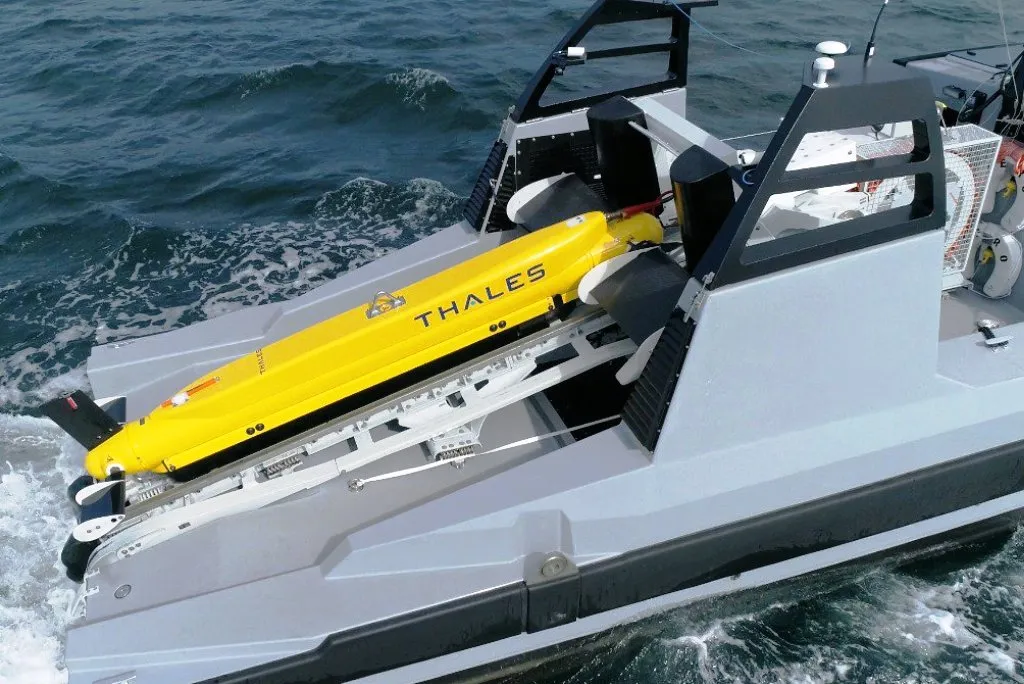
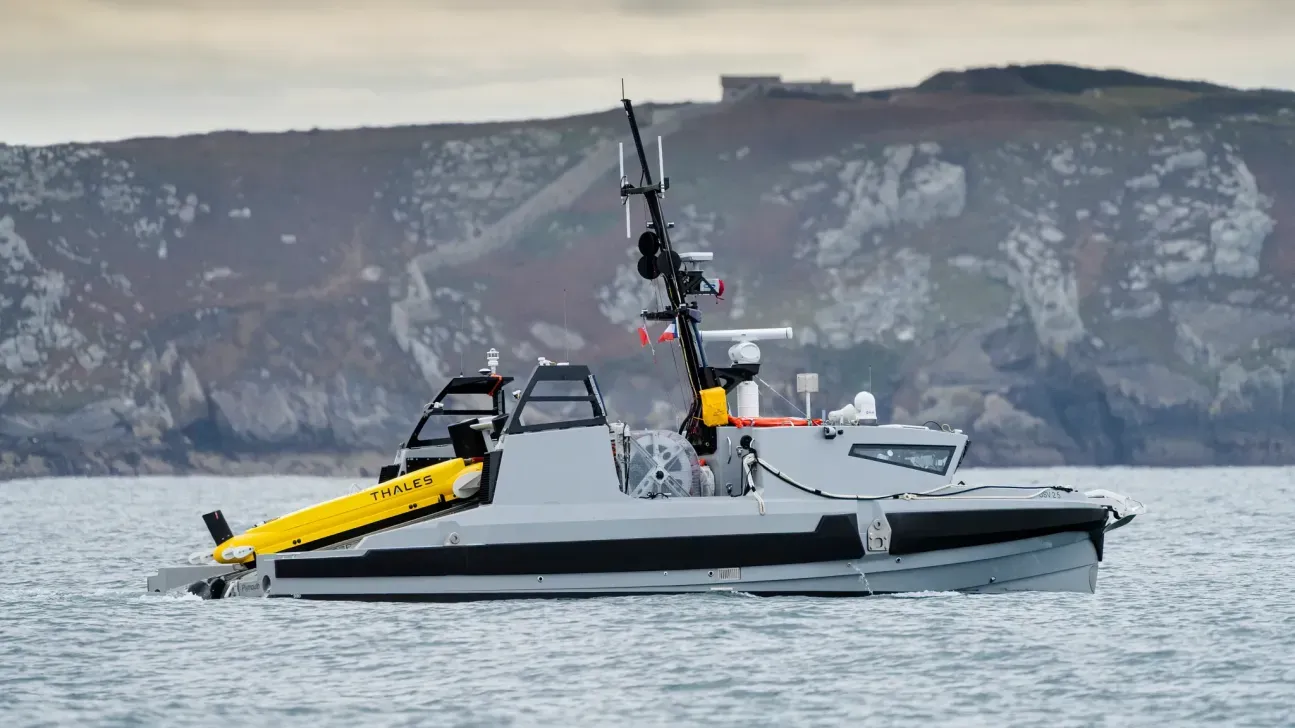
Thales MCM USV is the 12 m uncrewed surface-vessel element of the Franco-British MMCM/SLAM-F mine-countermeasure system. The craft works from shore, a portable command center, or a mothership with payloads such as TSAM towed sonar, a remotely operated vehicle, and supporting command-and-control software, keeping operators outside the minefield while the system searches, classifies, and supports neutralisation of underwater threats. Public sources document prototype deliveries from 2021 and French and Royal Navy production deliveries from 2024 onward; this entry does not claim verified combat employment.
The MMCM/SLAM-F craft is best understood as one surface node in a wider off-board mine-countermeasures architecture. OCCAR describes the program as a Franco-British effort to replace legacy mine-countermeasure methods with stand-off, remotely controlled systems that can work from shore facilities or motherships.
Lancaster House cooperation led to an OCCAR demonstration contract in 2015, prototype deliveries in 2021, and production deliveries to France and the United Kingdom from 2024 onward.
Public UK and OCCAR descriptions place the USV alongside TSAM sonar, a remotely operated vehicle, a portable operations centre, and secure command-and-control software.
Public reporting names French deliveries including Canopus and Rigel, and Royal Navy craft including Ariadne, Adventure, and the Apollo demonstrator.
Public records identify national MMCM/SLAM-F deliveries mainly by navy and boat name rather than by a separate export model designation.
| Variant | Configuration | Designation notes |
|---|---|---|
| French Navy SLAM-F surface drone | French production SLAM-F USV | DGA delivered the first French mine-warfare surface drone to the Marine nationale on 19 December 2024; OCCAR and naval reporting identify Canopus as the first French production system and Rigel as a later French USV handover. Sources: DGA first SLAM-F mine-warfare surface drone delivery, OCCAR Delivers First MMCM System to France, OCCAR Delivers a new Mine Warfare USV to France - Naval News |
| RNMB Ariadne | Royal Navy first MMCM primary system | Royal Navy reporting identifies Ariadne as the first 12 m MMCM USV delivered to the service, with TSAM sonar, payload, and remote-command elements for evaluation before operational use. Sources: New uncrewed boat to boost Royal Navy minehunting operations | Royal Navy |
| RNMB Adventure | Royal Navy second MMCM primary system | OCCAR identifies Adventure as the second UK MMCM primary system delivered in March 2026, following the first UK delivery in 2025. Sources: OCCAR Delivers Second MMCM System to the United Kingdom |
| RNMB Apollo | UK prototype and demonstrator | Royal Navy reporting names Apollo as a prototype MMCM vessel used in 2024 trials before Ariadne's production handover. Sources: New uncrewed boat to boost Royal Navy minehunting operations | Royal Navy |
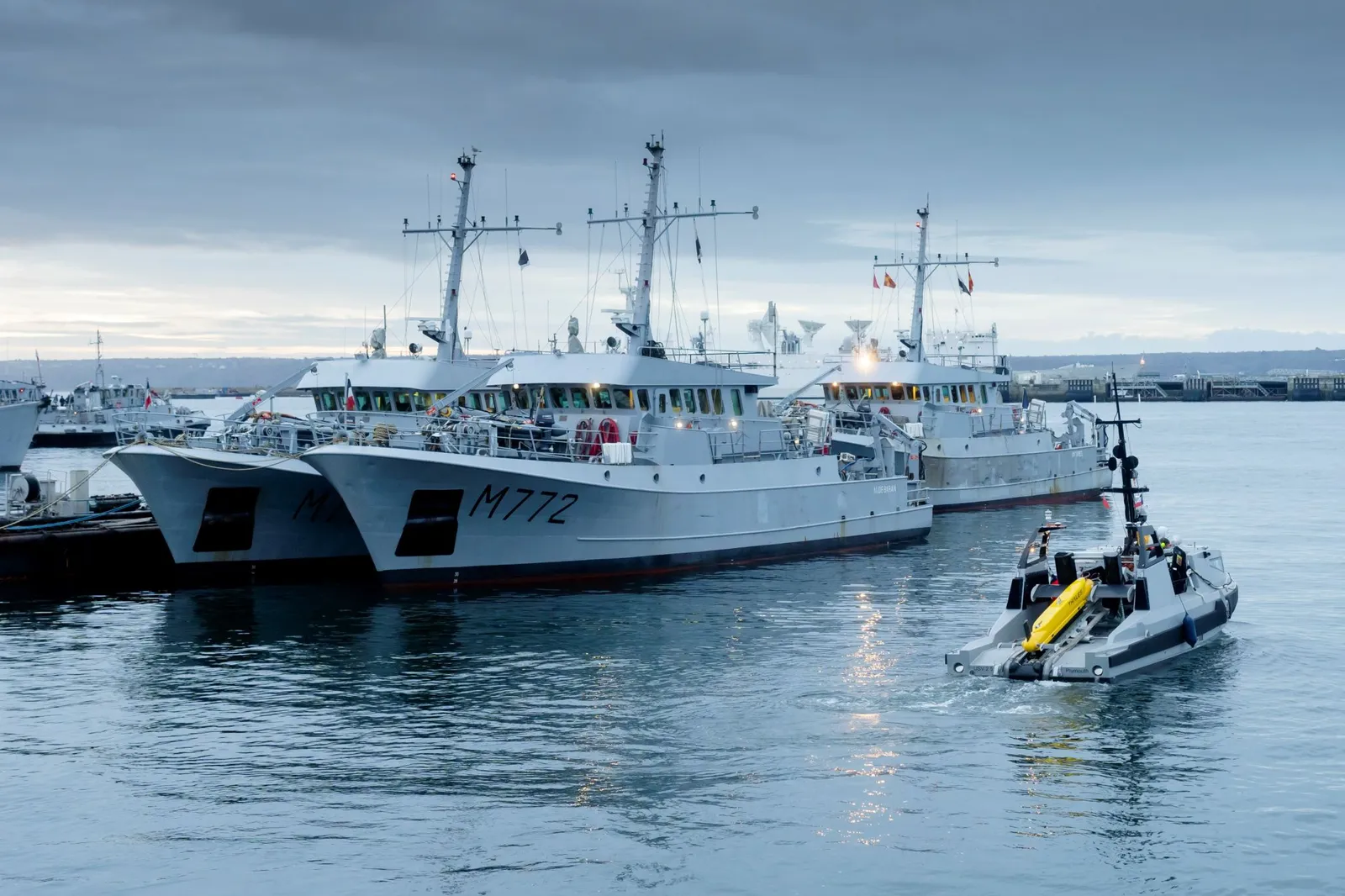
Royal Navy reporting shows the MMCM USV moving between shore trials, transport ships, and a mine-hunting mothership as the service prepares the system for operational use.
| Carrier | Carrier type | Carriage evidence |
|---|---|---|
 | Mine-hunting support ship | Ariadne was loaded onto HMS Stirling Castle for transportation to Gibraltar before docking with RFA Lyme Bay during Royal Navy trials ahead of a potential Strait of Hormuz mine-clearance mission; USNI News separately identified Ariadne as part of Lyme Bay's embarked MMCM package. Sources: Royal Navy crewless mine-hunting system docks in support ship for the first time ahead of potential Hormuz mission, U.K. Mine Countermeasures Mothership Leaves Gibraltar for Potential Strait of Hormuz Mission - USNI News |
OCCAR records the March 2015 award of the MMCM demonstration-phase contract after France and the United Kingdom initiated the bilateral mine-countermeasures program under the Lancaster House framework.
Sources: MMCM - Maritime Mine Counter Measures | OCCAR
OCCAR announced delivery of two MMCM unmanned-system prototypes to the United Kingdom and France, describing the system as a Thales-procured package of surface and underwater vehicles supervised from a Portable Operation Center.
Sources: OCCAR delivered two prototypes of the MMCM Unmanned System
OCCAR and DGA announced delivery of the first SLAM-F mine-warfare surface drone to the French Navy, with DGA listing the 12 m, 4 m USV and its towed sonar as the first step toward an operational surface-autonomous capability.
Sources: OCCAR Delivers First MMCM System to France, DGA first SLAM-F mine-warfare surface drone delivery
The Royal Navy said RNMB Ariadne, a 12 m uncrewed surface vessel with payload and remote-command elements, had been delivered for training and operational evaluation.
Sources: New uncrewed boat to boost Royal Navy minehunting operations | Royal Navy
Calibre Defence reported that Thales delivered an MMCM USV to the French Navy, following the first French delivery in December 2024 and the earlier Royal Navy handover in March 2025.
Sources: Thales delivers MMCM USV to French Navy - Calibre Defence
OCCAR announced delivery of Adventure, the second MMCM primary system for the United Kingdom and Royal Navy, following the first UK delivery in 2025.
Sources: OCCAR Delivers Second MMCM System to the United Kingdom
Royal Navy and USNI reporting described Ariadne docking with RFA Lyme Bay after Portland trials and transport by HMS Stirling Castle, a support-ship integration milestone ahead of a possible Strait of Hormuz mission.
Sources: Royal Navy crewless mine-hunting system docks in support ship for the first time ahead of potential Hormuz mission, U.K. Mine Countermeasures Mothership Leaves Gibraltar for Potential Strait of Hormuz Mission - USNI News