Naval Systems

Inspector Mk2 Mine Countermeasures USV

Also known as
  • Inspector Mk 2
  • Inspector Mk2
  • USV INSPECTOR MK2
  • Inspector USV Mk2
  • ECA Inspector Mk2
  • ECA Group Inspector Mk2

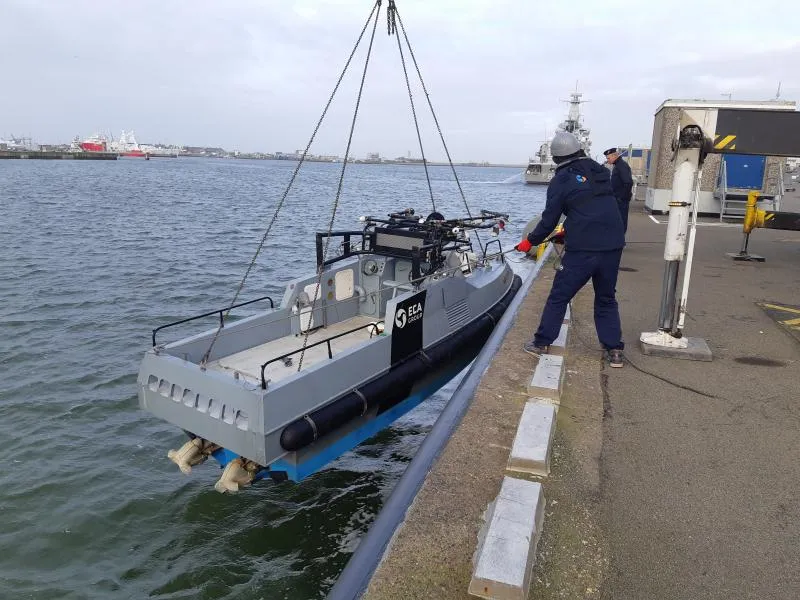
Inspector Mk2 is Exail's 9 m mine-countermeasures USV, a remotely or autonomously operated surface craft for sonar survey, mine identification, and intervention payloads. Documented service context centers on Russian Project 12700 and Project 22350 integration trials and Royal Netherlands Navy rMCM operational testing, with no verified combat employment claimed here.

Profile / Specs

Profile

Origin
France
Built by
Exail
Type
Mine countermeasures unmanned surface vehicle
Service note
2015-present
Produced
2015-present

Specifications

Length
9 m
Beam
2.95 m
Draft
0.5 m
Weight
4,700 kg
Endurance
More than 12 hours at 10 knots
Speed
More than 35 knots
Payload
1,000 kg
Mission fit
Interferometric side scan sonar, towed side scan sonar, and launch and recovery system
Payload integration
Inspector-family USVs are marketed for AUVs, ROVs, mine-identification and disposal systems, minesweeping devices, and synthetic aperture sonar payloads
Control link
Mk2 wireless-link coverage describes UHF to SHF radio options for line-of-sight and non-line-of-sight control and mission data links
Variants

Exail now presents the Inspector line as a family of unmanned surface vehicles for naval and mine-countermeasures work; the Mk2 record sits closest to the smaller 9 m Inspector 90 class, while Inspector 125 is the larger current family model.

VariantConfigurationDesignation notes
Inspector 90Current 9 m-class Inspector family USV

Exail describes Inspector 90 as an unmanned surface vehicle for naval operations, surveillance, mine countermeasures, and autonomous surface operations.

Sources: Inspector 90 - Unmanned Surface Vehicle | Exail

Inspector 125Larger current Inspector family USV

Exail presents Inspector 125 as a current Inspector-family USV for maritime operations, naval missions, autonomous navigation, and payload-based offshore applications.

Sources: Inspector 125 - Unmanned Surface Vehicle | Exail

Carrier and Test Vessels

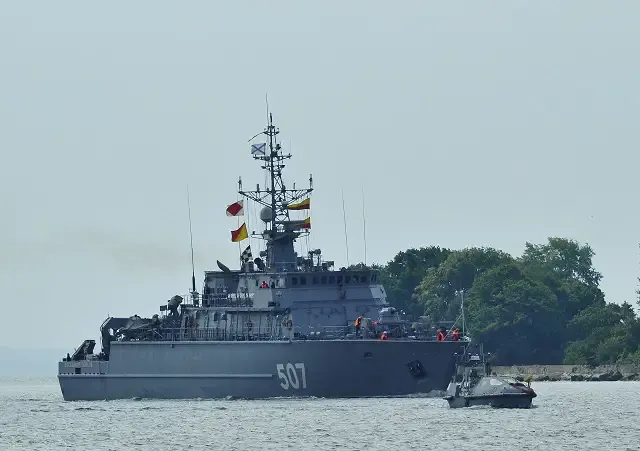
Inspector Mk2 is documented aboard Russian mine-countermeasure and test platforms, with Project 12700 integration separate from later Project 22350 drone-mothership trials.

CarrierCarrier typeCarriage evidence
Alexandrit class / Project 12700, Coastal mine countermeasures vessel, Naval SystemsAlexandrit class / Project 12700Coastal mine countermeasures vessel

Army Recognition says the first Project 12700 MCM vessel Alexander Obukhov sailed during sea trials with an Inspector Mk 2, and that ECA Group delivered a second USV inspection system to Russia for Project 12700.

Sources: ECA Group Delivers Second USV Inspection System to Russia for Project 12700 MCM Vessel

Project 22350 Admiral Gorshkov-class frigate, Guided-missile frigate, Naval SystemsProject 22350 Admiral Gorshkov-class frigateFrigate test platform

Naval News reported that Admiral Kasatonov, a Project 22350 frigate, was photographed in June 2019 with a Diamand mine-warfare container and an Inspector Mk2 USV on the helipad during Russian Navy testing.

Sources: Russian Navy Testing Project 22350 Frigate as Drone Mother Ship for Mine Warfare

Mine-Countermeasures Payload Context

Inspector Mk2 functions as the surface craft in a modular stand-off mine-countermeasures package rather than as a weapon by itself. The USV is tied to sonar search, launch-and-recovery, and expendable or reusable underwater payloads.

Payload or moduleDocumented roleSystem context
Side-scan and towed sonarMine detection and surveyThe Mk2 technical package lists interferometric and towed side-scan sonar fits, while Exail's current family page describes conventional SAS and T18-M towed-sonar integration.
A18-M AUV and launch-and-recovery gearStand-off survey payloadExail's family page describes launch-and-recovery systems for A18-M class AUVs, and Naval News identified A18-M among the first Dutch rMCM tools delivered for evaluation.
SEASCAN and K-STER class systemsMine identification and disposalNaval News reported SEASCAN identification ROVs and K-STER expendable mine-disposal vehicles in the Dutch package delivered with the Inspector Mk2.
Timeline

Inspector Mk2 Mine Countermeasures USV Key Events

  1. Wireless-link upgrade publicized

    Ocean Robotics Planet reported that ECA Group had upgraded the Inspector Mk2 communications architecture with UHF, VHF, Wi-Fi, 4G, and SHF link options.

    Sources: ECA Group's USV Inspector Mk2 Goes Wireless

  2. Project 22350 test role reported

    Naval News reported Russian Navy testing that placed an Inspector Mk2 and a Diamand mine-warfare container aboard the Project 22350 frigate Admiral Kasatonov.

    Sources: Russian Navy Testing Project 22350 Frigate as Drone Mother Ship for Mine Warfare

  3. Dutch rMCM test package delivered

    Naval News reported ECA Group's delivery of a USV Inspector Mk2 and mine-countermeasure tools to the Royal Netherlands Navy for operational test and evaluation.

    Sources: ECA Group delivers first MCM tools to Royal Netherlands Navy - Naval News

Media
Related Weapon Systems
Thales MCM USV, Mine countermeasures uncrewed surface vessel, Naval SystemsNaval SystemsThales MCM USVMine countermeasures uncrewed surface vesselThales MCM USV is the 12 m uncrewed surface-vessel element of the Franco-British MMCM/SLAM-F mine-countermeasure system. The craft works from shore, a portable command center, or a mothership with payloads such as TSAM towed sonar, a remotely operated vehicle, and supporting command-and-control software, keeping operators outside the minefield while the system searches, classifies, and supports neutralisation of underwater threats. Public sources document prototype deliveries from 2021 and French and Royal Navy production deliveries from 2024 onward; this entry does not claim verified combat employment.
Alexandrit class / Project 12700, Coastal mine countermeasures vessel, Naval SystemsNaval SystemsAlexandrit class / Project 12700Coastal mine countermeasures vesselThe Alexandrit class, Russian Project 12700, is a Russian mine-countermeasures vessel class designed by Almaz and built by Sredne-Nevsky Shipyard for the Russian Navy. The class combines a monolithic fiberglass vacuum-infusion hull with trawls and unmanned mine-hunting vehicles, and it entered the Russia-Ukraine war record when Ukrainian intelligence said it disabled the Baltic Fleet lead ship Aleksandr Obukhov at Baltiysk in October 2024.
Livadiya-ME mine-hunting sonar, Shipborne mine-hunting sonar, Naval SystemsNaval SystemsLivadiya-ME mine-hunting sonarShipborne mine-hunting sonarLivadiya-ME is a Russian shipborne mine-hunting sonar system for detecting, classifying, and cueing action against moored, bottom, and near-bottom mines. Public product-reference material describes low- and high-frequency antenna elements, automated coordinate measurement, mine-countermeasures control-system cueing, and an antenna package carried by a remotely operated underwater vehicle. Open reporting ties the sonar to the Project 12700/12701 Alexandrit mine-countermeasures family, while Weapons.rf identifies Aquamarin as developer and Taganrog Plant Priboy as producer.
Project 22350 Admiral Gorshkov-class frigate, Guided-missile frigate, Naval SystemsNaval SystemsProject 22350 Admiral Gorshkov-class frigateGuided-missile frigateThe Project 22350 Admiral Gorshkov-class frigate is a Russian multirole guided-missile frigate family designed by Severnoye Design Bureau and built by Severnaya Verf for escort, air defense, anti-submarine warfare, and long-range strike. Public sources describe it as Russia's post-Soviet ocean-going surface combatant class built around UKSK vertical launch cells for Kalibr, Oniks, and Tsirkon missiles, with later hulls receiving expanded launcher fits.
Sandown class, Single-role minehunter, Naval SystemsNaval SystemsSandown classSingle-role minehunterThe Sandown class is a British single-role minehunter family built by Vosper Thornycroft around a low-signature hull, Type 2093 sonar, remote mine-disposal vehicles, and light self-defense armament. Royal Navy and export ships have served in mine-countermeasures roles with the United Kingdom, Saudi Arabia, Estonia, Ukraine, and Romania; a 2025 House of Commons Library briefing described HMS Bangor as the last Sandown-class vessel in Royal Navy service. Direct conflict sourcing places HMS Sandown in NATO Adriatic ordnance clearance after Operation Allied Force and Sandown-class vessels in coalition route-clearance work around Umm Qasr during the 2003 Iraq War.

Sources