Profile
- Origin
- France
- Built by
- Exail
- Type
- Self-propelled mine-disposal remotely operated vehicle
- Service note
- Cold War mine-countermeasure service and later
- Designer
- ECA Group
- Designed
- 1970
- Produced
- 1970s-2000s
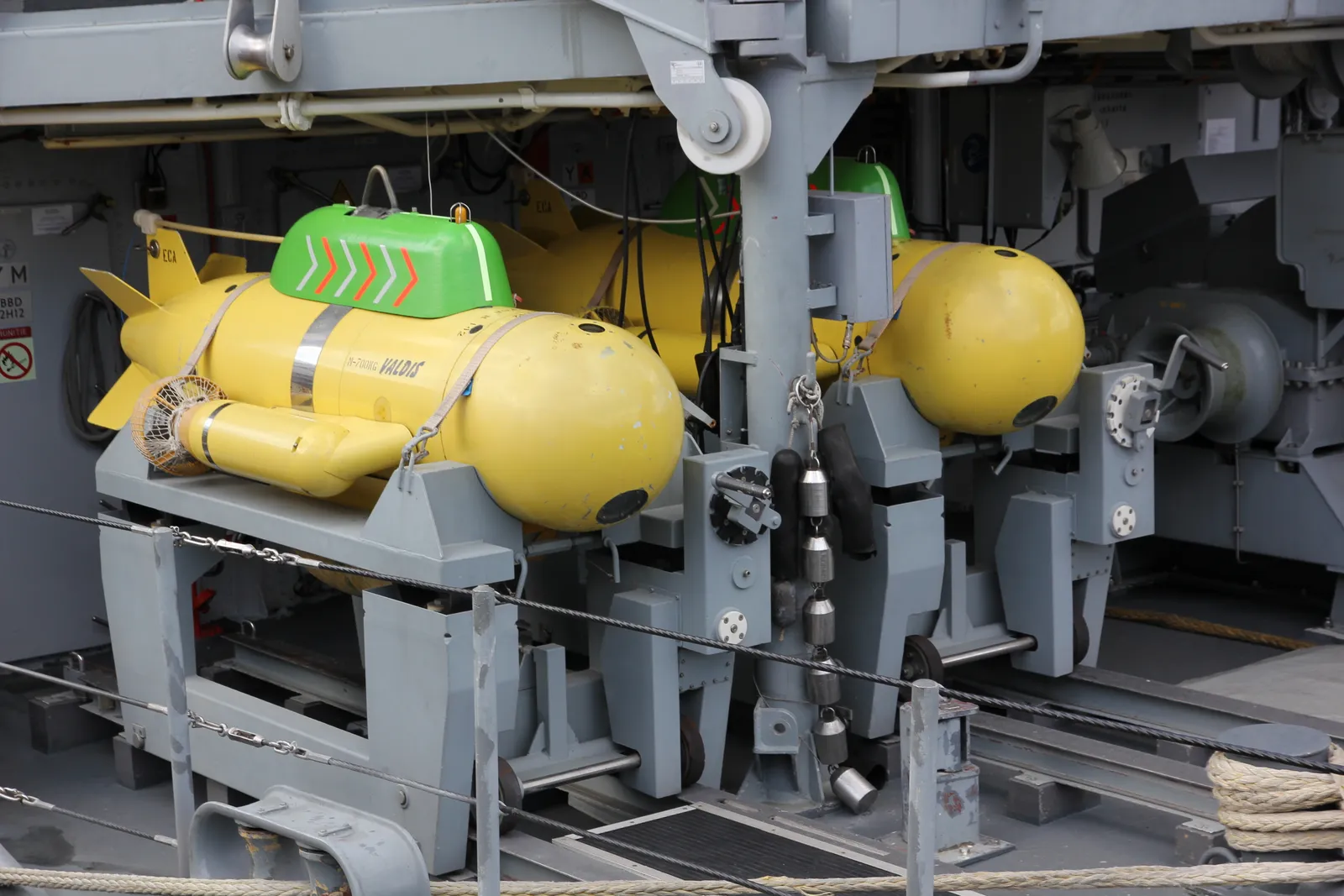
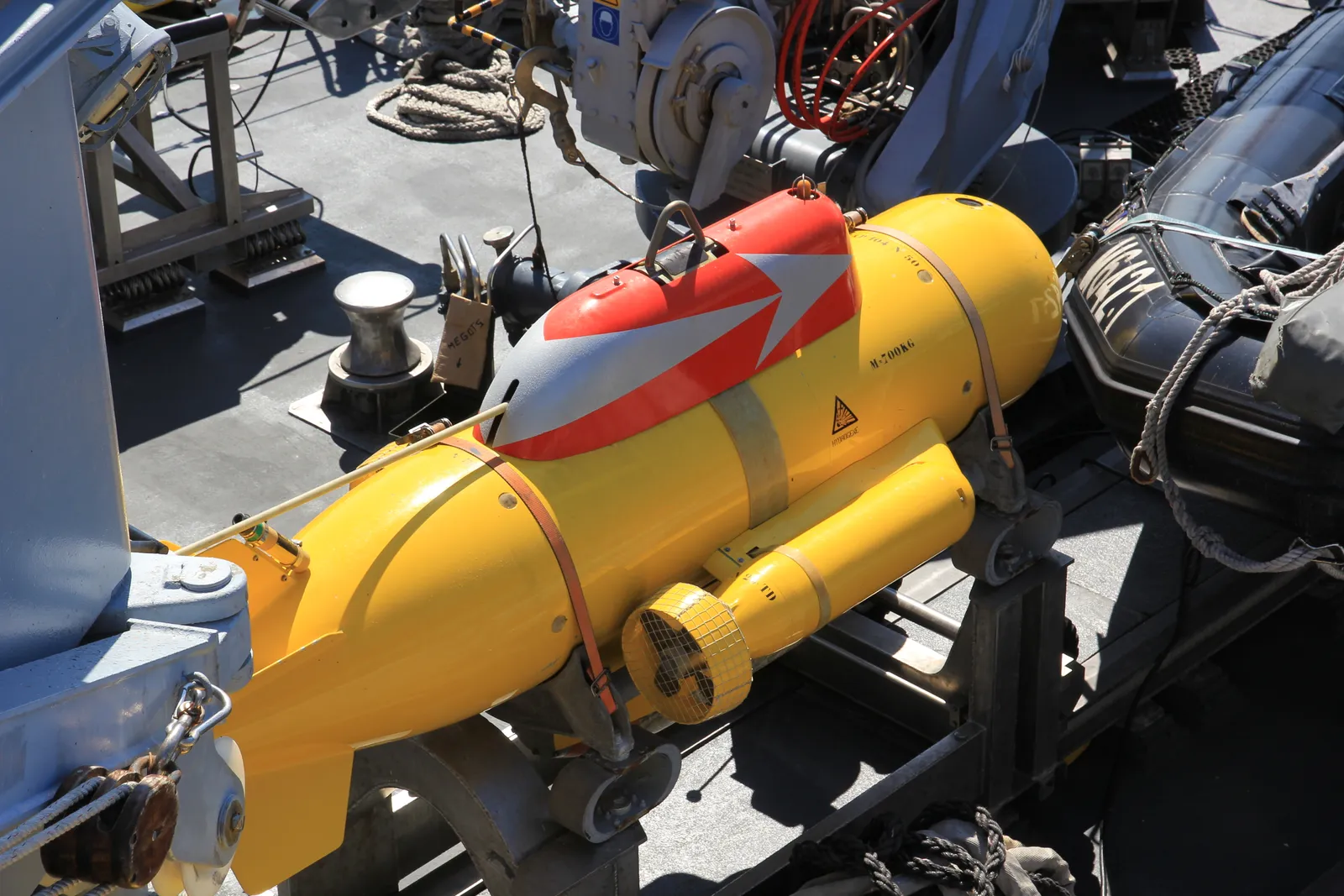
The PAP 104 is a French ECA/Exail self-propelled mine-disposal ROV from the PAP, or Poisson Auto Propulse, family. Mine-countermeasure ships used the cable-linked vehicle to inspect suspect contacts, place an explosive charge near a mine, and withdraw before detonation, making this page a relationship-only support record for shipboard mine-warfare systems rather than a standalone conflict-use entry.
PAP 104 belongs to the older reusable mine-disposal ROV pattern. Exail's white paper describes a shipboard operator guiding the vehicle by camera and cable link, placing a charge near the mine, and recovering the vehicle before the charge is detonated from a safe distance.
A thin cable unwound from the vehicle carried control and video signals, while onboard battery power avoided a heavy power umbilical.
The vehicle used camera guidance, low magnetic and acoustic signature, and a guide rope to work near suspect bottom or moored mines.
PAP placed a single explosive charge, withdrew for recovery and reload, and could use explosive cutters against moored-mine wires.
Exail presents expendable minekillers such as K-Ster as a later answer to the older PAP method's recovery and single-charge limits.
PAP sources use family and mark names together. The catalog page uses PAP 104 as the public identity while noting Mark 3 and Mark 5 fits where carrier sources identify them.
| Variant | Configuration | Designation notes |
|---|---|---|
| PAP Mk 3 | Earlier ship-carried mine-disposal ROV | Naval News describes Hunt-class vessels as originally fitted with two ECA Group PAP 104 Mk3 vehicles. Sources: British Shipyard to Regenerate ex-Royal Navy MCM Vessel for Lithuania |
| PAP Mk 5 | PAP-104 mine-disposal ROV | Forecast International documents Sandown-class minehunters with two PAP 104 Mk 5 vehicles, and Deagel identifies PAP Mark 5 as PAP-104. Sources: Sandown Class - Archived 2/2003, PAP - Deagel |
PAP 104 was ship-carried mine-disposal equipment used from specialist mine-countermeasure vessels rather than an independently deployed weapon.
| Carrier | Carrier type | Carriage evidence |
|---|---|---|
 | Tripartite minehunter | French CMT/Tripartite minehunters are documented with two PAP 104 self-propelled submersibles for mine destruction. Sources: Chasseurs de mines tripartite - French Ministry of Armed Forces, CHASSEURS DE MINES TRIPARTITES CMT |
 | Single-role minehunter | Forecast International documents the Sandown class with two PAP 104 Mk 5 remote mine-disposal vehicles. Sources: Sandown Class - Archived 2/2003 |
 | Mine countermeasures vessel | Naval News describes Hunt-class vessels as originally equipped with two ECA Group PAP 104 Mk3 remotely controlled mine-disposal vehicles; later service fits may differ. Sources: British Shipyard to Regenerate ex-Royal Navy MCM Vessel for Lithuania |
PAP 104 should not inherit conflicts from the minehunters that carried it. The source base here supports equipment relationships: French CMT/Tripartite minehunters carried two PAP 104 vehicles, Forecast International documents Sandown-class PAP 104 Mk 5 carriage, and Hunt-class evidence is historical because later operator fits may use SeaFox or K-Ster instead.
Exail Technologies history identifies the original PAP as a 1970 ECA mine-disposal submarine drone for the French Navy.
Sources: Exail Technologies History
Exail Technologies says PAP achieved its first commercial success with Belgian and Dutch navies in 1974.
Sources: Exail Technologies History
Naval Today reported that ECA delivered the first PAP mine-disposal vehicles to the French Navy in 1977.
Sources: ECA Group Secures French Navy PAP Demining ROV Contract
ECA received a five-year French Ministry of Armed Forces contract for PAP ROV consumables, with the older vehicles expected to remain active until replacement by later mine-countermeasure systems.
Sources: ECA Group Secures French Navy PAP Demining ROV Contract