

HMS Brocklesby was documented clearing a mined channel into Umm Qasr for coalition port access and humanitarian shipping during the 2003 Iraq War.
Role detailsNaval Systems
Hunt class mine countermeasure vessel
Also known as
- Hunt class
- Hunt-class minehunter
- Hunt-class mine countermeasures vessel
- Hunt class minehunter
The Hunt class is a British mine countermeasures vessel class built primarily by Vosper Thornycroft, with some hulls built by Yarrow Shipbuilders, for low-signature mine-hunting and clearance work. Royal Navy and Ministry of Defence sources document HMS Brocklesby clearing a mined channel into Umm Qasr during the 2003 Iraq War and destroying a mine near Misurata during the 2011 Libya campaign with sonar and the SeaFox mine disposal system.
Role in Conflicts

HMS Brocklesby was retasked to Operation Unified Protector and Operation Ellamy, then used sonar and SeaFox to clear mines laid near Misurata so aid ships could reach the port.
Mine-Clearance Service Context
Hunt-class vessels combine a low-signature glass-reinforced-plastic hull with minehunting sonar, clearance divers, and ship-launched mine-disposal systems. The Royal Navy describes the active Hunt-class ships as using high-definition sonar to find mines and lost explosives before divers or the onboard SeaFox system destroy them.
| Context | Documented role | Why it matters |
|---|---|---|
| Umm Qasr, 2003 | HMS Brocklesby cleared a mined approach channel into the Iraqi port. | The work helped reopen sea access for coalition control and humanitarian relief shipping. |
| Misurata, 2011 | HMS Brocklesby used sonar and SeaFox to locate and destroy a mine near the harbour entrance. | The clearance reduced the threat to aid ships and evacuation traffic during the Libya campaign. |
| Fleet role | Royal Navy Hunt-class ships remain configured for seabed search, mine neutralization, and secondary patrol tasks. | The class is best understood as a mine-warfare platform rather than a gun-armed patrol vessel. |
Profile / Specs
Profile
- Origin
- United Kingdom
- Type
- Mine countermeasures vessel class
- Service note
- 1978-present
- Produced
- 1978-1989
- Number built
- 13
Specifications
- Displacement
- 750 tonnes
- Length
- 60 metres
- Beam
- 10.5 metres
- Draught
- 3.4 metres
- Speed
- 15 knots
- Complement
- 45
- Sonar
- Type 2193 broad-band high-definition minehunting sonar
- Countermeasures
- SeaFox mine disposal system
Timeline
Hunt class mine countermeasure vessel Key Events
First Hunt-class ship launched
GlobalSecurity's class list records Brecon as the first ship launched in the Hunt class build run.
Sources: Hunt Class unit list - GlobalSecurity
Class build run closes
GlobalSecurity records Quorn as the final ship in the Hunt class run, with most hulls built by Vosper Thornycroft and two by Yarrow Shipbuilders.
Sources: Hunt Class unit list - GlobalSecurity
Brocklesby clears Umm Qasr channel
Royal Navy and contemporary reporting place HMS Brocklesby in mine-clearance work at Umm Qasr, where coalition forces needed the waterway opened for port access and relief shipping.
Sources: HMS Brocklesby (M33), Iraq's Umm Qasr Port Demining Process Well Under Way - VOA
Misurata mine-clearance mission
The Ministry of Defence said HMS Brocklesby began clearing mines at Misurata after NATO forces observed pro-Gaddafi forces laying explosive devices near the port.
Sources: HMS Brocklesby returns from Libya mission - GOV.UK
Brocklesby recognized for Libya mine clearance
The UK Ministry of Defence said HMS Brocklesby had cleared mines off Libya and was named Britain's best minehunter for that work.
Sources: HMS Brocklesby rewarded for part in Libya mission - GOV.UK
Media
Hunt class mine countermeasure vessel Videos
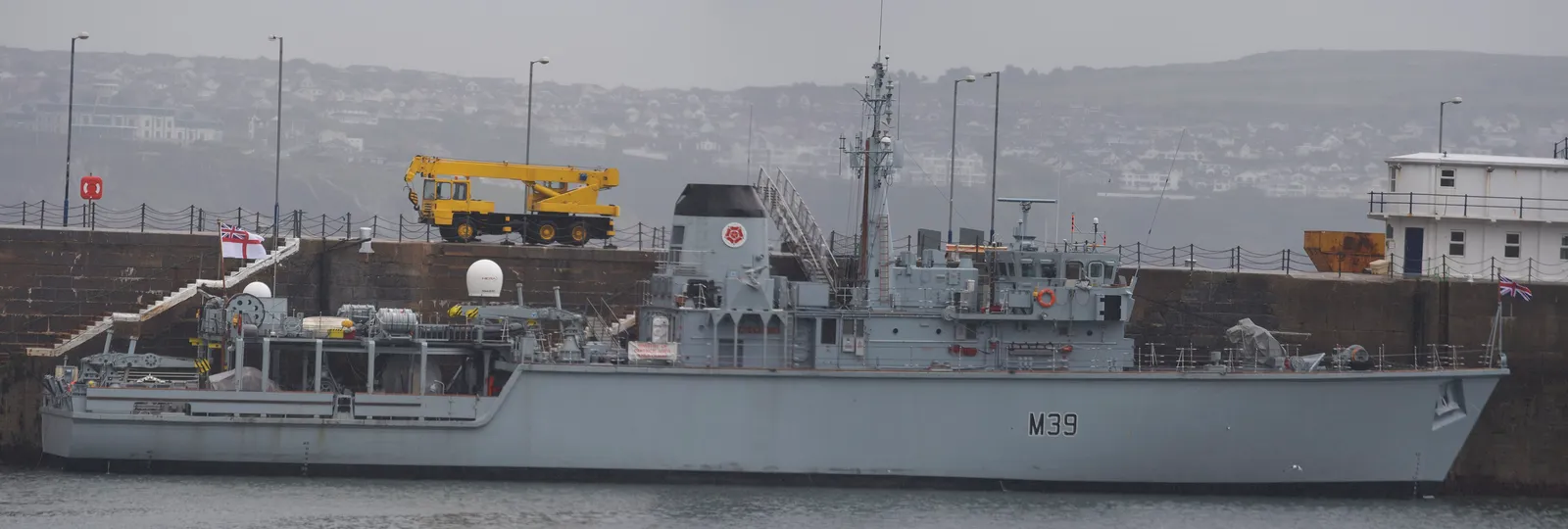
Hunt class mine countermeasure vessel Images

Related Weapon Systems


Sources
Royal Navy Hunt class overviewPublisher: Royal Navy | Note: Supports the Hunt class role as a mine countermeasures vessel family and the use of high-definition sonar, clearance divers, and the SeaFox mine disposal system. | Accessed: 2026-07-01HMS Brocklesby (M33)Publisher: Royal Navy | Note: Supports Brocklesby's mine counter-measures role, glass-reinforced plastic hull, SeaFox UUV fit, offshore patrol secondary role, and 2003 Iraq War channel-clearance service at Umm Qasr. | Accessed: 2026-07-01Hunt Class Mine Countermeasures Vessels - GlobalSecurityPublisher: GlobalSecurity.org | Note: Supports the class specifications including displacement, length, beam, draught, speed, complement, sonar, countermeasures, and propulsion. | Accessed: 2026-07-01Hunt Class unit list - GlobalSecurityPublisher: GlobalSecurity.org | Note: Supports the class build run, including the Vosper Thornycroft and Yarrow Shipbuilders production split and the late-1970s to 1989 commission timeline. | Accessed: 2026-07-01Iraq's Umm Qasr Port Demining Process Well Under Way - VOAPublisher: Voice of America | Note: Supports 2003 Iraq War direct conflict use by identifying Brocklesby as one of the ships clearing a channel at Umm Qasr during coalition mine-clearance work. | Accessed: 2026-07-01HMS Brocklesby returns from Libya mission - GOV.UKPublisher: Ministry of Defence | Note: Supports 2011 First Libyan Civil War direct conflict use by documenting HMS Brocklesby's retasking to Libya operations and mine clearance at Misurata with sonar and SeaFox. | Accessed: 2026-07-01HMS Brocklesby rewarded for part in Libya mission - GOV.UKPublisher: Ministry of Defence | Note: Supports 2011 First Libyan Civil War direct conflict use by documenting Brocklesby's Libya mine-clearance award, mine destruction near Misurata, and live mine-clearance work near enemy artillery and rockets. | Accessed: 2026-07-01Wikimedia Commons: HMS Brocklesby deployed on Op KIPION MOD 45167666Publisher: Wikimedia Commons | Note: Supports image provenance and licensing context for the primary image. | Accessed: 2026-07-01Wikimedia Commons: HMS Ledbury underway in the Arabian GulfPublisher: Wikimedia Commons | Note: Supports image provenance and licensing context for a gallery image. | Accessed: 2026-07-01Wikimedia Commons: HMS Hurworth M39Publisher: Wikimedia Commons | Note: Supports image provenance and licensing context for a second gallery image. | Accessed: 2026-07-01