- Side
- NATO

HMS Sandown served with NATO mine-countermeasures forces in Operation Allied Harvest, clearing Adriatic ordnance jettisoned during Operation Allied Force.
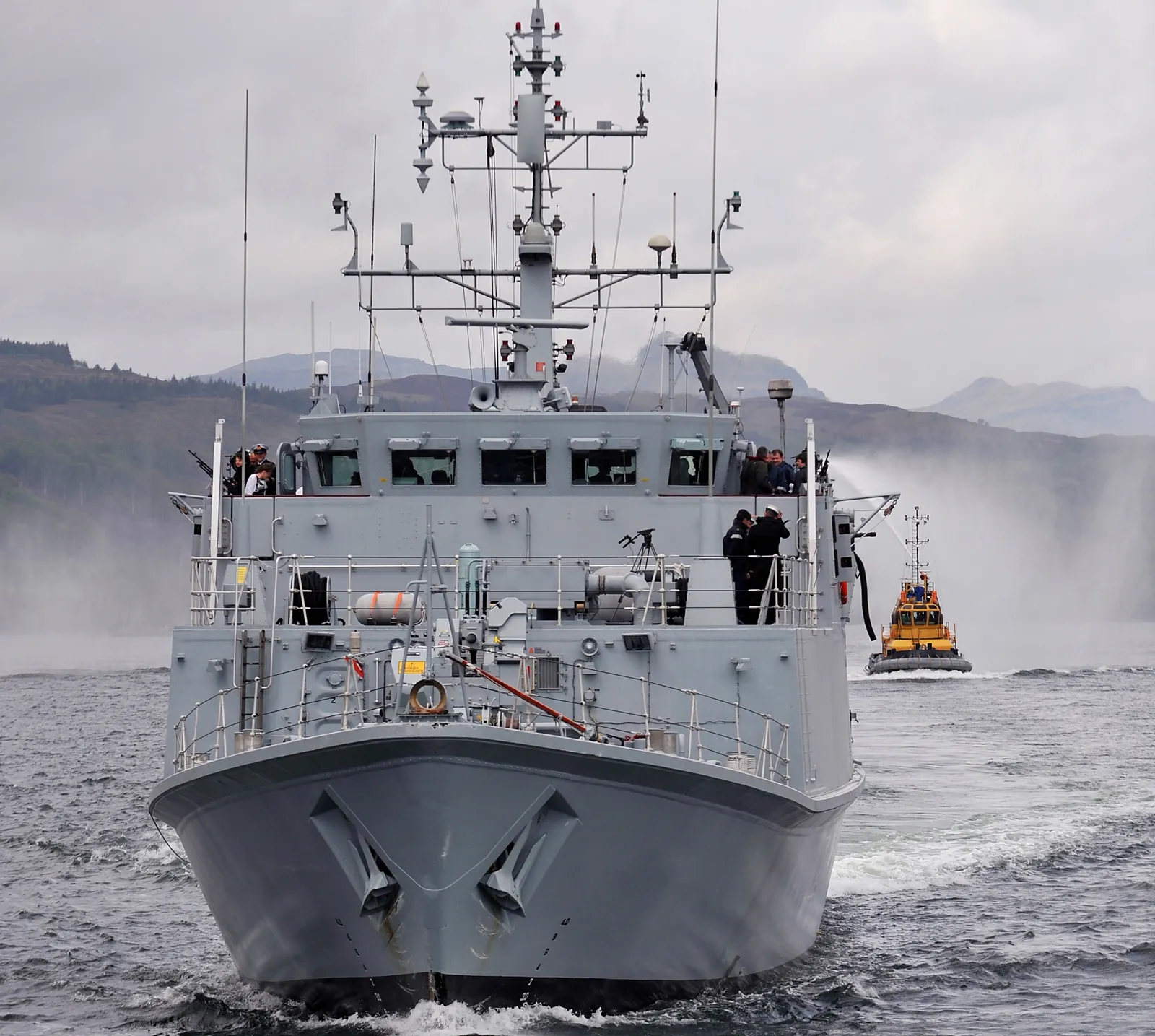
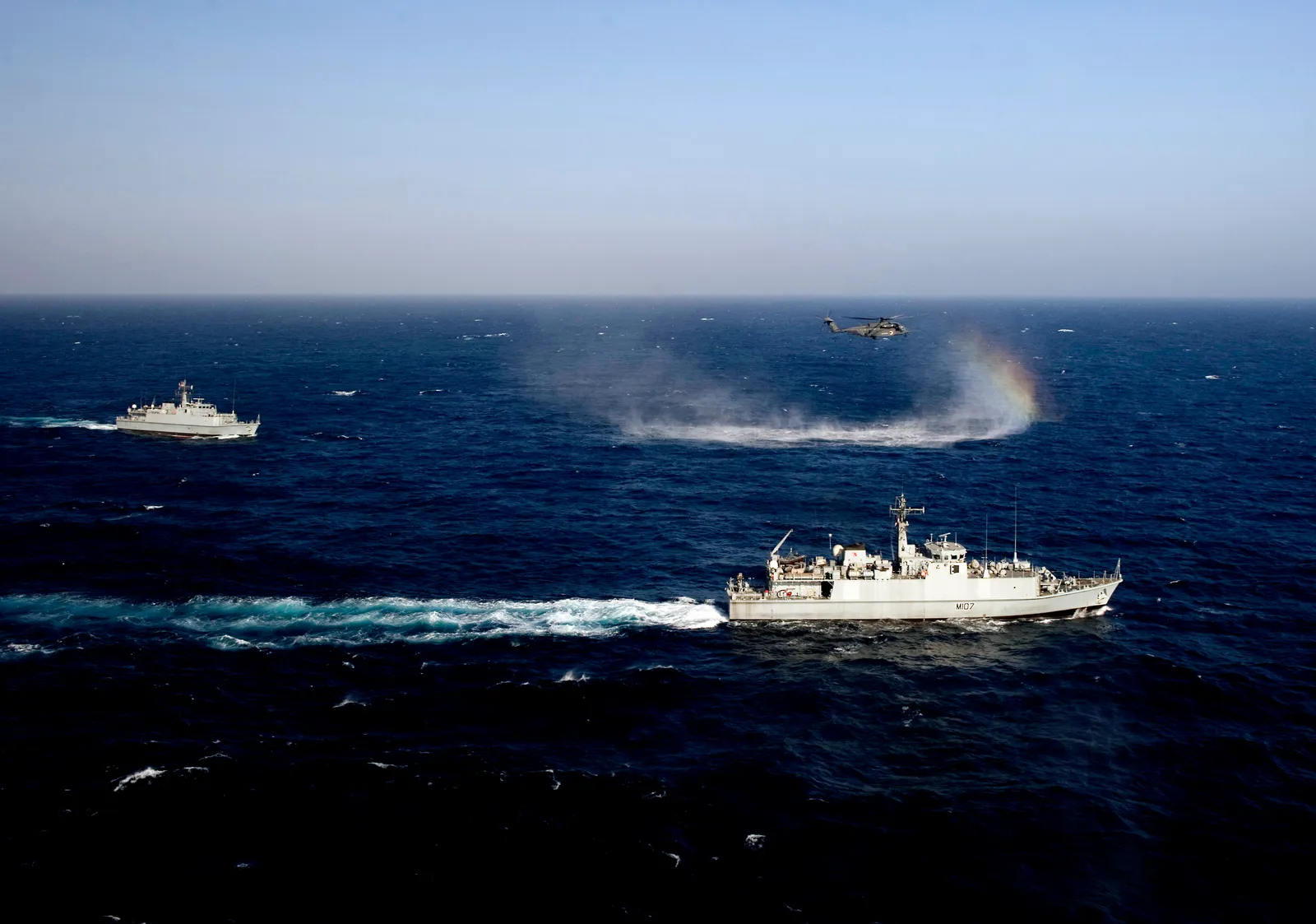
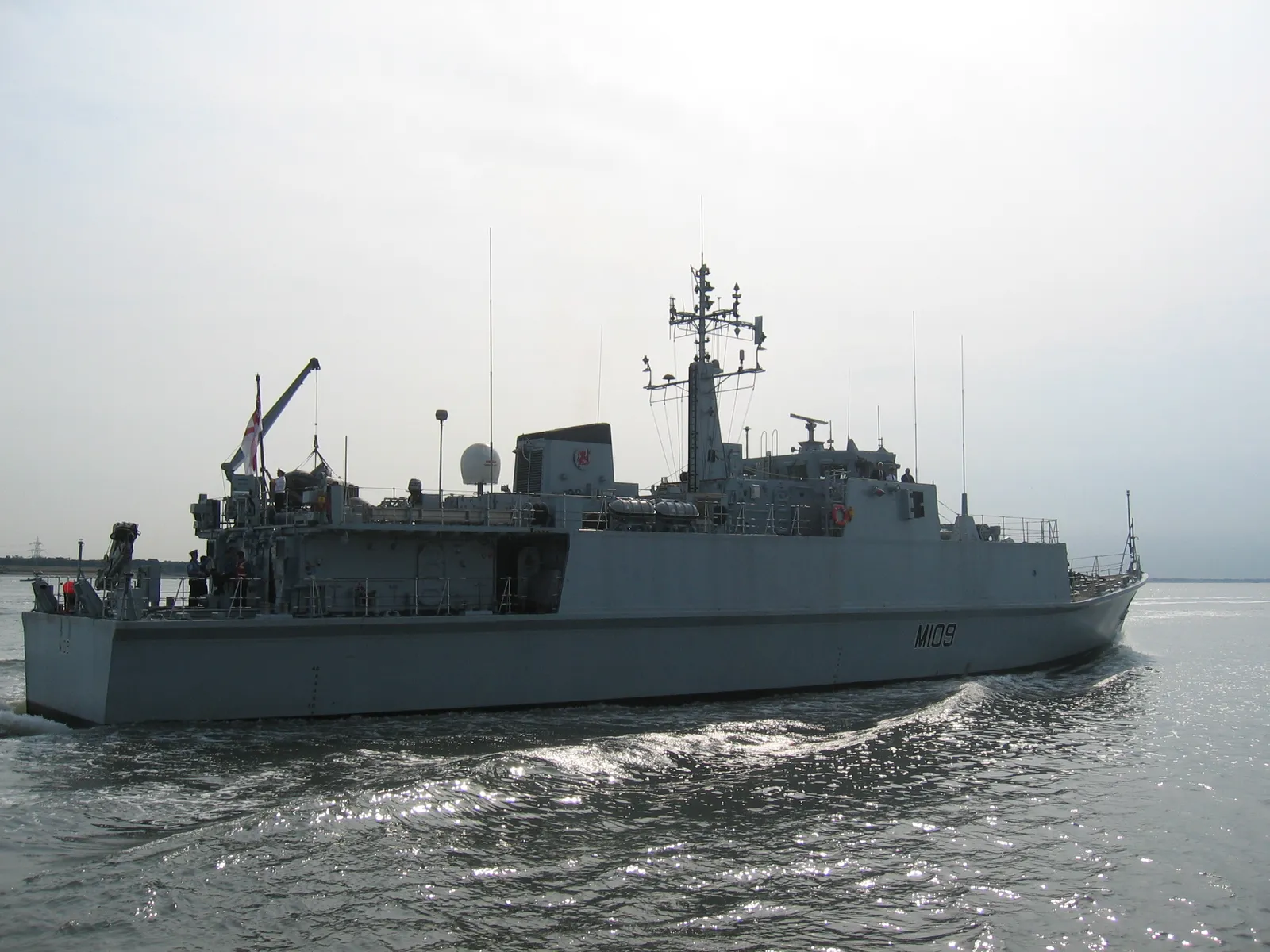
The Sandown class is a British single-role minehunter family built by Vosper Thornycroft around a low-signature hull, Type 2093 sonar, remote mine-disposal vehicles, and light self-defense armament. Royal Navy and export ships have served in mine-countermeasures roles with the United Kingdom, Saudi Arabia, Estonia, Ukraine, and Romania; a 2025 House of Commons Library briefing described HMS Bangor as the last Sandown-class vessel in Royal Navy service. Direct conflict sourcing places HMS Sandown in NATO Adriatic ordnance clearance after Operation Allied Force and Sandown-class vessels in coalition route-clearance work around Umm Qasr during the 2003 Iraq War.
HMS Sandown served with NATO mine-countermeasures forces in Operation Allied Harvest, clearing Adriatic ordnance jettisoned during Operation Allied Force.
HMS Bangor and HMS Sandown cleared approaches to Umm Qasr and the Az Zubayr waterway during Operation Iraqi Freedom, enabling RFA Sir Galahad to enter the port with humanitarian aid.
Role detailsRoyal Navy and specification sources describe Sandown as a single-role minehunter optimized for low-signature, close-range mine-countermeasures work rather than broad patrol-ship armament.
Non-magnetic construction reduces the risk of triggering influence mines while working in shallow or confined waterways.
Class specifications list Type 2093 variable-depth sonar, while Royal Navy material describes high-resolution minehunting sonar.
Royal Navy class material lists two underwater remote-controlled mine-disposal vehicles operated over a 2,000 m fibre-optic cable.
Specification sources list an Oerlikon 30 mm gun, general-purpose machine guns, and miniguns alongside the mine-disposal equipment.
Sandown-class differences are mostly operator and refit paths rather than cleanly renamed subvariants: the Royal Navy baseline generated later Estonian, Ukrainian, and Romanian ex-Royal Navy service, while three ships were built for Saudi Arabia.
| Variant | Configuration | Designation notes |
|---|---|---|
| Royal Navy SRMH | British single-role minehunter baseline | The Royal Navy class description and specification sources describe the low-magnetic minehunter fit, Type 2093 sonar, remote mine-disposal vehicles, and 30 mm gun armament used by the British ships. Sources: Sandown Class Mine Hunting Vessel - Royal Navy, Sandown Class Mine Countermeasures Vessels - GlobalSecurity.org |
| Saudi Sandown-class ships | Export minehunters | Forecast International listed the Royal Saudi Arabian Navy as a Sandown-class sponsor/customer in the archived program profile, while Royal Navy reporting later noted Saudi Sandown-class minehunters in service. Sources: Sandown Class - Archived 2/2003 - Forecast International, Commodore Mark praised for 39-year commitment to Navy and nation |
| Estonian ex-Royal Navy ships | Baltic mine-countermeasures service | Estonian Defence Forces material identifies Admiral Cowan, Sakala, and Ugandi as three Sandown-class minehunters acquired from the United Kingdom and lists later sonar, combat-management, and Seafox equipment in Estonian service. Sources: EML Admiral Cowan - Kaitsevägi, Sandown-klass - Kaitsevägi |
| Ukrainian ex-Royal Navy ships | Transferred minehunters for Ukrainian Navy training | UK government reporting identifies former HMS Shoreham and HMS Grimsby as Ukrainian Navy minehunters Cherkasy and Chernihiv, based at Portsmouth for exercises while wartime straits restrictions prevented entry into the Black Sea. Sources: Former Royal Navy ships transferred to Ukraine's Navy arrive in Portsmouth - GOV.UK, Two Ukrainian Navy ships to be temporarily based in Portsmouth |
| Romanian ex-Royal Navy ships | Black Sea security mine-countermeasures ships | Royal Navy and DE&S reporting document the sale of former HMS Blyth and HMS Pembroke to Romania and the later commissioning of former Pembroke into Romanian Navy service. Sources: Two retired Royal Navy minehunters sold to Romania, Second former Royal Navy minehunter joins Romanian Navy |
The Ministry of Defence awarded Vosper Thornycroft a US$190 million contract for four Sandown-class minehunters.
Sources: Sandown Class - Archived 2/2003 - Forecast International
HMS Sandown entered Royal Navy service, beginning the class's minehunter career.
Sources: Sandown Class - Archived 2/2003 - Forecast International
HMS Sandown was listed among NATO mine-countermeasures ships used for Operation Allied Harvest, which cleared ordnance jettisoned into the Adriatic during Operation Allied Force.
Sources: Operation Allied Harvest / II
HMS Bangor and HMS Sandown cleared the route into Umm Qasr and the Az Zubayr waterway, allowing RFA Sir Galahad to bring humanitarian aid into the port.
Sources: GULF MINEHUNTERS RETURN, USNI Mine Countermeasures a Success
Estonia and the United Kingdom signed a purchase agreement for three Sandown-class minehunters aboard HMS Victory in Portsmouth.
Sources: EML Admiral Cowan - Kaitsevägi
The Royal Navy sold former Sandown-class minehunters HMS Blyth and HMS Pembroke to Romania for Black Sea security duties.
Sources: Two retired Royal Navy minehunters sold to Romania
UK government and Royal Navy reporting placed transferred Ukrainian minehunters Cherkasy and Chernihiv in Portsmouth for multinational exercise preparation.
Sources: Former Royal Navy ships transferred to Ukraine's Navy arrive in Portsmouth - GOV.UK, Two Ukrainian Navy ships to be temporarily based in Portsmouth
The second former Royal Navy Sandown-class minehunter sold to Romania was commissioned as Capitan Constantin Dumitrescu.
Sources: Second former Royal Navy minehunter joins Romanian Navy
A House of Commons Library briefing listed HMS Bangor as the Royal Navy's single remaining Sandown-class vessel as of 1 April 2025 and summarized recent transfers to Ukraine and Romania.
Sources: UK defence in 2025: Warships and the surface fleet
The class moved from a Royal Navy single-role minehunter program into several later operator paths. Saudi ships were part of the original export story, Estonia received three former Royal Navy vessels in 2006, Ukraine received two former Royal Navy ships for training and future mine-countermeasures use, and Romania acquired former Blyth and Pembroke for Black Sea security.
HMS Sandown is listed in NATO Operation Allied Harvest, which cleared Adriatic ordnance jettisoned during Operation Allied Force.
Estonian Defence Forces pages identify Admiral Cowan, Sakala, and Ugandi as Sandown-class minehunters acquired from the United Kingdom, later using Thales 2193 sonar, Nautis M C2, and Seafox MIDS.
Former HMS Shoreham and HMS Grimsby were transferred to Ukraine and renamed Cherkasy and Chernihiv, but UK government reporting says wartime Montreux Convention restrictions kept them from entering the Black Sea.
Former HMS Blyth and HMS Pembroke were sold to Romania; former Pembroke was later commissioned as Capitan Constantin Dumitrescu.
By 2025 the British Sandown fleet had become a transition case between legacy crewed minehunters and newer autonomous mine-countermeasure plans. The House of Commons Library recorded seven Royal Navy mine-countermeasure vessels in service as of 1 April 2025: one Sandown-class ship, HMS Bangor, and six Hunt-class ships.
HMS Bangor remained the sole Sandown-class vessel listed in Royal Navy service as of 1 April 2025.
Former HMS Grimsby and HMS Shoreham had been transferred for Ukrainian use but remained docked in the United Kingdom while the Russia-Ukraine war continued.
The briefing summarized the sale of former HMS Blyth and HMS Pembroke to Romania after their Royal Navy withdrawal path.
The same briefing described the mine-countermeasure fleet as being phased toward autonomous surface and underwater vehicles.