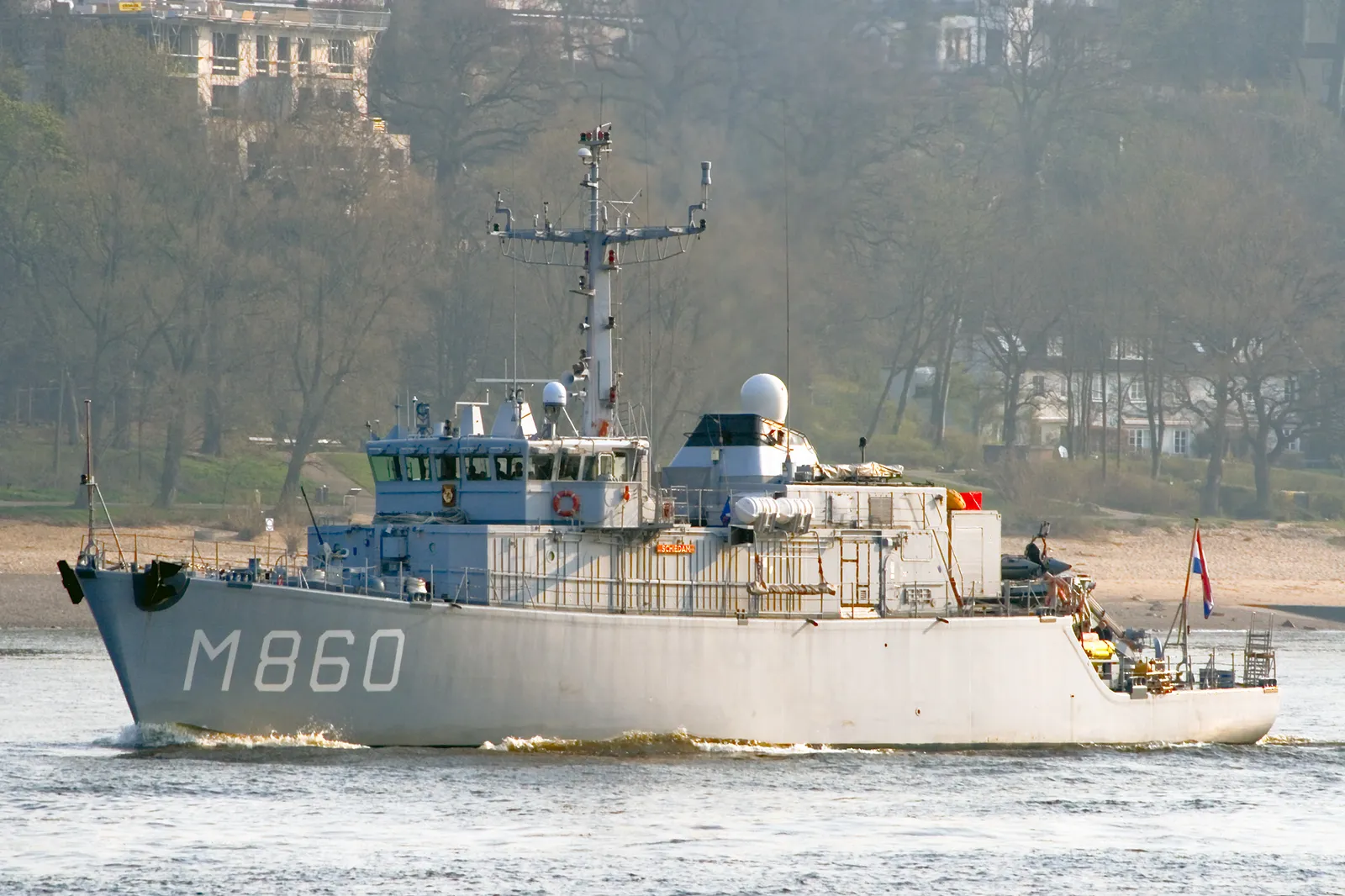
- Side
- Coalition forces

French minehunters began clearing Iraqi mines off the Kuwaiti coast on 30 January 1991.
Role detailsThe Tripartite class is a Franco-Belgian-Dutch minehunter family built around low-magnetic composite hulls, precise minehunting propulsion, hull sonar, divers, and remote mine-disposal vehicles. The French Éridan, Dutch Alkmaar, and Belgian Flower/Aster branches gave NATO navies a common Cold War mine-countermeasures design, later exported or transferred to Pakistan, Indonesia, Latvia, Bulgaria, and Ukraine. French ships are documented clearing Iraqi mines off Kuwait in the 1990 Gulf War, while Belgian and Dutch Tripartite-family boats were transferred to Ukraine during the 2014 Russia-Ukraine War for maritime security and future Black Sea mine clearance.
French minehunters began clearing Iraqi mines off the Kuwaiti coast on 30 January 1991.
Role detailsBelgium and the Netherlands transferred Tripartite-family minehunters to Ukraine for maritime security and mine-countermeasures capacity, including BNS Narcis/Mariupol and HNLMS Vlaardingen/Melitopol in 2025 and the former HNLMS Makkum/Henichesk in 2026.
Role detailsFrench and Dutch source material describe a specialist minehunter built to find, classify, and neutralize submerged mines while limiting the magnetic signature that can trigger influence mines.
The French CMT material identifies a glass-reinforced-plastic hull, while Dutch material describes a polyester hull and aluminum superstructure chosen because sea mines can react to magnetic disturbances.
Dutch Alkmaar-class boats use hull-mounted sonar, with a self-propelled variable-depth sonar available when water conditions complicate detection.
French CMT boats carried PAP 104 vehicles; modernized Dutch boats use SeaFox mine identification and disposal vehicles alongside clearance divers.
French and Dutch fits differ by national branch, with French source material listing a 20 mm modèle F2 gun and machine guns and Dutch material listing heavy machine guns after modernization.
The Tripartite design is best read as one shared mine-countermeasures family with national branches rather than a single unchanged ship list. France built the Éridan branch at Lorient, the Netherlands built the Alkmaar branch around Dutch propulsion and later modernization, and Belgium operated Flower/Aster-named boats including Narcis.
| Branch | Source-backed context | Ukraine relevance |
|---|---|---|
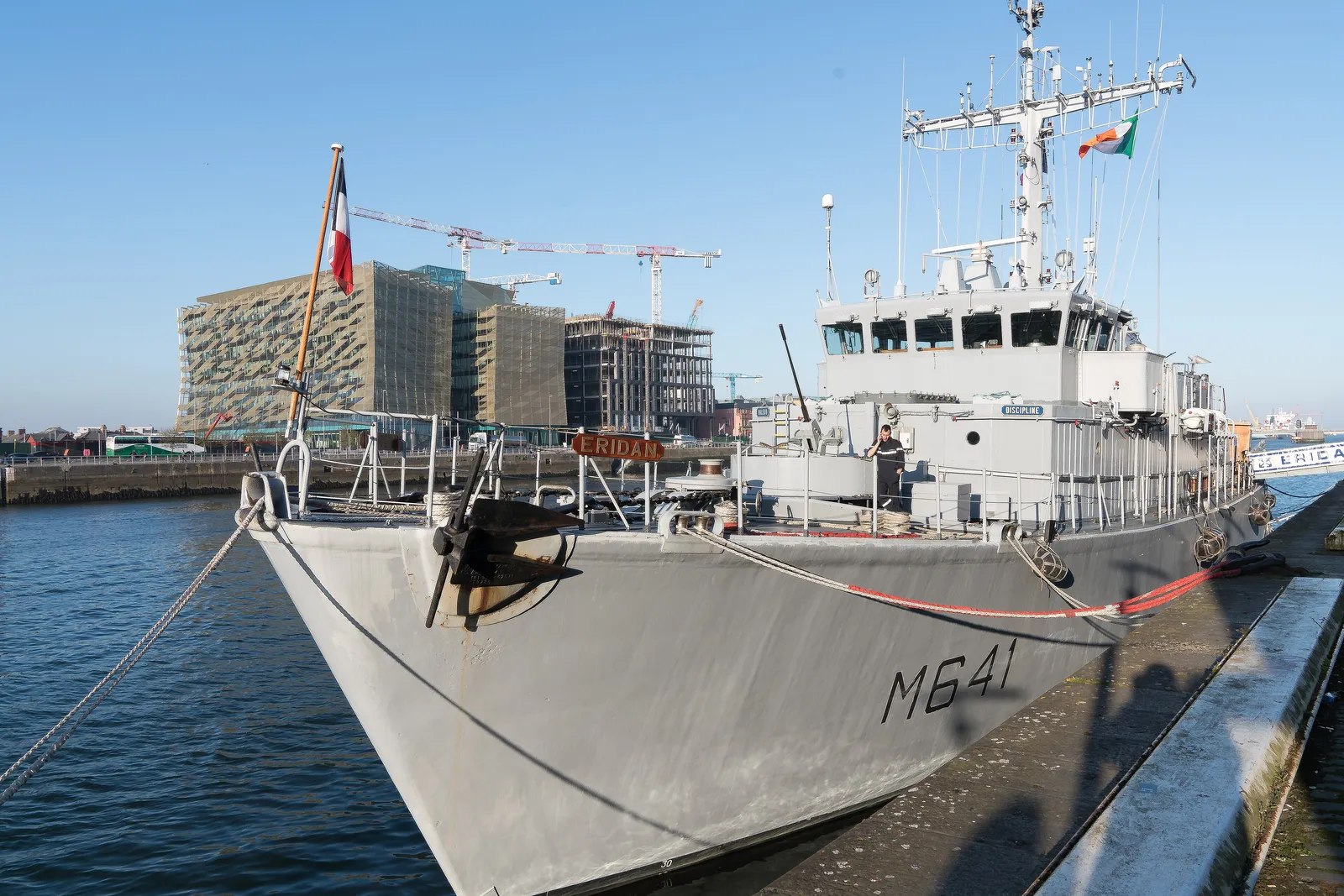
| Éridan | French CMT/Éridan boats are documented with low-magnetic hulls, PAP 104 mine-disposal vehicles, and French Navy service from the 1980s. | The existing direct conflict-use evidence for this branch is the 1991 Kuwaiti-coast mine-clearance mission. |
| Alkmaar | Dutch Ministry of Defence material identifies the Alkmaar class as the Dutch name for the internationally known Tripartite class. | HNLMS Vlaardingen became Melitopol, and HNLMS Makkum became Henichesk after transfer to Ukraine. |
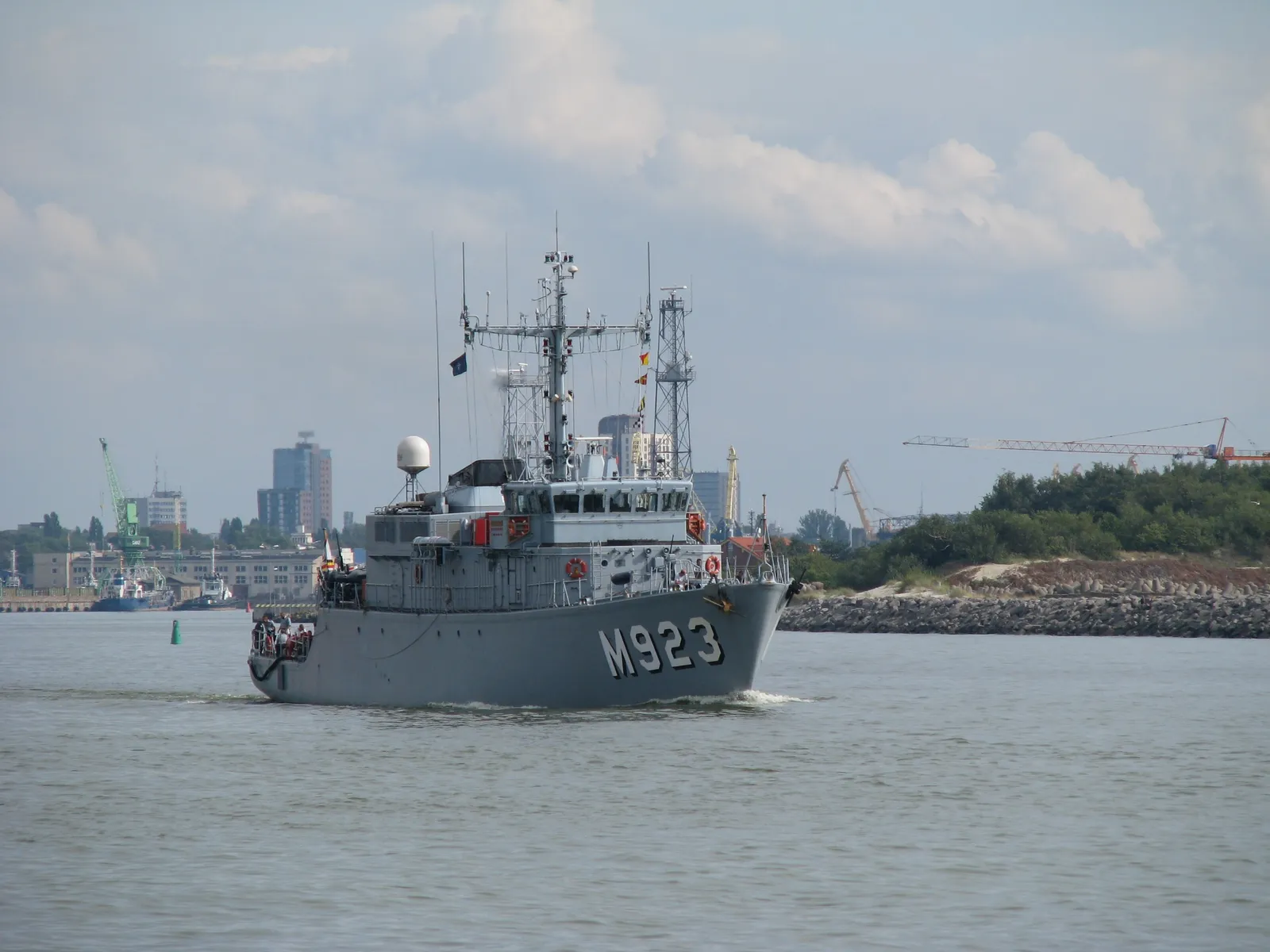
| Flower / Aster | Belgian Tripartite boats include BNS Narcis, a minehunter visible in open-license Lithuanian Ministry of Defence imagery. | BNS Narcis was transferred to Ukraine as Mariupol alongside the Dutch Vlaardingen transfer. |
Tripartite names vary by navy: Éridan for the French branch, Alkmaar for the Dutch branch, and Flower/Aster names for Belgian boats.
| Variant | Configuration | Designation notes |
|---|---|---|
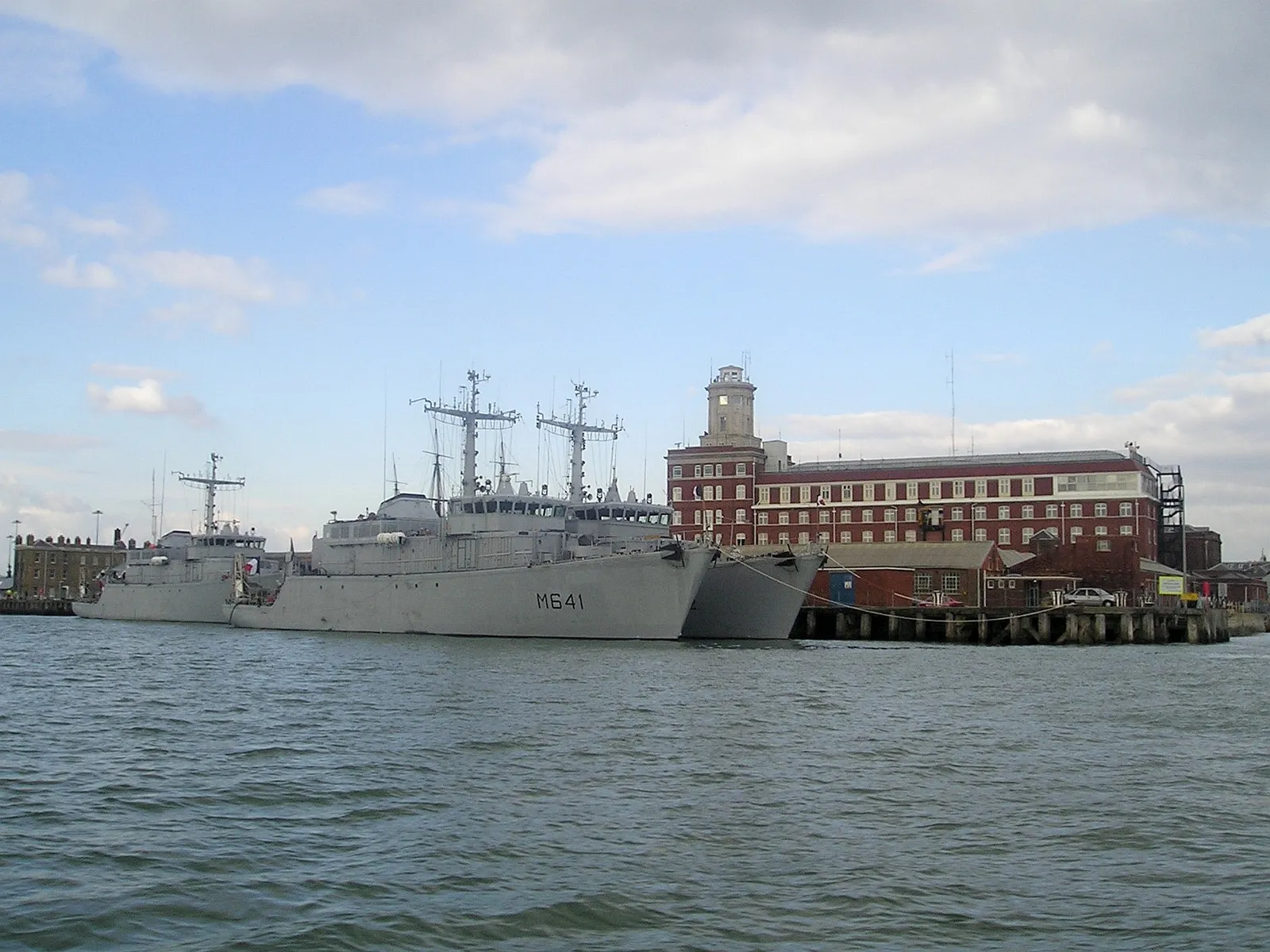
| Éridan class | French national branch | French material identifies the CMT/Éridan boats as the French Navy's Tripartite minehunters, with 13 ships entering service between 1984 and 1988. Sources: CHASSEURS DE MINES TRIPARTITES CMT, Projet de loi de finances pour 2003 : Défense - Marine - Sénat |
| Alkmaar class | Dutch national branch | Dutch Ministry of Defence material says the Alkmaar class was jointly designed by the Netherlands, Belgium, and France and is internationally known as the Tripartite class. Sources: Mijnenjagers - Defensie.nl |
| Flower / Aster class | Belgian national branch | Belgian Tripartite boats include the former BNS Narcis, a minehunter transferred to Ukraine as Mariupol. Sources: Belgium and Netherlands donate first minehunters to Ukraine - Defensie.nl, Belgian minehunter Narcis - Wikimedia Commons |
Éridan class minehunters are documented with a single 20 mm modèle F2 gun for close-range defense.
| Ammunition | Ammunition type | Firing evidence |
|---|---|---|
 | 20 mm naval autocannon | ODIN documents the Éridan class with one 20 mm modèle F2 gun. Sources: Éridan class minehunter - ODIN |
France, Belgium, and the Netherlands ratified the Tripartite minehunter program, with the French share covering 10 ships at the outset.
Sources: CHASSEURS DE MINES TRIPARTITES CMT
French Senate reporting later described 13 CMT as having entered active service between 1984 and 1988.
Sources: Projet de loi de finances pour 2003 : Défense - Marine - Sénat
Dutch Ministry of Defence material says the Royal Netherlands Navy ultimately received 15 Alkmaar-class minehunters and identifies the class as the international Tripartite design.
Sources: Mijnenjagers - Defensie.nl
French minehunters began clearing Iraqi mines off the Kuwaiti coast during the 1990 Gulf War.
Sources: The French Naval Campaign off the Kuwaiti Coasts - Global Studies Center
The French Navy launched a modernization program for the 13 CMT, with work scheduled through 2005.
Sources: Projet de loi de finances pour 2000 : Marine - Sénat
Dutch reporting said 35 Ukrainian sailors completed training aboard HNLMS Makkum, while Vlaardingen and Makkum were both planned for donation to Ukraine.
Sources: Ukrainian crew trained aboard Zr.Ms. Makkum - Defensie.nl
The Dutch Ministry of Defence announced that Belgian BNS Narcis and Dutch Zr.Ms. Vlaardingen had been transferred to Ukraine at Zeebrugge.
Sources: Belgium and Netherlands donate first minehunters to Ukraine - Defensie.nl
Naval News reported that the former HNLMS Makkum had entered Ukrainian Navy service as Henichesk.
Sources: Ukraine receives ex-Dutch Alkmaar-class minehunter Henichesk - Naval News