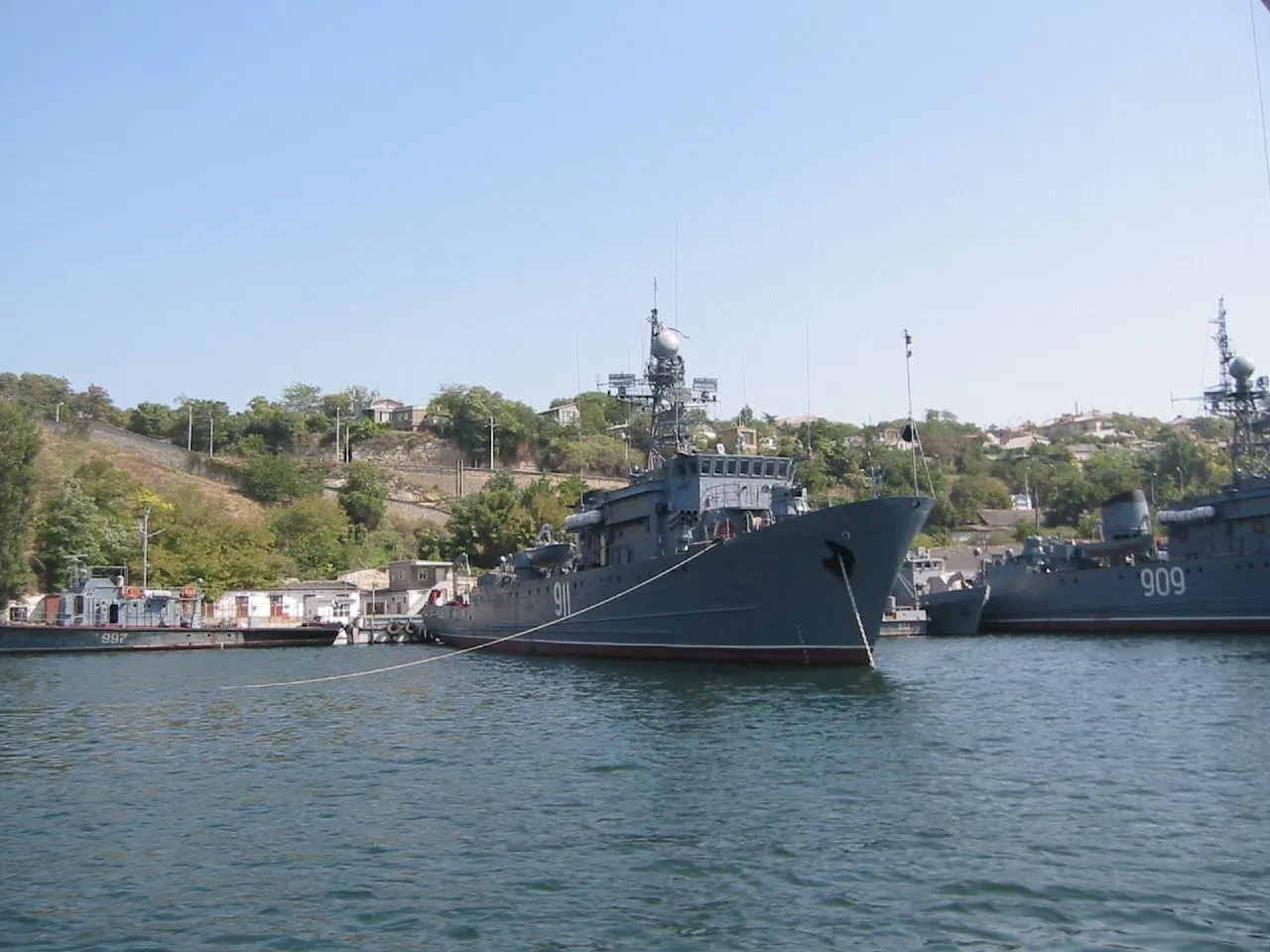


Project 266M/Natya-family minesweepers appear on both sides of the 2014 Russia-Ukraine War: USNI reported Ukrainian Natya I hulls lost during Russia's 2014 seizure of Crimea, while Ukrainian and naval reporting document Russian Ivan Golubets, Kovrovets, and Valentin Pikul being damaged, destroyed, or sunk in later Black Sea strikes.
Role detailsNaval Systems
Project 266M Akvamarin / Natya-class minesweeper
Also known as
- Natya class
- Natya-class minesweeper
- Project 266M
- Project 266M Akvamarin
- Project 266-M
- Akvamarin class minesweeper
- Semyon Roshal class
Project 266M Akvamarin, known to NATO as the Natya class, is a Soviet ocean minesweeper family built mainly by Sredne-Nevskiy Shipyard. The class paired a low-magnetic steel hull with mine-search sonar, contact, magnetic, and acoustic sweeping gear, and Black Sea Fleet hulls have become documented targets in the 2014 Russia-Ukraine War.
Role in Conflicts
Design And War Record
The Natya-family hulls were designed for ocean mine countermeasures rather than high-end surface combat. Their 2014 Russia-Ukraine War record is mostly a Black Sea fleet-support and attrition story: Ukrainian hulls were lost in Crimea, then Russian Black Sea Fleet hulls were damaged or destroyed in port and base attacks.
| Topic | Documented detail | Why it matters |
|---|---|---|
| Mine-countermeasure design | Low-magnetic steel construction, sonar-assisted mine detection, stern sweep handling, and contact, magnetic, acoustic, and detonating-cord sweeping gear. | Explains why the class matters even without missile armament. |
| Variant split | Project 266ME, 266MES, 02666, and 02668 entries differ in export fit, trial role, propulsion, endurance, weapons, and mine-search systems. | Separates baseline Soviet hulls from export and late modernized ships. |
| Black Sea losses | Ukraine lost Natya hulls in Crimea; Russian Ivan Golubets, Kovrovets, and Valentin Pikul were later reported damaged, destroyed, or sunk. | Connects a Cold War mine-warfare class to current Black Sea naval attrition. |
Profile / Specs
Profile
- Origin
- Soviet Union
- Built by
- Sredne-Nevskiy Shipyard
- Type
- Ocean minesweeper class
- Service note
- Cold War-present
- Produced
- 1969-2008, including late Project 02668 completion
- Number built
- 58 Natya-family ships reported by KCHF; RussianShips.info lists 58 plus 3 additional completed units across Project 266M/ME/MES/02666/02668.
- Developed from
- Project 266 Yurka-class minesweeper
Specifications
- Displacement
- 745 tons standard / 800 tons full load
- Dimensions
- 61 x 10.2 x 2.97 m
- Propulsion
- 2 x M-503B-3 diesel engines; 2 fixed-pitch propellers in nozzles
- Speed
- 17 knots
- Range
- 2,700 nmi at 12 knots
- Mine countermeasures
- KIU search-and-destroy device, BKT or GKT contact sweep, TEM magnetic sweep, AT acoustic sweep, and ShZ detonating cord, with variant-specific changes
- Electronics
- MR-302 Rubka air/surface search radar, Don-D navigation radars, Nikhrom-R IFF, MG-69/MG-79 mine-search sonars, and related underwater communications equipment
- Crew
- 68 (6 officers)
- Armament
- 2 x 2 30 mm AK-230M, 2 x 2 25 mm 2M-3M, 2 x 5 RBU-1200M, and mine-sweeping gear
Variants
Project 266M was the baseline Akvamarin/Natya ocean minesweeper. RussianShips.info separates export, special-purpose, and modernized descendants under Project 266ME, 266MES, 02666, and 02668 designations.
| Variant | Configuration | Designation notes |
|---|---|---|
| Project 266ME | Export variant | RussianShips.info lists Project 266ME as the principal export build, with differences including slightly higher displacement, longer endurance, Igla-1 launchers, AK-306 guns on later hulls, and export mine-sweeping equipment. Sources: RussianShips Project 266M |
| Project 266MES | Export subvariant | RussianShips.info lists one Project 266MES unit laid down under Project 266ME before completion as the MES subvariant. Sources: RussianShips Project 266M |
| Project 02666 | Trials/specialized variant | RussianShips.info lists Strelok as a one-unit Project 02666 ship and notes its later trials-ship service. Sources: RussianShips Project 266M |
| Project 02668 Agat | Modernized variant | RussianShips.info lists Vice-admiral Zakharin as the one Project 02668 Agat unit and records updated displacement, propulsion, armament, and mine-search equipment compared with baseline Project 266M. Sources: RussianShips Project 266M |
Timeline
Project 266M Akvamarin / Natya-class minesweeper Key Events
Crimea seizure removes Ukrainian Natya hulls
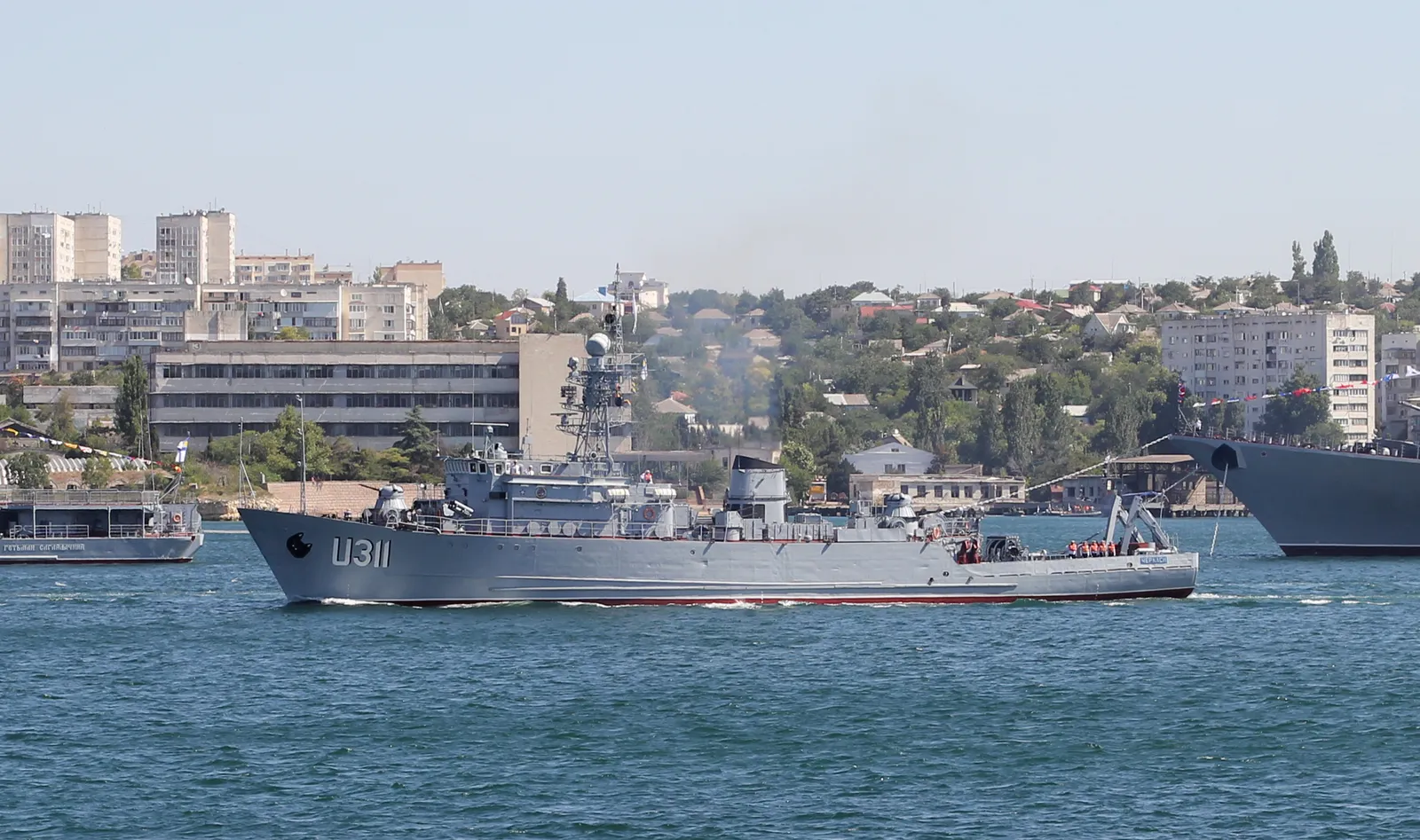
USNI reported that Ukraine lost two Project 266M Natya I-class minesweepers during Russia's 2014 seizure of Crimea.
Sources: USNI Eastern European Navies Expand as Russian Occupation of Ukraine Drags On
Ivan Golubets takes damage in Sevastopol
The New Voice of Ukraine reported minor damage to the Project 266M minesweeper Ivan Golubets after the Sevastopol drone attack.
Sources: NV Ivan Golubets damage
Kovrovets is reported destroyed
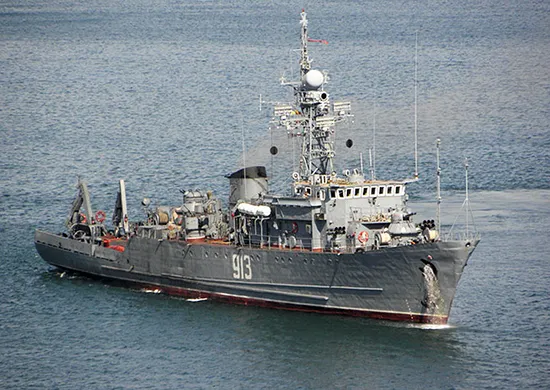
Ukraine's Navy and later Ministry of Defence reporting said the Russian Black Sea Fleet's Project 266M minesweeper Kovrovets was destroyed or rendered non-operational in Sevastopol.
Sources: UP Kovrovets destroyed, Ukraine MoD Black Sea Fleet losses, Euromaidan Press Kovrovets destroyed
Valentin Pikul struck at Novorossiysk
Ukraine's Ministry of Defence said the Project 266ME/Natya-family minesweeper Valentin Pikul sank in a Novorossiysk attack, while Naval News reported significant confirmed damage to the vessel.
Sources: Ukraine MoD Black Sea Fleet losses, Naval News Novorossiysk strike
Media
Project 266M Akvamarin / Natya-class minesweeper Videos
Project 266M Akvamarin / Natya-class minesweeper Images
Related Weapon Systems


Sources
KCHF Project 266M / Natya ClassPublisher: KCHF.RU | Note: Supports Project 266M background, Sredne-Nevskiy Shipyard construction, service history, and class specifications. | Accessed: 2026-06-29RussianShips Project 266MPublisher: RussianShips.info | Note: Supports Project 266M/ME/MES/02666/02668 designation structure, production counts, specifications, weapons, mine-countermeasure equipment, export operators, and late Project 02668 completion. | Accessed: 2026-06-29Natya-class minesweeper - WikipediaPublisher: Wikipedia | Note: Supports the class designation, broad service period, operators, developed-from relationship, and core class specifications. | Accessed: 2026-06-29Project 266M Akvamarin categoryPublisher: Wikimedia Commons | Note: Supports class naming, manufacturer, origin, dimensions, and total-produced context for the Project 266M / Natya class family. | Accessed: 2026-06-29USNI Eastern European Navies Expand as Russian Occupation of Ukraine Drags OnPublisher: U.S. Naval Institute | Note: Supports 2014 Russia-Ukraine War direct conflict-use/loss context by reporting that Ukraine lost two Project 266M Natya I-class minesweepers during Russia's 2014 seizure of Crimea. | Accessed: 2026-06-29NV Ivan Golubets damagePublisher: The New Voice of Ukraine | Note: Supports 2014 Russia-Ukraine War direct conflict-use/damage context by reporting Russian claims of damage to the Project 266M minesweeper Ivan Golubets after the 29 October 2022 Sevastopol drone attack. | Accessed: 2026-06-29UP Kovrovets destroyedPublisher: Ukrainska Pravda | Note: Supports 2014 Russia-Ukraine War direct conflict-use/loss context by reporting that Ukraine's Defence Forces destroyed the Russian Black Sea Fleet Project 266M minesweeper Kovrovets on 19 May 2024. | Accessed: 2026-06-29Euromaidan Press Kovrovets destroyedPublisher: Euromaidan Press | Note: Supports 2014 Russia-Ukraine War direct conflict-use/loss context by reporting the claimed destruction of the Russian Black Sea Fleet's Project 266M minesweeper Kovrovets on 19 May 2024. | Accessed: 2026-06-29Ukraine MoD Black Sea Fleet lossesPublisher: Ministry of Defence of Ukraine | Note: Supports 2014 Russia-Ukraine War direct conflict-use/damage and loss context by listing Ukrainian strikes against the Project 266M Ivan Golubets and Kovrovets and the Project 266ME Valentin Pikul. | Accessed: 2026-06-29Naval News Novorossiysk strikePublisher: Naval News | Note: Supports 2014 Russia-Ukraine War direct conflict-use/damage context by reporting confirmed damage to the Project 266M/Natya-family minesweeper Valentin Pikul in the March 2026 Novorossiysk strike. | Accessed: 2026-06-29IvanGolubets2005Sevastopol.jpgPublisher: Wikimedia Commons | Note: Supports primary image provenance and licensing context for the Ivan Golubets photograph. | Accessed: 2026-06-29Kovrovec 09 550.jpgPublisher: Wikimedia Commons | Note: Supports gallery image provenance and licensing context for the Kovrovets photograph. | Accessed: 2026-06-29Cherkasy U311 2012 G1.jpgPublisher: Wikimedia Commons | Note: Supports gallery image provenance and licensing context for the Cherkasy photograph. | Accessed: 2026-06-29