- Side
- Russia

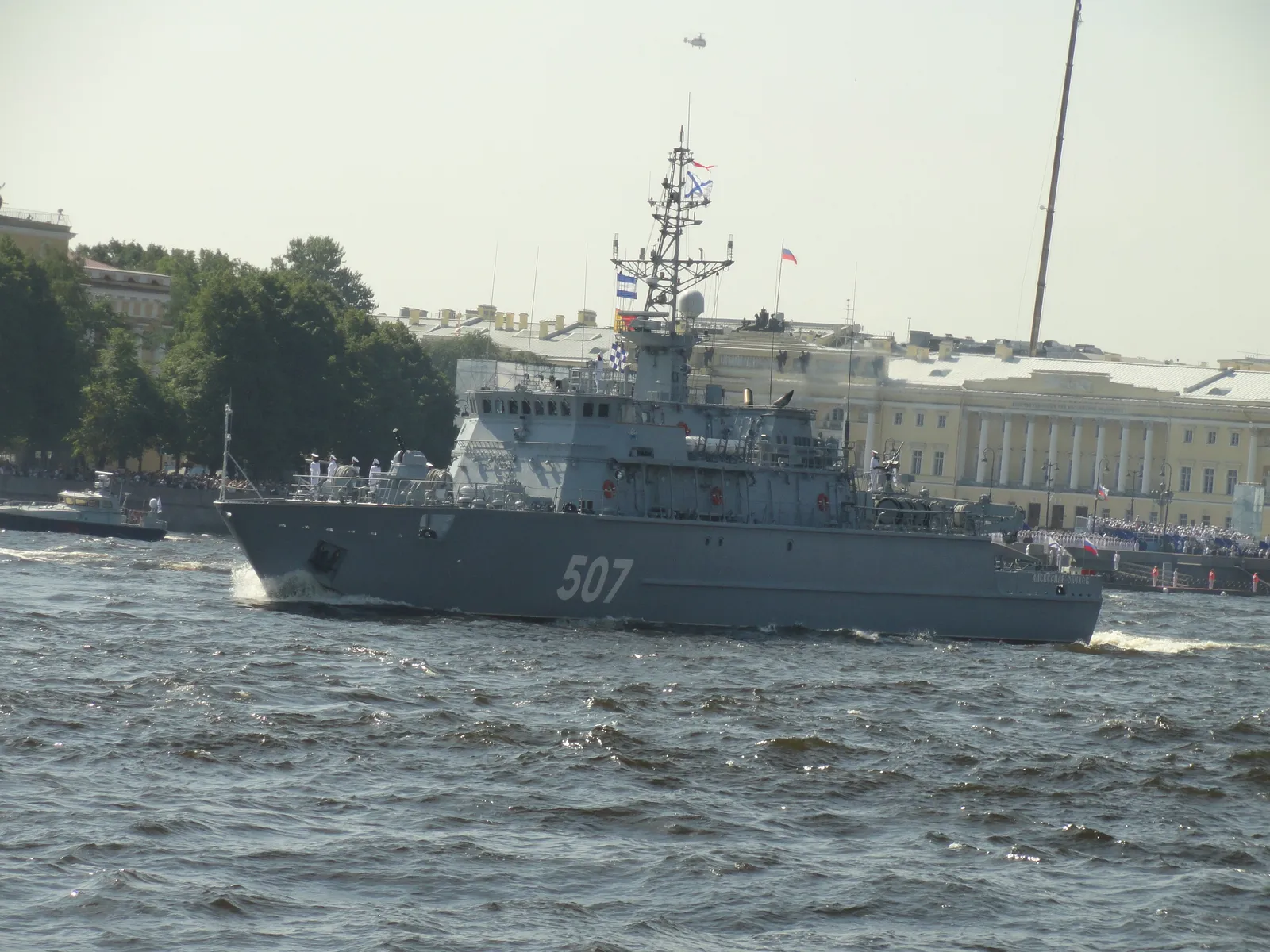
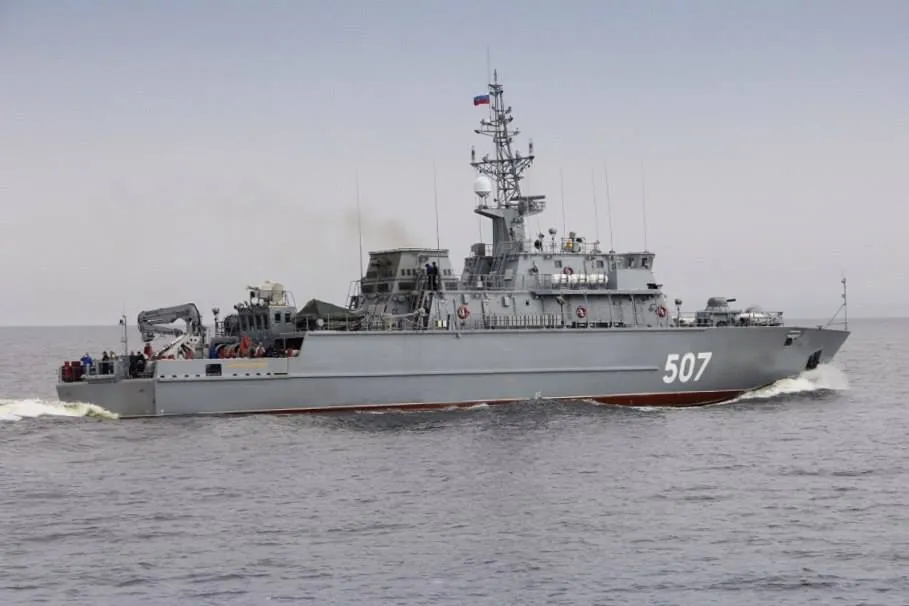
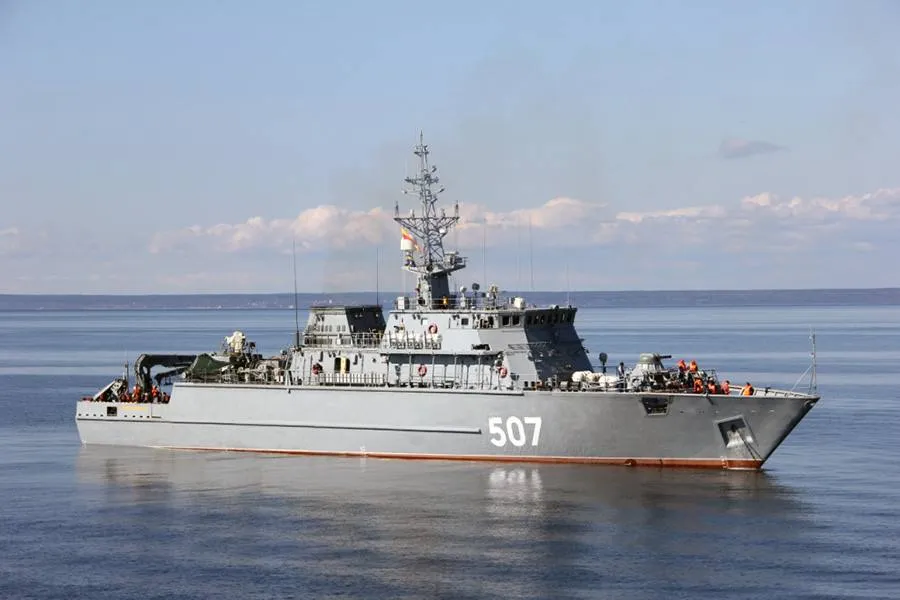
Ukraine's GUR said it disabled the Baltic Fleet Alexandrit-class minesweeper Aleksandr Obukhov at Baltiysk in October 2024; reporting identified Obukhov as the first Project 12700 ship.
Role detailsThe Alexandrit class, Russian Project 12700, is a Russian mine-countermeasures vessel class designed by Almaz and built by Sredne-Nevsky Shipyard for the Russian Navy. The class combines a monolithic fiberglass vacuum-infusion hull with trawls and unmanned mine-hunting vehicles, and it entered the Russia-Ukraine war record when Ukrainian intelligence said it disabled the Baltic Fleet lead ship Aleksandr Obukhov at Baltiysk in October 2024.
Ukraine's GUR said it disabled the Baltic Fleet Alexandrit-class minesweeper Aleksandr Obukhov at Baltiysk in October 2024; reporting identified Obukhov as the first Project 12700 ship.
Role detailsProject 12700 is built around stand-off mine countermeasures rather than heavy ship-to-ship armament. Sredne-Nevsky Shipyard describes the class as detecting sea mines in the water column and seabed without entering the danger area, using trawls as well as remotely operated and autonomous underwater vehicles.
The monolithic fiberglass hull is formed by vacuum infusion, cutting magnetic signature and weight compared with metal mine-warfare hulls.
Published shipyard descriptions emphasize trawls plus teleoperated and autonomous unmanned underwater vehicles for mine search and disposal.
Russian reporting in 2025 described continuing serial production for all Russian fleets and the Caspian Flotilla, with equipment improvements during the series.
Sources: Sredne-Nevsky Shipyard: Georgiy Kurbatov launch; Two to three dozen minesweepers for Russian Navy to be built in St. Petersburg.
The public Project 12700 record covers the Russian Navy Alexandrit-series ships; export marketing uses the Project 12701 / Alexandrit-E designation for a closely related mine-countermeasures vessel.
| Variant | Configuration | Designation notes |
|---|---|---|
| Project 12701 / Alexandrit-E | Export mine-countermeasures variant | Rosoboronexport describes Project 12701 as an Alexandrit-E counter-mine vessel with Alexandrit-ISPUM, Diez-E, sweeps, AK-306 armament, 890-ton full-load displacement, 61.6 m length, 1,500-mile range, and 10-day endurance; Baird Maritime describes it as an export-only Project 12700-family variant with a vacuum-infused FRP hull. Sources: Rosoboronexport: Project 12701, Baird Maritime: Project 12701 export-only minesweeper |
The Project 12700 electronics fit includes the Anapa anti-saboteur sonar.
| Carried item | Item type | Carriage evidence |
|---|---|---|
 | Anti-saboteur sonar | RussianShips.info lists the Anapa anti-saboteur sonar among the Alexandrit-class electronics fit. Sources: Project 12700 - RussianShips.info |
Project 12700 sea-trial and delivery coverage ties the class to the Inspector Mk2 mine countermeasures USV.
| Carried item | Item type | Carriage evidence |
|---|---|---|
 | Mine countermeasures USV | Army Recognition says the first Project 12700 MCM vessel Alexander Obukhov sailed during sea trials with an Inspector Mk 2, and that ECA Group delivered a second USV inspection system to Russia for Project 12700. Sources: ECA Group Delivers Second USV Inspection System to Russia for Project 12700 MCM Vessel |
Aleksandr Obukhov, the lead ship of Project 12700, was laid down at Sredne-Nevsky Shipyard in Saint Petersburg.
Sources: Project 12700 - RussianShips.info
Aleksandr Obukhov was accepted into service with the Russian Navy.
Sources: Project 12700 - RussianShips.info
Ukraine's GUR said the Baltic Fleet's Alexandrit-class minesweeper Aleksandr Obukhov was disabled in Baltiysk after water entered the engine through damage to the gas exhaust path.
Sources: Ukraine Claims to Have Damaged a Russian Minesweeper in the Baltic Sea, LIGA.net: GUR damaged Russian ship Alexander Obukhov
TASS reported Russian Navy statements that at least two to three dozen more Project 12700 minesweepers were planned, with continued equipment improvements during serial production.
Sources: Two to three dozen minesweepers for Russian Navy to be built in St. Petersburg