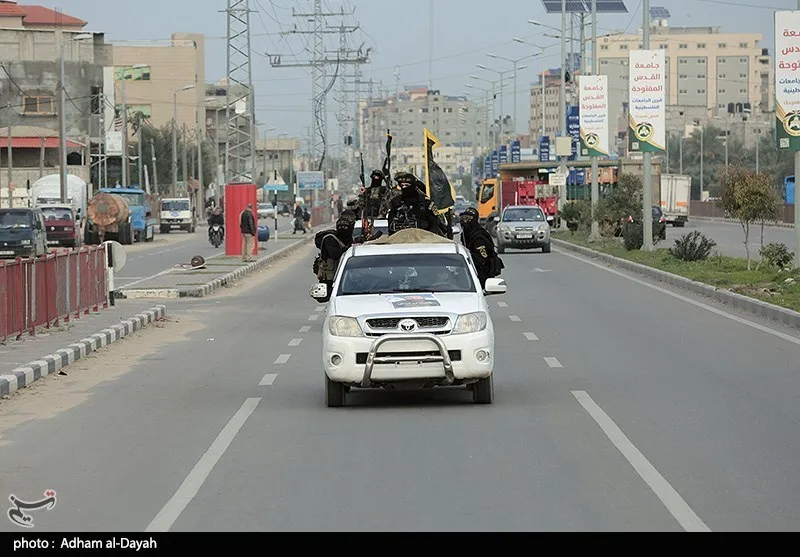


ARES reporting republished by Small Arms Defense Journal described a November 2015 Aleppo-countryside cache allegedly captured by Jabhat al-Nusra from Shi'a militia forces that included an Iranian AM50 (Sayyad-2) .50 BMG anti-materiel rifle.
Role detailsInfantry Weapons
AM-50 Sayyad .50-caliber anti-materiel rifle
Also known as
- AM-50
- AM50
- Sayyad-2
- AM-50 Sayyad-2
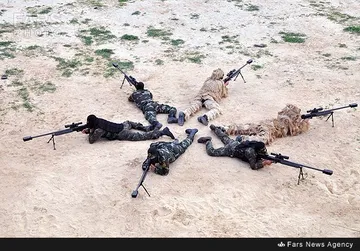
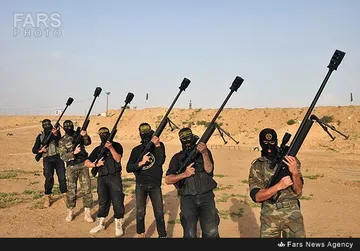
The AM-50 Sayyad is an Iranian 12.7x99 mm anti-materiel rifle derived from the Steyr HS .50 pattern after a mid-2000s HS .50 sale to Iran. It is a single-shot bolt-action weapon produced by DIO/ICIG and documented with Iraqi government forces, Syrian war militias, Houthi fighters in Yemen, and Hamas-linked fighters in Gaza.
Role in Conflicts

ARES reporting republished by Small Arms Defense Journal says AM50 rifles were documented with Iraqi government forces in 2014, assessed as likely supplied through Shi'a militia channels from Iran.

ARES reporting republished by Small Arms Defense Journal documented images that appeared to show a Houthi fighter armed with an Iranian AM50 (Sayyad-2) anti-materiel rifle in Yemen.
Role details
Used by Hamas and Gaza-based armed groups in the 2023 Israel-Hamas War; AP identified the AM-50 Sayyad in October 2023 Hamas propaganda footage from Gaza and later reported Hamas video purporting to show militants machining local copies.
Role detailsProfile / Specs
Profile
- Origin
- Iran
- Type
- Anti-materiel rifle
- Service note
- c. 2008-present
- Designer
- Derived from the Steyr HS .50 / Fortmeier pattern
- Designed
- After the mid-2000s Steyr HS .50 sale to Iran
- Produced
- c. 2008-present
- Number built
- Unknown
Specifications
- Caliber
- 12.7x99 mm (.50 BMG)
- Action
- Single-shot bolt action
- Weight
- 12.2 kg
- Overall length
- 1480 mm
- Barrel length
- 913 mm
- Effective range
- 1200 m
- Main component groups
- Receiver group, barrel group, bolt group, and optical sight
- Optic caveat
- CAR found the examined rifle fitted with a low-cost 2-6x32 civilian-style sight unsuitable for military recoil demands
Ammunition Fired
ARES identifies the rifle as chambered for the standard 12.7x99 mm NATO / .50 BMG cartridge family.
| Ammunition | Ammunition type | Firing evidence |
|---|---|---|
 | 12.7x99 mm NATO / .50 BMG cartridge family | ARES describes the AM-50 Sayyad as a single-shot, bolt-action anti-materiel rifle chambered for 12.7 x 99 mm (.50 BMG), which is direct source evidence that it fires this cartridge family. Sources: ARES Iranian AM50 in Iraq |
Design Lineage And Fielding Pattern
The AM-50 Sayyad combines a Steyr HS .50-derived layout with Iranian production and a conflict record that spans state forces, aligned militias, and non-state armed groups.
| Aspect | Source-backed detail | Reader takeaway |
|---|---|---|
| Lineage | CAR ties the weapon to the sale of 800 Steyr HS .50 rifles to Iran and describes later unlicensed Iranian AM-50 production. | The rifle is best understood as an Iranian copy or derivative rather than an unrelated indigenous design. |
| Mechanical layout | ARES and CAR describe a single-shot, bolt-action 12.7x99 mm rifle; CAR breaks the examined rifle into receiver, barrel, bolt, and optical-sight groups. | The record fits a simple anti-materiel rifle optimized for heavy-caliber shots rather than rapid fire. |
| Manufacturing clues | CAR found production flaws, poor fit and finish on the examined rifle, and evidence suggesting different Iranian facilities handled barrel, housing, and marking work. | Technical quality may vary across examples, and the examined rifle should not be treated as a perfect factory specimen. |
| Conflict spread | SADJ/ARES and AP reporting place AM50/Sayyad examples with Iraqi government forces, Syrian-war militias, Houthi fighters in Yemen, and Hamas-linked fighters in Gaza. | The weapon is a regional proliferation case as much as a rifle specification page. |
Sources: CAR Iranian AM-50 Technical Report; ARES Iranian AM50 in Iraq; SADJ Iranian AM50 in Yemen; SADJ Iranian RU Sights in Syria; AP Hamas weapons analysis.
Timeline
AM-50 Sayyad .50-caliber anti-materiel rifle Key Events
Iraq photos show Iranian AM50 rifles
ARES published photos from Iraq showing new Iranian AM50 rifles with government troops, documenting the rifle outside Iran before the Gaza footage appeared.
Sources: ARES Iranian AM50 in Iraq
Aleppo cache links the rifle to the Syrian war
SADJ's ARES-sourced reporting describes imagery from November 2 and 3, 2015 of a cache allegedly captured from Shi'a militia forces in Aleppo countryside that included an Iranian AM50 (Sayyad-2).
Sources: SADJ Iranian RU Sights in Syria
Hamas video shows domestic copies
AP reported a Hamas video dated December 20, 2023 that purports to show militants machining domestic copies of the AM-50 Sayyad in Gaza.
Sources: AP Hamas weapons analysis
Media
AM-50 Sayyad .50-caliber anti-materiel rifle Images
Related Weapon Systems


Sources
ARES Iranian AM50 in IraqPublisher: Armament Research Services | Note: Supports AM-50 Sayyad background, manufacturer, technical lineage, and specifications including DIO/ICIG production, .50 BMG chambering, weight, length, barrel length, effective range, and the 2013 War in Iraq direct-use context from photos of AM50 rifles with Iraqi government troops. | Accessed: 2026-07-01CAR Iranian AM-50 Technical ReportPublisher: Conflict Armament Research | Note: Supports technical background from CAR's September 2021 disassembly of a recovered AM-50, including the 2004 Steyr HS .50 sale cited by CAR, 12.7x99 mm chambering, major component groups, markings, production flaws, and optical-sight limitations. | Accessed: 2026-07-01SADJ Iranian AM50 in YemenPublisher: Small Arms Defense Journal | Note: Republishes ARES reporting that directly supports 2014 Yemen Civil War AM50/Sayyad-2 use by Houthi fighters and also summarizes 2013 War in Iraq documentation of AM50 rifles with Iraqi government forces. | Accessed: 2026-07-01SADJ Iranian RU Sights in SyriaPublisher: Small Arms Defense Journal | Note: Republishes ARES reporting that directly supports 2011 Syrian Civil War AM50/Sayyad-2 conflict-use context: a November 2015 Aleppo-countryside cache allegedly captured by Jabhat al-Nusra from Shi'a militia forces included an Iranian AM50 .50 BMG anti-materiel rifle. | Accessed: 2026-07-01AP Hamas weapons analysisPublisher: AP News | Note: Supports 2023 Israel-Hamas War direct-use context: AP identified an AM-50 Sayyad in Hamas propaganda footage from Gaza and reported a December 20, 2023 Hamas video purporting to show militants machining local copies of the rifle. | Accessed: 2026-07-01Wikimedia Al-Quds Brigades (2) imagePublisher: Wikimedia Commons | Note: Supports image provenance for the Commons AM-50 Sayyad gallery image Al-Quds Brigades (2).jpg, listed in the AM-50 Sayyad in service with Al-Quds Brigades category. | Accessed: 2026-07-01Wikimedia Training of al-Quds Brigades snipers in Gaza (01) imagePublisher: Wikimedia Commons | Note: Supports image provenance for the Commons AM-50 Sayyad gallery image Training of al-Quds Brigades snipers in Gaza (01).jpg, which is licensed on its Commons description page. | Accessed: 2026-07-01Wikimedia Training of al-Quds Brigades snipers in Gaza (06) imagePublisher: Wikimedia Commons | Note: Supports image provenance for the Commons AM-50 Sayyad gallery image Training of al-Quds Brigades snipers in Gaza (06).jpg, which is licensed on its Commons description page. | Accessed: 2026-07-01