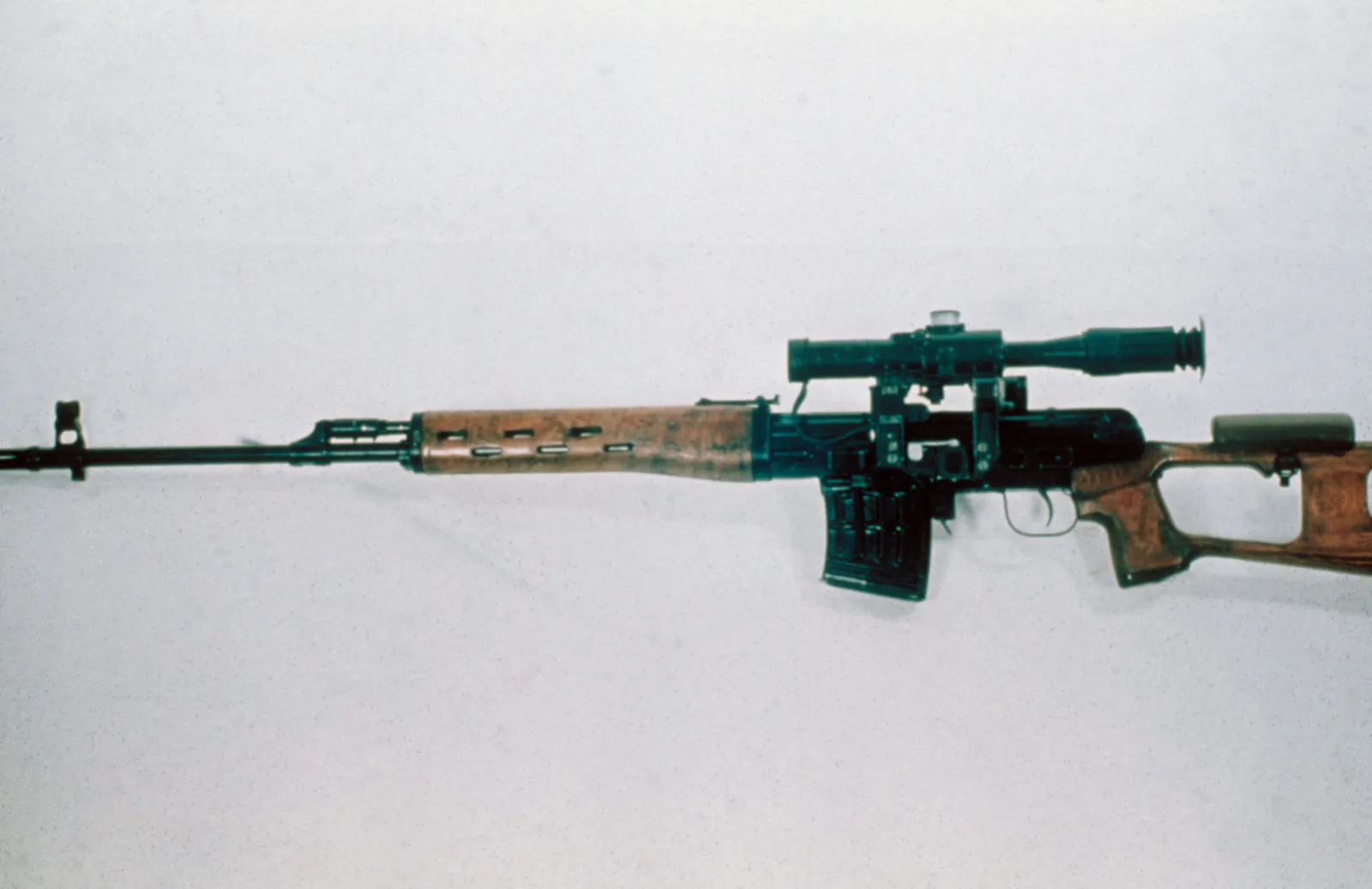

A March 2016 FS Provence interdiction documented 64 new-condition Iranian Hoshdar-M SVD-pattern sniper rifles in a dhow shipment assessed by CAR and analysts as part of an Iran-linked arms pipeline toward Somalia and Yemen, with possible onward transfer to Houthi-aligned forces rather than confirmed battlefield use.
Role detailsInfantry Weapons
Hoshdar-M sniper rifle
Also known as
- Nakhjir
The Hoshdar-M is an Iranian SVD-pattern sniper and designated marksman rifle, also associated in UN reporting with the Nakhjir name. Its 2014 Yemen Civil War relevance comes from the 20 March 2016 FS Provence interdiction, where investigators documented 64 rifles in a dhow shipment later identified by the UN as Iranian-produced SVD sniper rifles and linked to an Iran-to-Yemen supply route.
Role in Conflicts
Profile / Specs
Profile
- Origin
- Iran
- Built by
- Defense Industries Organization
- Type
- SVD-pattern sniper and designated marksman rifle
- Service note
- Documented in regional maritime arms interdictions during the 2014 Yemen Civil War
- Designer
- Based on the Soviet SVD/Dragunov pattern
- Designed
- Not publicly confirmed
- Unit cost
- Not publicly available
- Produced
- Pre-2016 examples documented
- Number built
- At least 64 documented in the FS Provence seizure
Specifications
- Pattern
- SVD-pattern semi-automatic sniper/designated marksman rifle
- Documented quantity
- 64 rifles in the March 2016 FS Provence seizure
- Condition
- New-condition rifles documented in UN and CAR reporting
- Identification
- The UN Monitoring Group said the rifles had characteristics consistent with Iranian-produced SVD sniper rifles (Hoshdar-M)
- Optics
- Optical sights intended for SVD sniper rifles were documented with the same seizure
Variants
- Nakhjir sniper rifle
Compatible Ammunition
This page links to the cartridge identified in the same reporting as the Hoshdar-M chambering.
| Compatible item | Item type | Compatibility evidence |
|---|---|---|
 | 7.62x54mmR rifle cartridge | War Noir's reporting describes the Hoshdar-M sniper rifle as chambered in 7.62x54mmR. Sources: War Noir - Telegram, War Noir on X |
Timeline
Hoshdar-M sniper rifle Key Events
La Provence intercepts the dhow shipment
The French naval vessel La Provence boarded a stateless dhow heading toward Somalia and seized the weapons later tied to the Hoshdar-M record.
Sources: UN Somalia and Eritrea Monitoring Group Report S/2017/924
UN report identifies the rifle family
The UN Monitoring Group reported that the 64 sniper rifles had characteristics consistent with Iranian-produced SVD sniper rifles (Hoshdar-M) and could also appear under the name Nakhjir sniper rifles.
Sources: UN Somalia and Eritrea Monitoring Group Report S/2017/924
Interdiction Findings
UN reporting ties the Hoshdar-M to a March 2016 maritime seizure and treats it as part of the Iranian-produced SVD family.
| Finding | Detail | Source |
|---|---|---|
| Seizure date | La Provence stopped and boarded a stateless dhow on 20 March 2016. | UN Somalia and Eritrea Monitoring Group Report S/2017/924 |
| Family identification | The report says the 64 sniper rifles had characteristics consistent with Iranian-produced SVD sniper rifles (Hoshdar-M). | UN Somalia and Eritrea Monitoring Group Report S/2017/924 |
| Alternate name | Hoshdar-M rifles could also appear under the name Nakhjir sniper rifles. | UN Somalia and Eritrea Monitoring Group Report S/2017/924 |
Media
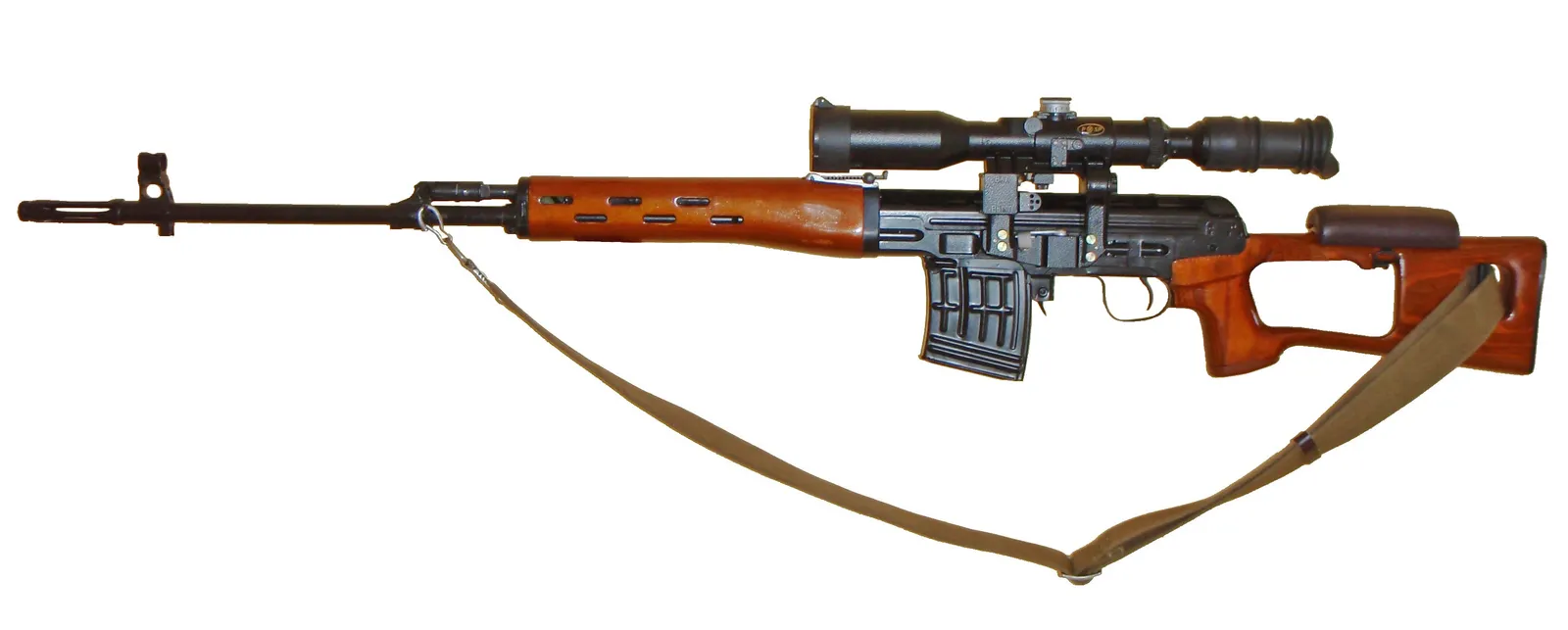
Hoshdar-M sniper rifle Images
Related Weapon Systems


Sources
Maritime Interdictions of Weapon Supplies to Somalia and YemenPublisher: Conflict Armament Research | Note: Supports 2014 Yemen Civil War transfer context: CAR describes illegal dhow shipments destined for Somalia and Yemen and documents Hoshdar-M rifles assessed as supplied to or transferred to the Iran-linked weapons pipeline. | Accessed: 2026-06-20Responding to Iran's Arms Smuggling in YemenPublisher: The Washington Institute for Near East Policy | Note: Supports 2014 Yemen Civil War conflict use context: reports Hoshdar-M rifles in the Provence seizure and frames them as transferred to the Houthi arms-supply pipeline. | Accessed: 2026-06-20How Iranian Weapons Are Ending Up in YemenPublisher: The Washington Post | Note: Supports 2014 Yemen Civil War conflict use context: reports that the Hoshdar-M rifles were shipped in a seizure tied to Iranian weapons transferred to Houthi-aligned forces in Yemen. | Accessed: 2026-06-20UN Somalia and Eritrea Monitoring Group Report S/2017/924Publisher: United Nations Security Council | Note: Supports manufacturer, background, and specs: identifies 64 Hoshdar-M SVD sniper rifles in the FS Provence seizure, says they were in new condition, and states that Hoshdar-M rifles were manufactured by Iran's Defence Industries Organization; the report also says they could appear under the name Nakhjir sniper rifles. | Accessed: 2026-06-20SVD DD-ST-85-01254 ImagePublisher: Wikimedia Commons | Note: Supports image provenance and public-domain license for a representative SVD-pattern rifle image; a rights-clear Hoshdar-M-specific image was not available. | Accessed: 2026-06-20SVD Dragunov ImagePublisher: Wikimedia Commons | Note: Supports image provenance and reusable-license context for a second representative SVD-pattern rifle image used in the gallery. | Accessed: 2026-06-26War Noir - TelegramPublisher: War Noir | Note: Supports the Hoshdar-M chambering claim by identifying the rifle in open-source reporting as chambered in 7.62x54mmR. | Accessed: 2026-06-28War Noir on XPublisher: War Noir | Note: Supports the Hoshdar-M chambering claim by identifying the rifle in open-source reporting as chambered in 7.62x54mmR. | Accessed: 2026-06-28