Infantry Weapons

SVD

Also known as
  • Dragunov
  • Dragunov SVD
  • SVD-63
  • Snayperskaya Vintovka Dragunova
  • 6V1

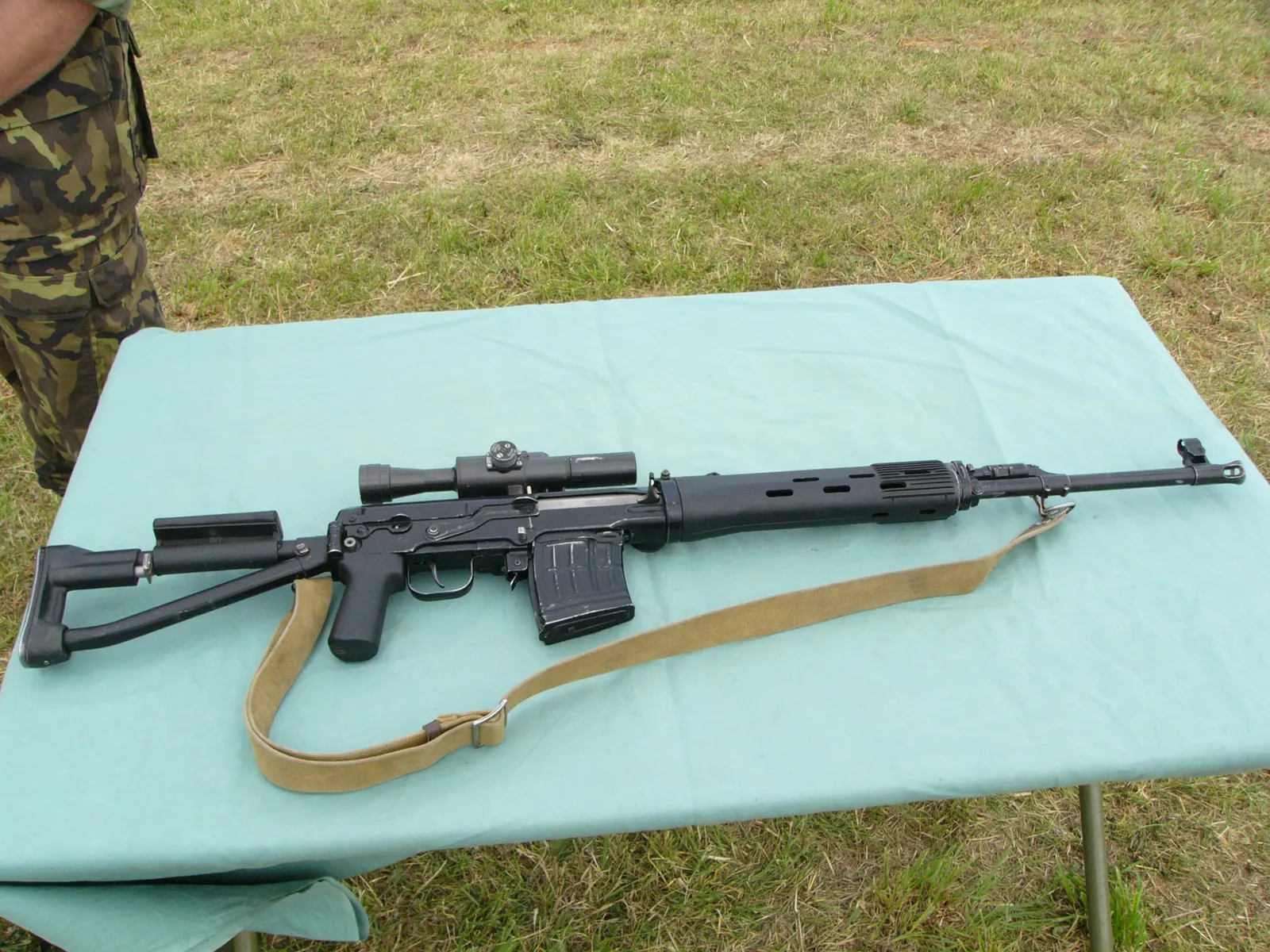
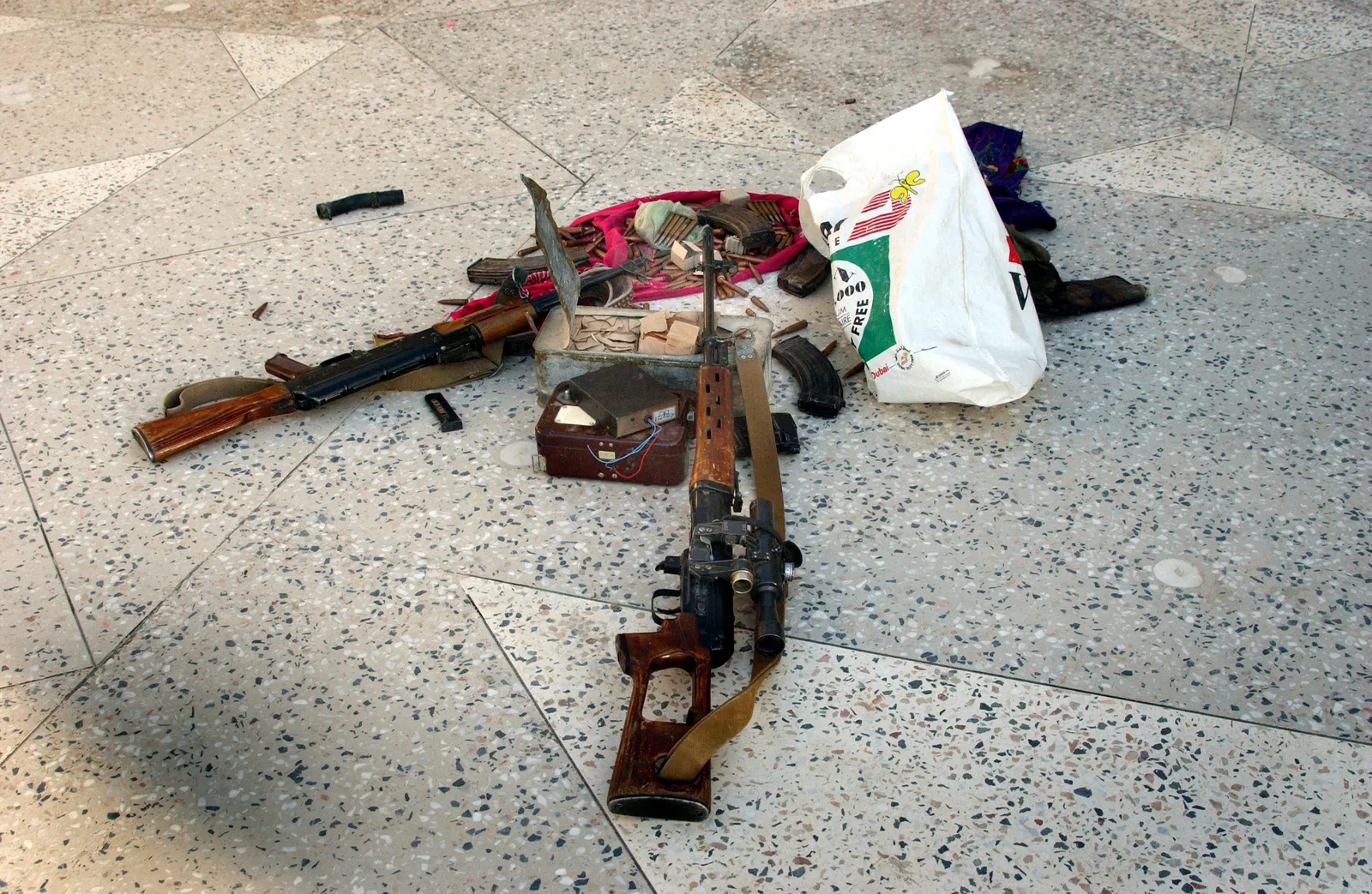
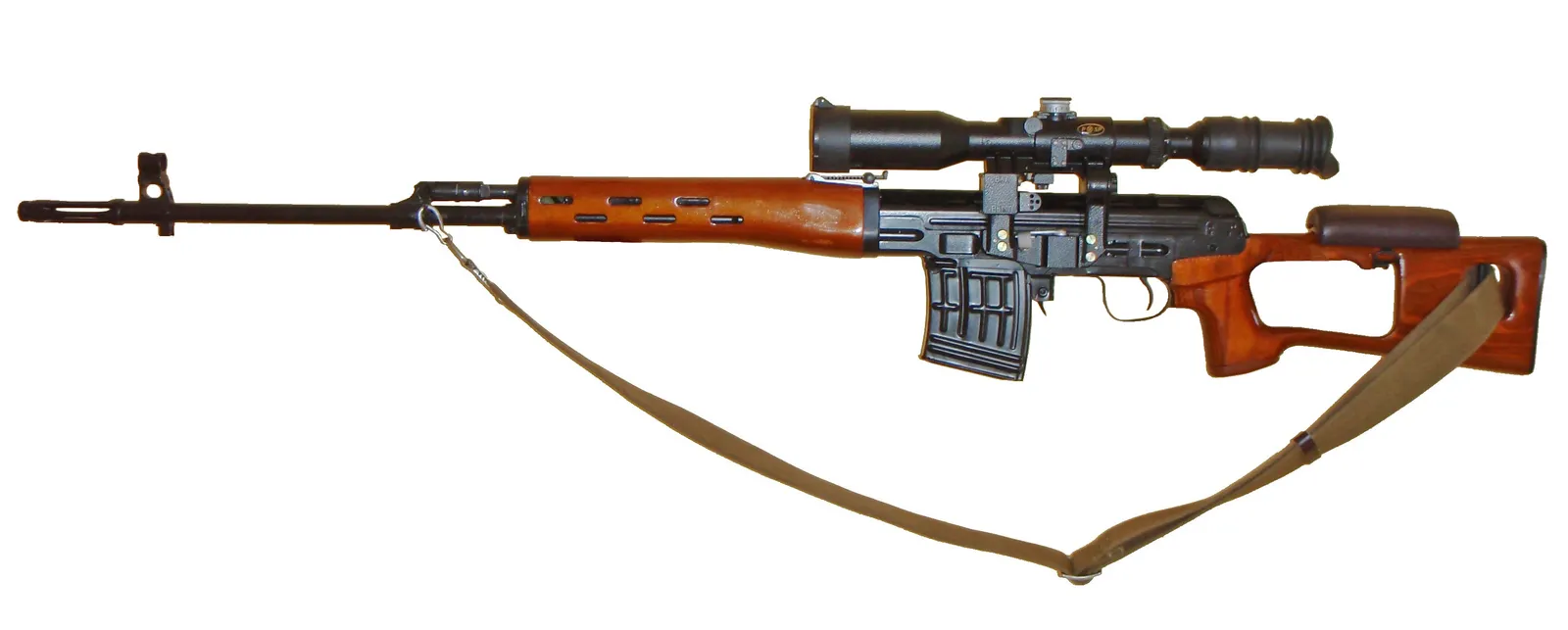
The SVD, commonly known as the Dragunov, is a Soviet 7.62x54R semi-automatic designated marksman rifle designed to give infantry units longer-range precision fire without the weight and slower rate of a bolt-action sniper rifle. Its fixed-stock, folding-stock, modernized, and heavy-caliber variants remain visible across state forces and non-state armed groups, including documented use in Ukraine, Syria, Afghanistan, and the Lake Chad Basin.

Role in Conflicts

Role in conflict
Insurgent marksman and sniper fire

A UN DPO/UNODA Lake Chad Basin weapons study lists Dragunov sniper rifles among the main manufactured small arms used by Boko Haram, while HumAngle reported a JAS/Boko Haram Lake Chad video showing a fighter demonstrating marksmanship with a Dragunov.

CAR documented eight SVD designated marksman rifles in Ukraine during 2018-2019 Donbas fieldwork, including rifles modified for sound moderators; open sniper reporting also describes Ukrainian SVDM use in Donbas, older SVD rifles with Russian snipers around the 2022 invasion, and Ukraine's GUR reporting SVD/SVCh rifles issued to North Korean troops moved toward Ukraine in 2024.

Role details

DOD IG and DVIDS records document Dragunov/SVD-137 rifles with Afghan government forces in 2009-2012, GAO and Small Arms Survey place Dragunov rifles in ANDSF equipment and transfer records, and U.S./UK imagery and reporting document a captured Dragunov rifle and Taliban-linked Dragunov ammunition.

Role details
Profile / Specs

Profile

Origin
Soviet Union
Type
Semi-automatic designated marksman rifle
Service note
Cold War design still in service during the 2014 Russia-Ukraine War
Designer
Yevgeny Dragunov
Designed
1958-1963
Unit cost
Not publicly standardized
Produced
1963-present
Number built
Not publicly standardized

Specifications

Cartridge
7.62x54R
Action
Gas-operated semi-automatic rifle
Magazine
10-round detachable box magazine
Weight
About 4.3 kg unloaded with optic for the standard SVD
Length
About 1,220 mm
Barrel length
620 mm
Sight system
PSO-1 optical sight with backup iron sights
Variants

SVD family designations mostly distinguish stock layout, modernization packages, caliber changes, and licensed or derivative rifles rather than a single clean production block.

VariantConfigurationDesignation notes
SVDSFolding-stock airborne and mechanized variant

Small Arms Survey treats the SVDS as a folding-stock SVD variant intended for troops that needed a shorter weapon for transport and vehicle or airborne use.

Sources: Dragunov SVD Weapons Identification Sheet

SVDMModernized Russian SVD

Kalashnikov and Russian procurement reporting identify the SVDM as a modernized Dragunov-family rifle, keeping the SVD lineage in Russian service despite newer replacement programs.

Sources: SVD capabilities, Russia chooses 60-year-old SVD rifle instead of the latest SVCh

SVDKHeavy-caliber derivative

Small Arms Survey identifies the SVDK as a larger-caliber Dragunov-family variant chambered for 9.3x64 mm ammunition.

Sources: Dragunov SVD Weapons Identification Sheet

SVUBullpup derivative

Small Arms Survey lists the SVU as a bullpup-pattern derivative in the wider Dragunov family rather than a standard fixed-stock SVD.

Sources: Dragunov SVD Weapons Identification Sheet

Timeline

SVD Key Events

  1. Design and Soviet adoption

    Yevgeny Dragunov's rifle was developed in the late 1950s and early 1960s, with the SVD adopted into Soviet service in 1963.

    Sources: Dragunov SVD Weapons Identification Sheet, SVD-63 Russian 7.62mm Russian Automatic Sniper Rifle

  2. Folding and derivative models expand the family

    Small Arms Survey's identification sheet distinguishes later Dragunov-family layouts such as the folding-stock SVDS, heavy-caliber SVDK, and bullpup SVU.

    Sources: Dragunov SVD Weapons Identification Sheet

  3. Documented in al-Qusayr fighting

    Reporting and conflict analysis from the Battle of Qusayr documented Dragunov rifles with both Free Syrian Army and Hezbollah combatants.

    Sources: Confessions Of A Sniper, The Battle for Qusayr

  4. Still issued beside newer Russian rifles

    Ukraine's military intelligence reported that Russia issued SVD/SVCh sniper rifles to North Korean troops moved toward Ukraine, illustrating continued Dragunov-family use alongside newer weapons.

    Sources: Po-pikhotnomu: chym Moskva ozbroila perekynuti do kordoniv z Ukrainoiu viiska KNDR?

Why It Stayed Useful
  • It filled the squad precision gap. The SVD gave infantry units a semi-automatic 7.62x54R rifle with optical sights and a 10-round magazine, trading some pure sniper-rifle precision for speed and reach.
  • The family is broader than one fixed-stock rifle. SVDS, SVDM, SVDK, SVU, and export or derivative rifles can appear under Dragunov labels, so conflict reports often need careful variant wording.
  • Legacy stocks matter. The rifle appears in state arsenals, captured inventories, transfers, and armed-group holdings, which is why it shows up in conflicts long after its 1960s adoption.
Media
Related Weapon Systems
M76 sniper rifle, Semi-automatic designated marksman/sniper rifle, Infantry WeaponsInfantry WeaponsM76 sniper rifleSemi-automatic designated marksman/sniper rifleThe M76 is a Zastava-built Yugoslav semi-automatic marksman rifle originally chambered for 7.92x57 mm Mauser and built around an enlarged Kalashnikov-pattern action. Its catalog significance is twofold: it was a Yugoslav People's Army precision rifle with distinctive 8 mm ammunition and optic arrangements, and it later appears in Lake Chad Basin reporting as a Serbian-origin sniper rifle associated with Boko Haram factions.
Type 56 assault rifle, 7.62x39mm Kalashnikov-pattern assault rifle, Infantry WeaponsInfantry WeaponsType 56 assault rifle7.62x39mm Kalashnikov-pattern assault rifleThe Type 56 is China's 7.62x39mm Kalashnikov-pattern assault rifle family, adopted in 1956, built in very large numbers, and exported widely through state, surplus, and illicit channels. Its early rifles followed the Soviet AK-47 with milled receivers, later production used AKM-style stamped receivers under the same designation, and many examples are recognizable by a permanently attached folding spike bayonet. In the 2009 Boko Haram Insurgency, Small Arms Survey and Stimson reporting link Chinese Type 56 rifles to weapons seized from Boko Haram members and to materiel captured during the 2016 Bosso camp attack in Niger.
AKM, 7.62x39mm assault rifle, Infantry WeaponsInfantry WeaponsAKM7.62x39mm assault rifleThe AKM is the stamped-receiver modernization of the Soviet Kalashnikov assault rifle, chambered for 7.62x39mm and built around a long-stroke gas piston and rotating bolt. Adopted in 1959, it reduced production burden compared with earlier milled-receiver AK rifles and became a widely licensed baseline for later 7.62mm Kalashnikov-pattern weapons. CAR and ARES field documentation continues to place AKM and AKM-pattern rifles in modern conflict stocks, from Islamic State recoveries in Iraq and Syria to Taliban captures in Afghanistan.
M2010 Enhanced Sniper Rifle, Bolt-action sniper rifle, Infantry WeaponsInfantry WeaponsM2010 Enhanced Sniper RifleBolt-action sniper rifleThe M2010 Enhanced Sniper Rifle is the U.S. Army's .300 Winchester Magnum rebuild of the M24 Sniper Weapon System, developed to give sniper teams longer reach in Afghanistan's mountainous terrain. Remington converted the long-action M24 into a suppressed, magazine-fed precision rifle with a folding adjustable chassis, extended-range optic, night-sight compatibility, and a 1,200-meter effective range; later imagery from 2014 Operation Inherent Resolve shows the rifle still serving in U.S. patrol overwatch in northeast Syria.

Sources