Infantry Weapons

M76 sniper rifle

Also known as
  • Zastava M76
  • Zastava M-76
  • M-76 sniper rifle
  • Yugoslav M76
  • 7.9 mm M76
  • 7.92x57 mm M76
  • 8x57 mm M76
  • Poluautomatska snajperska puska 7.9 mm M76

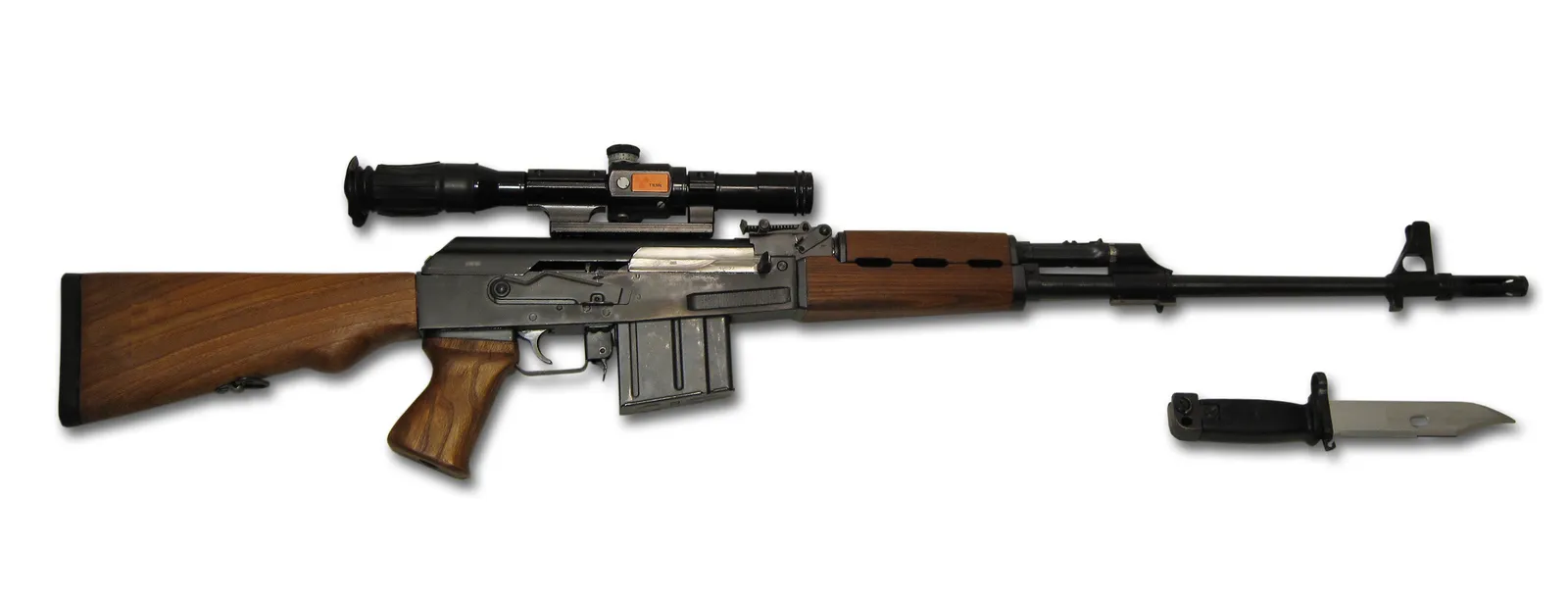
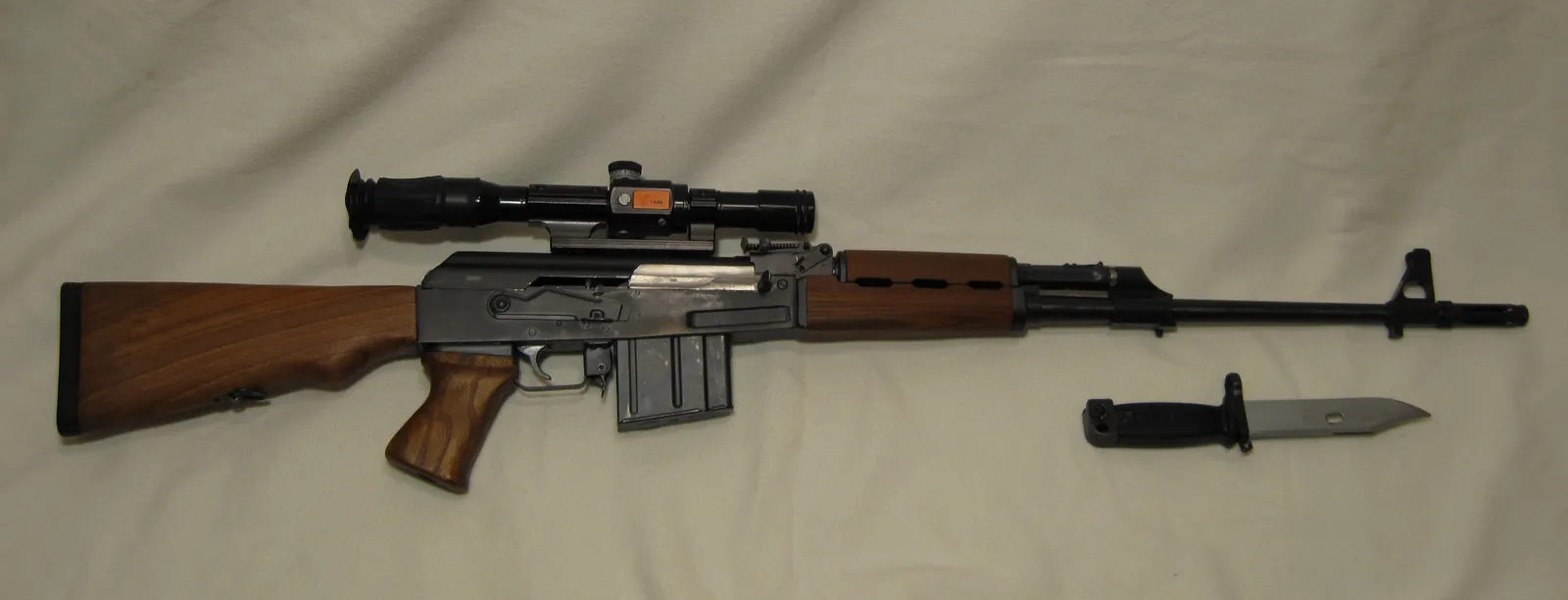
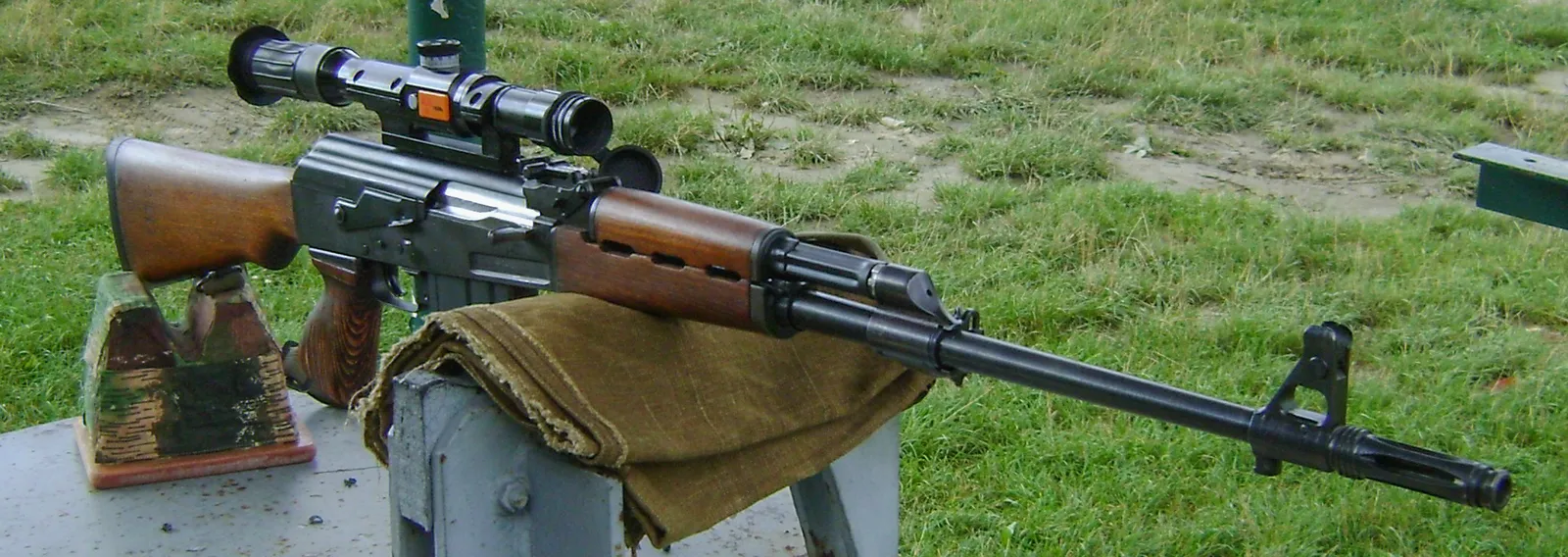
The M76 is a Zastava-built Yugoslav semi-automatic marksman rifle originally chambered for 7.92x57 mm Mauser and built around an enlarged Kalashnikov-pattern action. Its catalog significance is twofold: it was a Yugoslav People's Army precision rifle with distinctive 8 mm ammunition and optic arrangements, and it later appears in Lake Chad Basin reporting as a Serbian-origin sniper rifle associated with Boko Haram factions.

Role in Conflicts

Role in conflict
Insurgent designated marksman rifle

Listed in Lake Chad Basin reporting as a Serbian-origin sniper rifle in service with, or recovered from, Boko Haram factions between 2015 and April 2021; the source treats the list as cumulative and not a current holdings snapshot.

Profile / Specs

Profile

Origin
Yugoslavia / Serbia
Built by
Zastava Arms
Type
Semi-automatic designated marksman/sniper rifle
Service note
Cold War design with documented post-2015 conflict circulation
Designer
Zastava Arms
Designed
Mid-1970s
Produced
Late 1970s onward; successor and derivative production associated with Zastava Arms in Serbia

Specifications

Caliber
7.92x57 mm Mauser original; related variants in 7.62x54R and 7.62x51 mm
Operation
Gas-operated semi-automatic rifle with rotating bolt
Length
1,135 mm
Barrel length
550 mm
Weight
4.6 kg unloaded
Feed
10-round detachable box magazine
Sights
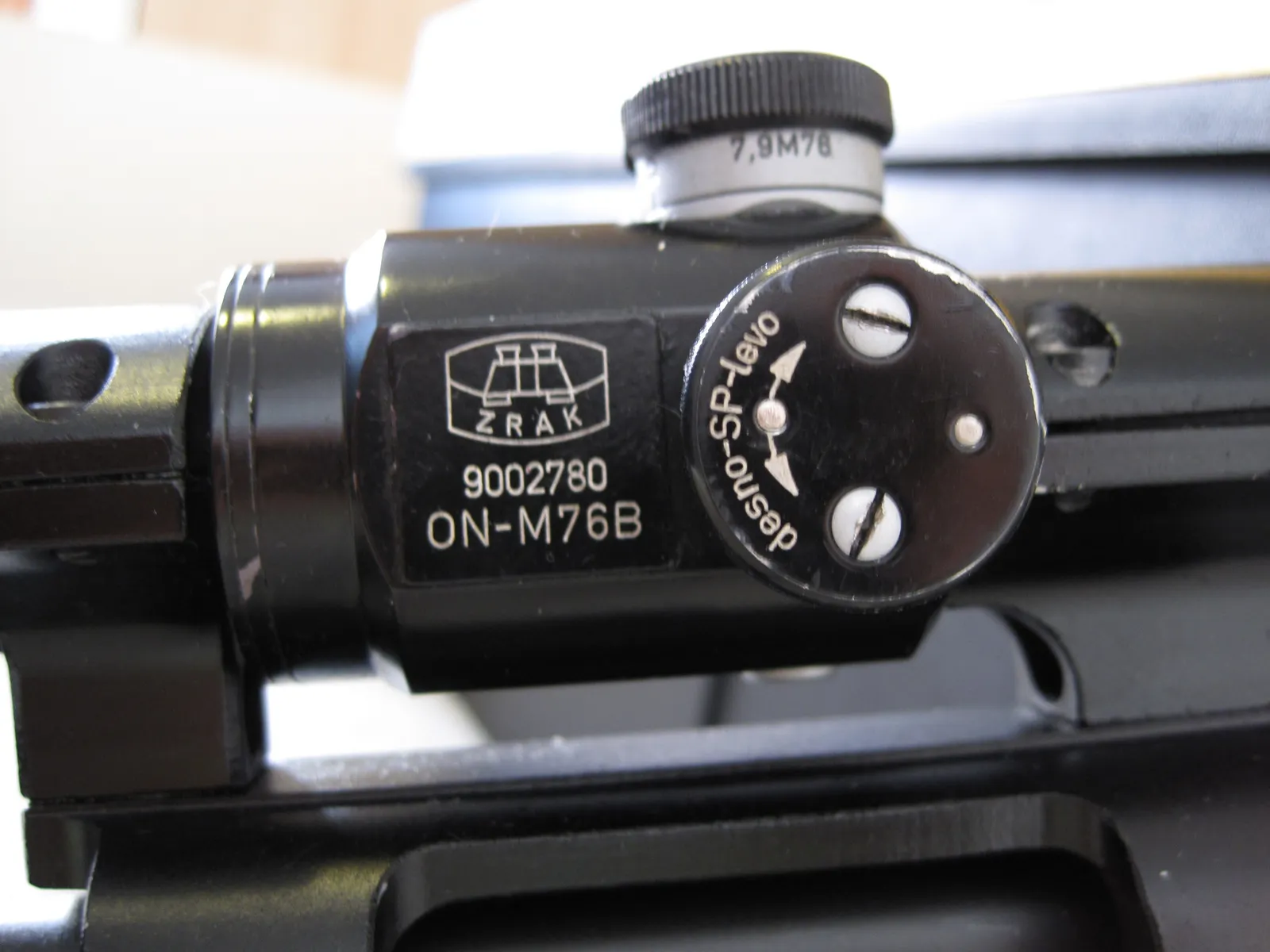
Optical primary sight with iron backup sights
Muzzle velocity
730 m/s
Effective range
Reported around 800 m for man-sized targets
Optics interface
Left-side receiver rail for day or night optic mounts
Design and Optics

The M76 sits between a conventional sniper rifle and a squad-level marksman rifle: it keeps semi-automatic fire, a 10-round magazine, and Kalashnikov-style controls, but scales the receiver, bolt, and barrel group for full-power rifle ammunition.

FeatureCatalog contextWhy it matters
Action familyGas-operated, rotating-bolt, Kalashnikov-derived layoutExplains the rifle's relationship to Yugoslav AK/RPK production without treating it as an SVD clone.
Original cartridge7.92x57 mm Mauser / 7.9 mm M76 service contextDistinguishes the original Yugoslav weapon from later 7.62 mm derivatives.
Optic fitSide rail for day and night optical sights, backed by iron sightsShows why the rifle appears in sniper/designated-marksman identification sheets despite its AK-pattern control layout.
Variants

The M76 family centers on the Yugoslav 7.9 mm rifle, with close derivatives and alternate chamberings documented in small-arms reference sources.

VariantConfigurationDesignation notes
Tabuk close derivativeIraqi close derivative

Small Arms Survey treats the Tabuk sniper rifle as a close derivative in the M76 identification family rather than as the baseline Yugoslav rifle.

Sources: M76 (& close derivatives) Weapons Identification Sheet

7.62x51 mm and 7.62x54R chamberingsAlternate-caliber derivatives

Reference sources identify M76-related rifles in 7.62x51 mm NATO and 7.62x54R alongside the original 7.92x57 mm Mauser chambering.

Sources: M76 (& close derivatives) Weapons Identification Sheet, Zastava M76

Timeline

M76 sniper rifle Key Events

  1. Yugoslav marksman-rifle development

    Reference sources place M76 development at Crvena Zastava in the late 1970s as a semi-automatic Yugoslav precision rifle built around a strengthened Kalashnikov-pattern action.

    Sources: Zastava M76, Zastava's Heavy Hitter: The Yugoslav M76 DMR

  2. JNA 7.9 mm M76 manual

    A Yugoslav People's Army infantry manual was issued for the Poluautomatska snajperska puska 7.9 mm M76, supporting the official 7.9 mm M76 designation and JNA service context.

    Sources: JNA 7.9 mm M76 Manual

  3. Lake Chad Basin reporting

    IPIS/ECDPM reporting listed the Serbian-origin M76 among small arms associated with, or recovered from, Boko Haram factions in the 2015-April 2021 reporting window.

    Sources: The Management of Lethal Materiel in Conflict Settings

Media
Related Weapon Systems
SVD, Semi-automatic designated marksman rifle, Infantry WeaponsInfantry WeaponsSVDSemi-automatic designated marksman rifleThe SVD, commonly known as the Dragunov, is a Soviet 7.62x54R semi-automatic designated marksman rifle designed to give infantry units longer-range precision fire without the weight and slower rate of a bolt-action sniper rifle. Its fixed-stock, folding-stock, modernized, and heavy-caliber variants remain visible across state forces and non-state armed groups, including documented use in Ukraine, Syria, Afghanistan, and the Lake Chad Basin.
AKM, 7.62x39mm assault rifle, Infantry WeaponsInfantry WeaponsAKM7.62x39mm assault rifleThe AKM is the stamped-receiver modernization of the Soviet Kalashnikov assault rifle, chambered for 7.62x39mm and built around a long-stroke gas piston and rotating bolt. Adopted in 1959, it reduced production burden compared with earlier milled-receiver AK rifles and became a widely licensed baseline for later 7.62mm Kalashnikov-pattern weapons. CAR and ARES field documentation continues to place AKM and AKM-pattern rifles in modern conflict stocks, from Islamic State recoveries in Iraq and Syria to Taliban captures in Afghanistan.
Type 56 assault rifle, 7.62x39mm Kalashnikov-pattern assault rifle, Infantry WeaponsInfantry WeaponsType 56 assault rifle7.62x39mm Kalashnikov-pattern assault rifleThe Type 56 is China's 7.62x39mm Kalashnikov-pattern assault rifle family, adopted in 1956, built in very large numbers, and exported widely through state, surplus, and illicit channels. Its early rifles followed the Soviet AK-47 with milled receivers, later production used AKM-style stamped receivers under the same designation, and many examples are recognizable by a permanently attached folding spike bayonet. In the 2009 Boko Haram Insurgency, Small Arms Survey and Stimson reporting link Chinese Type 56 rifles to weapons seized from Boko Haram members and to materiel captured during the 2016 Bosso camp attack in Niger.

Sources