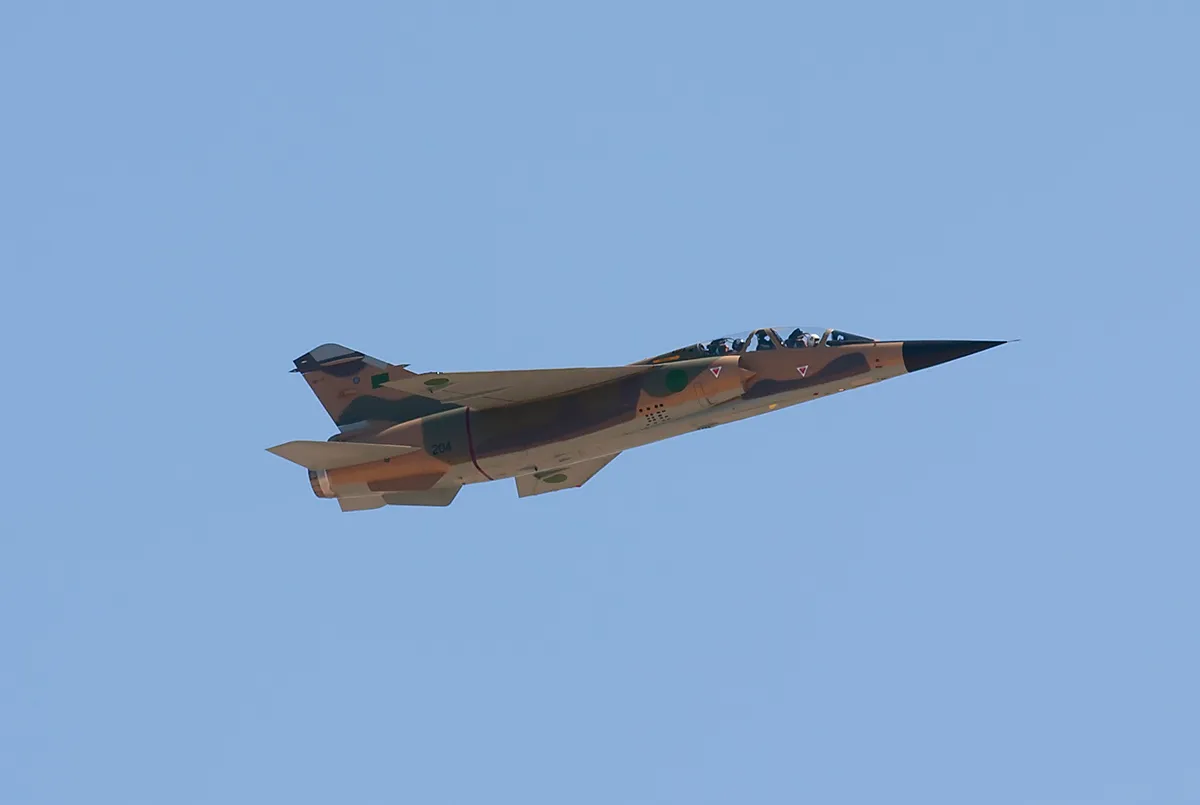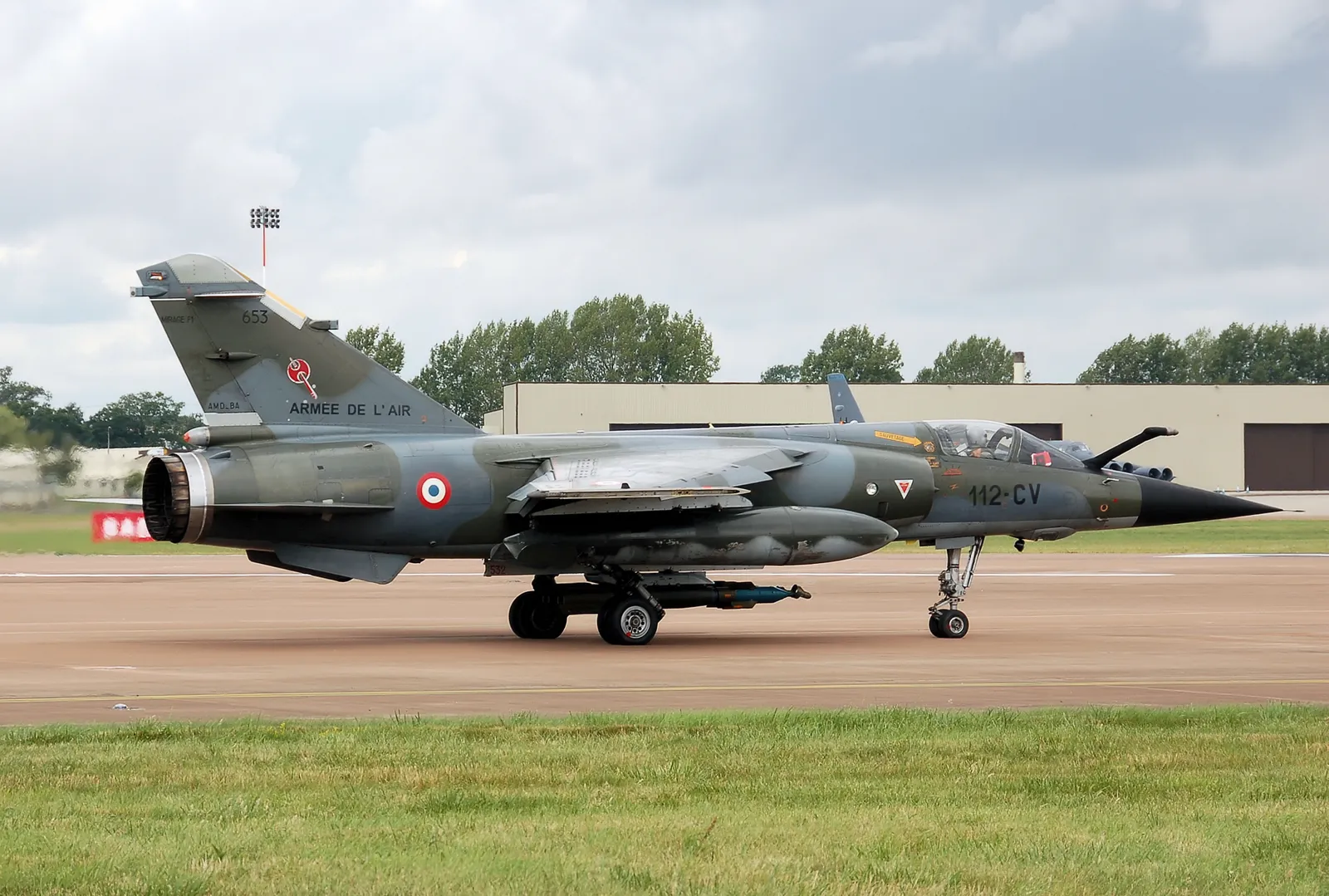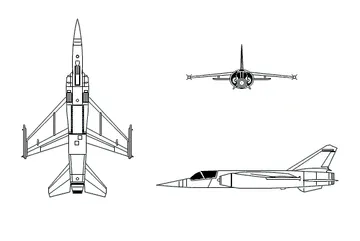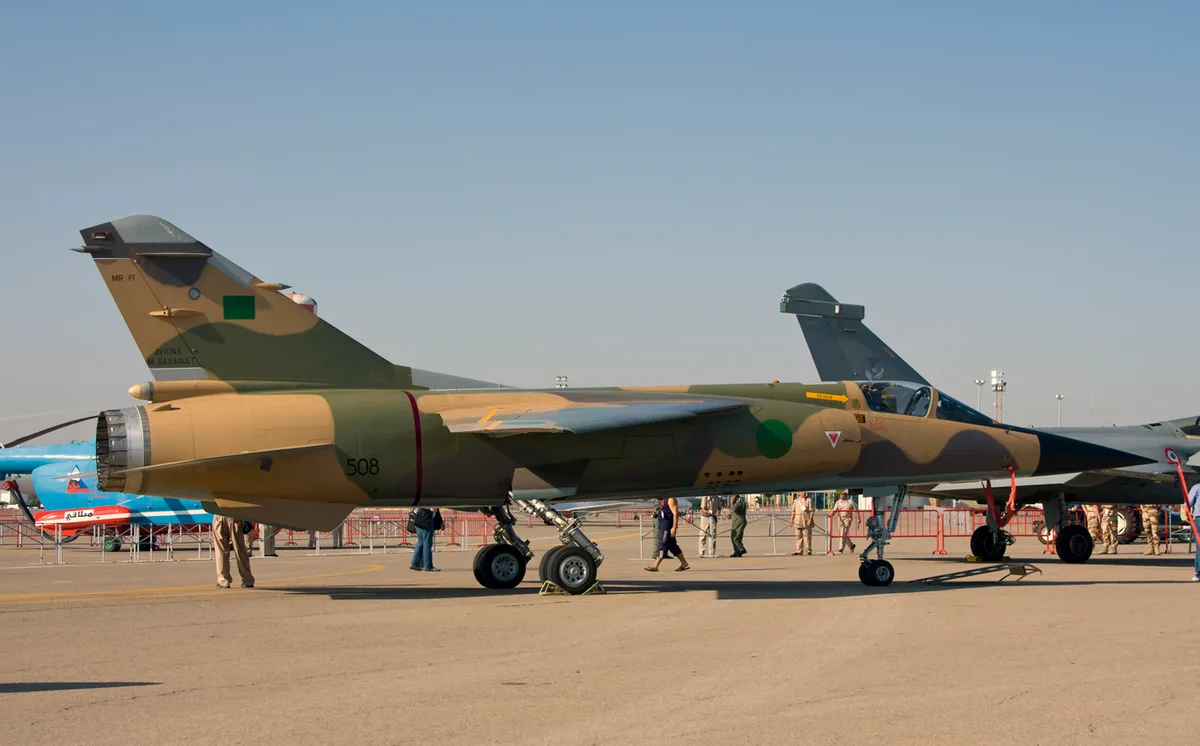
- Side
- Iraq

CIA and specialist airpower sources describe Iraqi Mirage F1 aircraft using Exocet missiles in Gulf attack missions and performing interception, strike, and anti-shipping roles during the Iran-Iraq War.
The Dassault Mirage F1 is a French swept-wing fighter family built around all-weather interception but adapted into attack, reconnaissance, trainer, and export multirole versions. Its source-backed conflict record spans Iraqi Mirage F1EQ missions in the Iran-Iraq War and Gulf War, Ecuadorian Cenepa War sorties, French reconnaissance and strike-support deployments from Kosovo to Afghanistan, Libya, and Mali, and a 2019 Libyan shootdown tied to GNA strike activity during the Tripoli siege.
CIA and specialist airpower sources describe Iraqi Mirage F1 aircraft using Exocet missiles in Gulf attack missions and performing interception, strike, and anti-shipping roles during the Iran-Iraq War.
The U.S. Gulf War final report lists Kuwaiti and French Air Force F-1s attacking Iraqi artillery, armor, troops, and other Iraqi forces in the Kuwaiti theater, while airpower-history reporting describes Iraqi Mirage F1s taking part in an attempted strike on Saudi oil facilities.
Role detailsEcuadorian and aviation-history sources describe Mirage F1 sorties, radar encounters, reconnaissance missions, and planned ground-support missions by Ecuador's Ala de Combate 21 during the 1995 Cenepa conflict.
RAND and UK Parliament order-of-battle material list French Mirage F1CR aircraft among NATO aircraft assigned to Operation Allied Force in 1999.
Air University Press describes French Mirage F1-CR deployments for route reconnaissance, surveillance, mapping, and later ground-support missions in Afghanistan, including the 2007 move to Kandahar.
Role detailsRAND's Libya air-campaign study lists French Mirage F1CT and Mirage F1CR aircraft assigned to Operations Odyssey Dawn and Unified Protector, based from Souda Bay and Solenzara.
Air Power Review and RAND describe Mirage F1-CR or Mirage F1 aircraft supporting Operation Serval with theater ISR and joint fires in Mali.
Reporting on the May 2019 shootdown near Tripoli identified a Mirage F1 flown for the GNA side; sources describe LNA forces downing the jet and link the flight to bombing or strike activity against LNA positions and infrastructure during the Tripoli siege.
The Mirage F1 moved Dassault's Mirage fighter line away from the earlier delta-wing layout toward a swept shoulder wing, conventional tail surfaces, and high-lift devices intended to reduce approach speed and runway dependence while retaining Mach 2-class performance.
Dassault links the wing choice to shorter takeoff and landing distances, lower approach speed, longer radius, and operation from less elaborate runways.
The family separated into interceptor, day-attack, multirole export, two-seat training, reconnaissance, and later French attack-conversion branches.
Operator variants appear in Iraq, Kuwait, Ecuador, Libya, Morocco, and several French expeditionary operations, with direct conflict rows here limited to conflicts supported by aircraft-specific sources.
Mirage F1 designations split mainly by mission fit: F1C covered the all-weather air-defense baseline, F1A and F1E adapted the airframe for attack or export multirole work, F1B added a two-seat cockpit, and French CR/CT branches moved the family toward reconnaissance and strike.
| Variant | Configuration | Designation notes |
|---|---|---|
| Mirage F1C | All-weather interceptor baseline | Dassault describes the F1C as the basic all-weather, all-altitude air-defense version. Sources: Dassault Mirage F1 Overview |
| Mirage F1A / F1AZ | Day attack export branch | Dassault identifies the F1A as a simplified-electronics day version with more fuel, realized for South Africa as the F1AZ. Sources: Dassault Mirage F1 Overview |
| Mirage F1B | Two-seat trainer | Dassault identifies the F1B as the two-seat F1C derivative, initially developed for Kuwait and also acquired by France. Sources: Dassault Mirage F1 Overview |
| Mirage F1CR / F1R | Tactical reconnaissance branch | Dassault describes the F1R as the export reconnaissance version of the French F1CR, optimized for low-altitude day and night reconnaissance. Sources: Dassault Mirage F1 Overview |
| Mirage F1CT | French attack conversion | Dassault places the F1CT alongside the F1CR as a later French Air Force branch used after earlier Mirage III-era aircraft reached replacement age. Sources: Dassault Mirage F1 Overview |
| Mirage F1E | Multirole export fighter | Dassault says the export F1E retained F1C missions while adding avionics for more precise air-to-ground missions and longer firing distances. Sources: Dassault Mirage F1 Overview |
Public sources document Mirage F1 carriage across baseline interceptor, Iraqi strike, and Moroccan MF2000 modernization contexts; notes below keep variant-specific limits visible.
| Carried item | Item type | Carriage evidence |
|---|---|---|
 | Short-range air-to-air missile | From Balloons to Drones describes a typical Mirage F1 intercept fit with R.550 Magic missiles, and Aviation Week lists Magic 2 among Moroccan MF2000 weapons. Sources: From Balloons to Drones Mirage F1 Tanker War, Mirage upgrade augments new fighter force |
 | Air-launched anti-ship missile | From Balloons to Drones describes Iraqi Mirage F1s using Exocet missiles for anti-shipping operations during the Iran-Iraq Tanker War; Aviation Week lists AM39 Exocet compatibility for the Moroccan MF2000 upgrade. Sources: From Balloons to Drones Mirage F1 Tanker War, Mirage upgrade augments new fighter force |
 | Precision-guided bomb family | Safran's official HAMMER/AASM PDF says HAMMER / AASM has already been fired from Mirage F1 aircraft, and Aviation Week lists AASM as a major Moroccan MF2000 air-to-ground capability. Sources: Safran AASM HAMMER official PDF, Mirage upgrade augments new fighter force |
 | Air-to-air missile | Aviation Week says the Moroccan MF2000 upgrade can carry IR MICA missiles and has MICA EM available for beyond-visual-range use; this is an upgraded Moroccan Mirage F1 context, not baseline Mirage F1 compatibility. |
Dassault traces the program to a French Air Force requirement for an all-weather low-altitude aircraft with supersonic interception capability, short-field operation, and low approach speed.
Sources: Dassault Mirage F1 Overview
The Mirage F1 01 made its first flight at Melun-Villaroche, and Dassault says the prototype reached Mach 2 on its fourth flight in early 1967.
Sources: Dassault Mirage F1 Overview, Dassault Mirage F1 Timeline
The first production Mirage F1 flew at Merignac before delivery to the French Air Force the following year.
Sources: Dassault Mirage F1 Overview
Dassault records delivery of the first production Mirage F1 to the French Air Force on March 14, 1974.
Sources: Dassault Mirage F1 Overview, Dassault Mirage F1 Customer Support Datasheet
Aviation Geek Club's account of the Helion Iraqi Mirages research describes Iraqi Mirage F1EQ-2s using Giraffe tactics against Iranian F-14s north of Ahwaz.
Sources: Aviation Geek Club Iraqi Mirage F1 Giraffe Missions
CBS News and other reporting described a Mirage F1 flown for the GNA side being shot down by LNA forces near Tripoli during the 2019 campaign.
Sources: American Pilot Released After Libya Mirage F1 Shootdown, The Globalized Unmaking of the Libyan State