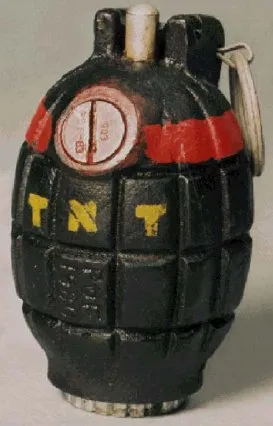


U.S. military reporting listed four Type 86P grenades in large weapons caches found west of Habbaniyah during Operation River Sweep on January 1, 2007, a cache hunt described as disrupting insurgent activity.
Role detailsInfantry Weapons
Type 86P hand grenade
Also known as
- Type 86P
- Type-86P
- Type 86 hand grenade
- Type 86P fragmentation grenade
- 86式全塑无柄手榴弹
- 86式手榴弹
The Type 86P, also described in Chinese as the 86式全塑无柄手榴弹, is a Chinese all-plastic fragmentation hand grenade standardized in 1986 with an ovoid body, striker-release delay fuze, and about 1,600 embedded steel balls. Technical references disagree on the explosive fill, while conflict reporting documents the type in Iraq weapons caches, Boko Haram-captured materiel in northeast Nigeria, and opposition-area Syrian arms-market listings.
Role in Conflicts
Displayed among Type 86P hand grenades and other materiel reported stolen from Nigerian forces after the April 2021 Dikwa attack.
ARES documented 19 Chinese Type 86P hand grenades among online arms-market listings in opposition-controlled north and northwestern Syria during its November 2020-November 2021 monitoring window; this supports circulation, not a specific firing event.
Role detailsProfile / Specs
Profile
- Origin
- China
- Built by
- Chinese state ordnance industry
- Type
- All-plastic defensive fragmentation hand grenade
- Service note
- 1986-present
- Designed
- 1986
- Produced
- 1986 onward
Specifications
- Munition class
- High-explosive fragmentation hand grenade
- Body
- All-plastic ovoid body with horizontal and vertical grip ribs
- Fuze
- Striker-release delay fuze; CAT-UXO identifies the Type 86P fuze as pyrotechnic-delay
- Fragmentation
- Approximately 1,600 steel balls, about 2.5-3 mm, embedded in plastic
- Fill
- Open sources conflict: Chinese web references report about 40 g TNT, while a 1994 U.S. ordnance guide lists plasticized PETN; JMU/CISR extract lists 39.28 g net explosive weight
- Delay
- 3-5 seconds in the 1994 U.S. ordnance guide; Chinese web references often summarize about 4 seconds
- Effect radii
- Lethal radius about 6 m; safety radius about 25 m
- Dimensions
- About 90 mm long and 52 mm diameter
- Weight
- About 260 g
- Grip ribs
- External grip pattern reported as five horizontal ribs and eight radial/longitudinal ribs
Timeline
Type 86P hand grenade Key Events
Design finalized
Chinese reporting says the 86式全塑无柄手榴弹 was designed and standardized in 1986 and then produced in quantity for PLA service.
Sources: 军事丨国产86式全塑无柄手榴弹,将代替木柄手榴弹装备部队 - 搜狐
Recovered in Iraq cache hunt
U.S. military reporting said Marine engineers found four Type 86P grenades among weapons caches west of Habbaniyah during Operation River Sweep.
Sources: Iraqi, Coalition Troops Detain Suspects, Find Weapons
Shown in Dikwa capture imagery
Sahara Reporters published photos of Type 86P grenades among materiel Boko Haram said it had stolen from Nigerian forces after the Dikwa attack.
Sources: Boko Haram Releases Photos Of Nigerian Army's Gun Trucks, Police Van Stolen In Dikwa
ARES Syria market report released
ARES' Digital Bazaar report identified 19 Chinese Type 86P hand grenades in its dataset of online arms-market listings from opposition-controlled northwestern Syria.
Sources: Digital Bazaar: The Online Trade of Arms and Munitions in Opposition-controlled Syria
Design Notes
Open-source Chinese reporting and a 1994 U.S. ordnance identification guide describe the Type 86P as a compact all-plastic grenade that moved Chinese hand-grenade design away from older stick-grenade ergonomics.
Designation
86式全塑无柄手榴弹, rendered here as Type 86P hand grenade.
Body construction
An olive-green ovoid plastic body with external ribs and a steel-ball fragmentation liner molded into plastic.
Fragmentation liner
About 1,600 steel balls, typically described around 2.5-3 mm diameter, provide the main anti-personnel fragmentation effect.
Fuze and fill
Sources agree on a striker-release delay fuze but disagree on fill: Chinese web references report about 40 g TNT, while the U.S. ordnance guide lists plasticized PETN.
Related Weapon Systems


Sources
Hand and Rifle Grenades - Worldwide Identification Guide (U)Publisher: Defense Intelligence Agency / U.S. Army Foreign Science and Technology Center | Note: Supports Type 86P identification, Chinese origin, 90 mm length, 52 mm diameter, 260 g weight, striker-release fuze, 3-5 second delay, plastic body, approximately 1,600 steel balls, lethal radius, safety radius, and plasticized-PETN fill listing. | Accessed: 2026-07-03Iraqi, Coalition Troops Detain Suspects, Find WeaponsPublisher: DVIDS / War.gov | Note: For 2003 Iraq War, reports four Type 86P grenades found in weapons caches west of Habbaniyah during Operation River Sweep, supporting recovered insurgent-cache context. | Accessed: 2026-07-03The Management of Lethal Materiel in Conflict SettingsPublisher: International Peace Information Service | Note: For 2009 Boko Haram Insurgency, lists Type 86P hand grenades as materiel in service with or recovered from Boko Haram, supporting that Type 86P hand grenades were fielded by Boko Haram and ISWAP-side forces. | Accessed: 2026-07-03Boko Haram Releases Photos Of Nigerian Army's Gun Trucks, Police Van Stolen In DikwaPublisher: Sahara Reporters | Note: For 2009 Boko Haram Insurgency, reports Boko Haram insurgents displayed Type 86P hand grenades stolen from Nigerian military forces at Dikwa, supporting that Type 86P grenades were fielded by Boko Haram and ISWAP-side forces. | Accessed: 2026-07-03Digital Bazaar: The Online Trade of Arms and Munitions in Opposition-controlled SyriaPublisher: Armament Research Services | Note: For 2011 Syrian Civil War, documents 19 Chinese Type 86P hand grenades among online arms-market listings in opposition-controlled north and northwestern Syria, supporting Type 86P circulation in opposition-held areas rather than a specific firing event. | Accessed: 2026-07-03军事丨国产86式全塑无柄手榴弹,将代替木柄手榴弹装备部队 - 搜狐Publisher: Sohu | Note: Supports the 1986 design date, quantity production, current PLA issue, all-plastic body, 1,600-steel-ball fragmentation liner, 40 g TNT fill, and smokeless/flameless ignition details for the 86式全塑无柄手榴弹. | Accessed: 2026-07-03军事丨国产86式全塑无柄手榴弹,已装备部队定量生产了Publisher: Sina | Note: Supports reported weight, length, diameter, exterior rib pattern, steel-ball liner, and Chinese service background for the 86式全塑无柄手榴弹. | Accessed: 2026-07-0305-Grenade.pdfPublisher: James Madison University Center for International Stabilization and Recovery | Note: Supports EOD-style identification of the Chinese Type 86P hand fragmentation grenade, striker-release grenade association, and 39.28 g net explosive weight. | Accessed: 2026-07-03Type 86P Hand GrenadePublisher: CAT-UXO | Note: Supports general identification, role, fuze type, and technical description of the Chinese Type 86P hand grenade. | Accessed: 2026-07-03Original Chinese Current Issue Type 86P Hand Grenade with Fuze and Pull RingPublisher: International Military Antiques | Note: Supports background details for an inert Type 86P example, including Chinese development, plastic body construction, fuze assembly, approximate height, and steel-ball fragmentation liner. | Accessed: 2026-07-03METIS grenade munitions indexPublisher: Fenix Insight | Note: Supports manufacturer-country context by listing Type 86P hand grenades as manufactured in China. | Accessed: 2026-07-03Type 86P grenade.jpgPublisher: Wikimedia Commons | Note: Image provenance for a public-domain U.S. Army drawing of the Type 86P fragmentation grenade. | Accessed: 2026-07-03