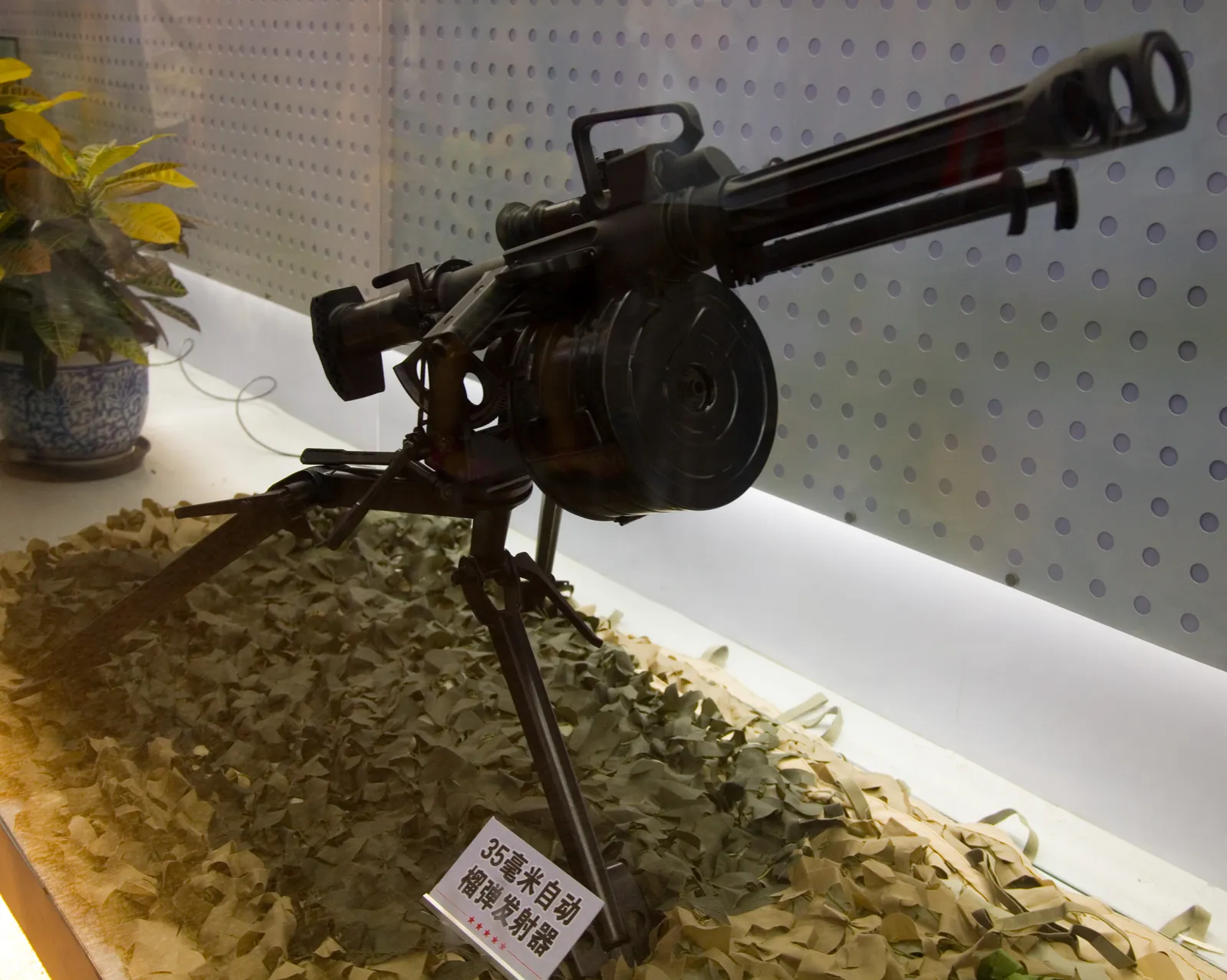

ARES documented a Chinese QLZ-87 automatic grenade launcher captured by the Taliban in Wardak province in July 2021; the source identifies the capture but leaves the launcher's acquisition route unknown.
Role detailsInfantry Weapons
QLZ-87 automatic grenade launcher
Also known as
- QLZ87
- QLZ-87
- QLZ87-35
- Type 87 grenade launcher
- Type 87
- 87式35毫米自动榴弹发射器
- Abba
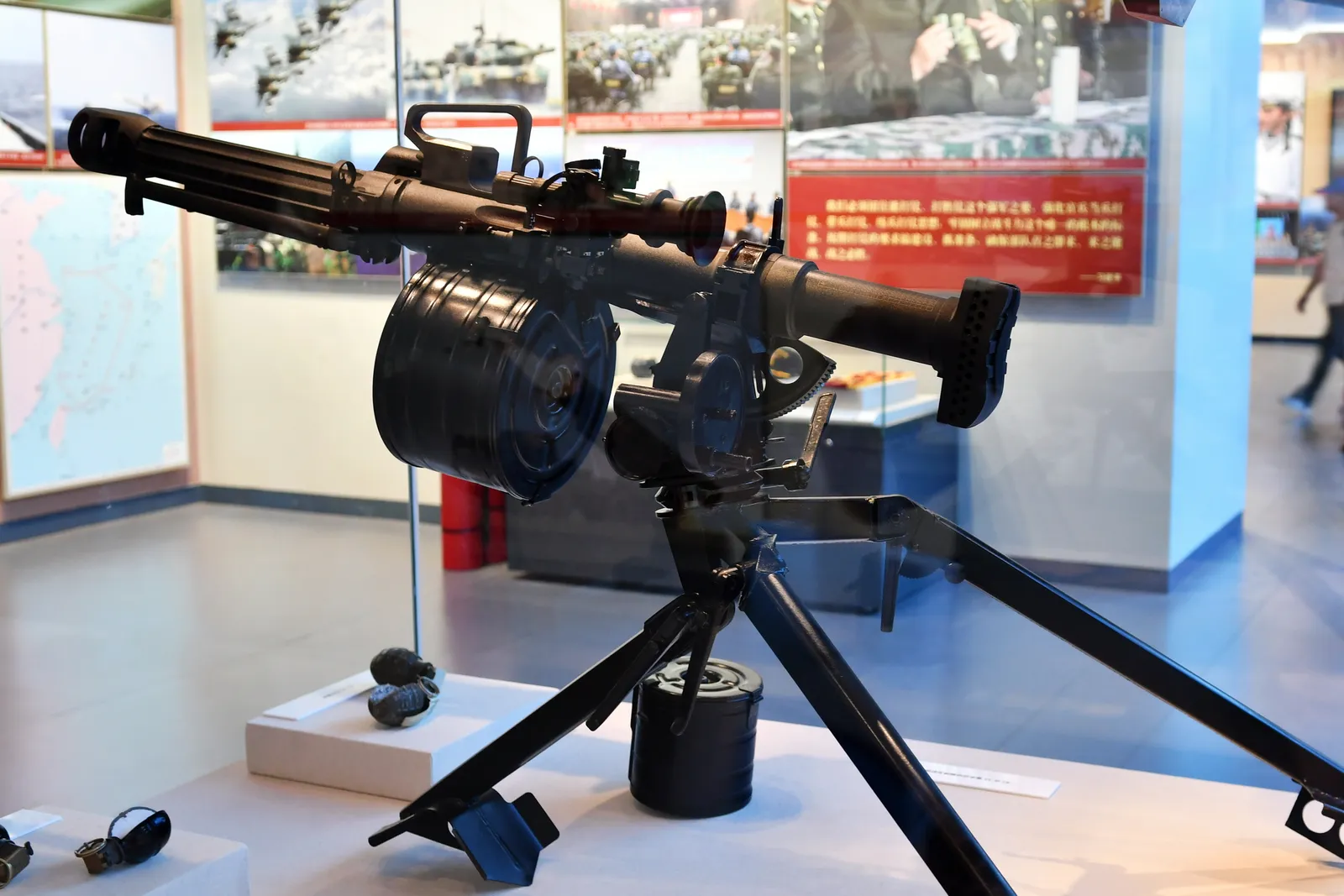
The QLZ-87 is a Chinese 35x32 mm automatic grenade launcher built for portable infantry fire support, with light bipod and heavier tripod configurations fed by drum magazines. Its cataloged conflict record is strongest where photographs or arms-monitoring reports identify specific examples: AMISOM weapons in Somalia, SPLM-N captures in Sudan, opposition and Islamic State appearances in Syria, Séléka stocks in CAR, Kurdish weapons in Iraq, a Boko Haram capture in Niger, and a Taliban capture in Afghanistan.
Role in Conflicts


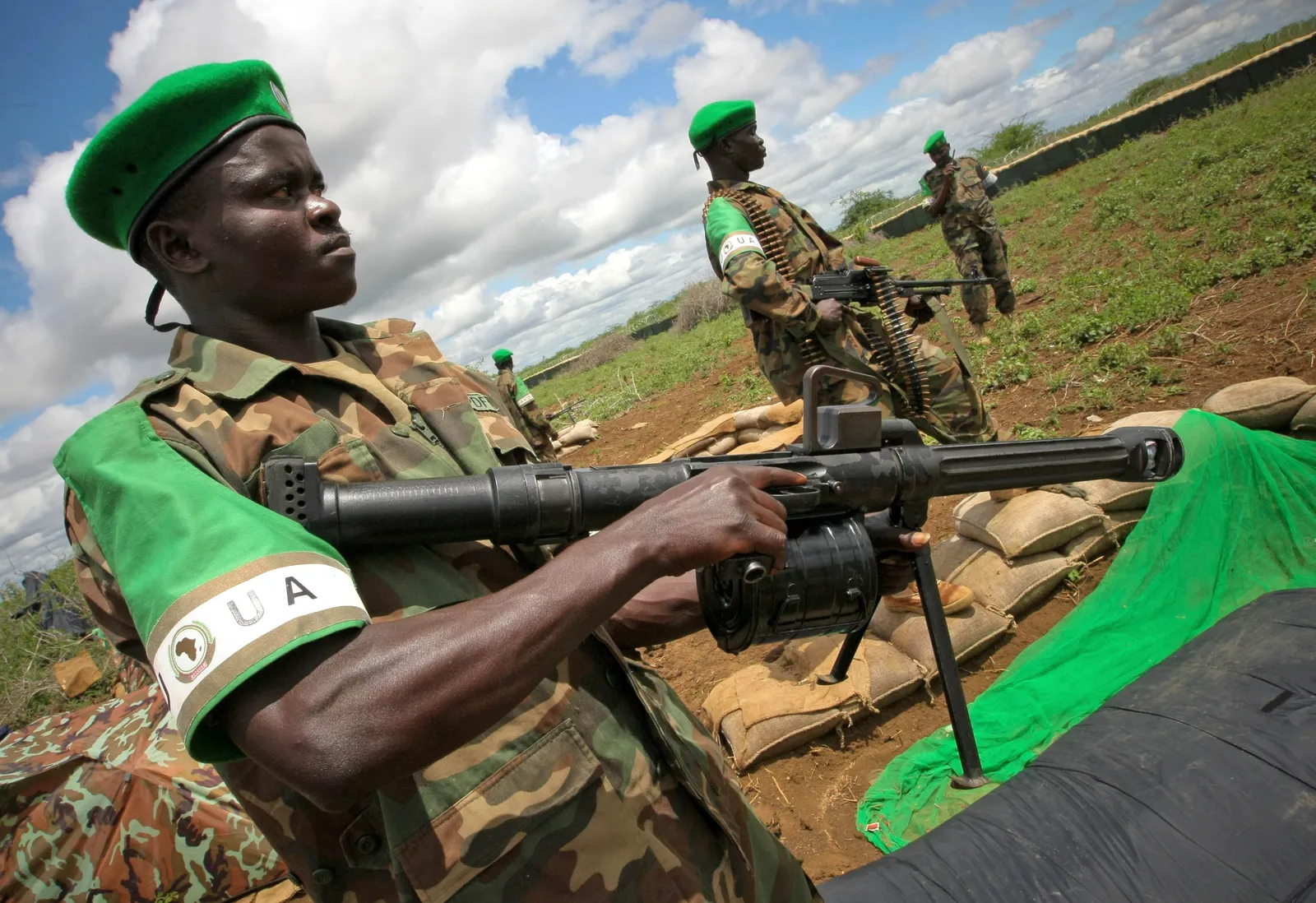
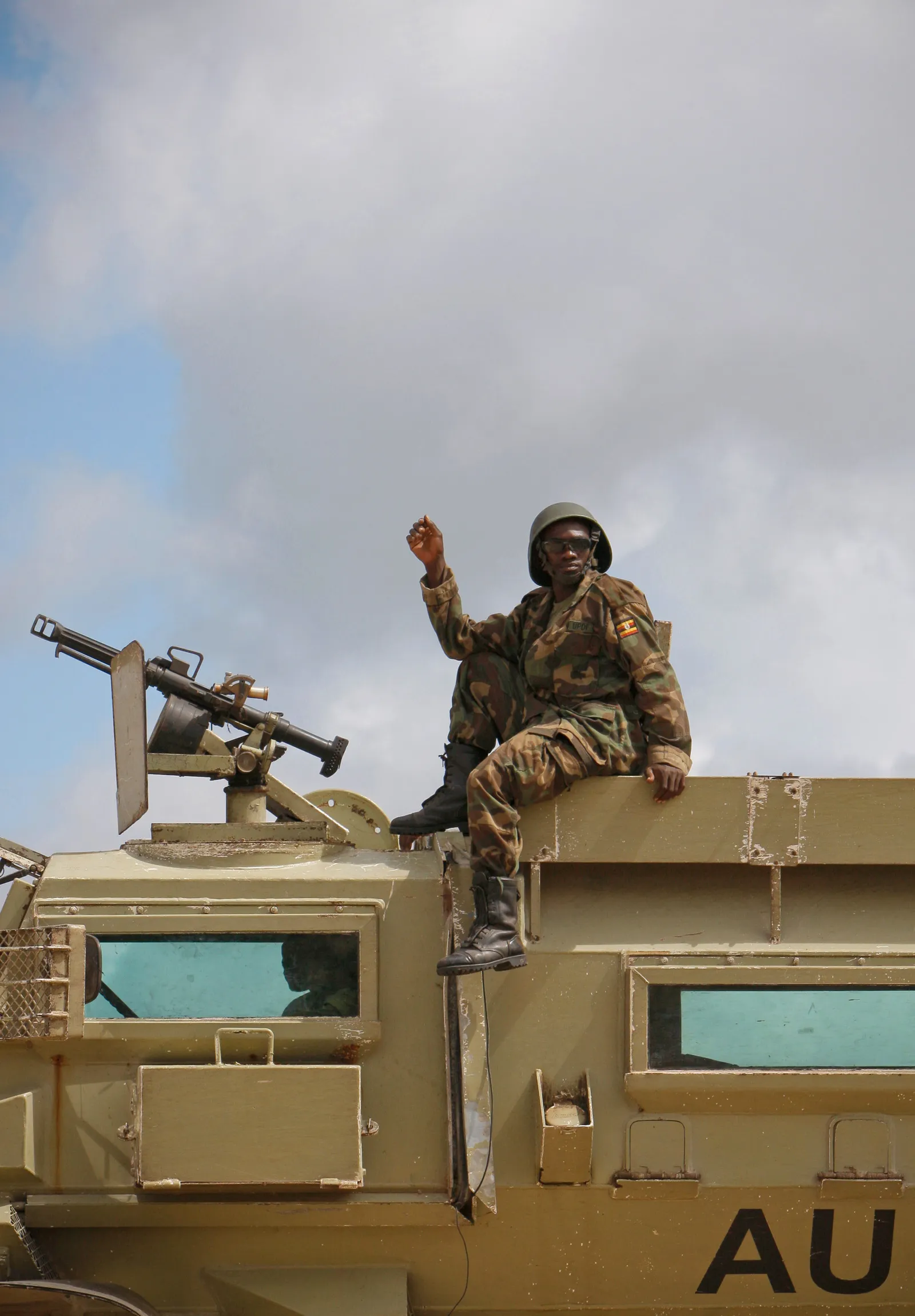
AMISOM public-information photographs from May 2012 identify QLZ-87 launchers in light configuration around Baidoa airstrip and in heavy configuration on a Ugandan AMISOM armored vehicle during the Afgoye corridor operation.

Small Arms Survey identified one QLZ-87 among military materiel taken by Boko Haram during the 3 June 2016 attack on the Bosso military camp in Niger's Diffa region; the source documents capture, not confirmed later firing or retention.
- Side
- Sudanese Armed ForcesSPLM-N and allied rebels

Small Arms Survey documented three QLZ-87 launchers and DFJ87-35 ammunition in South Kordofan and Blue Nile, including examples reportedly captured by SPLM-N from Sudanese Armed Forces during fighting at al Hamra, Tolodi, and Surkum in 2011-2012.
ARES identifies an anti-government Syrian rebel combatant armed with a QLZ-87, and Amnesty International later noted QLZ87 launchers in Syrian conflict photos and video with armed opposition groups and Islamic State fighters.
Role detailsConflict Armament Research documented Chinese-manufactured QLZ-87 35 mm grenade launchers among the small arms and light weapons held by Séléka factions, with related DFS87-35 ammunition documented in Bangui in 2014.

ARES reported December 2014 photos showing Kurdish forces in Iraq with a limited number of Chinese QLZ-87 automatic grenade launchers, while noting that the acquisition route was unclear.
Profile / Specs
Profile
- Origin
- China
- Built by
- Norinco
- Type
- 35 mm automatic grenade launcher
- Service note
- Entered Chinese service in the early 1990s; documented in conflicts in Somalia, South Kordofan, Syria, CAR, Iraq, Niger, and Afghanistan.
- Designer
- Chinese state ordnance design teams
- Designed
- Mid to late 1980s
- Unit cost
- Not publicly reported
- Produced
- Early 1990s-present
- Number built
- Thousands estimated
- Developed from
- W87 automatic grenade launcher
Specifications
- Caliber
- 35x32 mm Chinese high-velocity grenade
- Feed
- 6-round or 15-round drum magazine
- Weight
- 12 kg with sight in light configuration; about 20 kg including tripod
- Length
- 1,040 mm in light configuration; 1,300 mm in heavy configuration
- Muzzle velocity
- About 190 m/s
- Effective range
- 800 m on bipod; up to 1,750 m on tripod
- Rate of fire
- About 480 rounds per minute
- Sights
- Iron sights and 3x optical sight; rail provision for night or thermal sighting
- Ammunition types
- DFS87 HE, DFJ87 HEDP, DFR87 incendiary, DFN87 fragmentation-incendiary, and DFD87 smoke or marker grenades
- Operation
- Direct-gas impingement, flap lock, closed-bolt selective fire
Configuration And Ammunition Notes
The QLZ-87 was built around portability rather than sustained belt-fed fire. Its light configuration uses the launcher with a bipod for infantry movement, while the heavy configuration adds a tripod and is normally shown with the larger drum and optical sight.
Feed devices
Sources identify 6-round and 15-round drum magazines; the larger drum is most closely associated with tripod or vehicle-mounted use.
35 mm cartridge family
ARES identifies DFS87 high-explosive and DFJ87 HEDP as the common projectiles, with incendiary and smoke or marker types also listed in the Chinese 35x32 mm family.
Sights and range
The technical sources describe iron sights and a 3x optical sight, with the tripod configuration extending practical use beyond the bipod range.
Variants
Sources distinguish the accepted QLZ-87/Type 87 from the earlier W87 project and from the later QLB06, which has also been referred to as QLZ-87B. The fielded QLZ-87 itself appears in light and heavy configurations rather than as separate weapon models.
| Variant | Configuration | Designation notes |
|---|---|---|
| QLZ-87 light configuration | Bipod infantry configuration | Uses the launcher with its integral bipod, usually with a 6-round drum, for portable infantry fire support. Sources: Arms & Munitions Brief No. 1: QLZ-87 Automatic Grenade Launcher, Grenade Launchers in China |
| QLZ-87 heavy configuration | Tripod crew-served configuration | Adds the tripod and is commonly shown with the 15-round drum and optical sight for longer-range crew-served fire. Sources: Arms & Munitions Brief No. 1: QLZ-87 Automatic Grenade Launcher, Grenade Launchers in China |
| QLB06 / QLZ-87B | Semi-automatic derivative | ARES describes the QLB06 as a further QLZ-87 development, also referred to as QLZ-87B, with a lighter redesigned receiver and 4-round drum. Sources: Arms & Munitions Brief No. 1: QLZ-87 Automatic Grenade Launcher |
| W87 automatic grenade launcher | Experimental predecessor | Reference sources identify the W87 as an earlier 35 mm automatic grenade launcher project that led into the accepted QLZ-87 design path. Sources: Arms & Munitions Brief No. 1: QLZ-87 Automatic Grenade Launcher, QLZ87 |
Timeline
QLZ-87 automatic grenade launcher Key Events
SPLM-N captures QLZ-87 from SAF
Small Arms Survey records a QLZ-87 launcher captured by SPLM-N from Sudanese Armed Forces between 30 June and 1 July 2011 at al Hamra, South Kordofan.
QLZ-87 photographed with AMISOM near Baidoa
AMISOM image metadata identifies a light-configuration QLZ-87 with Ugandan troops manning defensive positions around Baidoa airstrip in Somalia.
Heavy configuration shown during Afgoye corridor operation
An AMISOM public-information photograph identifies a QLZ-87 in heavy configuration on a Ugandan AMISOM armored vehicle during the Afgoye corridor operation.
Syria and CAR examples enter monitoring reports
ARES documented a Syrian opposition QLZ-87 example, and Conflict Armament Research documented Chinese-manufactured QLZ-87 launchers in Séléka-linked stocks in the Central African Republic.
Kurdish forces in Iraq photographed with QLZ-87
ARES reported photographs of Kurdish forces in Iraq with a limited number of QLZ-87 automatic grenade launchers.
Boko Haram captures QLZ-87 at Bosso
Small Arms Survey documents one QLZ-87 among materiel captured by Boko Haram during the attack on the Bosso military camp in Niger's Diffa region.
Taliban capture QLZ-87 in Wardak
ARES identified a Chinese QLZ-87 automatic grenade launcher among weapons captured by the Taliban in Wardak province during the 2021 offensive.
Related Weapon Systems


Sources
At the Crossroads of Sahelian ConflictsPublisher: Small Arms Survey | Note: Supports 2009 Boko Haram Insurgency direct conflict-use/capture claim: one QLZ-87 was captured by Boko Haram during the 3 June 2016 Bosso military camp attack in Niger. | Accessed: 2026-07-01The Chinese QLZ87 Automatic Grenade LauncherPublisher: Armament Research Services | Note: Supports background on the QLZ-87's development history, portability, light and heavy configurations, and ammunition. | Accessed: 2026-07-01Arms & Munitions Brief No. 1: QLZ-87 Automatic Grenade LauncherPublisher: Armament Research Services | Note: Supports detailed specifications and direct conflict-use claims: a QLZ-87 fielded by an anti-government rebel combatant in the 2011 Syrian Civil War and a QLZ-87 captured from SPLM-N forces in the 2011 South Kordofan and Blue Nile Conflict. | Accessed: 2026-07-01Following the Thread: Arms and Ammunition Tracing in Sudan and South SudanPublisher: Small Arms Survey | Note: Supports 2011 South Kordofan and Blue Nile Conflict direct capture claim: SPLM-N captured QLZ-87 launchers and DFJ87-35 ammunition from Sudanese Armed Forces during 2011-2012 fighting. | Accessed: 2026-07-01Kurdish forces with Chinese QLZ87 automatic grenade launcher and M99 anti-materiel riflePublisher: Armament Research Services | Note: Supports 2013 War in Iraq direct fielding claim: Kurdish forces in Iraq were photographed with QLZ-87 automatic grenade launchers in late 2014. | Accessed: 2026-07-01Taking Stock: The Arming of Islamic StatePublisher: Amnesty International | Note: Supports 2011 Syrian Civil War direct fielding claim: Amnesty's ARES-backed assessment identified QLZ87 launchers in Syrian conflict photos and video with armed opposition groups and Islamic State fighters. | Accessed: 2026-07-01Non-state Armed Groups in the Central African RepublicPublisher: Conflict Armament Research | Note: Supports 2012 Central African Republic Civil War direct fielding/stockpile claim: Séléka-linked stocks included Chinese-manufactured QLZ-87 35 mm grenade launchers and related 35 mm ammunition documented in 2014. | Accessed: 2026-07-01Arms Captured by the Taliban during their Conquest of AfghanistanPublisher: Armament Research Services | Note: Supports 2001 War in Afghanistan direct capture claim: a Chinese QLZ-87 automatic grenade launcher was captured by the Taliban in Wardak province in July 2021. | Accessed: 2026-07-01Grenade Launchers in ChinaPublisher: NDIA / DTIC | Note: Supports Chinese QLZ87 background, service context, ammunition, and performance specifications from a technical armament presentation. | Accessed: 2026-07-01QLZ87Publisher: WeaponSystems.net | Note: Supports manufacturer, production-era, aliases/designations, variants, service-era, and general system background for the QLZ-87. | Accessed: 2026-07-01Type 87 Grenade Launcher.jpgPublisher: Wikimedia Commons | Note: Image provenance for a public-domain Type 87 grenade launcher photo at the Beijing military museum. | Accessed: 2026-06-21Type 87 grenade launcher 20170919.jpgPublisher: Wikimedia Commons | Note: Image provenance for a CC BY-SA 4.0 Type 87 grenade launcher photo showing another museum view. | Accessed: 2026-06-21Advance contingent of AMISOM troops deployed in Baidoa 04Publisher: Wikimedia Commons | Note: Supports image provenance and 1991 Somali Civil War post-2006 al-Shabaab phase direct fielding claim: Ugandan AMISOM troops used or fielded a QLZ-87 in light configuration around Baidoa airstrip on 15 May 2012. | Accessed: 2026-07-01AMISOM and Somali National Army operation to capture Afgoye Corridor Day 5 09Publisher: Wikimedia Commons | Note: Supports image provenance and 1991 Somali Civil War post-2006 al-Shabaab phase direct fielding claim: Ugandan AMISOM troops used or fielded a QLZ-87 in heavy configuration on an armored vehicle during the Afgoye corridor operation on 26 May 2012. | Accessed: 2026-07-01