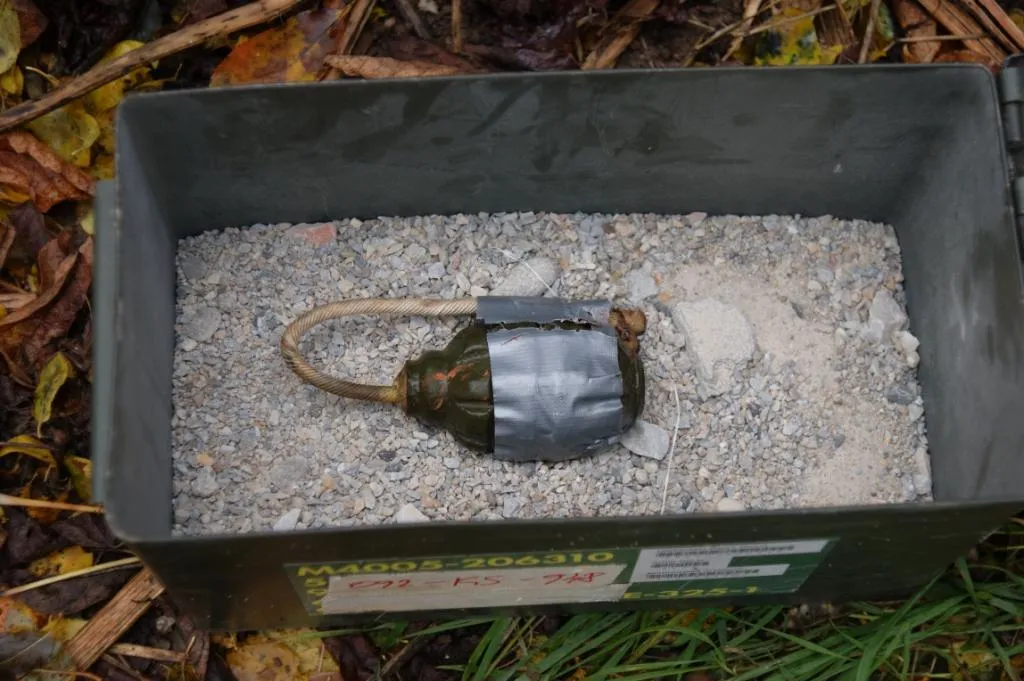

Boko Haram/ISWAP-linked militants used armed drones carrying locally made or locally fabricated grenades against Nigeria's Forward Operating Base at Wajiroko, Borno State, on 24 December 2024.
Munitions
Locally manufactured grenade
Also known as
- Locally fabricated grenade
- Locally made grenade
- Drone-carried locally fabricated grenade
- Grenade-strapped drone payload
Locally manufactured grenade is the public-source wording for an improvised grenade payload carried by Boko Haram/ISWAP-linked armed drones during the 24 December 2024 Wajiroko attack in Borno State. Sources do not identify a factory model, fuze, casing, or exact explosive fill, so the entry covers the documented locally fabricated payload rather than a standardized grenade family.
Role in Conflicts
Profile / Specs
Profile
- Origin
- Nigeria
- Built by
- Unknown local fabricators
- Type
- Improvised grenade
- Designer
- Unknown
- Designed
- Unknown
- Produced
- Unknown
- Number built
- Unknown
Specifications
- Identification
- Described in reporting as locally manufactured or locally fabricated
- Delivery
- Carried by multiple armed drones in the 24 December 2024 Wajiroko attack
- Reported quantity
- Up to four armed drones were observed in the Wajiroko drone attack
- Function
- Improvised explosive payload used in a drone-delivered strike on a military position
- Public detail
- Exact model, fuze, casing, explosive fill, and dimensions were not identified in the public reporting
Identification Limits
The public record identifies the payload by descriptive manufacture terms rather than a model name. That makes the strongest supported reading a locally fabricated grenade adapted for drone carriage, not a named industrial grenade type.
Reported terms
Sources use locally made, locally manufactured, and locally fabricated grenade wording for the Wajiroko payload.
Carrier
The grenades were reported on multiple armed drones in the 24 December 2024 attack.
Unidentified details
Public reporting does not name a fuze, casing type, explosive fill, dimensions, or fabrication workshop.
Variants
Public reporting uses descriptive terms rather than a formal designation, so the variants below preserve the reported naming forms without implying a standardized model series.
- Locally fabricated grenade
- Locally made grenade
Carrier Drones
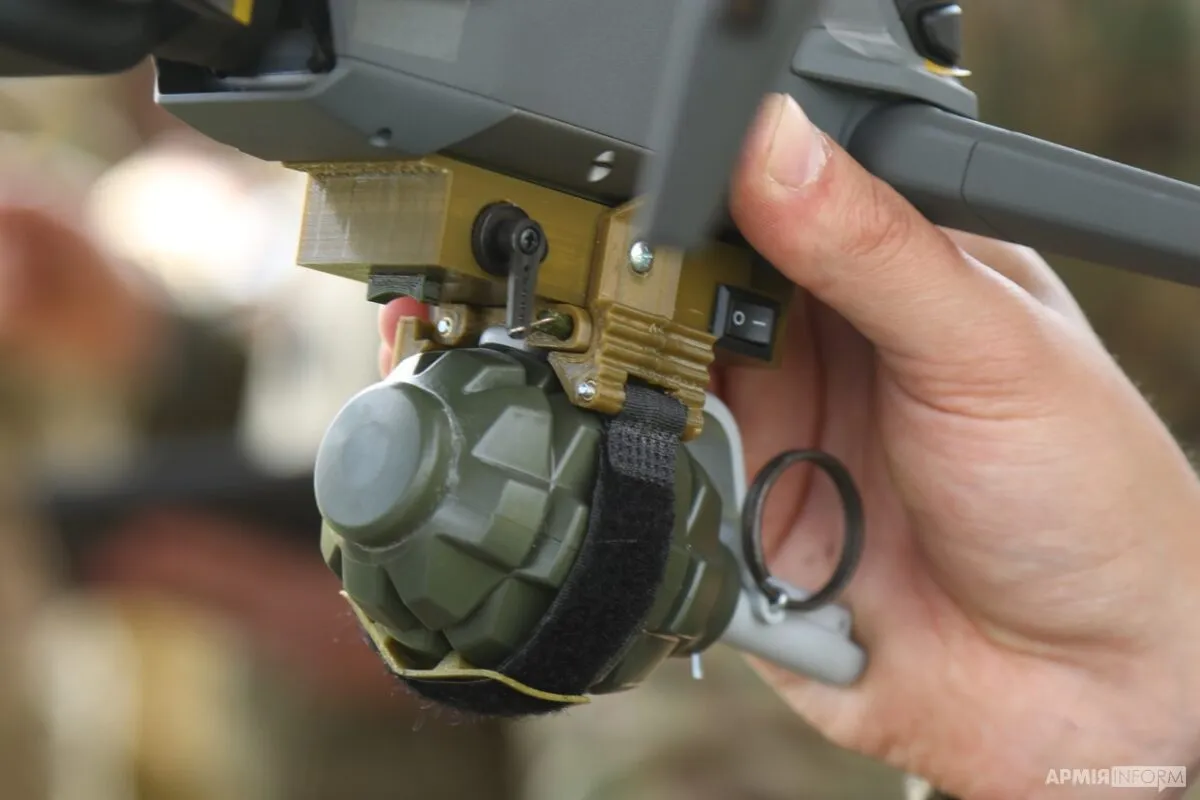
Reporting on the Wajiroko attack connects the grenade payload to commercially derived armed drones rather than a conventional hand-thrown employment method.
| Carrier | Carrier type | Carriage evidence |
|---|---|---|
 | Commercial quadcopter UAV | ISS, The Nation, Defense Mirror, and Peoples Gazette described armed drones carrying locally made, locally manufactured, or locally fabricated grenades in the 24 December 2024 Wajiroko attack. Sources: Lake Chad Basin insurgents raise the stakes with weaponised drones, NAF deploys counter measures against terrorists drones, Boko Haram Militants Attack Two Nigerian Army Bases with Grenade-strapped Drones, Nigerian Army raises security alert after Boko Haram drone attack |
Timeline
Locally manufactured grenade Key Events
Wajiroko drone attack
Reporting on a Nigerian military signal said militants attacked FOB Wajiroko after an initial mortar-and-firearms assault, using multiple armed drones carrying locally fabricated or locally manufactured grenades.
Nigerian Air Force counter-UAV response
Nigeria's Chief of Air Staff cited the Wajiroko incident while describing an integrated counter-UAV response to terrorist drones carrying locally fabricated grenades.
ISS Lake Chad assessment
Institute for Security Studies assessed the Wajiroko attack as a turning point in Lake Chad Basin insurgent drone use and described four ISWAP armed drones carrying locally made grenades.
Media
Locally manufactured grenade Images
Related Weapon Systems


Sources
Lake Chad Basin insurgents raise the stakes with weaponised dronesPublisher: Institute for Security Studies | Note: Supports 2009 Boko Haram Insurgency direct use: ISWAP deployed armed drones carrying locally made grenades in the 24 December 2024 Wajiroko attack, with broader Lake Chad basin armed-drone context. | Accessed: 2026-07-03NAF deploys counter measures against terrorists dronesPublisher: The Nation | Note: Supports 2009 Boko Haram Insurgency direct use: Nigeria's Chief of Air Staff described Boko Haram terrorists using drones carrying locally fabricated grenades in a kamikaze role at Wajiroko, Damboa LGA. | Accessed: 2026-07-03Boko Haram Militants Attack Two Nigerian Army Bases with Grenade-strapped DronesPublisher: Defense Mirror | Note: Supports 2009 Boko Haram Insurgency direct use: militants used multiple armed drones carrying locally made grenades against FOB Wajiroko on 24 December 2024. | Accessed: 2026-07-03Nigerian Army raises security alert after Boko Haram drone attackPublisher: Peoples Gazette | Note: Supports 2009 Boko Haram Insurgency direct use: a reported military signal described multiple armed drones carrying locally manufactured or locally fabricated grenades in the Wajiroko attack. | Accessed: 2026-07-03Improvised hand grenade imagePublisher: Wikimedia Commons | Note: Image provenance and CC BY-SA 3.0 licensing page for a representative improvised hand-grenade image; this is not the specific grenade identified in the Wajiroko reporting. | Accessed: 2026-07-03UA grenade quadcopter imagePublisher: Wikimedia Commons | Note: Image provenance and CC BY 4.0 licensing page for a representative quadcopter with an improvised grenade release system; this is Ukrainian training imagery, not the Wajiroko drone or payload. | Accessed: 2026-07-03