- Side
- Ukraine

Ukrainian forces, including the 95th Air Assault Brigade, have used SPG-9M "Spys" recoilless guns for direct and indirect fire against Russian infantry positions and light armored vehicles.
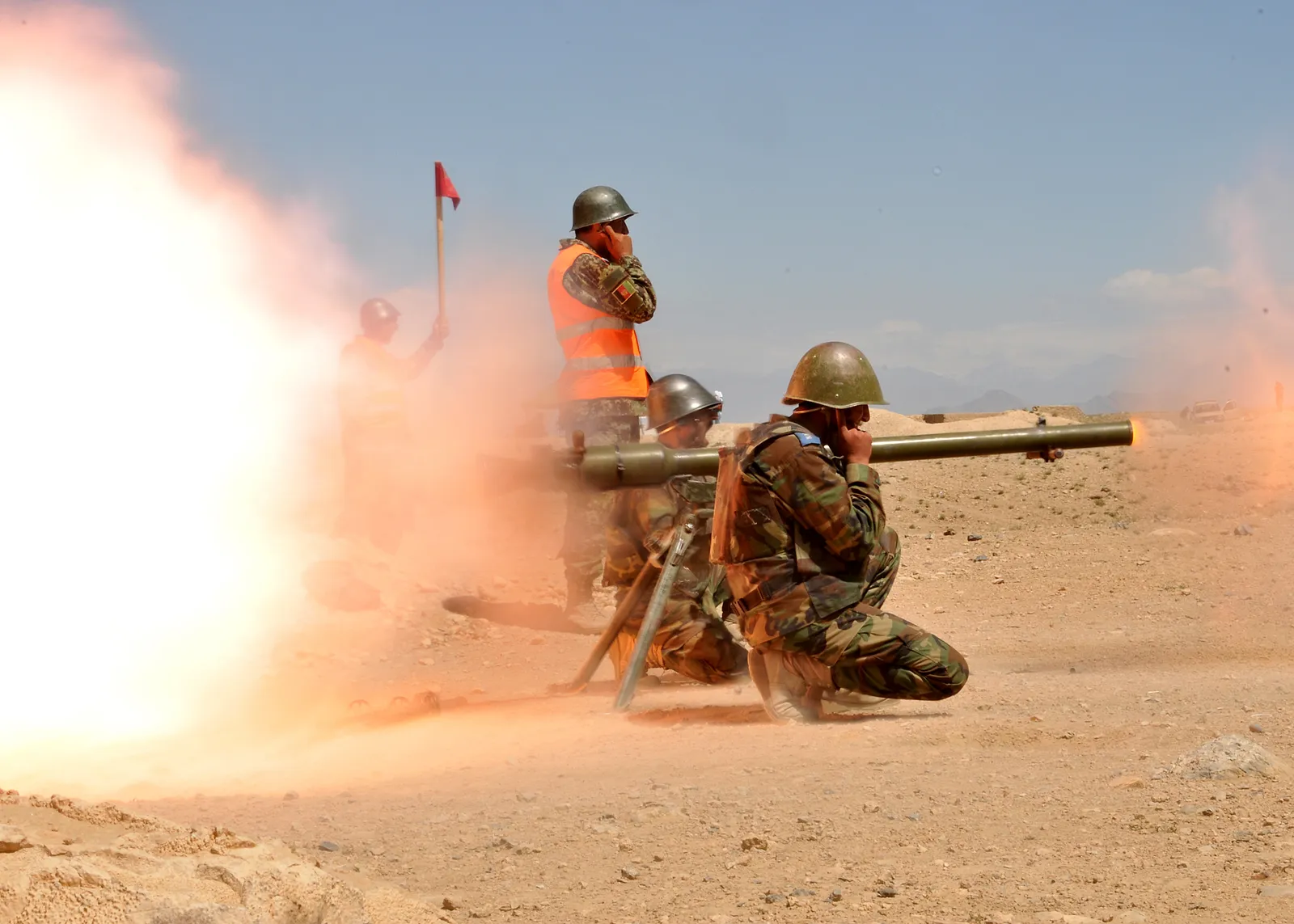
Role detailsThe SPG-9 is a Soviet 73 mm tripod-mounted recoilless gun, known in some references as Kopye, that fires rocket-assisted HEAT and HE-fragmentation projectiles from a crew-served launcher. Accepted into Soviet service in 1962 and exported widely, it was designed as an anti-armor weapon but still appears in conflicts as a flexible direct- and indirect-fire support system.
Ukrainian forces, including the 95th Air Assault Brigade, have used SPG-9M "Spys" recoilless guns for direct and indirect fire against Russian infantry positions and light armored vehicles.
Role detailsOpposition forces in Dara'a used SPG-9 recoilless guns during the 2017 Manshiyah battle, including attacks on government positions and a reported strike that destroyed a 23 mm cannon.
Role detailsIsraeli reporting on weapons seized during the post-October 2023 border war documented Iranian-marked SPG-9 recoilless cannons among Hezbollah weapons recovered in southern Lebanon.
Lake Chad basin weapons reporting lists SPG-9 recoilless guns among materiel in service with or recovered from Boko Haram factions, while later analysis of ISWAP propaganda described SPG-9(M) guns on light trucks and likely SPG-9 materiel looted during a 2021 Bama-area attack.
Small Arms Survey's 2012 review cited Somalia footage assessed by an explosive ordnance specialist as probably showing an SPG-9, while explicitly noting that poor image quality prevented confirmation.
Public references consistently describe the SPG-9 as a two-round system: a HEAT projectile for armor and a fragmentation projectile for personnel and area fire.
| Round | Typical role | Reader note |
|---|---|---|
| PG-9 HEAT-FS | Anti-armor direct fire | The Small Arms Survey and U.S. Army reference both identify the SPG-9 family as firing rocket-assisted HEAT ammunition. |
| OG-9 HE-fragmentation | Personnel and area fire | The same sources note fragmentation ammunition and indirect-fire use out to roughly 4.5 km. |
The SPG-9 is portable only as a crew-served system: references describe a tripod infantry launcher that can be moved short distances by its crew, while modern conflict imagery and reporting show the same weapon adapted to buggies and light trucks.
| Configuration | Documented context | Reader note |
|---|---|---|
| Infantry tripod | Baseline launcher | WeaponSystems.net describes the SPG-9 as tripod-mounted for infantry use, with a crew of two required and four recommended. |
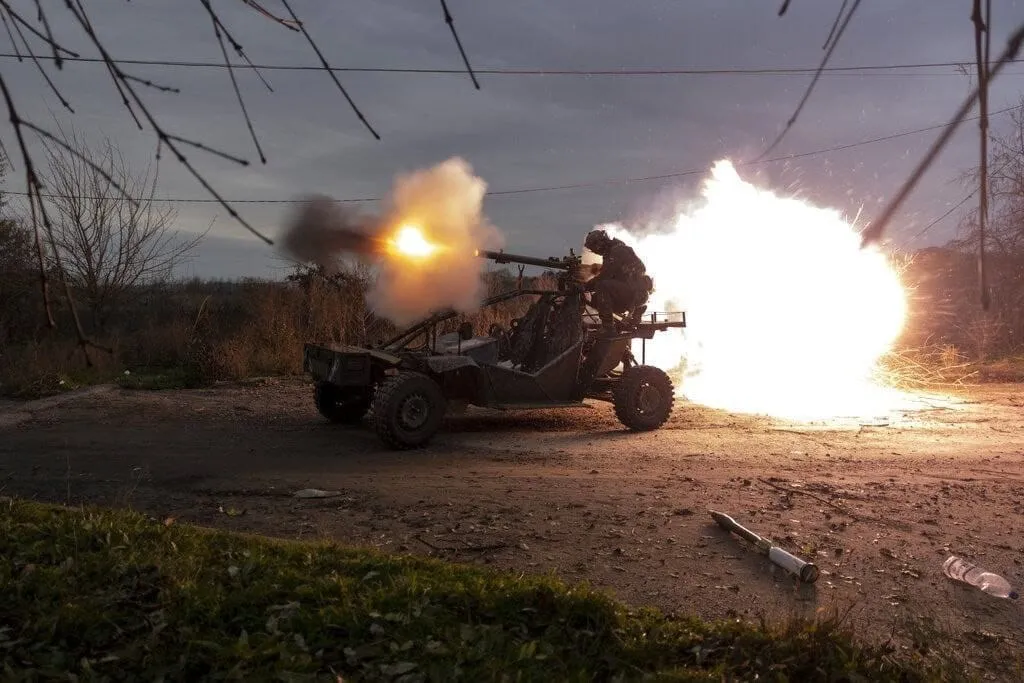
| Buggy mount | 2014 Russia-Ukraine War | A Ukrainian Armed Forces image on Wikimedia Commons shows an SPG-9 firing from a buggy in November 2022. |
| Light-truck mount | 2009 Boko Haram Insurgency | HumAngle reporting on ISWAP transport capacity described SPG-9(M) recoilless guns carried on light trucks. |
SPG-9 references use a mixture of Soviet GRAU indexes, sight or mounting configurations, and national-production names. The main cataloged family members are the improved SPG-9M, airborne SPG-9D, Romanian AG-9, and Bulgarian ATGL or SPG-9DNM close derivatives.
| Variant | Configuration | Designation notes |
|---|---|---|
| SPG-9M | Improved launcher | WeaponSystems.net lists the SPG-9M as an improved 1971 launcher associated with OG-9 series HE-fragmentation ammunition. Sources: 73mm SPG-9 |
| SPG-9D | Airborne configuration | WeaponSystems.net records the SPG-9D under GRAU index 6G7, distinguishing it from the baseline 6G6 and improved 6G13 entries. Sources: 73mm SPG-9 |
| AG-9 | Romanian production | Small Arms Survey identifies the RomArm AG-9 as a Romanian close derivative of the SPG-9 family. Sources: SPG-9 (& Close Derivatives) |
| ATGL | Bulgarian close derivative | Small Arms Survey lists Arsenal ATGL as a Bulgarian SPG-9 close derivative, and WeaponSystems.net records Bulgarian SPG-9DNM production naming. Sources: SPG-9 (& Close Derivatives), 73mm SPG-9 |
The GICHD guide describes the SPG-9 Kopye recoilless gun as an early-1960s weapon, and the catalog's reference entry records 1962 as the service year.
Sources: Explosive Ordnance Guide for Ukraine, 73mm SPG-9
Bellingcat's photo review of the Manshiyah fighting in Dara'a shows opposition forces using SPG-9 recoilless guns against government positions.
Sources: The Battle for Manshiyah: A Victory in 100 Pictures
A General Staff of the Ukrainian Armed Forces photo on Wikimedia Commons shows a Ukrainian buggy firing a mounted SPG-9 during the 2014 Russia-Ukraine War.
Sources: UA buggy SPG-9 01.jpg