- Side
- United States and South Vietnam


U.S. Marine Corps M50 Ontos vehicles carried six M40A1C recoilless rifles in Vietnam; the U.S. Army/RIA account describes the Ontos as shifting into field-support use when enemy armor targets were limited.
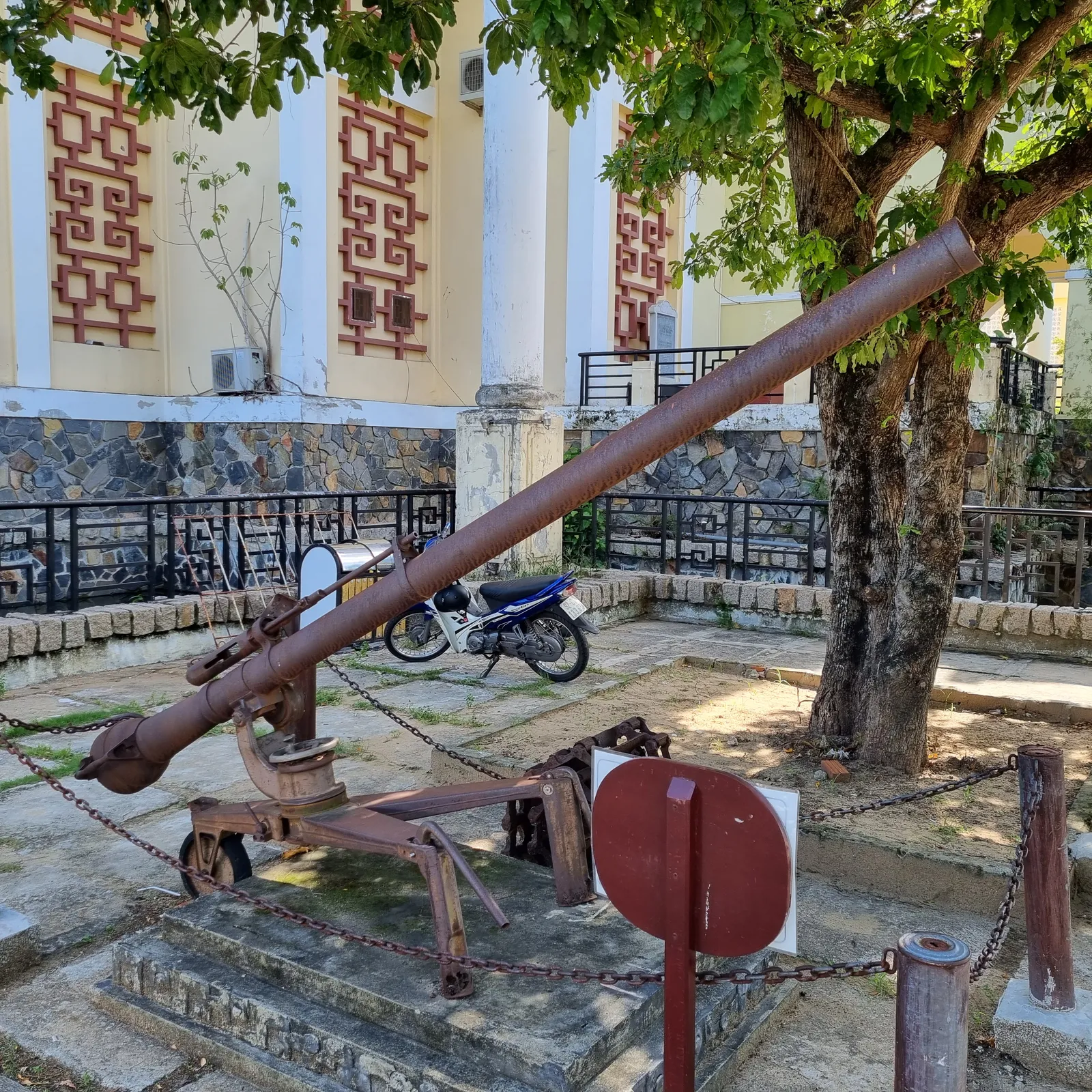
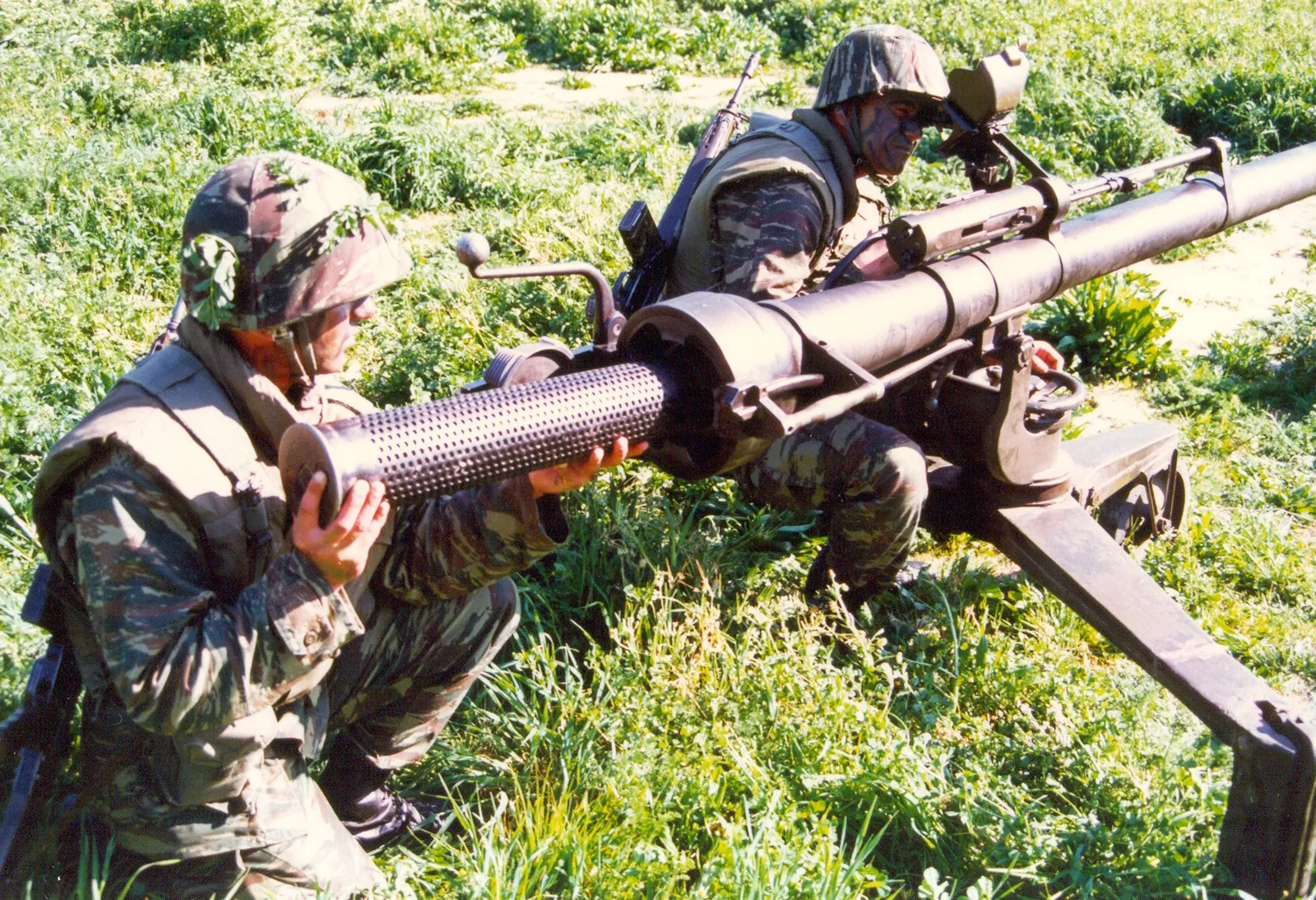
The M40 106 mm recoilless rifle is a U.S.-origin crew-served direct-fire weapon built around a 105 mm-class round but commonly identified by its 106 mm designation. It served on ground carriages and vehicle mounts such as the M50 Ontos, remained useful for anti-armor and bunker work after newer missiles appeared, and is documented in conflicts from Vietnam to Libya, Mali, Syria, and Afghanistan.
U.S. Marine Corps M50 Ontos vehicles carried six M40A1C recoilless rifles in Vietnam; the U.S. Army/RIA account describes the Ontos as shifting into field-support use when enemy armor targets were limited.
WIRED reported that U.S. Special Forces units, Danish forces, and Australian forces used 106 mm M40 recoilless rifles in Afghanistan, where the weapon remained useful against targets such as mud-walled buildings.
Role detailsWIRED reported M40 use by Libyan rebel forces, especially in urban fighting against tanks and fortified positions, while noting that the weapon's route into rebel hands remained unclear.
Small Arms Survey and Conflict Armament Research documented an M40 106 mm recoilless gun in Gao in April-May 2012 in service with Tuareg/Islamist forces, plus 106 mm projectiles in northern Mali.
WIRED reported M40 recoilless rifles appearing with Syrian rebel forces, with possible Libyan or Iranian-origin supply paths but no settled provenance.
Role detailsThe U.S. Army Center of Military History notes Iranian receipt of M40A1 recoilless rifles for the war against Iraq and identifies the weapon as a direct-fire anti-tank system.
M40 designations are tied to mount, production, and export context rather than a single clean family tree; the 106 mm label refers to a 105 mm-class weapon kept distinct from incompatible 105 mm ammunition.
| Variant | Configuration | Designation notes |
|---|---|---|
| M40A1 | Crew-served recoilless rifle | The U.S. Army Center of Military History describes the M40A1 as a portable, breech-loaded, single-shot recoilless rifle or anti-tank weapon fired primarily from a wheeled ground mount. |
| M40A1C | M50 Ontos-mounted variant | The U.S. Army/RIA Ontos account identifies the M50 as fitted with six M40A1C recoilless rifles plus an M1919 machine gun. Sources: RIA Self-Guided Tour: The Ontos |
| Anti-Tank Gun 106 | Iranian licensed-origin derivative designation | WIRED reported Iran's Defense Industry Organization offering a licensed-origin M40 derivative under the Anti-Tank Gun 106 name, while treating the exact supply path to Syria as unresolved. Sources: Ancient U.S. Weapon Makes a Surprise Reappearance in Syria |
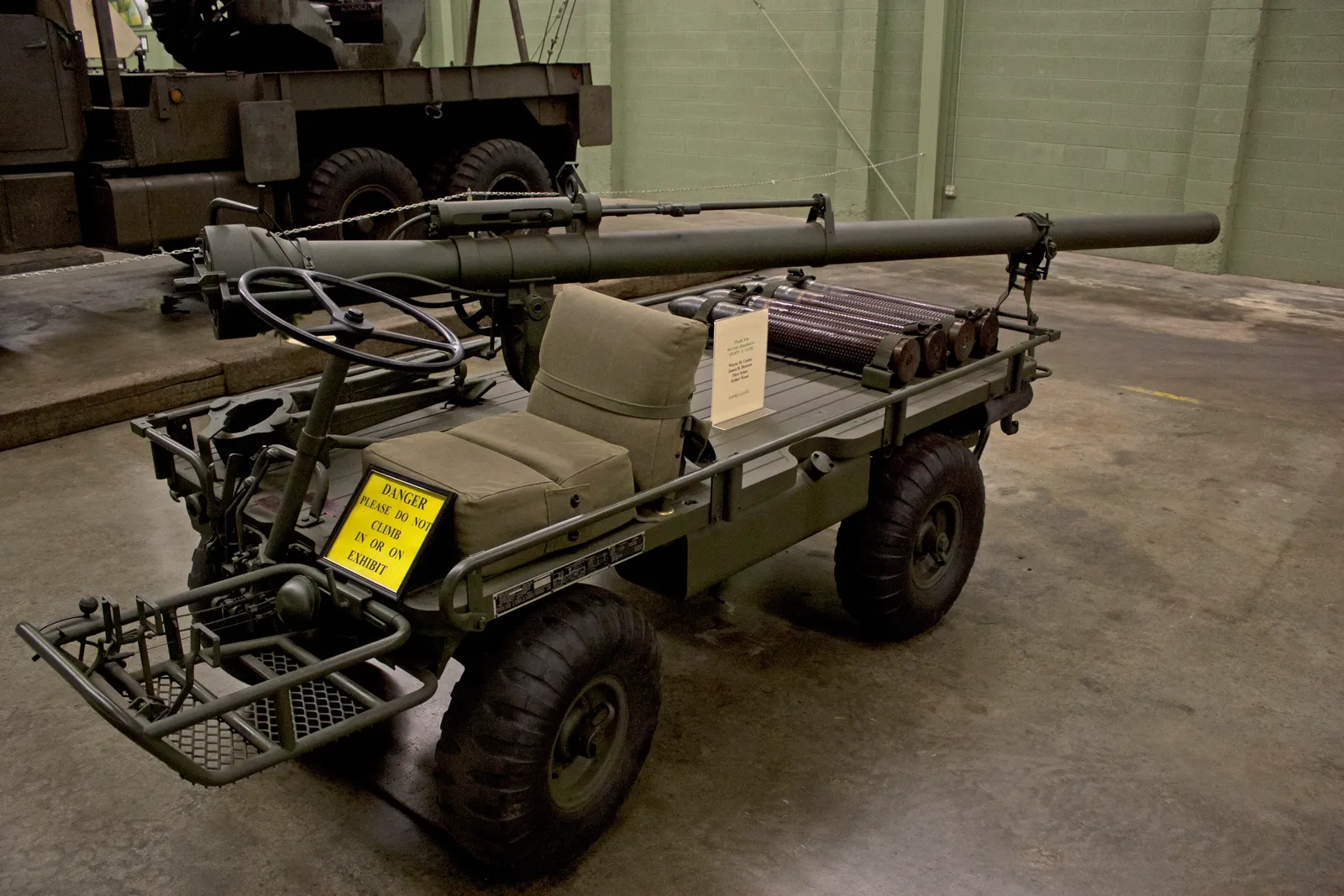
The M40 was widely adapted to vehicle and ground mounts; the Al-Jawad page documents one protected turret configuration.
| Carrier | Carrier type | Carriage evidence |
|---|---|---|
 | Armored vehicle mount | Small Arms Defense Journal describes a compact turret on top of an Al-Jawad vehicle that accommodates a 106 mm recoilless gun, with firing controlled from inside the armored turret. Sources: Infantry Support and Anti-tank Weapons in Latin America |
The M40 replaced the earlier M27 pattern and entered service as a 105 mm-class recoilless rifle usually identified by the 106 mm designation.
Sources: 106mm M40
The first M50 Ontos vehicles were accepted in 1956; the U.S. Army/RIA account says the Marine Corps ultimately used the 297 vehicles that were built.
Sources: RIA Self-Guided Tour: The Ontos
The U.S. Army/RIA account says the Ontos was taken out of service in 1969, with remaining systems largely removed by 1970.
Sources: RIA Self-Guided Tour: The Ontos
WIRED later reported M40 use by Libyan rebels during urban fighting against tanks and fortified positions.
Sources: Ancient U.S. Weapon Makes a Surprise Reappearance in Syria
Small Arms Survey and Conflict Armament Research documented 106 mm recoilless rifles among rebel-held materiel in northern Mali.
Sources: Rebel Forces in Northern Mali
WIRED reported M40 recoilless rifles appearing with Syrian rebel forces, with provenance still uncertain.
Sources: Ancient U.S. Weapon Makes a Surprise Reappearance in Syria
The U.S. Army Center of Military History described museum-system support to tests involving M40A1 recoilless-rifle spotting-rifle components, a reminder that the type remained relevant to weapons-effect research long after U.S. frontline service.
Sources: The Relevance of the Army Museum Enterprise
The M40's combat record is split between formal military inventories and later proliferation. Its direct-fire recoilless layout made it adaptable to ground mounts, light vehicles, and armored installations, while later reporting tracks the same family in state and rebel hands.
The M50 Ontos carried six M40A1C recoilless rifles and saw U.S. Marine Corps service in Vietnam.
WeaponSystems.net lists tripod or wheeled ground mounts, and Small Arms Defense Journal documents an Al-Jawad turret accepting a 106 mm recoilless gun.
WIRED describes Iran's Defense Industry Organization offering a licensed-origin M40 derivative as the Anti-Tank Gun 106.
WIRED reports Libyan and Syrian rebel appearances, while Small Arms Survey and Conflict Armament Research document 106 mm recoilless rifles in northern Mali rebel materiel.
Sources: 106mm M40; RIA Self-Guided Tour: The Ontos; Infantry Support and Anti-tank Weapons in Latin America; Ancient U.S. Weapon Makes a Surprise Reappearance in Syria; Rebel Forces in Northern Mali.