Infantry Weapons

105 mm M1974 FMK-1 recoilless rifle

Also known as
  • 105mm M1974
  • 105 mm M1974
  • M1974 FMK-1
  • Modelo 1974 FMK-1
  • Model 1974 FMK-1
  • 105 mm M1968
  • Modelo 1968
  • FM Czekalski
  • Czekalski 105 mm recoilless rifle
  • Canon sin retroceso Modelo 1968
  • Cañón Czekalski
  • Cañón sin retroceso Czekalski
  • 105 mm Czekalski
  • FM K-1-A Czekalski

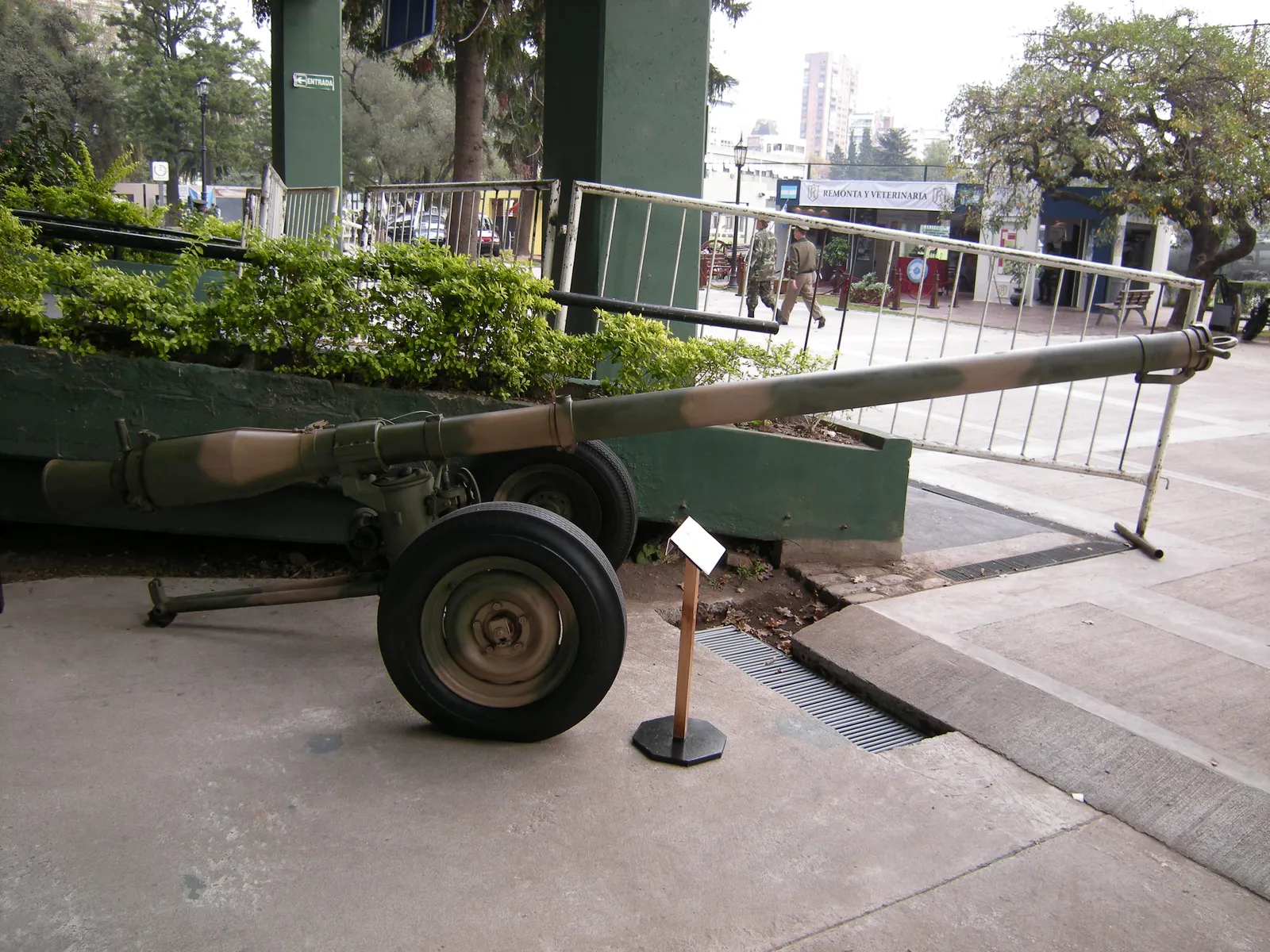
The 105 mm M1974 FMK-1 is the later standard in Argentina's Czekalski recoilless-rifle family, a heavy smoothbore infantry-support weapon with optical sights, an FAP/FN FAL spotting rifle, and a two-wheel adjustable carriage. Falklands War evidence directly documents the closely related Modelo 1968 Czekalski in Argentine service, while the M1974 designation is best supported as the improved FMK-1 ammunition and export-era standard.

Role in Conflicts

Argentine forces used the 105 mm Modelo 1968 recoilless rifle around Mount Longdon and other outer Stanley positions during the Falklands War; the M1974 FMK-1 is the later model in the same Argentine 105 mm recoilless-rifle family rather than a separately confirmed Falklands variant.

Family Evidence And Export Context

The strongest open conflict evidence identifies the Modelo 1968 Czekalski in Falklands War service, while separate references describe the Modelo 1974 FMK-1 as the later improved ammunition or update standard. That source split makes the M1974 best read as part of the same Argentine 105 mm Czekalski family rather than as a separately confirmed Falklands variant.

Confirmed combat model

Modelo 1968 Czekalski around Mount Longdon and other Stanley-area positions in 1982.

Target model context

Modelo 1974 FMK-1, associated with the heavier FMK-1 HEAT projectile and possible sighting or ammunition-standard changes.

Export context

A 1981 Argentine decree authorized 72 FM K-1-A Czekalski recoilless rifles for Bolivia, and specialist sources list Guatemala among M1974 users, but available public sources support those as operator or export facts rather than direct conflict-use rows.

Sources: 105mm M1974; Infantry Support and Anti-tank Weapons in Latin America; Czekalski Archaeology in the Falklands; Decreto S 478/1981.
Profile / Specs

Profile

Origin
Argentina
Type
105 mm recoilless rifle
Service note
Entered service as the Modelo 1968 Czekalski family in 1968; the M1974 FMK-1 was the later ammunition/variant standard.
Designer
Alejandro R. Czekalski
Designed
1960s family development; the 105 mm Czekalski model was selected after Argentine trials, and the M1974 FMK-1 followed as the later ammunition/update standard
Produced
1968 into the 1980s or later
Number built
Several hundred across the M1968/M1974 family

Specifications

Caliber
105 mm smoothbore breech-loaded recoilless rifle
Crew
4
Weight
397 kg including carriage and regular tires
Overall length
4.02 m to 4.20 m, depending on source and configuration
Barrel length
3.0 m
Carriage
Two-wheel adjustable undercarriage with low, medium, and high firing positions
Sights
4x optical sight with a 7.62 mm FAP spotting rifle
Rate of fire
3 to 5 rounds per minute
Direct-fire range
1.2 km with spotting rifle; optical sight markings to 1.8 km
Indirect-fire range
Up to 9.2 km with high-explosive ammunition
M1974 HEAT projectile
14.7 kg FMK-1 HEAT projectile, cited at 514 m/s muzzle velocity and about 400 mm RHA penetration
Elevation and traverse
-7 to +40 degrees elevation; 360 degrees traverse
Backblast
Forty-meter danger area behind the breech in Argentine Army manual-derived descriptions
Variants

Public sources treat the M1974 FMK-1 as the later model in the same 105 mm Argentine recoilless-rifle family that began with the Modelo 1968; open references do not clearly separate structural changes from sighting and ammunition updates.

VariantConfigurationDesignation notes
Modelo 1968Original Argentine 105 mm recoilless-rifle model

The original model fired ballistically matched HEAT and high-explosive rounds and is the variant directly documented in Argentine Falklands War use.

Sources: 105mm M1974, Infantry Support and Anti-tank Weapons in Latin America

Modelo 1974 FMK-1Updated model / ammunition standard

The M1974 FMK-1 introduced an improved 14.7 kg HEAT round and retained the two-wheel carriage, optical sighting, and crew-served recoilless-rifle layout; sources reviewed here leave the extent of structural change unclear.

Sources: 105mm M1974, Infantry Support and Anti-tank Weapons in Latin America

Spotting Rifle Fit

The Czekalski used a rifle-caliber spotting weapon to help the crew range targets before firing the recoilless-rifle round.

Compatible itemItem typeCompatibility evidence
FN FAL, 7.62 mm battle rifle, Infantry WeaponsFN FALFAP spotting rifle

Specialist references describe a 7.62 mm FAP/FN FAL spotting rifle fitted to the M1968/M1974 family, firing tracer rounds that burst on impact for target confirmation.

Sources: 105mm M1974, Infantry Support and Anti-tank Weapons in Latin America

Timeline

105 mm M1974 FMK-1 recoilless rifle Key Events

  1. 105 mm Czekalski selected after trials

    The Anuario de Arqueología article ties the Czekalski family to Argentine design and production from 1968 and uses the weapon as a case study for Falklands battlefield archaeology.

    Sources: Czekalski Archaeology in the Falklands

  2. Modelo 1968 enters service

    WeaponSystems.net dates family service entry to 1968 and identifies Argentina as the origin.

    Sources: 105mm M1974

  3. M1974 FMK-1 model standard appears

    Specialist references identify the Modelo 1974 FMK-1 as the updated production model associated with the improved FMK-1 HEAT shell.

    Sources: 105mm M1974, Infantry Support and Anti-tank Weapons in Latin America

  4. Argentine 105 mm recoilless rifles used in the Falklands

    Small Arms Defense Journal and the Anuario de Arqueología article document Czekalski/Modelo 1968 use and battlefield material evidence in the Falklands War.

    Sources: Infantry Support and Anti-tank Weapons in Latin America, Czekalski Archaeology in the Falklands

  5. Bolivia export authorization lists FM K-1-A Czekalski guns

    Argentina's published secret-decree supplement records a 1981 authorization to export 72 105 mm L/28.5 FM K-1-A Czekalski recoilless rifles and associated ammunition to Bolivia.

    Sources: Decreto S 478/1981

Related Weapon Systems
FN MAG general-purpose machine gun, 7.62x51mm NATO general-purpose machine gun, Infantry WeaponsInfantry WeaponsFN MAG general-purpose machine gun7.62x51mm NATO general-purpose machine gunThe FN MAG is FN Herstal's Belgian 7.62x51mm NATO belt-fed general-purpose machine gun family, fielded from infantry bipods, tripods, vehicles, aircraft, ships, and boats. The catalog record connects the MAG and its M240/L7A2/MAG 58 designations to directly sourced conflict evidence: surrendered Boko Haram-held stocks in Nigeria, coalition base-defense training during Operation Inherent Resolve, and Afghan special-operations weapons training during the War in Afghanistan.
120mm MO-120-AM50, 120 mm smoothbore heavy mortar, ArtilleryArtillery120mm MO-120-AM50120 mm smoothbore heavy mortarThe 120mm MO-120-AM50 is a French Brandt smoothbore heavy mortar developed after World War II and fielded from the 1950s as a towed, baseplate-fired, or carriage-fired infantry support weapon. It predates the later MO-120 RT rifled mortar family and appears in the catalog through two direct evidence lanes: an Imperial War Museums object record for an Argentine Army Brandt 120 mm mortar captured during the Falklands War, and SIPRI transfer data recording Denmark's 2024 delivery of MW-50 120mm mortars to Ukraine.

Sources