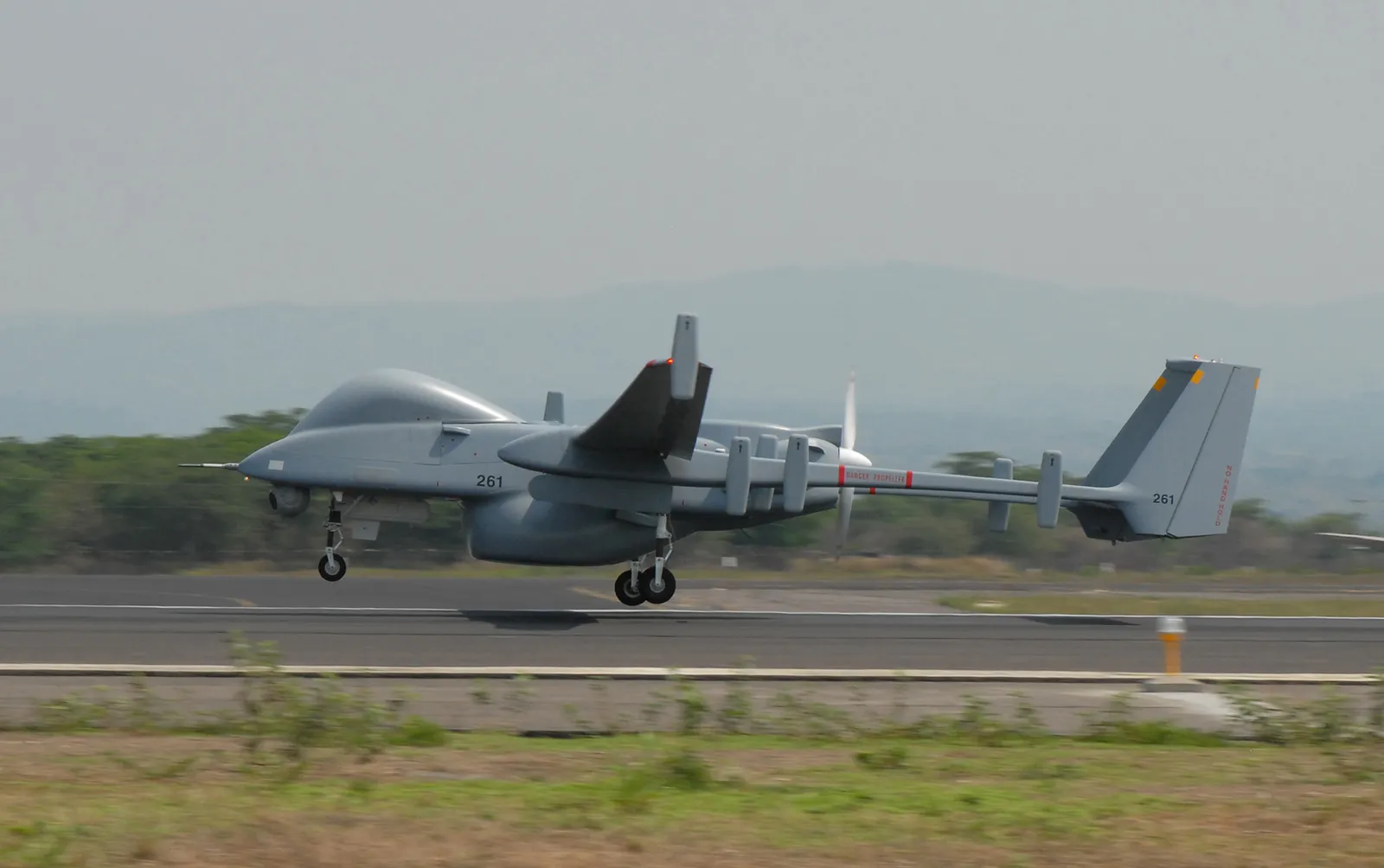
- Side
- Israel

Defense Update reported that Heron, designated Shoval by the Israeli Air Force, was operational during the 2006 Lebanon War through a joint IAI and IAF activity before the type's formal 2007 IAF induction.
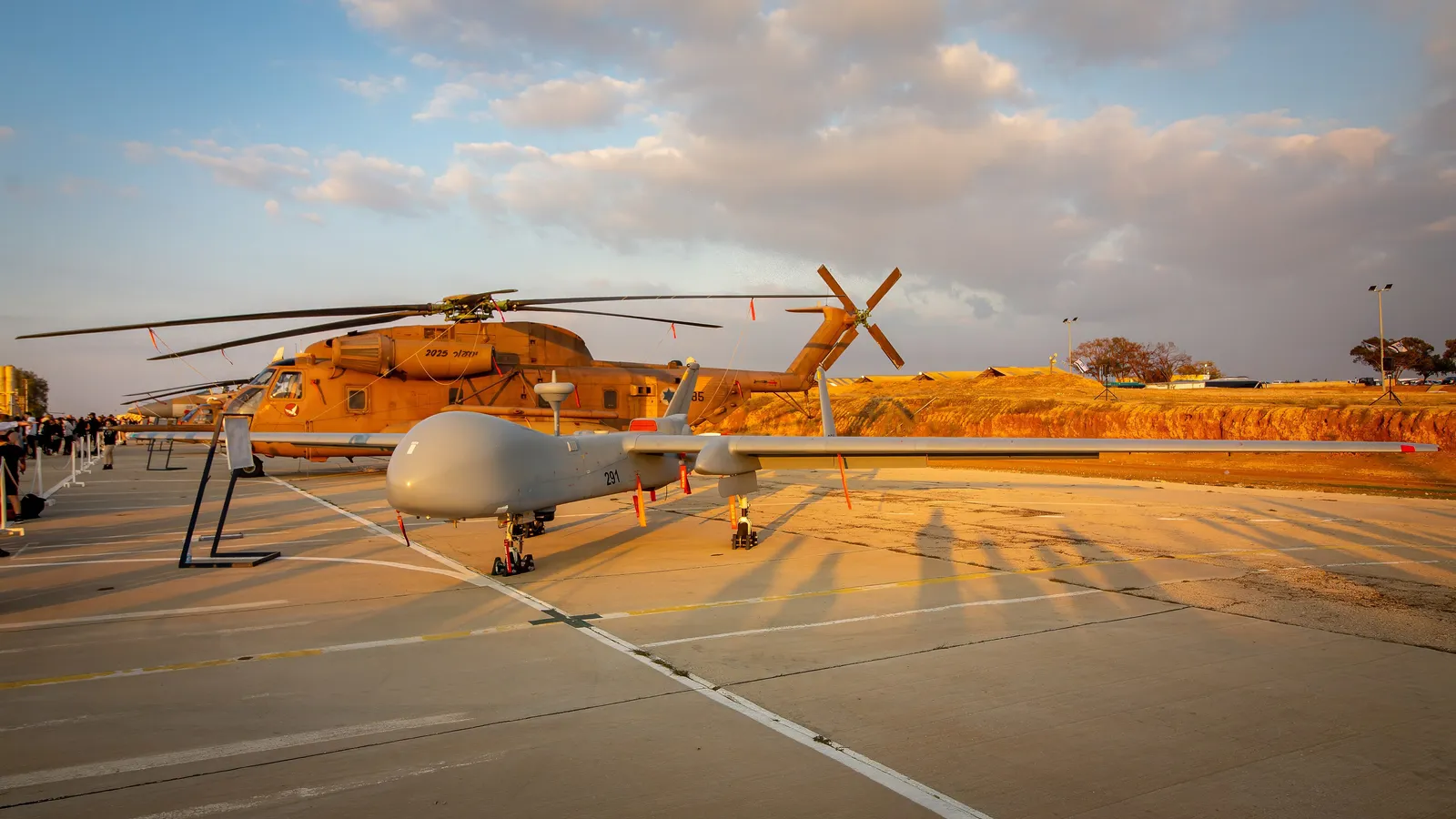
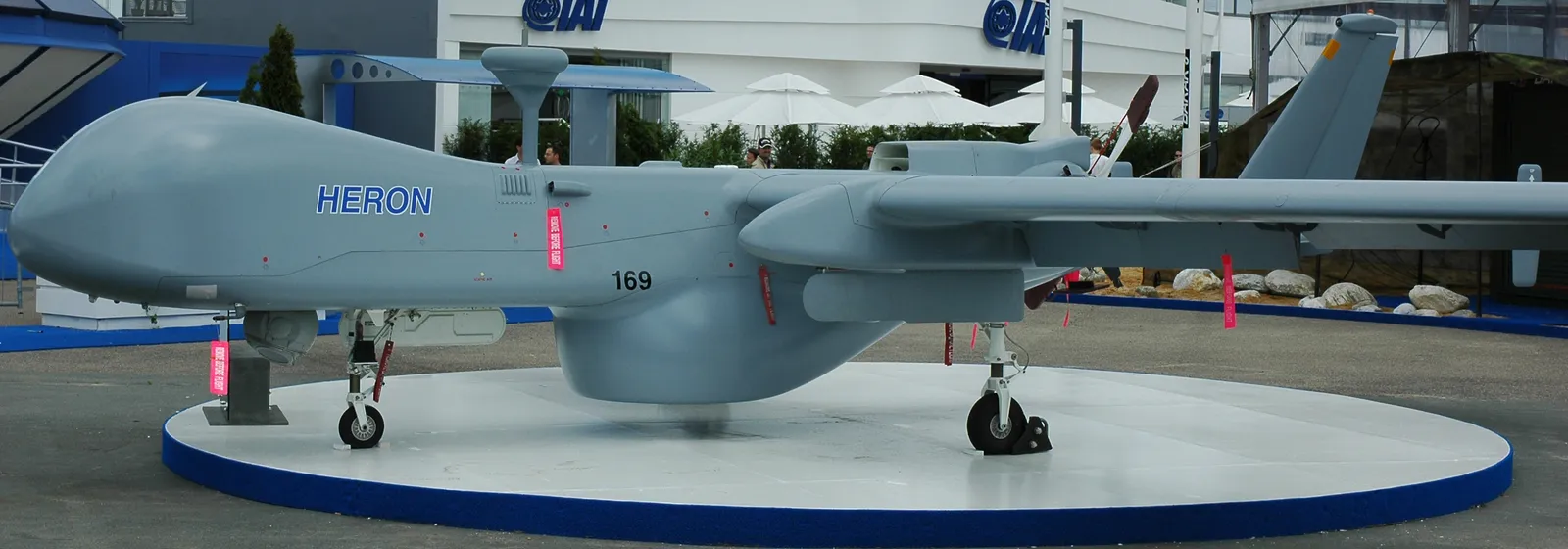
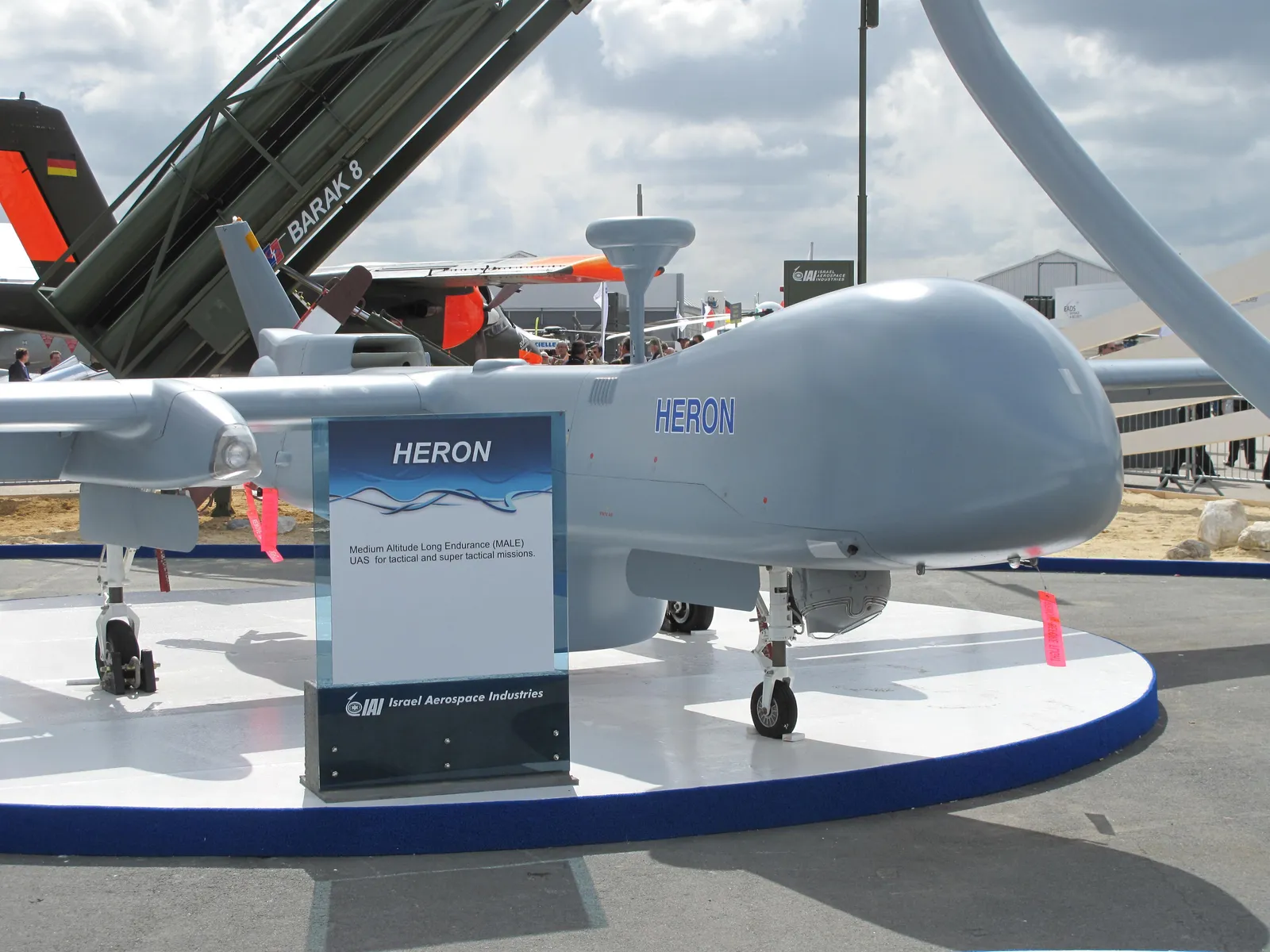
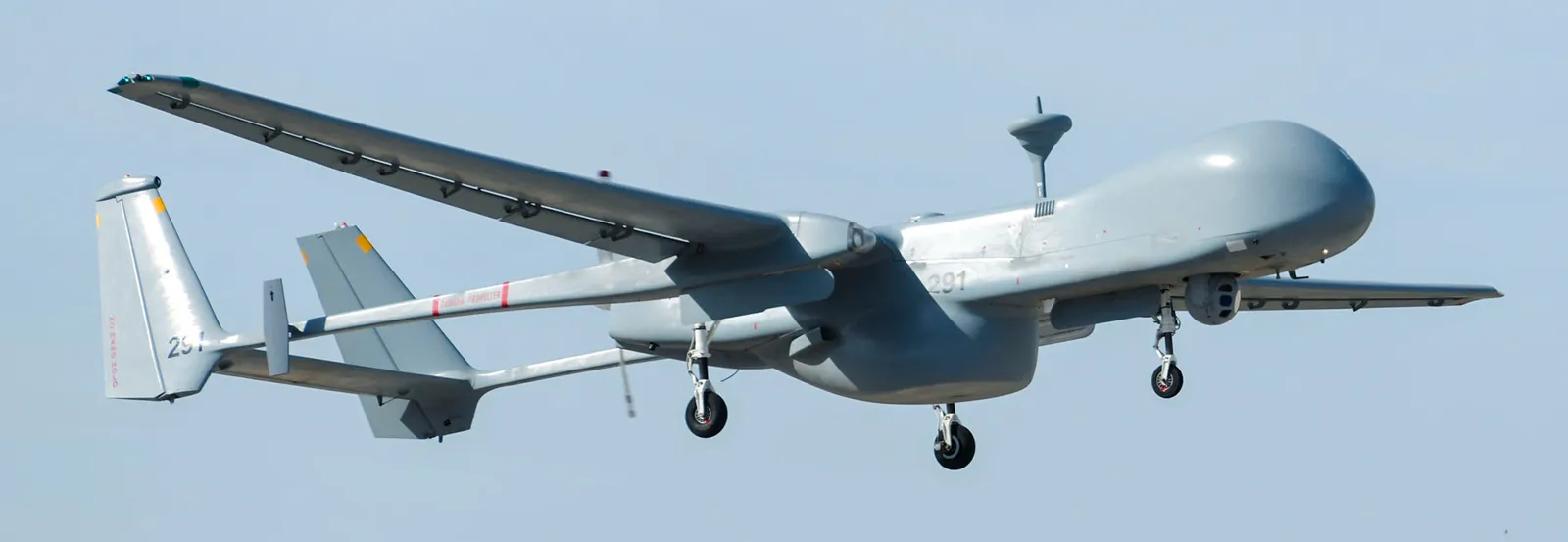
The IAI Heron is an Israeli medium-altitude long-endurance UAV family built for persistent ISR, target acquisition, maritime patrol, and multi-sensor surveillance missions. IAI describes Heron 1, known in Israeli service as Shoval, and Heron Mk II as SATCOM-capable MALE platforms with automatic taxi, takeoff, and landing, while conflict sourcing ties the family to Israeli operations in Gaza and Iran, Azerbaijani reconnaissance and targeting in Nagorno-Karabakh, and Indian Heron Mk II operations during Operation Sindoor.
Defense Update reported that Heron, designated Shoval by the Israeli Air Force, was operational during the 2006 Lebanon War through a joint IAI and IAF activity before the type's formal 2007 IAF induction.
Human Rights Watch reported Israeli Heron drone use during Operation Cast Lead in Gaza, describing Heron and Hermes UAVs as part of the drone force used by Israel during the 2008-2009 fighting.
IAI says the first UAV squadron directed a Heron toward Gaza on October 7, 2023, and that Heron operators used onboard sensors and communications to help restore situational awareness for IDF command during the opening of the war.
Role detailsAzerbaijani forces used Heron (Machatz-1) remotely controlled MALE UAVs in varying numbers during the 2020 Nagorno-Karabakh war; the source context places the system in Azerbaijan's broader drone reconnaissance and targeting architecture rather than as a loitering munition.
Indian forces used Heron Mk II UAVs during Operation Sindoor; ThePrint reported that Herons and other drones documented the May 7 strikes and continued operating during the brief 2025 India-Pakistan fighting.
IAI says Heron-family MALE UAS, including Heron/Shoval and Heron TP/Eitan, operated continuously in Israel's third-circle Rising Lion campaign, transmitting visual and electronic intelligence, supporting target identification and kill-chain closure, and maintaining combat presence over Iran.
Role detailsJNS reported a Squadron 200 operator describing Heron 1/Shoval missions during the 2026 Iran War, including hunting surface-to-surface and surface-to-air missile launchers and providing long-endurance intelligence support.
The Heron family is best understood as a sensor platform and mission aircraft rather than only as a strike munition. IAI describes the baseline Heron as a multi-payload ISTAR aircraft able to use direct line-of-sight or satellite links, while Heron Mk II extends the same mission set with larger sensors and standoff collection. During Operation Rising Lion, IAI says Heron/Shoval and Heron TP/Eitan aircraft transmitted visual and electronic intelligence over long ranges and used AI-assisted payload data fusion to build a multidomain intelligence picture.
ISR, target acquisition, reconnaissance, maritime patrol, command situational-awareness support, and sensor relay missions across air, land, and naval operating contexts.
IAI says Heron can manage up to six mission payloads, while Heron Mk II can carry electro-optical, radar, ELINT, COMINT, ESM, communication-relay, and specialized payloads.
The family uses automatic taxi, takeoff, and landing, SATCOM for beyond-line-of-sight missions, and long endurance to keep surveillance over a target area without exposing a crewed aircraft.
Shoval is the Israeli Air Force service name for the Heron 1 configuration rather than a separate unrelated UAV family. IAI uses Heron for the export and family name, Heron Mk II for the enhanced model, and Heron TP/Eitan for the larger derivative. The maritime Heron 1/Shoval configuration adds naval patrol sensors, and the IDF-sourced Commons image identifies the maritime Squadron 200 aircraft as Shoval Yam.
Shoval refers to Heron 1 in Israeli Air Force service, with Squadron 200 operating the type for ISR, surveillance, ground-force support, and long-range missions.
Shoval Yam is documented as a maritime Heron-1 used by the maritime patrol unit of Squadron 200.
Heron TP/Eitan is listed as a heavier derivative, while Heron Mk II is treated here as an enhanced Heron-family model rather than a separate catalog page.
IAI uses Heron for the baseline MALE UAS family; Israeli service sources identify Heron 1 as Shoval, while Heron Mk II is an enhanced model and Heron TP is a much larger high-endurance derivative known in Israeli service as Eitan.
| Variant | Configuration | Designation notes |
|---|---|---|
| Heron 1 / Machatz-1 / Shoval | Baseline MALE ISR UAS | IAI's Heron page describes a multi-role MALE UAS with SATCOM, automatic taxi-takeoff-and-landing, six-payload mission capacity, 45-hour endurance, and a 470 kg payload class; IAI's Heron-family war reporting identifies the IAF-operated Heron UAS as Shoval. Sources: HERON Multi-Role MALE UAS, IAI Unmanned Aerial Dominance |
| Maritime Heron 1 / Shoval Yam | Maritime patrol configuration | IAI says the maritime Heron 1/Shoval configuration replaced the IAF's Sea Scan maritime patrol aircraft and uses maritime radar plus electro-optical payloads; Commons metadata for the IDF-sourced image identifies a Heron-1 Shoval Yam used by Squadron 200's maritime patrol unit. Sources: IAI Sea Scan Replacement, IAI Heron-1 Maritime Patrol UAV Shoval Yam |
| Heron MK II | Enhanced Heron model | IAI presents Heron MK II as an updated Heron UAV with a stronger body, 1,430 kg maximum takeoff weight, 490 kg payload class, 150 kt maximum speed, 45-hour endurance, and standoff intelligence collection from tens of kilometers away. Sources: HERON MK II, HERON MK II 2026 Brochure |
 | Larger high-endurance derivative | IAI's Heron TP page lists a 5,670 kg maximum takeoff weight, payloads exceeding 1,000 kg, operation up to 45,000 ft, and mission endurance above 30 hours, separating it from the smaller Heron 1 airframe. Sources: HERON TP |
IAI's history page says the Heron first flew in 1994, marking the start of the MALE UAV line.
Sources: IAI history: Heron first flight
Aviation Week's program dossier says the first Israeli Air Force order came in September 2005 and tied the platform to its first major domestic customer.
Sources: Aviation Week Program Dossier: IAI Heron
Defense Update reported that the IAI Heron/Shoval had already operated during the 2006 Lebanon War before formal IAF induction in 2007.
Sources: Defense Update IAF Heron Shoval
IAI announced that the Israeli Air Force would replace its manned Sea Scan maritime patrol aircraft with maritime Heron 1/Shoval UAV systems equipped with maritime radar and electro-optical payloads.
Sources: IAI Sea Scan Replacement
IAI says a Heron from the first UAV squadron was sent toward Gaza on October 7, 2023, and helped restore higher-command situational awareness with sensors and communications.
Sources: IAI Unmanned Aerial Dominance
Army University Press describes Heron (Machatz-1) as one of the remotely controlled MALE UAVs Azerbaijan used in varying numbers during the 2020 war.
Sources: Realize the Future
ThePrint reported that Indian Heron Mk II UAVs and other drones documented the May 7 Operation Sindoor strikes and continued operating during the short 2025 India-Pakistan conflict.
Sources: After Op Sindoor, India goes in for more Heron Mk IIs
IAI says Heron/Shoval and Heron TP/Eitan remotely piloted aircraft flew long-range Rising Lion missions, including visual and electronic intelligence collection, AI-assisted data fusion, target identification, kill-chain support, and battle-damage assessment.
Sources: IAI Rising Lion Multi-Domain Defence, IAI Heron Sets New Standards
JNS reported a Squadron 200 Heron 1/Shoval operator describing missions during the 2026 Iran War that focused on finding Iranian missile launchers and supporting wider Israeli air operations.
Sources: JNS Heron 1 Shoval Missions
The Heron line sits between IAI's smaller tactical UAVs and its heavier Heron TP derivative. The distinctions below are useful because public reporting sometimes compresses Heron 1, Heron Mk II, and Heron TP/Eitan into one Heron label.
| Model | Scale | Public distinction |
|---|---|---|
| Heron 1 | 1,270 kg MTOW | Baseline 45-hour MALE UAS with 470 kg payload class and more than 1,000 km BLOS range. |
| Heron MK II | 1,430 kg MTOW | Enhanced model with a 490 kg payload class, 150 kt speed, 45-hour endurance, larger sensor options, and standoff intelligence collection. |
| 5,670 kg MTOW | Much larger high-endurance derivative with payloads above 1,000 kg, 45,000 ft altitude class, and endurance above 30 hours. |