- Side
- Sri Lankan government forces

Sri Lanka Air Force No. 111 UAV Squadron used Searcher Mk II UAVs during the final government offensive against the LTTE, providing real-time intelligence and surveillance over LTTE-controlled areas.
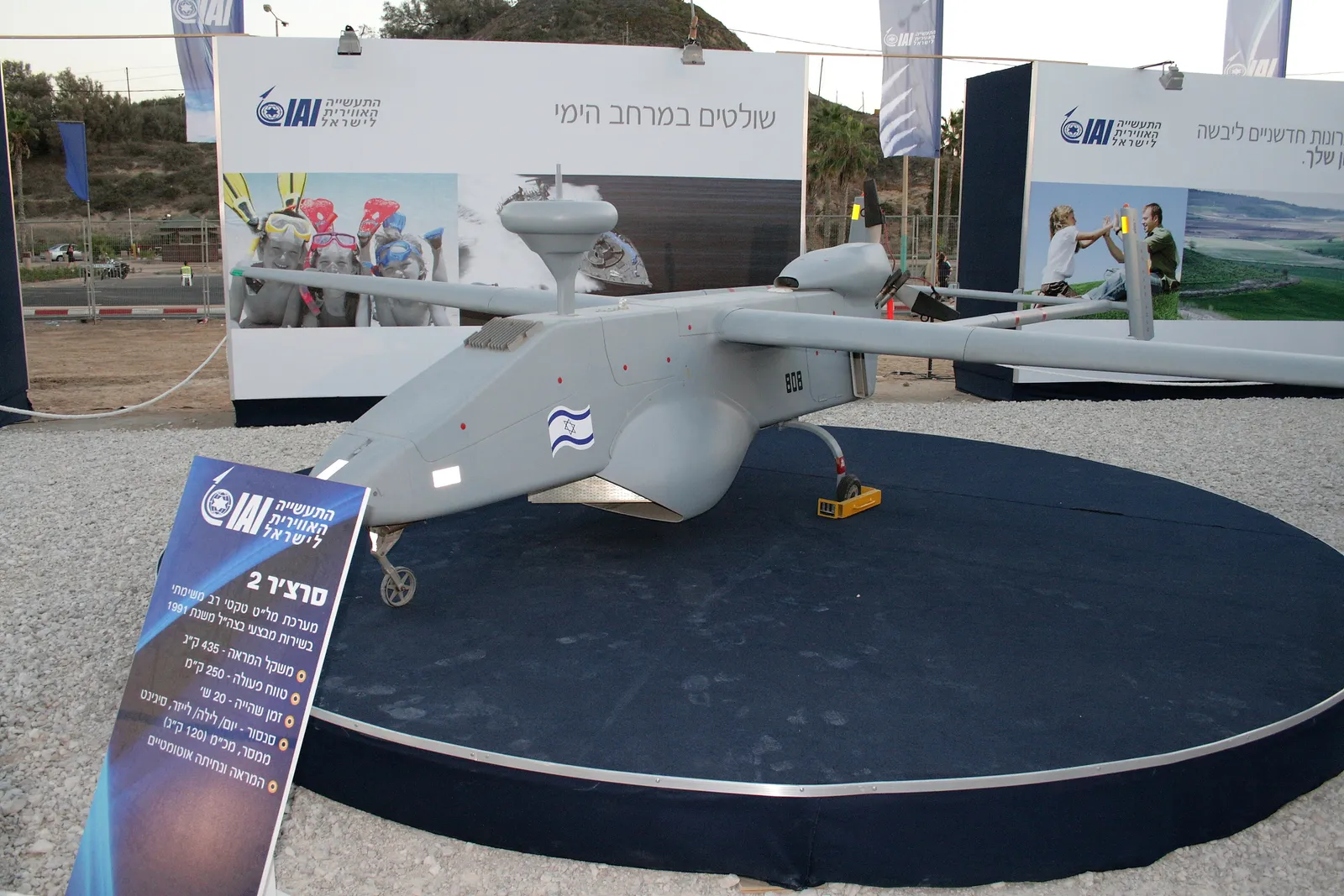
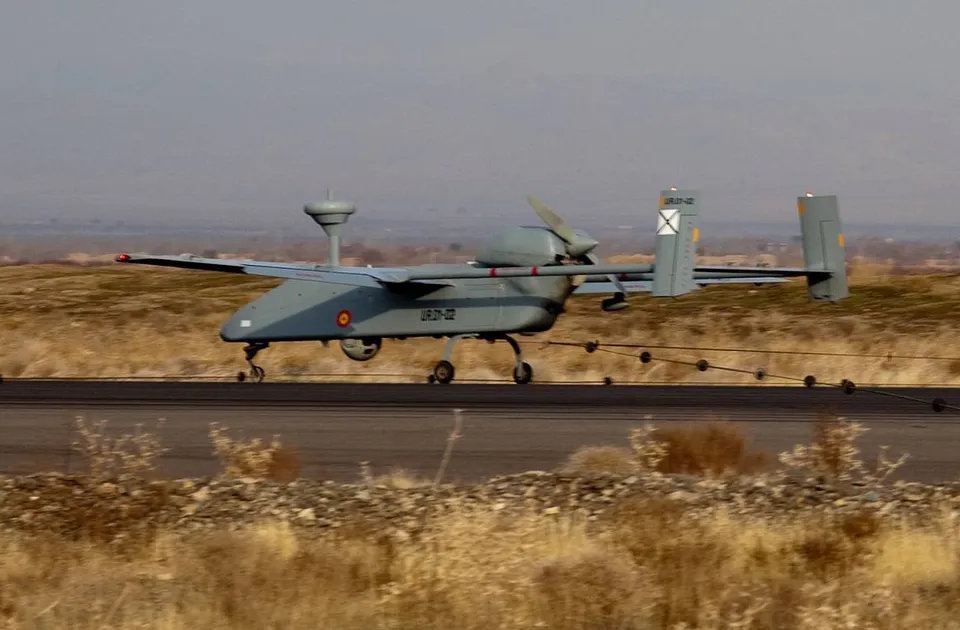
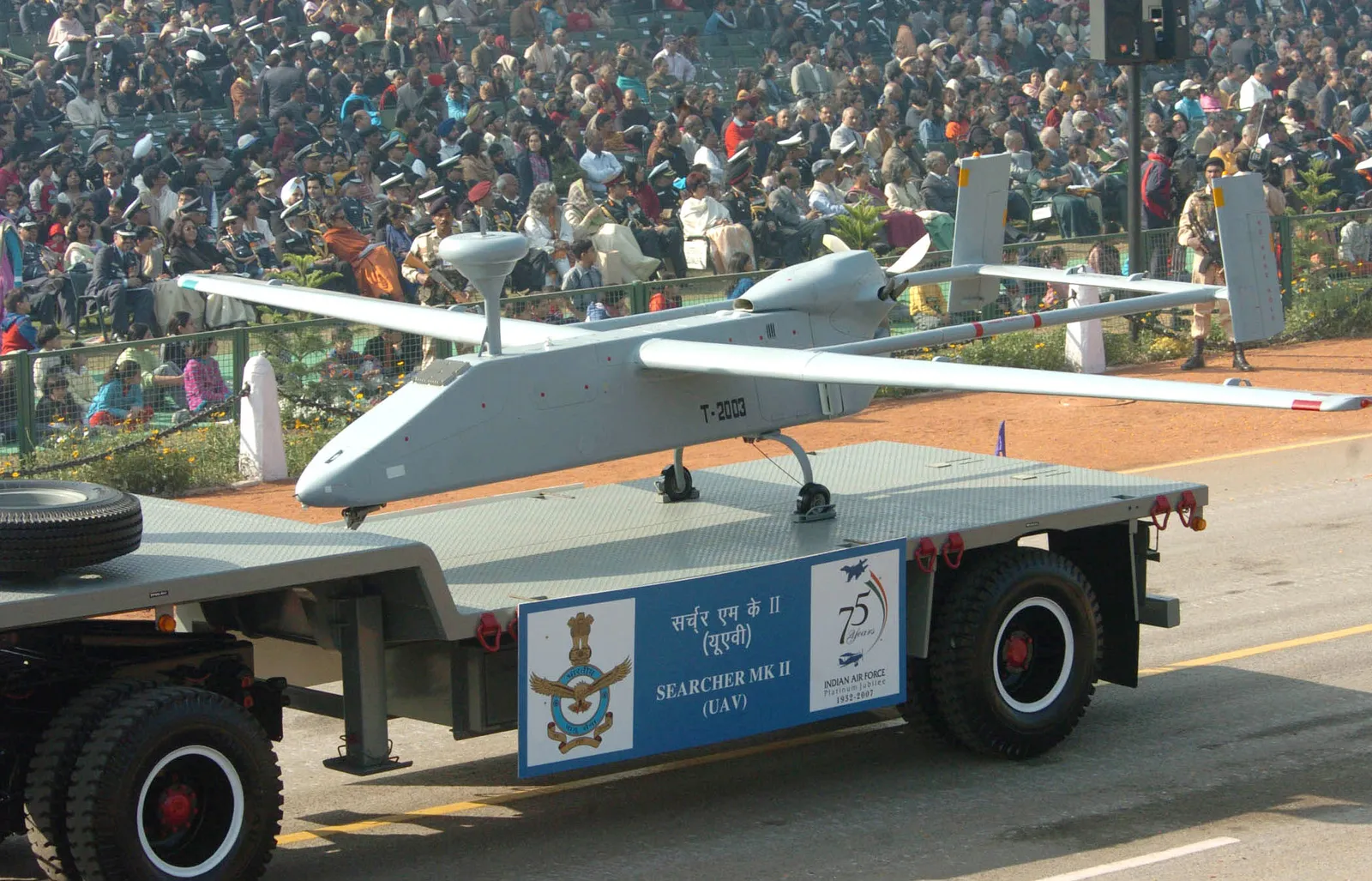
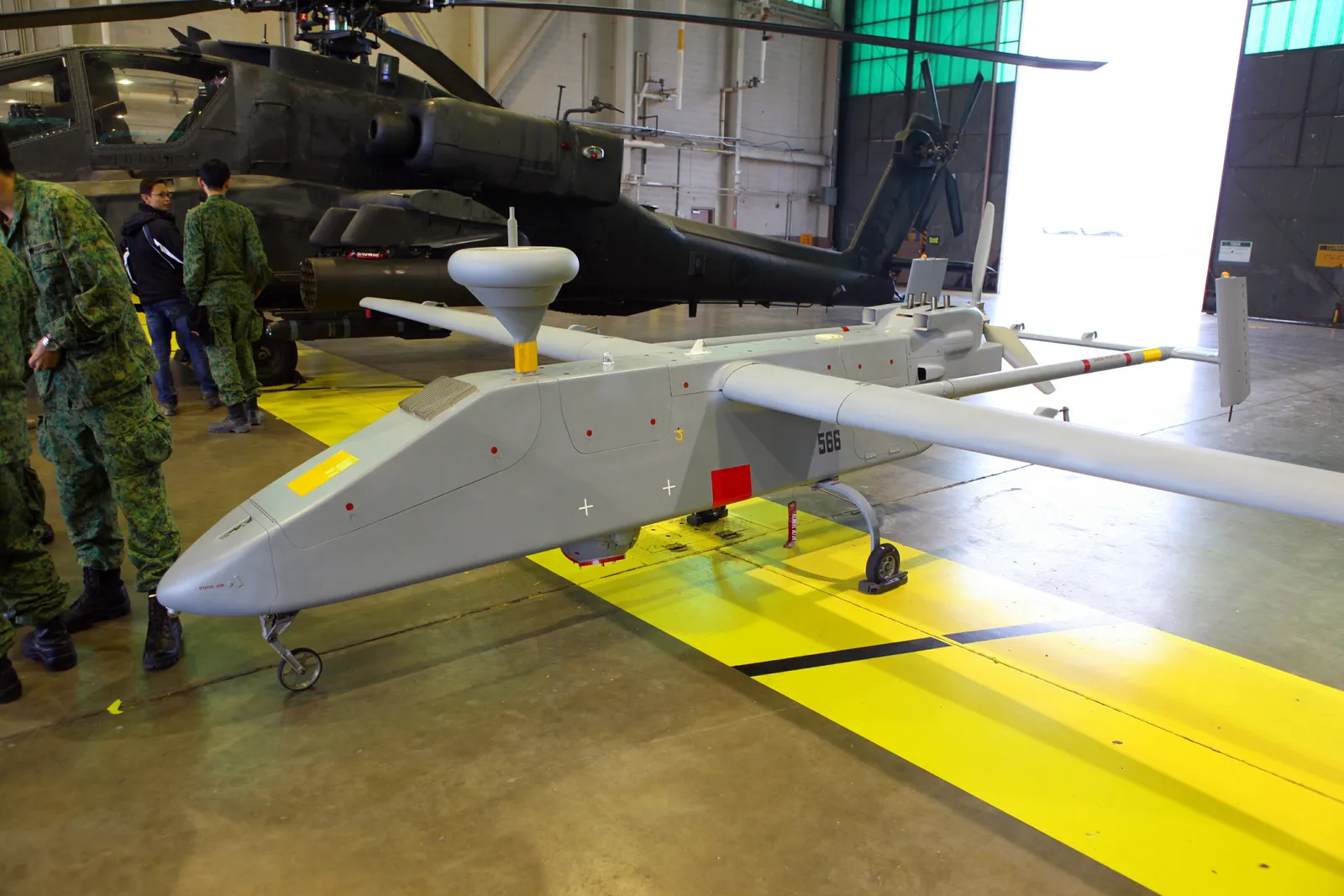
The IAI Searcher is an Israeli tactical UAV family built by Israel Aerospace Industries for surveillance, reconnaissance, target acquisition, artillery adjustment, and battle-damage assessment. Searcher Mk II and Mk III extended the line with longer endurance, heavier payload options, and export service, including Sri Lankan Air Force use in the civil war and Azerbaijani reconnaissance/fire-control use in the 2020 Nagorno-Karabakh war.
Sri Lanka Air Force No. 111 UAV Squadron used Searcher Mk II UAVs during the final government offensive against the LTTE, providing real-time intelligence and surveillance over LTTE-controlled areas.
Azerbaijani forces used the Searcher family for reconnaissance and artillery fire-control tasks in the 2020 Nagorno-Karabakh conflict; the platform is described in the sources as a tactical ISR UAV rather than a strike drone.
Searcher designations cover the base Searcher, the longer-running Mk II/Searcher II export aircraft, the Mk III/Searcher III update, and the Russian Forpost derivative built from the Searcher II line.
| Variant | Configuration | Designation notes |
|---|---|---|
| Searcher | Base tactical UAV | Searcher I was operational in Israeli service by 1992, after earlier Israeli Mastiff and Scout UAV experience. Sources: An Historical Analysis of Israeli Drone Use, 1971-2014 |
| Searcher Mk II | Improved Searcher II / Mk-IIJ export family | The Searcher II line became operational by 1998; Spanish Army pages identify the PASI as an IAI Searcher Mk-IIJ RPAS used for ISTAR missions. Sources: An Historical Analysis of Israeli Drone Use, 1971-2014, Spanish Army - UAV Searcher MK II J |
| Searcher Mk III | Mk III / Searcher III ISR update | Israeli Ministry of Defense export material describes the Mk III with SAR/GMTI, SIGINT, and EO/IR payload configurations, composite construction, a low-noise four-stroke engine, and redundant automatic takeoff-and-landing systems. |
 | Russian Searcher II derivative | Janes describes Forpost-R as an indigenized Russian variant of the Forpost, itself the Israeli Searcher Mk II assembled under licence using IAI-manufactured components. |
A British Journal for Military History study places Searcher I operational service in 1992 as part of Israel's post-Mastiff and Scout UAV lineage.
Sources: An Historical Analysis of Israeli Drone Use, 1971-2014
The same study places Searcher II operational service in 1998, before later export and derivative production lines.
Sources: An Historical Analysis of Israeli Drone Use, 1971-2014
Deagel lists Searcher Mk II initial operational capability in 2003 and describes it as the Israel Air Force's ground-surveillance replacement for the Mk I.
Sources: Searcher
Deagel lists Searcher Mk III initial operational capability in 2010 and notes its winglets, quieter engine, composite materials, and redundant ATOL avionics.
Sources: Searcher
Deagel says Azerbaijan ordered five Searcher Mk III aircraft in 2011.
Sources: Searcher
Sri Lanka Air Force anniversary reporting said No. 111 UAV Squadron flew Searcher Mk II UAVs extensively during the final government offensive against the LTTE.
Sources: No. 111 Unmanned Aerial Vehicle Squadron celebrates 4 years of Service
Valdai describes Azerbaijani Searcher UAVs as part of the reconnaissance and fire-control fleet used in the 2020 war.
Sources: Unmanned Aerial Vehicles over Nagorno-Karabakh
Searcher references do not always use the same date convention. The rows below separate Israeli service-history dates, export-operator specifications, and later derivative naming.
| Line | Documented notes | Reader takeaway |
|---|---|---|
| Searcher I / II | Israeli service-history research places Searcher I in operational service in 1992 and Searcher II in 1998. | These dates describe operational service rather than every later export configuration. |
| Searcher Mk-IIJ / PASI | Spanish Army pages identify PASI as an IAI Searcher Mk-IIJ RPAS and list ISTAR service with EO/FLIR control from a ground station. | Spanish figures are useful operator data, but they should not be treated as universal for every Searcher II airframe. |
| Searcher Mk III | Israeli export material describes SAR/GMTI, SIGINT, and EO/IR configurations, composite construction, a quieter four-stroke engine, and redundant ATOL systems. | The Mk III row captures the higher-capability ISR update without implying an armed strike role. |
| Janes identifies Forpost and Forpost-R as Russian derivatives of the Searcher Mk II licence-production line. | Combat use of Forpost is tracked on the Forpost page, not copied into Searcher conflict rows. |
Sources: An Historical Analysis of Israeli Drone Use, 1971-2014; Spanish Army - UAV Searcher MK II J; IAI Searcher Mk III - Israel at Aero India 2017; Ukraine conflict: Russia employs Forpost-R UCAV.