Aircraft & UAVs

IAI Heron TP

Also known as
  • Heron TP
  • Heron-TP
  • Eitan
  • IAI Eitan
  • IAF Eitan
  • Heron TP Eitan
  • Eitan UAV

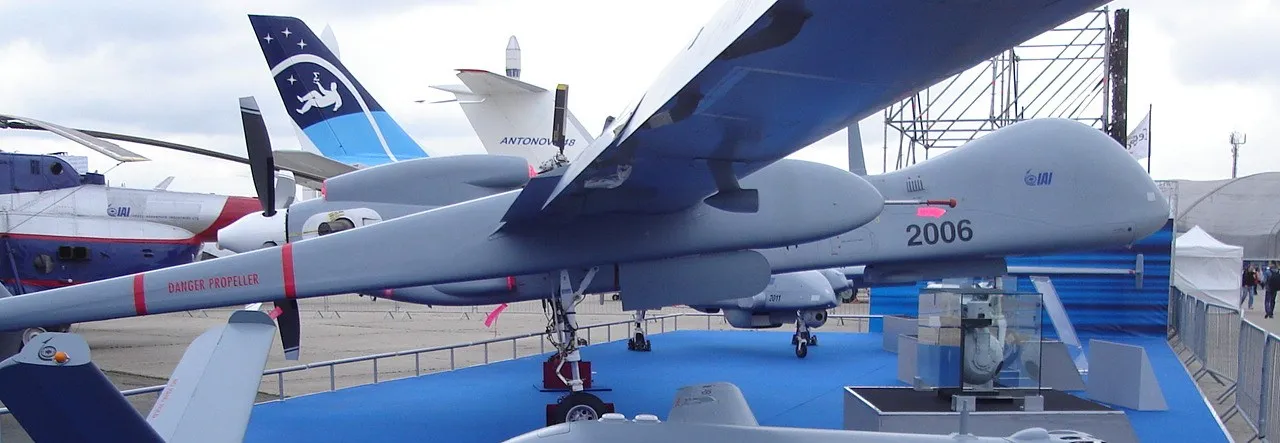
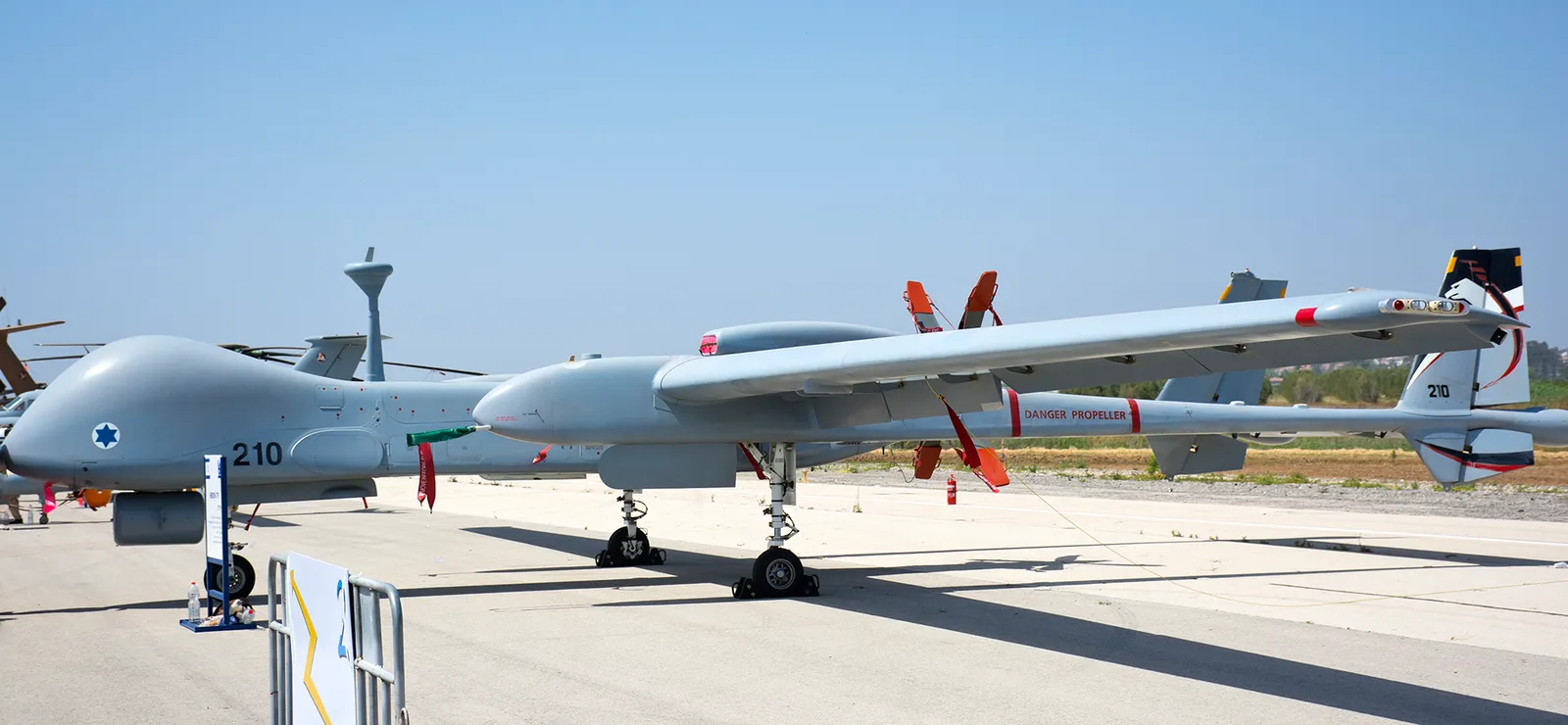
The IAI Heron TP is the large strategic member of Israel Aerospace Industries' Heron UAV family, known in Israeli Air Force service as Eitan. It is built for long-range, high-altitude intelligence, surveillance, target acquisition, reconnaissance, and multi-payload missions, with official specifications listing a 5,670 kg maximum takeoff weight, more than 30 hours endurance, beyond-line-of-sight SATCOM operation, and payload capacity far above the smaller Heron 1. Conflict sourcing ties the type to Israeli Iron Swords surveillance sorties and Operation Rising Lion missions over Iran.

Role in Conflicts

Strategic UAV Role

Heron TP occupies the heavy end of IAI's Heron family. Its published specification emphasizes altitude, endurance, payload mass, SATCOM, and a ground-control architecture intended for long missions rather than a small tactical drone profile.

Operating band

IAI lists operation above 45,000 ft, all-weather readiness, triple-redundant avionics, and automatic taxi, takeoff, and landing.

Mission payloads

Official material describes multi-mission, multi-payload service with large internal volume and payloads exceeding 1,000 kg; the technical table lists a 2,700 kg maximum payload weight.

Control architecture

The Heron TP product page pairs the aircraft with a Mission Operation and Intelligence Center and advanced ground-control station for fleet command, sensor data handling, and mission flow management.

Profile / Specs

Profile

Origin
Israel
Type
Strategic medium-altitude long-endurance UAV
Service note
First successful Eitan/Heron TP flight in 2006; Israeli Air Force service from the 2010s with documented 2023 and 2025 combat use
Designer
Israel Aerospace Industries Malat division
Designed
Early 2000s
Produced
2000s-present

Specifications

Crew
Uncrewed air vehicle with remote ground-control crew
Maximum takeoff weight
5,670 kg
Maximum payload weight
2,700 kg
Payload class
Payloads exceeding 1,000 kg; large internal volume for multiple payload configurations
Endurance
More than 30 hours
Altitude
Above 45,000 ft
Range
Beyond-line-of-sight range greater than 1,000 km
Length
14 m
Wingspan
26 m
Maximum speed
220 KTAS
Powerplant
1,200 hp PT6 turboprop
Avionics and control
Triple-redundant avionics, SATCOM, automatic taxi-takeoff-and-landing, STANAG 4671/NATO compatibility
Variants

Heron TP is the larger strategic derivative of the Heron line. IAI and Israeli sources use Eitan for the Israeli Air Force service configuration, while Heron TP is the export and product designation.

VariantConfigurationDesignation notes
IAI Heron UAV, Medium-altitude long-endurance UAV, Aircraft & UAVsHeron 1 / ShovalSmaller Heron-family MALE UAV

The cataloged Heron 1/Shoval is the smaller Heron-family aircraft; IAI lists Heron TP/Eitan separately with a 5,670 kg maximum takeoff weight, 26 m wingspan, 1,200 hp turboprop, and payload capacity above 1,000 kg.

Sources: HERON TP, IAI History

Heron TP / EitanIsraeli Air Force strategic UAV configuration

IAI identifies Heron TP as operational with the Israeli Air Force and calls Eitan the largest indigenous unmanned reconnaissance aircraft in its history timeline.

Sources: HERON TP, IAI History, IAF Heron TP Fleet Expansion

Timeline

IAI Heron TP Key Events

  1. Eitan first flight

    IAI's corporate history says the first successful flight of Eitan, also known as Heron TP, took place in 2006.

    Sources: IAI History

  2. Israeli Air Force expansion announced

    IAI announced additional Israeli Air Force Heron TP deliveries, describing the type as the largest unmanned reconnaissance aircraft used by the IAF and linking the expansion to more flight hours, more arenas, and new capabilities.

    Sources: IAF Heron TP Fleet Expansion

  3. Heron TP sorties during Iron Swords

    IAI said Heron and Heron TP platforms were performing continuous surveillance sorties during the Iron Swords war; AP separately reported German approval for Israel to use up to two German-leased Heron TP combat drones in the response to Hamas.

    Sources: IAI Unmanned Aerial Dominance, AP Germany Heron TP Approval

  4. Heron TP used in Operation Rising Lion

    IAI identified Heron TP/Eitan among the remotely piloted aircraft used over long ranges during Operation Rising Lion, providing extended visual and electronic intelligence for Israeli forces.

    Sources: IAI Rising Lion Systems, IAI Heron Standards

Heron Family Boundary

Public reporting often compresses Heron 1, Heron Mk II, and Heron TP into a single Heron label. For catalog purposes, Heron TP is separated here because IAI treats it as the larger strategic derivative and public combat reporting specifically identifies the Eitan/Heron TP configuration.

ModelScaleReader-facing distinction
Heron 1 / Shoval1,270 kg MTOW classBaseline Heron-family MALE UAV with a smaller payload and airframe, covered in the IAI Heron UAV record.
Heron TP / Eitan5,670 kg MTOW classStrategic derivative with a 26 m wingspan, high-altitude operations, BLOS range, and much greater payload capacity.
Media
Related Weapon Systems
Gulfstream G500 Nachshon Shavit, Signals-intelligence and electronic-reconnaissance aircraft, Aircraft & UAVsAircraft & UAVsGulfstream G500 Nachshon ShavitSignals-intelligence and electronic-reconnaissance aircraftThe Gulfstream G500 Nachshon Shavit is Israel's Gulfstream V/G500-based special electronic missions aircraft, converted for Israeli Air Force 122 Squadron with IAI mission systems for signals intelligence, electronic reconnaissance, and long-range ISR support. Public sources sometimes group the Nachshon fleet under G550 wording, but Shavit-specific imagery and specialist references identify the aircraft as the earlier Gulfstream V/G500 SIGINT member alongside the G550 Eitam and Oron aircraft.
Gulfstream G550 Nachshon Eitam, Airborne early warning and control aircraft, Aircraft & UAVsAircraft & UAVsGulfstream G550 Nachshon EitamAirborne early warning and control aircraftThe Gulfstream G550 Nachshon Eitam is Israel's conformal airborne early warning and control version of the G550 business jet, modified by Israel Aerospace Industries and ELTA with the EL/W-2085 AESA radar and mission systems. Operated by Israeli Air Force 122 Squadron, it provides airborne surveillance, battle management, and command-and-control support for air defense and long-range strike operations, including documented use during Iron Swords and the 2025 Israel-Iran conflict.
Gulfstream G550 Nachshon Oron, Multi-mission intelligence, surveillance, target acquisition, and reconnaissance aircraft, Aircraft & UAVsAircraft & UAVsGulfstream G550 Nachshon OronMulti-mission intelligence, surveillance, target acquisition, and reconnaissance aircraftThe Gulfstream G550 Nachshon Oron is an Israeli special-mission aircraft that adapts a U.S.-built Gulfstream G550 business jet with IAI/ELTA radar, electro-optical, SIGINT, C4I, and AI-assisted processing systems. Operated by Israeli Air Force 122 Squadron, it is documented in wartime intelligence, surveillance, early-warning, and targeting-support roles over Gaza and during Israel's 2025 operations against Iran.
IAI Heron UAV, Medium-altitude long-endurance UAV, Aircraft & UAVsAircraft & UAVsIAI Heron UAVMedium-altitude long-endurance UAVThe IAI Heron is an Israeli medium-altitude long-endurance UAV family built for persistent ISR, target acquisition, maritime patrol, and multi-sensor surveillance missions. IAI describes Heron 1, known in Israeli service as Shoval, and Heron Mk II as SATCOM-capable MALE platforms with automatic taxi, takeoff, and landing, while conflict sourcing ties the family to Israeli operations in Gaza and Iran, Azerbaijani reconnaissance and targeting in Nagorno-Karabakh, and Indian Heron Mk II operations during Operation Sindoor.
Hermes 900 unmanned aircraft, Medium-altitude long-endurance UAV, Aircraft & UAVsAircraft & UAVsHermes 900 unmanned aircraftMedium-altitude long-endurance UAVElbit's Hermes 900 Kochav is an Israeli medium-altitude long-endurance UAV family with 36-hour endurance, a 350 kg baseline payload, and modular ISR, electronic-intelligence, communications-relay, maritime-patrol, and wide-area surveillance payload options. First flown in 2009, it entered Israeli combat use during the 2014 Gaza War and has since appeared in Azerbaijani and Israeli conflict documentation, while the StarLiner branch adds civil-airspace certification and heavier payload capacity for non-segregated airspace missions.

Sources