- Side
- United Kingdom

Imperial War Museums' David Chaundler interview describes FV101 Scorpion and FV107 Scimitar light tanks supporting preparations for the attack on Wireless Ridge during the Falklands campaign.
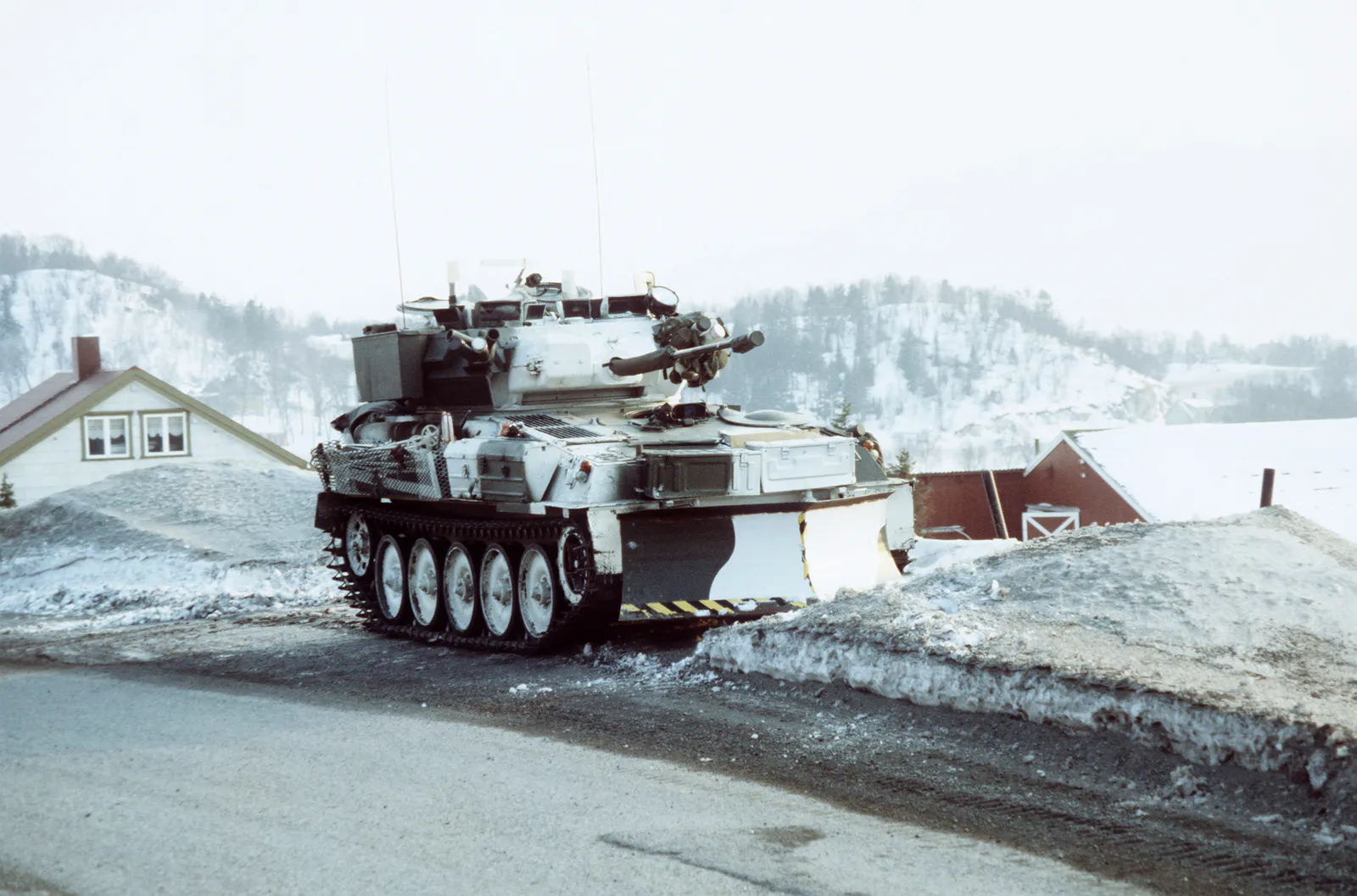
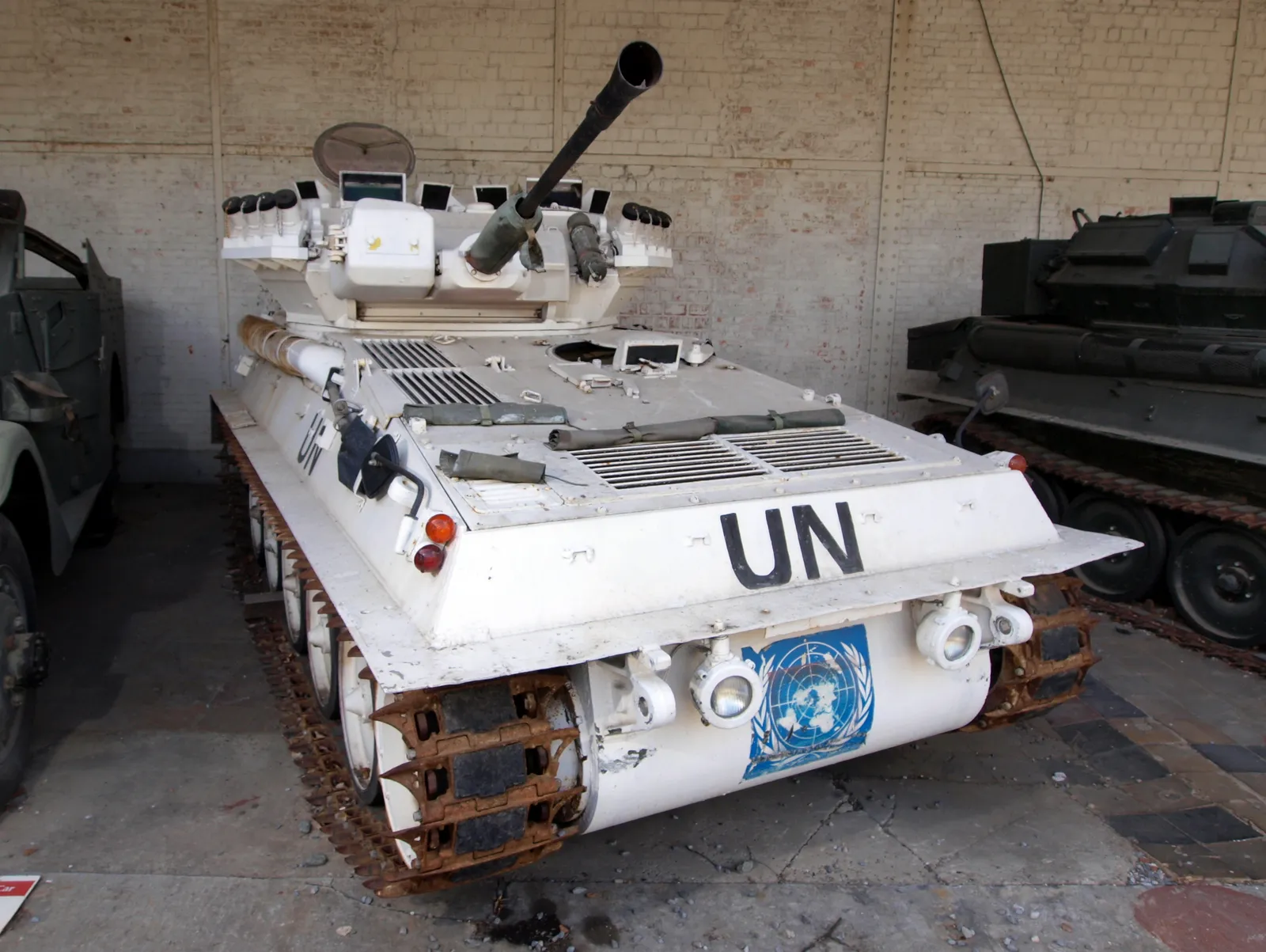
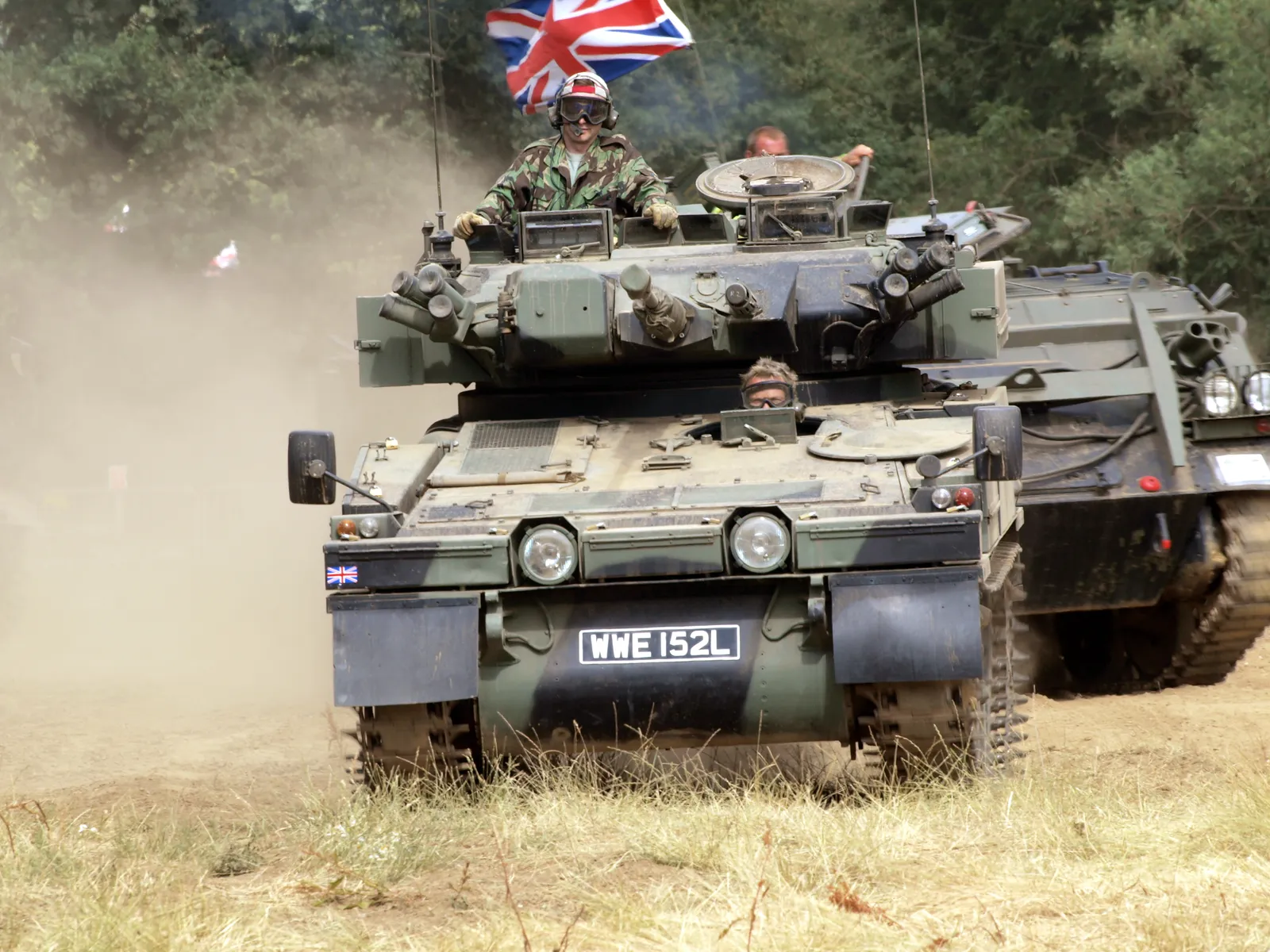
The FV107 Scimitar is a British CVR(T) tracked reconnaissance vehicle built by Alvis around a compact aluminum hull and 30 mm L21 RARDEN cannon. It filled the armed reconnaissance role for British cavalry units in the Falklands, Gulf, Iraq, and Afghanistan campaigns before upgraded Scimitar Mk 2 vehicles appeared in Ukrainian service during the Russia-Ukraine War.
Imperial War Museums' David Chaundler interview describes FV101 Scorpion and FV107 Scimitar light tanks supporting preparations for the attack on Wireless Ridge during the Falklands campaign.
The 14th/20th King's Hussars history records 16th/5th The Queen's Royal Lancers using Scimitars in the First Gulf War, including direct engagements with Iraqi armor.
Role detailsParliamentary evidence from Brigadier James Dutton states that British forces got Scimitars onto the Al Faw peninsula during Operation Telic, and describes C Squadron QDG light armor as integrated for firepower, ISTAR, and reconnaissance.
Role detailsThe UK Ministry of Defence reported that Scimitar Mark 2 vehicles were operational on Operation HERRICK 14 in Helmand with 9th/12th Royal Lancers, providing security in Nahr-e Saraj.
Ukraine's Ministry of Defence identifies FV107 Scimitar Mk 2 vehicles among CVR(T) armored vehicles in service with the Armed Forces of Ukraine, while SIPRI records a UK-to-Ukraine Scimitar transfer in 2024.
Role detailsThe Scimitar kept the CVR(T) family's compact tracked layout but substituted the 30 mm L21 RARDEN cannon for the 76 mm gun used on FV101 Scorpion. The Afghanistan-era Mk 2 update used a Spartan-based hull, added mine-blast seating, revised driver controls, improved applique armor, upgraded torsion-bar suspension, and fuel-system changes. Later Ukrainian service documentation identifies the Mk 2 alongside Spartan and Samaritan vehicles in a common CVR(T) support ecosystem.
Armed reconnaissance for Royal Armoured Corps and attached light-armor units.
30 mm L21 RARDEN cannon with coaxial 7.62 mm machine gun.
BAE Systems' Telford team developed, tested, and managed the Mk 2 upgrade, while DSG Donnington coordinated vehicle build for a 50-vehicle urgent operational requirement.
Sources: 14th/20th King's Hussars Scimitar; BAE Systems tougher recce vehicles; Ukraine MoD CVR(T) vehicles.
FV107 belongs to the British CVR(T) family. The Scimitar designation separates the 30 mm RARDEN-armed reconnaissance model from the 76 mm Scorpion and personnel-carrier or support variants using the same family architecture.
| Variant | Configuration | Designation notes |
|---|---|---|
| Scimitar Mk 2 | Up-armored Afghanistan-era modernization | BAE Systems describes the Mk 2 urgent operational requirement as a five-variant CVR(T) re-hulling and protection upgrade, with Scimitar Mk 2 using a Spartan-based hull and additional mine-blast protection. Sources: BAE Systems tougher recce vehicles |
 | 76 mm gun CVR(T) family member | Ukraine's Ministry of Defence identifies FV101 Scorpion as a CVR(T) light reconnaissance tank and FV107 Scimitar as the 30 mm RARDEN-armed member of the same family. Sources: Ukraine MoD CVR(T) vehicles |
 | CVR(T) armored personnel carrier family member | Ukraine's Ministry of Defence lists FV103 Spartan with FV107 Scimitar Mk 2 among CVR(T) vehicles in Ukrainian service and notes the common platform and standardized components across the family. Sources: Ukraine MoD CVR(T) vehicles |
 | CVR(T) armored ambulance family member | Ukraine's Ministry of Defence lists FV104 Samaritan alongside FV103 Spartan and FV107 Scimitar Mk 2 in the CVR(T) family in Ukrainian service. Sources: Ukraine MoD CVR(T) vehicles |
The 14th/20th King's Hussars history places Scimitar service entry in 1971 as part of the CVR(T) family.
Sources: 14th/20th King's Hussars Scimitar
IWM's Chaundler interview records FV101 Scorpion and FV107 Scimitar light tanks supporting preparations for the attack on Wireless Ridge.
Sources: IWM David Chaundler interview
The 14th/20th King's Hussars history describes Scimitars serving with 16th/5th The Queen's Royal Lancers during the First Gulf War.
Sources: 14th/20th King's Hussars Scimitar
House of Commons evidence after Operation Telic describes Scimitars crossing onto the Al Faw peninsula and C Squadron QDG light armor supporting firepower, ISTAR, and reconnaissance tasks.
Sources: House of Commons Operation Telic evidence
The UK Ministry of Defence reported the enhanced Scimitar Mark 2 operational on Operation HERRICK 14 in Helmand province.
Sources: MOD Scimitar Mark 2 Afghanistan
The Defense Post reported 23 Scimitar Mk II reconnaissance vehicles being prepared for shipment to Ukraine, citing Rheinmetall BAE Systems Land support activity.
Sources: Defense Post Ukraine Scimitar shipment
SIPRI's public arms-transfer database records a 2024 UK-to-Ukraine transfer row for Scimitar vehicles, supporting the transfer context without by itself proving battlefield employment.
Sources: SIPRI Arms Transfers Database
Ukraine's Ministry of Defence identified FV107 Scimitar Mk 2 among CVR(T) vehicles in service with the Armed Forces of Ukraine.
Sources: Ukraine MoD CVR(T) vehicles