Artillery

122 mm Type 83 howitzer

Also known as
  • Type 83 122 mm howitzer
  • Type 83 122mm howitzer
  • 122mm Type 83
  • PL-83
  • PL 83
  • PL83
  • Type 83-122
  • Type 83 122mm gun
  • 83-122 mm howitzer

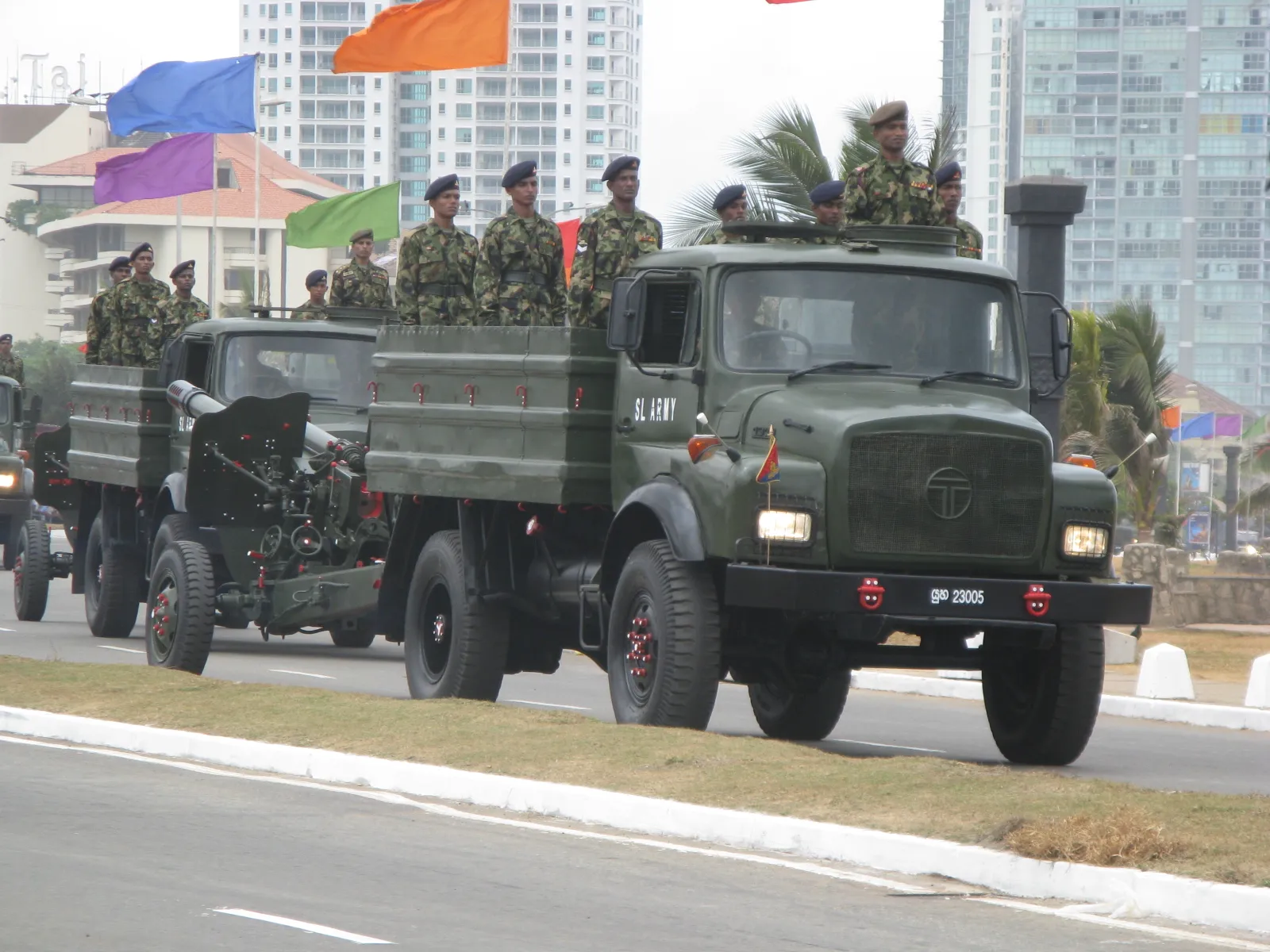
The 122 mm Type 83 is a Chinese split-trail towed howitzer developed as a lighter, longer-range successor to earlier Type 54/M-30-derived guns before China moved toward D-30-derived 122 mm systems. Open sources tie the weapon to limited Chinese adoption, exports to Sri Lanka and Bangladesh, and Sri Lankan government fire-support use by Sri Lanka Artillery's 9th Field Regiment during the 1983 Sri Lankan Civil War.

Role in Conflicts

Side
Sri Lankan government forces

WeaponSystems.net identifies Sri Lankan troops firing the 122 mm Type 83 during the Sri Lankan Civil War; Sri Lanka Artillery says 9 SLA field batteries were equipped with newly purchased Chinese 122 mm PL 83 howitzers for combat operations and direct support during Operation Jayasikuru.

Profile / Specs

Profile

Origin
China
Type
122 mm towed howitzer
Service note
Late Cold War Chinese towed artillery design; limited Chinese service and later exports
Designed
1970s concept work; Type 83-122 development and trials in the 1979-1984 period
Produced
1980s limited production
Number built
At least dozens; public sources describe limited Chinese adoption and export batches

Specifications

Caliber
122 mm
Ordnance
122 mm L/30 howitzer with multi-slotted muzzle brake
Barrel length
3.63 m
Muzzle velocity
618 m/s with Type 83 HE-fragmentation ammunition
Crew
8
Combat weight
About 2.63 t; 2.70 t in travel configuration
Travel dimensions
7.86 m long, 2.16 m wide, 2.09 m high
Maximum range
15.6 km with standard ammunition; 19.0 km with assisted ammunition
Direct fire range
About 1 km
Rate of fire
7-8 rounds per minute
Elevation
-3 degrees to +65 degrees
Traverse
54 degrees total
Carriage
Two-wheel split-trail carriage with gun shield and no auxiliary power unit
Towing
Tactical 4x4 or 6x6 truck
Design Lineage

The Type 83 is best treated as an interim Chinese 122 mm design rather than a simple M-30 or D-30 rename. Its carriage lineage points backward to Chinese M-30 derivatives, while its ordnance and later replacement path point toward D-30-pattern Chinese 122 mm artillery.

Related systemConnectionDetail
122 mm M-30 howitzer, 122 mm towed field howitzer, Artillery122 mm M-30 howitzerCarriage lineageWeaponSystems.net describes the Type 83 carriage as taken from the Type 54-I, a Chinese derivative of the Soviet M-30.
D-30 122 mm howitzer, 122 mm towed howitzer, ArtilleryD-30 122 mm howitzerOrdnance influenceWeaponSystems.net says the Type 83 ordnance was derived from the Soviet D-30 and notes the similar multi-slotted muzzle brake; GlobalSecurity describes China later moving to a D-30-based Type 96/PL96 path.
PL96 / Type 96 122 mm howitzerLater Chinese directionWeaponSystems.net and GlobalSecurity both distinguish the later D-30-copy PL96/Type 96 from the limited Type 83 production run.
Sources: WeaponSystems.net 122mm Type 83; GlobalSecurity Type 83 122mm.
Variants

Open references distinguish this 122 mm towed Type 83 from other Chinese Type 83 designations, including a 152 mm self-propelled gun and unrelated rocket systems.

VariantConfigurationDesignation notes
Type 83Original Chinese 122 mm towed howitzer designation

WeaponSystems.net lists Type 83 as the original designation for the 122 mm towed howitzer.

Sources: WeaponSystems.net 122mm Type 83

PL-83Later Chinese naming-system designation

WeaponSystems.net gives PL-83 as the designation under the newer Chinese artillery naming system.

Sources: WeaponSystems.net 122mm Type 83

Timeline

122 mm Type 83 howitzer Key Events

  1. Light 122 mm howitzer project begins

    WeaponSystems.net describes the Type 83 as emerging from a Chinese lightweight 122 mm howitzer project that ran through the 1970s.

    Sources: WeaponSystems.net 122mm Type 83

  2. Redesigned early-1980s production pattern

    Specialist references describe the early-1980s Type 83 as a redesigned, limited-production Chinese towed howitzer rather than a large family replacing all older 122 mm guns.

    Sources: WeaponSystems.net 122mm Type 83, GlobalSecurity Type 83 122mm

  3. Type 83-122 designation finalized

    GlobalSecurity describes the Type 83-122 program as tested in the early 1980s and officially named in 1984, with later Chinese production moving away from broad Type 83 replacement.

    Sources: GlobalSecurity Type 83 122mm

  4. 9 SLA supports Operation Jayasikuru

    Sri Lanka Artillery states that 9 SLA's field batteries were equipped with newly purchased Chinese 122 mm PL 83 howitzers, then placed in direct support of 55 Infantry Division for Operation Jayasikuru in May 1997.

    Sources: Sri Lanka Artillery 9th Field Regiment

  5. Bangladesh inventory context reported

    Army Recognition reported Type 83 guns among Bangladesh Army 122 mm field artillery holdings while describing Bangladesh's search for additional 155 mm howitzers.

    Sources: Army Recognition Bangladesh artillery procurement

Service And Export Context

Open references present the Type 83 as a limited Chinese service weapon whose best-documented export users are Sri Lanka and Bangladesh. Documented combat use in the Sri Lankan Civil War is tied to Sri Lankan government artillery units rather than to every later operator.

China

WeaponSystems.net describes Chinese adoption as limited before larger acquisition of later 122 mm systems.

Sri Lanka

Sri Lanka Artillery says 9 SLA field batteries received Chinese 122 mm PL 83 howitzers for combat operations and direct support during Operation Jayasikuru.

Bangladesh

Army Recognition reported Type 83 guns among Bangladesh Army 122 mm field artillery holdings in 2017, and Wikimedia Commons hosts a 2018 Bangladesh Army Type 83 firing-exercise video.
Sources: WeaponSystems.net 122mm Type 83; Sri Lanka Artillery 9th Field Regiment; Army Recognition Bangladesh artillery procurement; Commons Bangladesh Type 83 firing video.
Related Weapon Systems
Alvis Saracen, 6x6 armored personnel carrier, Armored VehiclesArmored VehiclesAlvis Saracen6x6 armored personnel carrierThe Alvis Saracen is the FV603 6x6 armored personnel carrier of Britain's FV600 wheeled-vehicle family, developed by Alvis for protected troop movement and internal-security work before the Saladin armored car reached production. It carried a small crew and an infantry section in a welded steel hull, used a Rolls-Royce B80 petrol engine and machine-gun turret, and was adapted into command, ambulance, and up-armored Northern Ireland marks. Sri Lanka Army sources document Saracen service with the Sri Lanka Armoured Corps during the civil-war period, while UN arms-transfer reporting records five Alvis Saracens among 2023 United Kingdom armored-combat-vehicle exports to Ukraine.
T-55AM-2, Upgraded T-55 main battle tank, TanksTanksT-55AM-2Upgraded T-55 main battle tankThe T-55AM-2 is a Czechoslovak T-55 modernization that added passive BDD applique armor, side skirts, smoke dischargers, improved mobility equipment, modern radios, and the Kladivo fire-control lineage while retaining the manually loaded 100 mm D-10-series gun. Sri Lankan Army records document T 55 AM 2/AM II tanks arriving for the 4th Armoured Regiment before the final phase of the 1983 Sri Lankan Civil War, where the regiment used tank squadrons for assault, defensive holding, and direct-fire support.
152 mm D-1 gun-howitzer, Towed 152 mm howitzer, ArtilleryArtillery152 mm D-1 gun-howitzerTowed 152 mm howitzerThe 152 mm D-1 gun-howitzer is a Soviet towed heavy howitzer that put a short 152.4 mm ordnance on a lighter split-trail carriage. Its modern record is mostly residual-use evidence: Russia drew D-1 guns from stocks during the full-scale phase of the 2014 Russia-Ukraine War, while open loss records tie the same World War II-era system to Armenian/Artsakh equipment in 2020 Nagorno-Karabakh and Syrian government artillery losses in the 2011 Syrian Civil War.

Sources