Tanks

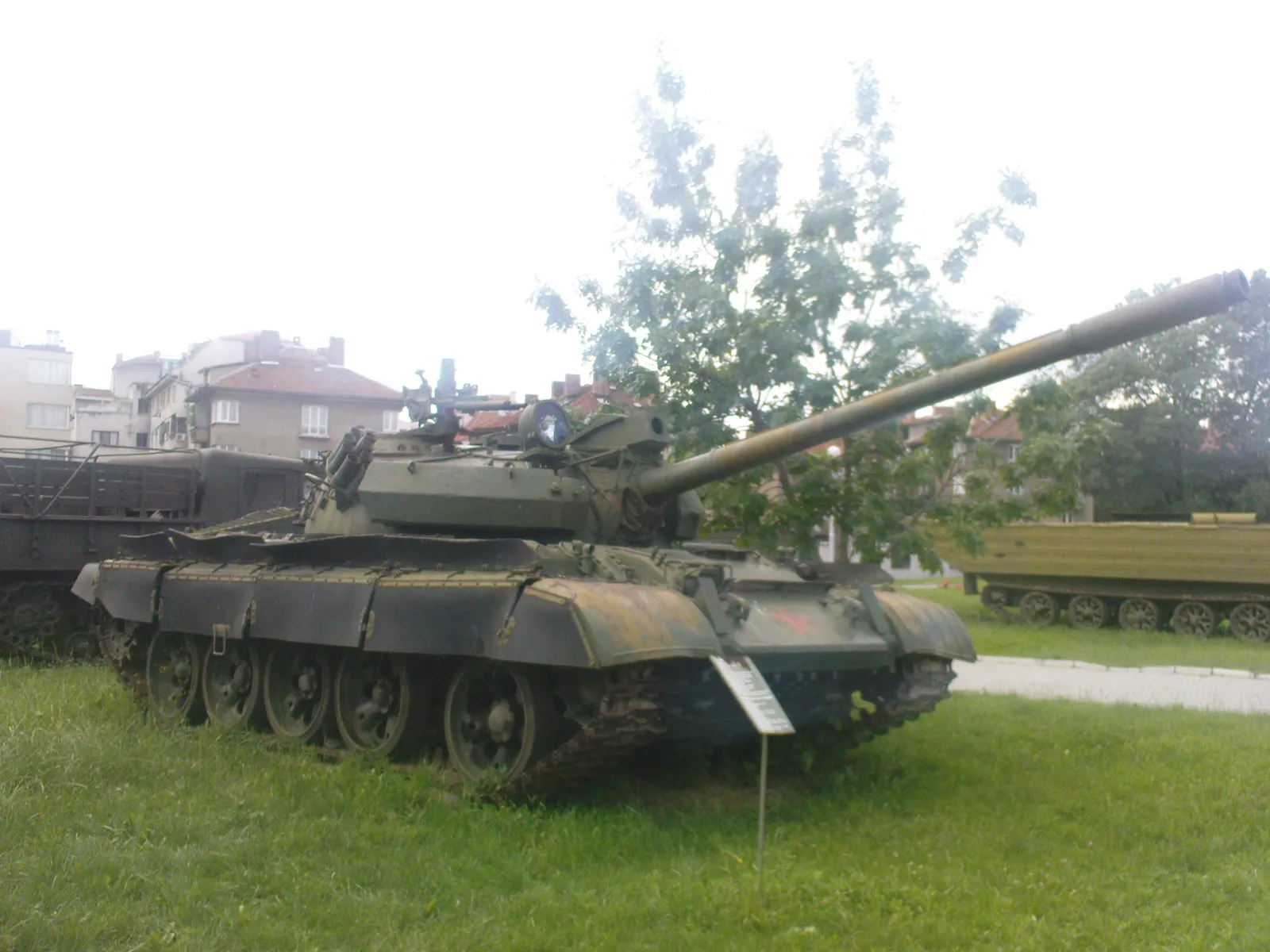
T-55AM-2

Also known as
  • T-55AM2
  • T 55 AM 2
  • T 55 AM II
  • T-55 AM II
  • T55AM2
  • T-55AM-2 Kladivo
  • T-55AM2 Kladivo

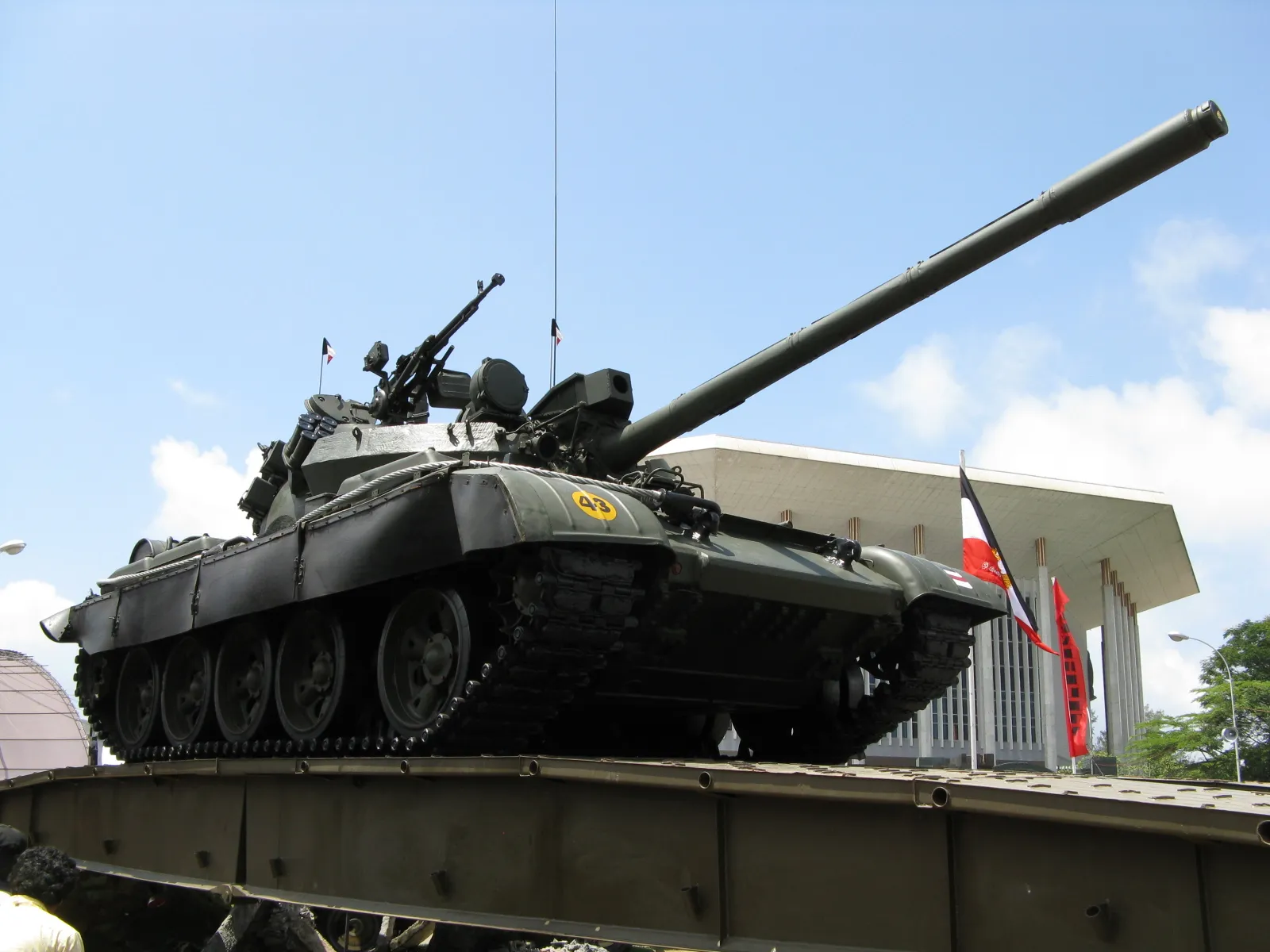
The T-55AM-2 is a Czechoslovak T-55 modernization that added passive BDD applique armor, side skirts, smoke dischargers, improved mobility equipment, modern radios, and the Kladivo fire-control lineage while retaining the manually loaded 100 mm D-10-series gun. Sri Lankan Army records document T 55 AM 2/AM II tanks arriving for the 4th Armoured Regiment before the final phase of the 1983 Sri Lankan Civil War, where the regiment used tank squadrons for assault, defensive holding, and direct-fire support.

Role in Conflicts

Profile / Specs

Profile

Origin
Czechoslovakia
Type
Upgraded T-55 main battle tank
Service note
1980s Czechoslovak modernization; exported from Czech stocks after the Cold War
Designer
Czechoslovak T-55 modernization program
Designed
1980s modernization program
Produced
Modernized and exported from late-Cold-War and post-Cold-War stocks
Number built
Public sources give export and service batches rather than a reliable total production figure

Specifications

Crew
4
Main armament
100 mm D-10T2S-series rifled gun
Secondary armament
7.62 mm coaxial machine gun and 12.7 mm DShKM roof machine gun on AM-family references
Combat weight
About 40.5 tonnes on FAS T-55AMV/T-55AM-family data; exact AM2 weights vary by armor package and source
Engine
V-55U V-12 diesel, commonly reported at about 620 hp for AM2/AM-family upgrades
Road speed
About 50 km/h
Range
About 390-450 km on internal fuel depending on reference; longer with external fuel tanks
Protection
BDD-style passive applique armor, side skirts, smoke dischargers, NBC protection, and mine/anti-radiation improvements on AM-family upgrades
Fire control
Czechoslovak Kladivo fire-control lineage for AM2; missile-capable AM2B adds 1K13/9K116-related equipment
Modernization Profile

The AM2 package is best understood as a late-life rebuild of T-55-family tanks rather than a new tank design. It kept the four-person crew and 100 mm D-10-series gun while adding visible survivability and fire-control changes.

Fire control

Czechoslovak AM2 sources connect the variant with the locally developed Kladivo laser-rangefinder and wind-sensor fire-control lineage.

Sources: GlobalSecurity T-55AM-2; Tank-AFV T-55 Czechoslovak Variants.

Protection

The AM2 added BDD-style passive turret armor, hull applique armor, side skirts, smoke grenade launchers, and related survivability changes.

Sources: GlobalSecurity T-55AM-2; Tank-AFV T-55 Czechoslovak Variants.

Export context

SIPRI records ex-Czech T-55AM-2 transfers to Sri Lanka and Yemen in 2000-2001, showing the variant's post-Cold-War movement from surplus stocks into active conflict inventories.

Source: SIPRI International Arms Transfers 2001 Register.
Variants

T-55AM-2 designations sit inside the wider T-55AM modernization family; suffixes distinguish fire-control, missile, armor, and command configurations rather than a clean-sheet tank.

VariantConfigurationDesignation notes
T-55AM2Baseline Czechoslovak AM2 modernization

The baseline AM2 kept the 100 mm gun and added BDD-style passive armor and other modernization features; specialist references distinguish it from missile-capable AM2B versions.

Sources: GlobalSecurity T-55AM-2, Tank-AFV T-55 Czechoslovak Variants

T-55AM2BMissile-capable Czechoslovak AM2 derivative

GlobalSecurity distinguishes the Czechoslovak AM2B as the version fitted for the 9K116 Bastion gun-launched missile through the 1K13 fire-control equipment.

Sources: GlobalSecurity T-55AM-2

T-55AM2K1 / K2 / K3Command versions

Tank-AFV lists K1, K2, and K3 command versions at company, battalion, and division command levels.

Sources: Tank-AFV T-55 Czechoslovak Variants

Base Tank Family

The T-55AM-2 was a modernization of existing T-55-family tanks, so its reader context belongs alongside the broader Soviet-designed family.

Compatible itemItem typeCompatibility evidence
T-54/T-55, Main battle tank / medium tank family, TanksT-54/T-55Base tank family

FAS describes the T-54/T-55 lineage as a widely produced family with Czechoslovak and Polish production, while GlobalSecurity identifies the AM2 as a Polish and Czechoslovak modernization parallel to the Soviet T-55M/T-55AM program.

Sources: FAS T54/T55 Series Tanks, GlobalSecurity T-55AM-2

Timeline

T-55AM-2 Key Events

  1. Soviet T-55M/T-55AM modernization baseline appears

    FAS and GlobalSecurity describe the early-1980s modernization wave that added fire-control, protection, radio, mobility, and armor improvements to T-55-series tanks.

    Sources: FAS T54/T55 Series Tanks, GlobalSecurity T-55AM-2

  2. Czech T-55AM-2 transfer to Sri Lanka recorded

    SIPRI's 2001 transfer register lists Czech T-55AM-2 main battle tanks ordered by Sri Lanka in 2000 for delivery in 2000-2001, with the comment that they were for use against LTTE rebels.

    Sources: SIPRI International Arms Transfers 2001 Register

  3. First T 55 AM 2 batch reaches Sri Lanka

    Sri Lanka's 4th Armoured Regiment history says the first 11 new T 55 AM 2 tanks reached Colombo on 6 January 2001 and enabled a new D Squadron.

    Sources: Sri Lanka Army 4th Armoured Regiment History

  4. Second T 55 AM II batch arrives

    The same regimental history records a second consignment of 25 T 55 AM II tanks arriving on 15 April 2001, after which the regiment had four sabre squadrons.

    Sources: Sri Lanka Army 4th Armoured Regiment History

  5. Armored operations in the final campaign

    The 4th Armoured Regiment history describes its squadrons supporting decisive operations from the Muhamalai-Kilali defenses during the final 2008-2009 campaign.

    Sources: Sri Lanka Army 4th Armoured Regiment History

Media
Related Weapon Systems
T-54/T-55, Main battle tank / medium tank family, TanksTanksT-54/T-55Main battle tank / medium tank familyThe T-54/T-55 is a Soviet tank family built around a low-profile tracked hull, four-person crew, and 100 mm D-10-series gun. It became one of the most widely produced tank families of the Cold War, with Soviet and licensed production spreading across Warsaw Pact and partner states. Direct conflict sourcing traces the family from North Vietnamese T-54 use in the 1975 fall of Saigon and Iraqi T-55s in the Gulf War to recent secondary fire-support, capture, and loss contexts in Ukraine, Yemen, Libya, Syria, Nagorno-Karabakh, Nigeria, and Sudan.
Daimler Ferret armoured car, 4x4 armored reconnaissance car, Armored VehiclesArmored VehiclesDaimler Ferret armoured car4x4 armored reconnaissance carThe Daimler Ferret is a compact British 4x4 armored reconnaissance car built for liaison, scouting, patrol, and internal-security work. Daimler produced the type from the 1950s into the early 1970s, and its small hull, machine-gun armament, smoke dischargers, and high road speed made it a durable export vehicle after British service. Sri Lanka Army history places Ferret scout cars in its reconnaissance fleet before civil-war armor deployments, while Ukrainian Mk 1 vehicles have appeared as improvised light reconnaissance and force-protection platforms, including a modified example with anti-drone grilles and electronic-warfare equipment during the 2025 Nadiia operation.
T-62, Main battle tank, TanksTanksT-62Main battle tankThe T-62 is a Soviet main battle tank built around a 115 mm U-5TS/2A20 smoothbore gun, a four-person crew, and a conventional tracked armor layout inherited from the T-54/T-55 design line. Produced in large numbers by Uralvagonzavod, it moved from Cold War export and Soviet service into long-tail combat use: Egyptian and Iraqi T-62s appear in 1970s and 1991 conflict records, while upgraded or inherited T-62M/T-62MV stocks reappeared in Syria, Libya, Ukraine, Tigray, and Yemen.
Alvis Saracen, 6x6 armored personnel carrier, Armored VehiclesArmored VehiclesAlvis Saracen6x6 armored personnel carrierThe Alvis Saracen is the FV603 6x6 armored personnel carrier of Britain's FV600 wheeled-vehicle family, developed by Alvis for protected troop movement and internal-security work before the Saladin armored car reached production. It carried a small crew and an infantry section in a welded steel hull, used a Rolls-Royce B80 petrol engine and machine-gun turret, and was adapted into command, ambulance, and up-armored Northern Ireland marks. Sri Lanka Army sources document Saracen service with the Sri Lanka Armoured Corps during the civil-war period, while UN arms-transfer reporting records five Alvis Saracens among 2023 United Kingdom armored-combat-vehicle exports to Ukraine.
Alvis Saladin, 6x6 armored reconnaissance car, Armored VehiclesArmored VehiclesAlvis Saladin6x6 armored reconnaissance carThe Alvis Saladin is a British FV601 6x6 armored reconnaissance car developed from a postwar British Army requirement and produced at Coventry from 1958 to 1972. Its production Mk 2 form combined a three-person turreted layout, a 76 mm L5A1 low-pressure gun, welded steel protection, and road mobility suited to reconnaissance, convoy escort, internal-security, and light direct-fire roles. Yemen evidence remains inventory-level: Oryx lists the Saladin in pre-war Yemeni Army armored-fighting-vehicle stocks available to parties after the 2014-2015 takeover, so this entry does not claim a specific Saladin engagement in that war.

Sources