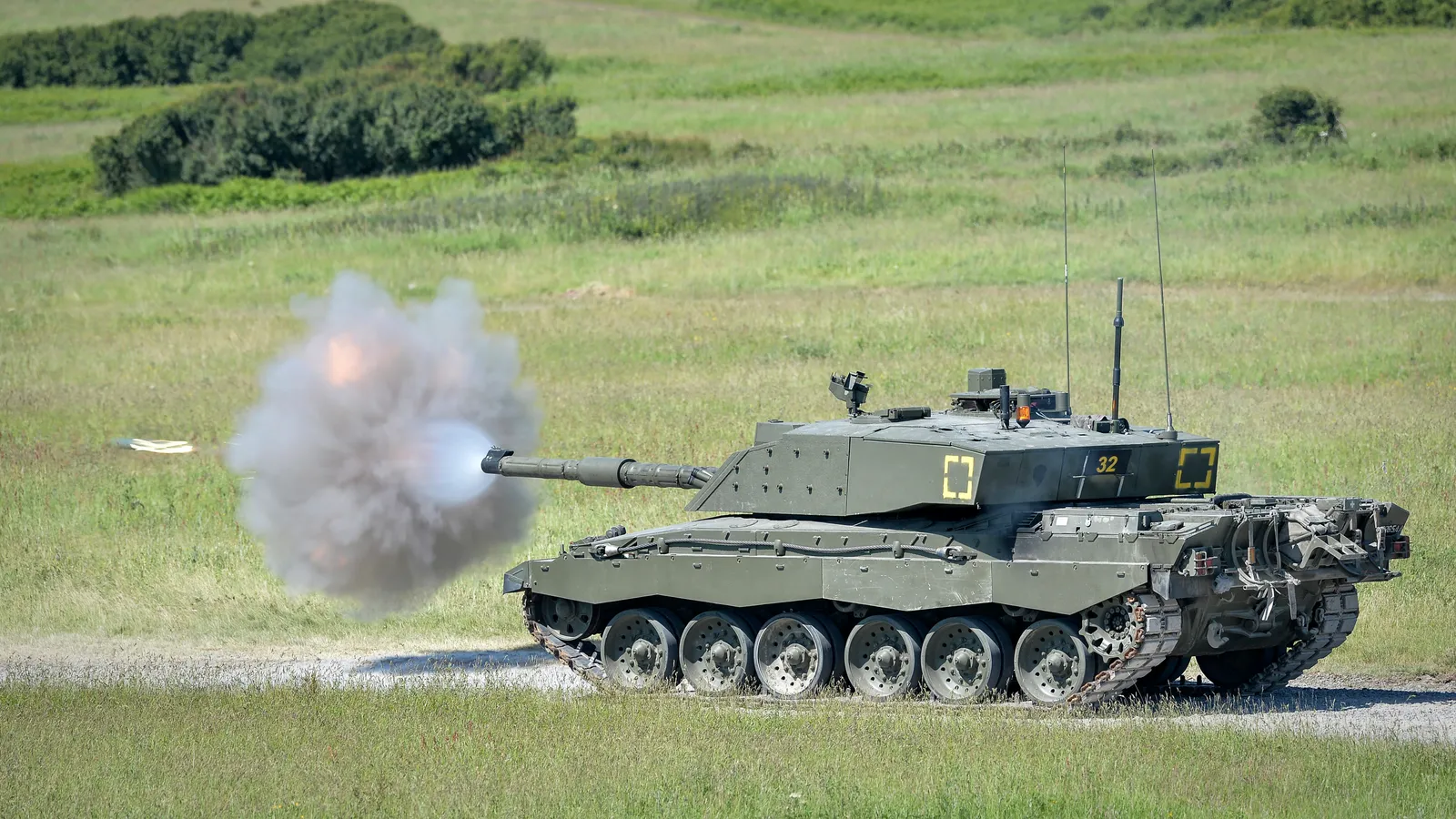

Forecast International identifies the L30 as Challenger 2's main armament and says it earned a combat record with Challenger 2 during Operation Telic, the British component of Operation Iraqi Freedom.
Artillery
120 mm Royal Ordnance L30
Also known as
- Royal Ordnance L30
- L30
- L30A1
- Gun, 120mm, Tank L30
- 120mm Royal Ordnance L30
- 120 mm L30A1
- CHARM gun
- EXP 32M1
The 120 mm Royal Ordnance L30 is the British rifled tank gun developed under the Challenger Armament program for Challenger 2. It kept separate-loading British 120 mm ammunition and HESH compatibility at a time when most NATO main battle tanks moved to smoothbore guns, giving Challenger 2 a distinctive direct-fire armament in Iraq and later in Ukrainian service.
Role in Conflicts
- Side
- Ukraine

UK-supplied Challenger 2 tanks entered Ukrainian service with the L30A1 120 mm rifled main gun; Forces News and The Times document Ukrainian Challenger 2 combat employment and 120 mm rifled-gun fire against Russian forces.
Role detailsProfile / Specs
Profile
- Origin
- United Kingdom
- Built by
- Royal Ordnance
- Type
- 120 mm rifled tank gun
- Service note
- Late Cold War development with 1998-present Challenger 2 service
- Designer
- Royal Ordnance Factory / RO Defence under the Challenger Armament program
- Designed
- 1980s; EXP 32M1 selected for Challenger in 1984
- Unit cost
- Forecast International listed a 2006 serial-production L30 unit price of $319,800
- Produced
- 1990s-2000s; serial production dormant by 2005
- Number built
- 483 L30 tank guns through 2005, excluding EXP32M1 and XL30 prototype guns
Specifications
- Caliber
- 120 mm
- Barrel
- 55 calibres; Forecast International lists 6.604 m barrel length for the L11/L30 data set
- Gun type
- Rifled high-pressure tank gun
- Primary platform
- Challenger 2 main battle tank
- Breech
- Split sliding-block breech with Crossley pad obturation ring
- Recoil system
- Hydro-pneumatic recoil system with two buffers in the L11/L30 data set
- Ammunition format
- Separate projectile and propelling charge; supports British 120 mm rifled ammunition natures
- Compatible ammunition
- L27A1/CHARM 3 APFSDS and L31 HESH among documented Challenger 2 ammunition types
- Barrel life
- Forecast International cites a contractor statement of 400 equivalent full charges for L30 barrel life
- Production
- 483 L30 guns through 2005, plus 50 pre-production cannon in that total
- Combat platform fit
- Standard main armament of Challenger 2, including export models
Rifled Gun Architecture
The L30 preserved a British design choice that made Challenger 2 unusual among modern NATO tanks: a rifled 120 mm gun using separate projectiles and propelling charges. That architecture supported HESH and CHARM ammunition but also made the system less interchangeable with the smoothbore 120 mm ammunition used by Leopard 2 and M1 Abrams fleets.
Gun format
120 mm, 55-calibre rifled tank gun for Challenger 2.
Sources: Forecast International; Rheinmetall.
Loading system
Separate projectile and combustible or bagged charge rather than a single fixed smoothbore cartridge.
Sources: House of Commons evidence; Forecast International.
Upgrade pressure
Challenger 3 replaces the L30 with a Rheinmetall L55A1 smoothbore gun to move the future fleet onto a different ammunition ecosystem.
Source: Rheinmetall Challenger 2 and 3.
Variants
The L30 is best read as the final production branch of Britain's rifled L11 tank-gun lineage rather than a broad export gun family.
| Variant | Configuration | Designation notes |
|---|---|---|
| EXP 32M1 | Prototype and program designation | Forecast International identifies EXP 32M1 as the L30 development model selected under the Challenger Armament program. Sources: Forecast International L11 and L30 |
| L30 | Production gun designation | Forecast International describes L30 as the last major model in the L11-derived 120 mm rifled tank-gun line and the standard main armament of Challenger 2. Sources: Forecast International L11 and L30 |
| L30A1 | Challenger 2 service designation | Rheinmetall and Forces News identify Challenger 2's main armament as an L30/L30A1 120 mm rifled gun. Sources: Rheinmetall Challenger 2 and 3, Forces News Challenger 2 Ukraine |
Carrier Tanks
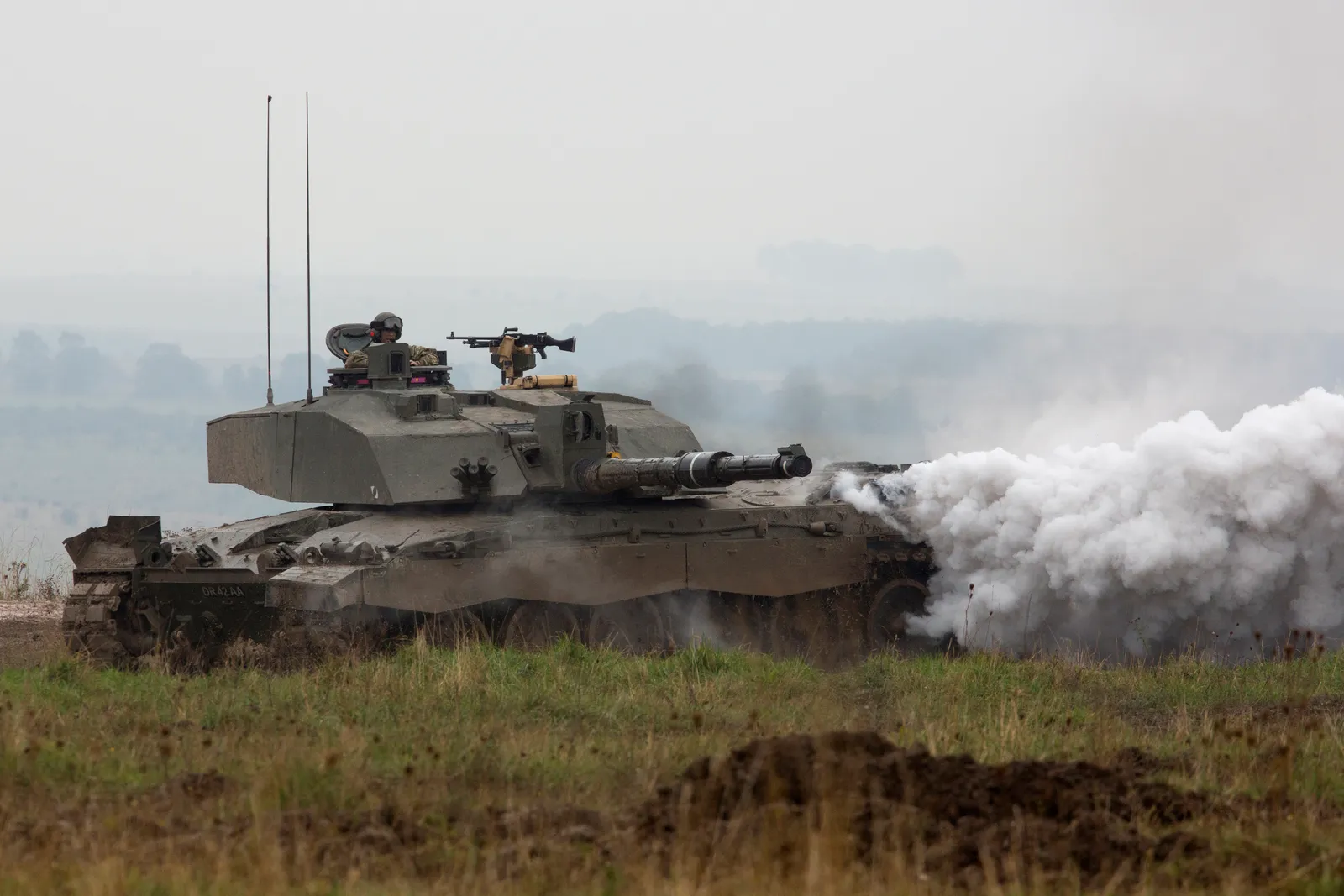
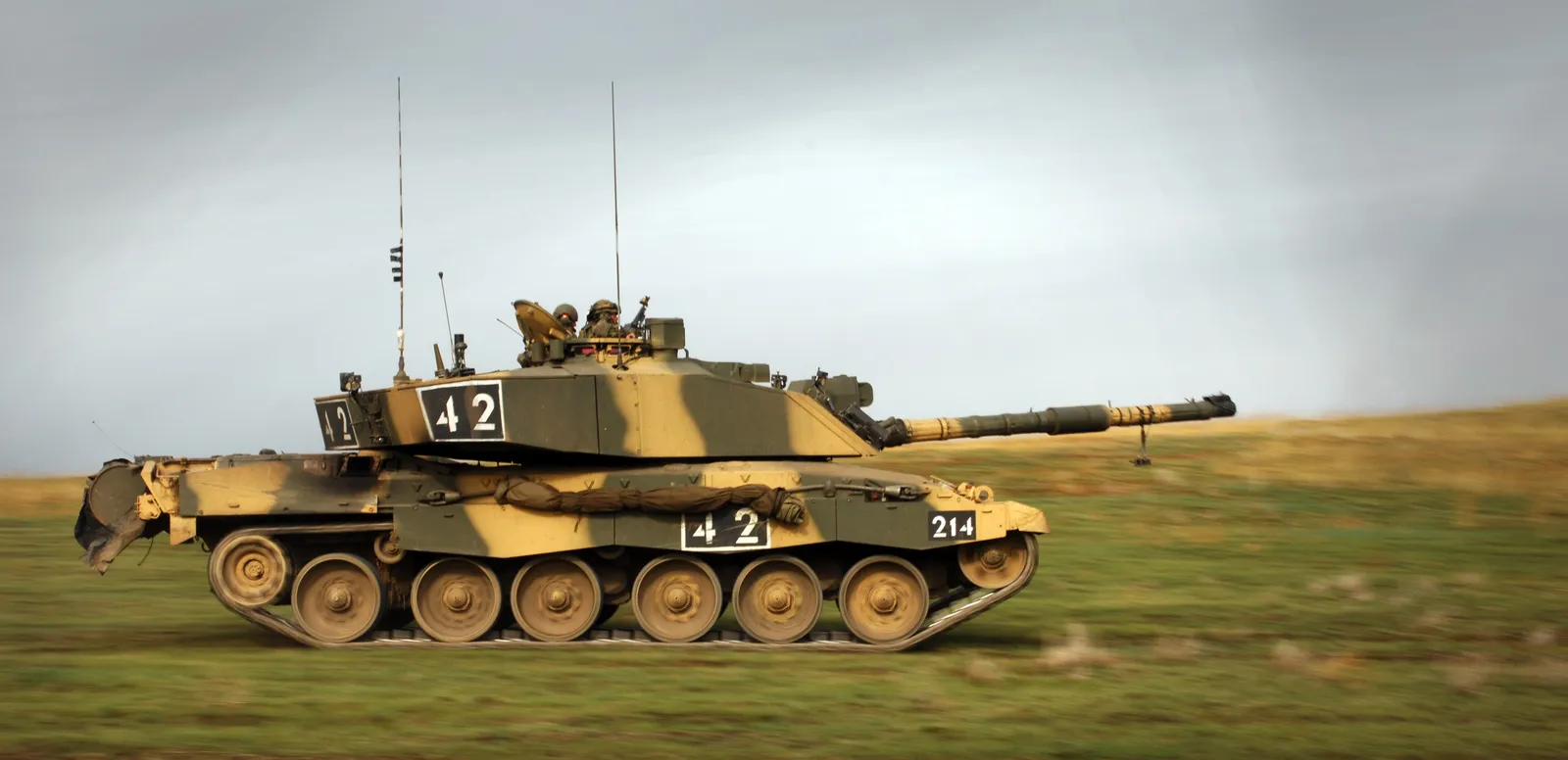
The L30's operational identity is tied closely to Challenger 2, whose turret, ammunition stowage, sights, and fire-control system were built around the British rifled gun and separate-loading ammunition.
| Carrier | Carrier type | Carriage evidence |
|---|---|---|
 | Main battle tank | Forecast International, Rheinmetall, and British Army material identify the L30/L30A1 as Challenger 2's 120 mm rifled main gun and connect the tank to British Iraq service and Ukrainian transfer. Sources: Forecast International L11 and L30, Rheinmetall Challenger 2 and 3, British Army Challenger 2, UK MOD Ramstein Ukraine package |
Ammunition Fired
British 120 mm rifled tank ammunition is separate-loaded and differs from NATO smoothbore fixed rounds, which is central to the L30's logistics and upgrade history.
| Ammunition | Ammunition type | Firing evidence |
|---|---|---|
 | Armour-piercing fin-stabilized discarding-sabot round | Jane's identifies L27A1/CHARM 3 as a depleted-uranium APFSDS projectile for Challenger 2's L30A1 gun. Sources: RO Defence 120mm tank gun ammunition |
 | High-explosive squash-head round | Jane's and parliamentary evidence tie the L31 HESH round to the British rifled 120 mm gun family and to the CHARM/L30 ammunition system. Sources: RO Defence 120mm tank gun ammunition, House of Commons Challenger II evidence |
Timeline
120 mm Royal Ordnance L30 Key Events
EXP 32M1 selected for Challenger
Forecast International lists 1984 as the point when the UK Ministry of Defence selected EXP 32M1 for the Challenger armament path that became L30.
Sources: Forecast International L11 and L30
Challenger 2 service context begins
British Army and Rheinmetall sources place Challenger 2 in British Army service with the L30 120 mm rifled gun as its main armament.
Sources: British Army Challenger 2, Rheinmetall Challenger 2 and 3
Operation Telic combat record
Forecast International states that the L30 earned a combat record with Challenger 2 during Operation Telic, and official British Army material lists Iraq among Challenger 2 operations.
Sources: Forecast International L11 and L30, British Army Challenger 2
Serial production dormant
Forecast International reported that L11 and L30 production lines were dormant, with 483 L30 guns produced through 2005.
Sources: Forecast International L11 and L30
UK completes Challenger 2 delivery to Ukraine
The UK Ministry of Defence confirmed delivery of a Challenger 2 squadron to Ukraine with ammunition, spares, and armoured recovery support.
Sources: UK MOD Ramstein Ukraine package
Ukrainian combat use reported in Kursk
The Times reported Ukrainian 82nd Air Assault Brigade Challenger 2 crews using the tank's 120 mm rifled gun against Russian armored vehicles in the Kursk fighting.
Sources: The Times Challenger tanks Ukraine
Media
120 mm Royal Ordnance L30 Images
Related Weapon Systems


Sources
Forecast International L11 and L30Publisher: Forecast International | Note: Supports 2003 Iraq War direct use by identifying the L30 as Challenger 2's main armament and saying the L30 earned a combat record with Challenger 2 during Operation Telic, the British component of Operation Iraqi Freedom; also supports L30 identity, production, price, design lineage, technical details, and production status. | Accessed: 2026-07-06House of Commons Challenger II evidencePublisher: UK Parliament | Note: Vickers evidence to the Defence Committee describing the Challenger 2 CHARM gun system, the L30 high-pressure gun, Royal Ordnance supply context, rifling, HESH compatibility, and separate ammunition construction. | Accessed: 2026-07-06Rheinmetall Challenger 2 and 3Publisher: Rheinmetall | Note: Manufacturer-lineage source for Challenger 2's L30 120 mm rifled gun, ammunition natures, stabilized sights, Iraq service context, and Challenger 3 smoothbore replacement path. | Accessed: 2026-07-06British Army Challenger 2Publisher: The British Army | Note: Official source for Challenger 2 service context, British Army operations including Iraq, and general system role that anchors the L30 carrier relationship. | Accessed: 2026-07-06UK MOD Ramstein Ukraine packagePublisher: UK Ministry of Defence | Note: Supports 2014 Russia-Ukraine War direct transfer context by confirming completion of a Challenger 2 squadron delivery to Ukraine with ammunition, spares, and recovery vehicles. | Accessed: 2026-07-06UK MOD Challenger 2 trainingPublisher: UK Ministry of Defence | Note: Supports 2014 Russia-Ukraine War transfer and training context for Ukrainian Challenger 2 crews and the UK donation of 14 tanks with ammunition and spares. | Accessed: 2026-07-06Forces News Challenger 2 UkrainePublisher: BFBS Forces News | Note: Supports 2014 Russia-Ukraine War direct conflict-use context by reporting UK-supplied Challenger 2 tanks in Ukraine and identifying their main armament as the L30A1 120 mm rifled gun. | Accessed: 2026-07-06The Times Challenger tanks UkrainePublisher: The Times | Note: Supports 2014 Russia-Ukraine War direct combat-use context by reporting Ukrainian Challenger 2 crews in Kursk using the tank's 120 mm rifled gun against Russian armored vehicles. | Accessed: 2026-07-06RO Defence 120mm tank gun ammunitionPublisher: Jane's Defence News | Note: Supports L30A1 ammunition context, including L27A1 APFSDS and L31 HESH relationship to the Challenger 2 L30A1 gun. | Accessed: 2026-07-06Challenger 2 Tank Firing a Shell MOD 45157421Publisher: Wikimedia Commons | Note: Primary image provenance for a UK Ministry of Defence Challenger 2 firing photograph made available under Open Government Licence terms. | Accessed: 2026-07-06Challenger 2 Tank MOD 45154622Publisher: Wikimedia Commons | Note: Gallery image provenance for a UK Ministry of Defence Challenger 2 photograph made available under Open Government Licence terms. | Accessed: 2026-07-06Challenger 2 Tank MOD 45148907Publisher: Wikimedia Commons | Note: Gallery image provenance for a UK Ministry of Defence Challenger 2 photograph made available under Open Government Licence terms. | Accessed: 2026-07-06Wikipedia Royal Ordnance L30Publisher: Wikipedia | Note: Baseline terminology and lead source for aliases and service context, checked against specialist, official, parliamentary, and manufacturer-lineage sources before publication. | Accessed: 2026-07-06