- Side
- Coalition forces

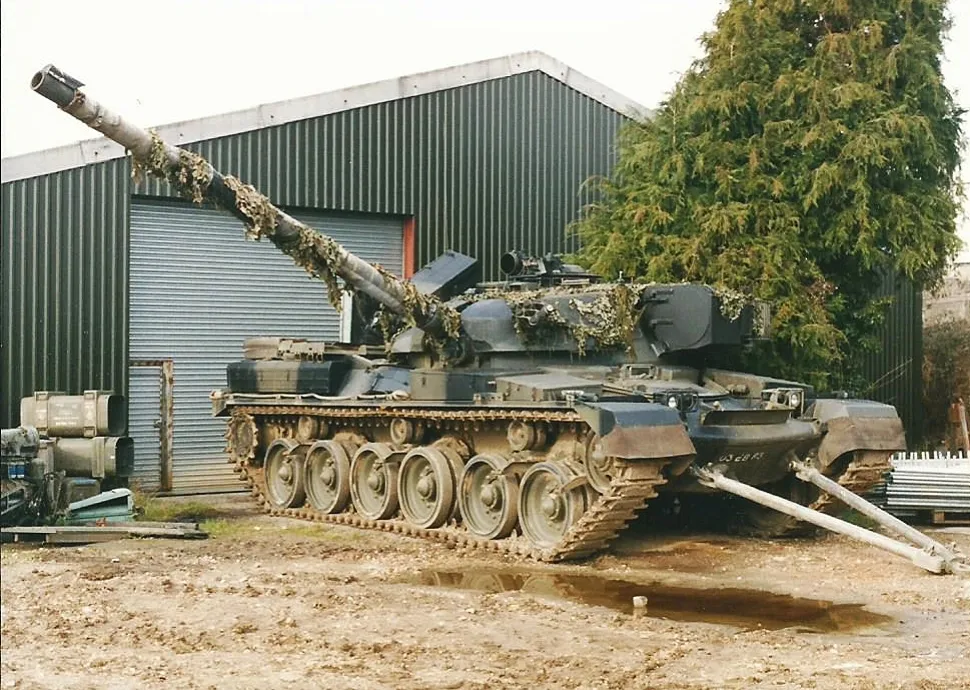
British Challenger 1 tanks deployed with coalition forces in Operation Granby, and Challenger 1 references identify the L11A5 120 mm rifled gun as the tank's main armament during that Gulf War service.
Role detailsThe 120 mm Royal Ordnance L11 is a British L/55 rifled tank gun developed for the Chieftain and later carried by Challenger 1 and Khalid tanks. Its separate-loading projectile and bag-charge system kept British tank ammunition distinct from later NATO 120 mm smoothbore rounds, while the L11A5 production version gave Challenger 1 its Gulf War direct-fire and anti-armor armament.
British Challenger 1 tanks deployed with coalition forces in Operation Granby, and Challenger 1 references identify the L11A5 120 mm rifled gun as the tank's main armament during that Gulf War service.
Role detailsThe L11's catalog value comes from its place between earlier British heavy tank guns and later NATO-standard smoothbores. It gave Chieftain and Challenger 1 a 120 mm rifled main armament, but it kept a British separate-loading ammunition chain: projectile, propellant charge, and electric vent tube rather than one fixed cartridge.
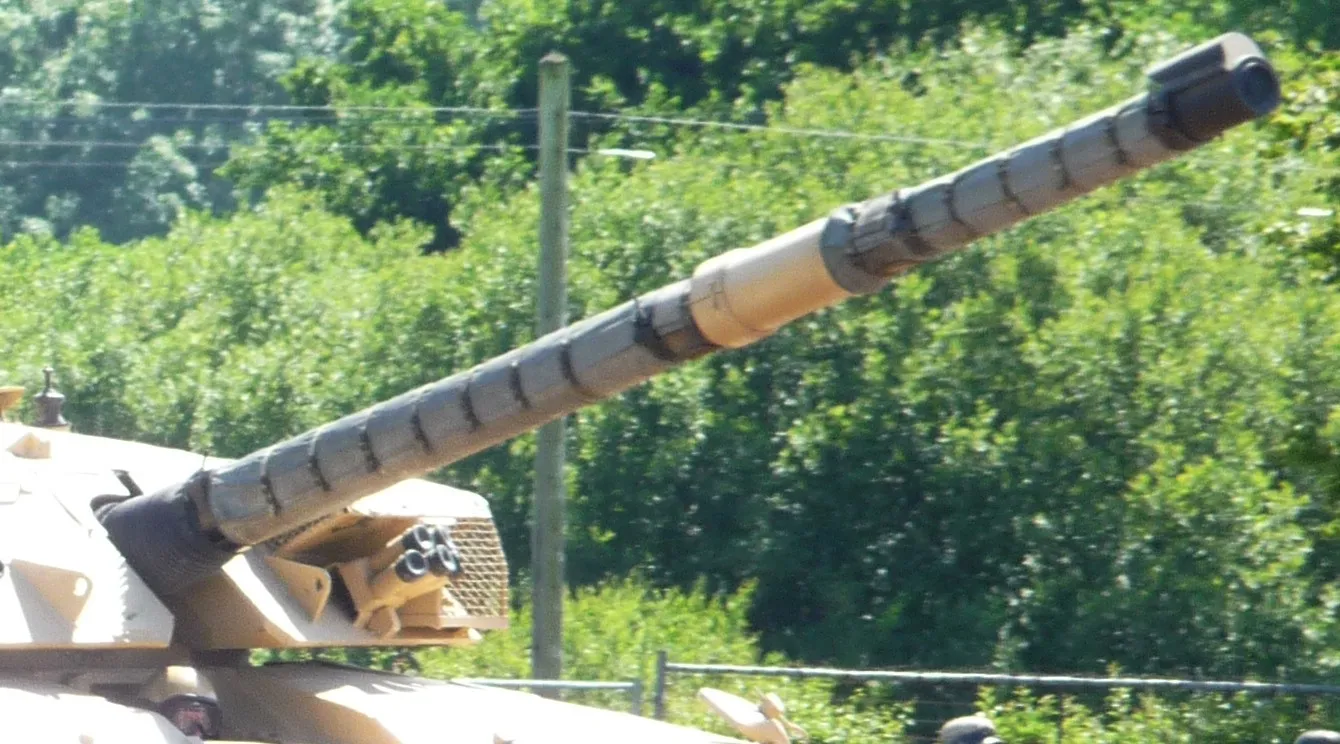
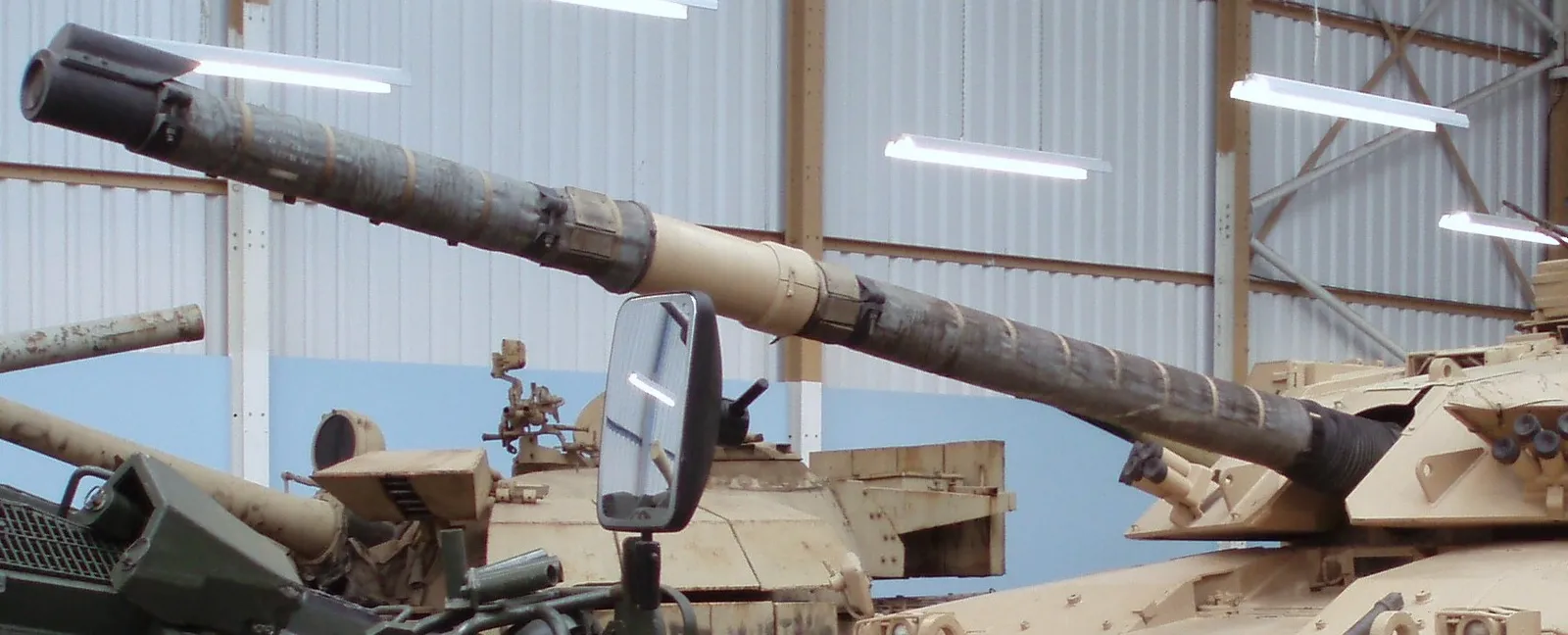
The barrel was a monobloc L55 rifled design with thermal sleeve, fume extractor, and late-production muzzle reference features.
Sources: Forecast International L11 and L30; Army Guide L11.
The breech design sealed the chamber with an expanding ring because the gun used separate projectiles and propellant bags instead of a metallic cartridge case.
Source: Forecast International L11 and L30.
Challenger 1's L11A5 armament was the route by which this gun family appears in sourced 1990 Gulf War use.
Sources: Defense Advancement Challenger 1; The World Wars Challenger 1; British Army Desert Storm Part 22.
The L11 family evolved through production cut-ins and trials models, with the L11A5 becoming the principal service version before the later L30 was treated as a distinct Challenger Armament development.
| Variant | Configuration | Designation notes |
|---|---|---|
| L11A1 | Initial production version | Forecast International and Army Guide identify L11A1 as the initial production version, with 130 produced. |
| L11A2 | Improved breech and vent-tube configuration | Published variant summaries describe L11A2 changes including vent-tube, obturator, magazine, and breech-ring improvements. |
| L11A4 | Automatic-loading trial piece | Forecast International describes L11A4 as a single evaluation piece used for automatic-loading-system work. Sources: Forecast International L11 and L30 |
| L11A5 | Main production model | The L11A5 introduced an integral muzzle reference system and a smaller, lighter fume extractor that required added breech-side balance weight. |
| L11A6 | A3 conversion with A5-style sighting features | Sources describe L11A6 as an A3 conversion incorporating muzzle-reference-system provision and the lighter fume extractor. |
| L11A7 | Proposed vent-tube-loader development | Forecast International lists L11A7 as a proposed version with a semi-automatic vent-tube-loader plunger that did not reach production. Sources: Forecast International L11 and L30 |
The L11 used British separate-loading 120 mm rifled-gun ammunition rather than fixed 120 mm smoothbore cartridges. Existing catalog links are limited to ammunition pages with compatible L11/L30 lineage sourcing.
| Ammunition | Ammunition type | Firing evidence |
|---|---|---|
 | 120 mm high-explosive squash-head round | Forecast International lists L31 HESH among L11 ammunition types, and the L31 record's Jane's source places the round in the L11/L30A1 rifled 120 mm family. Sources: Forecast International L11 and L30 |
Public references consistently place the L11 family in a small set of British and export tank installations. Until those carriers have separate catalog pages, the important relationship is the installed-gun context rather than an unresolved link.
| Carrier | Gun fit | Reader context |
|---|---|---|
| Chieftain | L11 family | The L11 was developed for the FV4201 Chieftain and entered service with that tank line in the mid-1960s. |
| Challenger 1 | L11A5 | Army Guide identifies the current service version as L11A5 on Challenger 1 and Chieftain; Gulf War sources connect Challenger 1 to Operation Granby. |
| Khalid | L11 family | Forecast International and Army Guide list Khalid among L11-equipped export tanks. |
Sources: Forecast International L11 and L30; Army Guide L11; The World Wars Challenger 1.
Forecast International credits the Royal Armament Research and Development Establishment at Fort Halstead with designing the L11 in 1957.
Sources: Forecast International L11 and L30
The L11 program reached first firing trials in 1961, after the Chieftain requirement had moved beyond the earlier 105 mm L7 class.
Sources: Forecast International L11 and L30, Army Guide L11
Forecast International's timetable lists June 1964 as the start of serial production.
Sources: Forecast International L11 and L30
The same program timetable lists 1965 as initial operational capability for the L11 tank gun.
Sources: Forecast International L11 and L30
Forecast International records June 1976 as the start of new ammunition development for the L11 family.
Sources: Forecast International L11 and L30
Challenger 1 tanks armed with the L11A5 served with British coalition forces in Operation Granby during the 1990 Gulf War.
Sources: Defense Advancement Challenger 1, British Army Desert Storm Part 22, The World Wars Challenger 1
Forecast International described L11 production as dormant by 2005 and listed 3,012 L11 guns produced through that year.
Sources: Forecast International L11 and L30