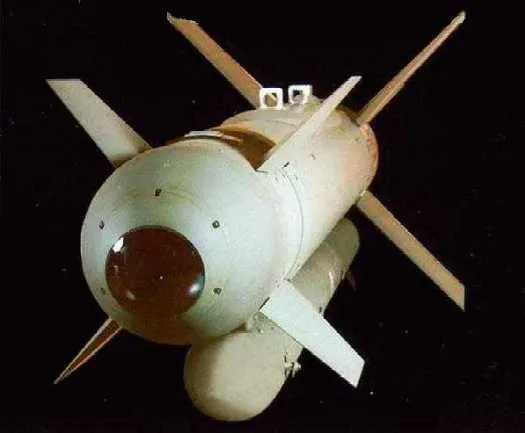

Durante la aplicación de la zona de exclusión aérea meridional en enero de 1999, aeronaves estadounidenses dispararon un AGM-130 contra un sitio de radar iraquí mientras respondían a amenazas contra aeronaves de la coalición.
Municiones
AGM-130
Also known as
- AGM-130 Missile
- AGM-130A
- AGM-130C
- AGM-130 Standoff Weapon System
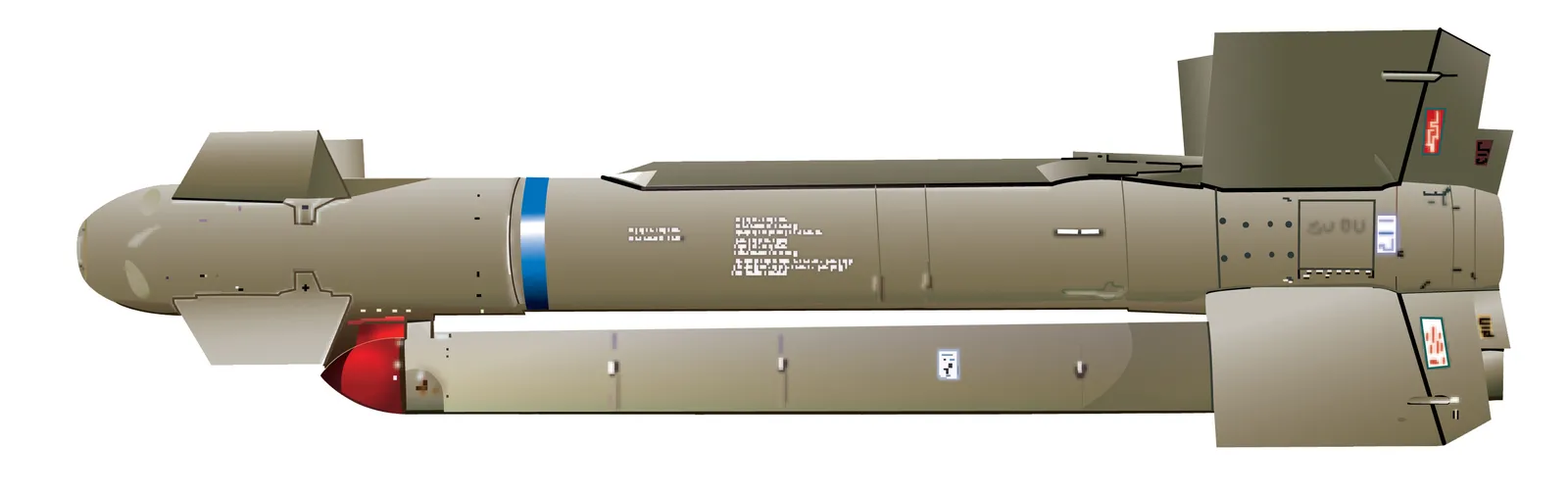
El AGM-130 fue un misil stand-off aire-superficie propulsado estadounidense derivado de la familia de bombas guiadas GBU-15 y transportado por el F-15E Strike Eagle. Fuentes de la Fuerza Aérea, el DoD y reportes de conflictos documentan su guiado terminal por televisión o infrarrojo de imagen, enlace de datos bidireccional, mejora de medio curso GPS/INS, ojivas de clase Mk 84 o BLU-109, y uso en combate durante la aplicación de las zonas de exclusión aérea iraquíes, Operation Allied Force y la Guerra de Irak de 2003.
Role in Conflicts
- Side
- NATO

El informe posterior a la acción del DoD sobre Kosovo dice que se emplearon AGM-130 desde aeronaves F-15E de la Fuerza Aérea durante Operation Allied Force, y Human Rights Watch identifica el uso de AGM-130 en el ataque de abril de 1999 contra el puente ferroviario de Grdelica.
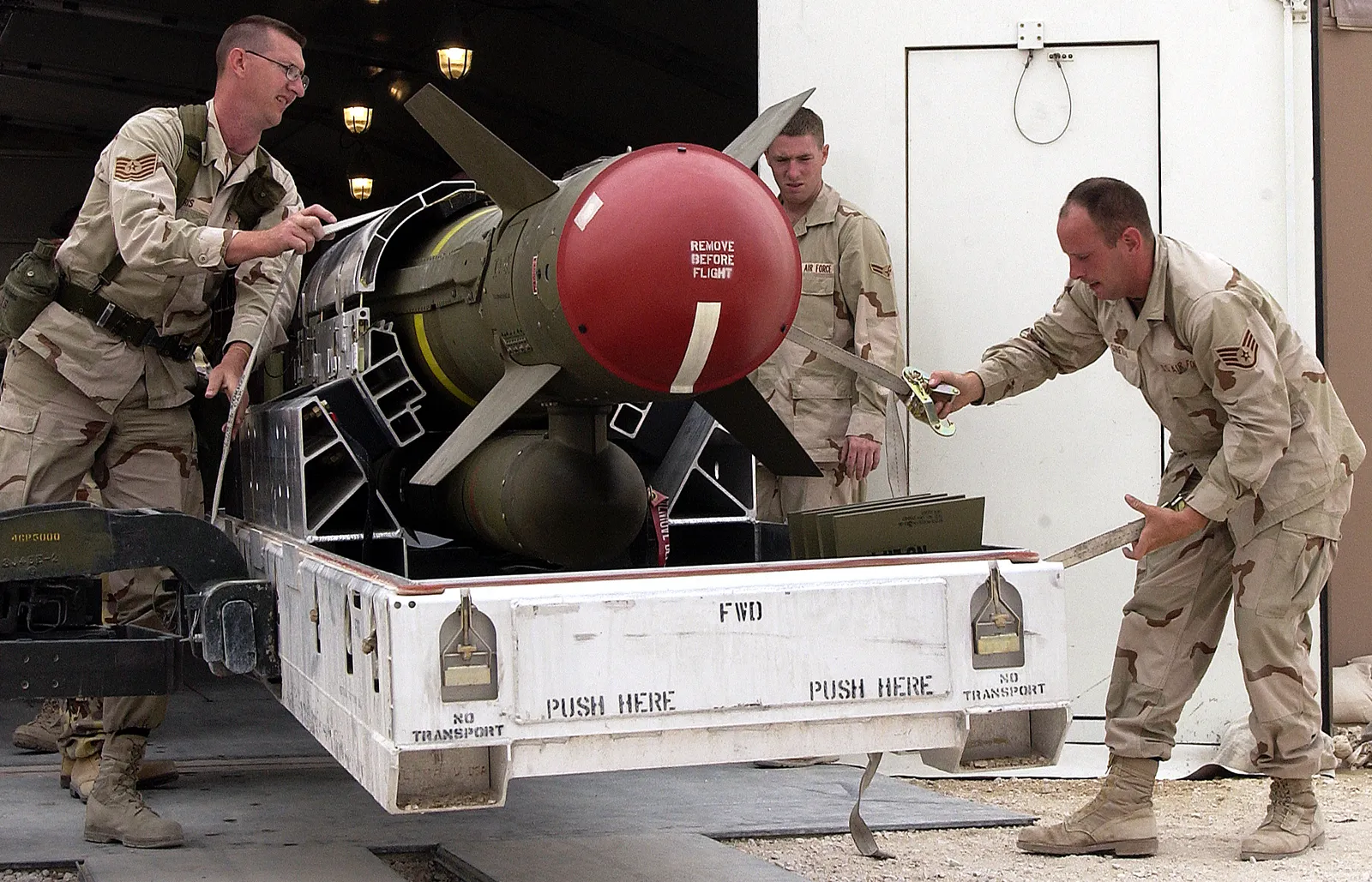
El recuento de municiones de CENTAF para Operation Iraqi Freedom enumera cuatro municiones guiadas AGM-130 gastadas, y un pie de foto de la Fuerza Aérea documenta misiles AGM-130 trasladados a la línea de vuelo en una ubicación desplegada avanzada que apoyaba Operation Iraqi Freedom.
Profile / Specs
Profile
- Origin
- Estados Unidos
- Built by
- Boeing North American
- Built in
- United States
- Type
- Misil stand-off aire-superficie propulsado
- Service note
- 1994-2013
- Designer
- Rockwell International
- Designed
- 1984
- Unit cost
- Aproximadamente $450,000 por arma
- Produced
- 1990-2000
- Number built
- Aproximadamente 700 a 1,000 adquiridos por la Fuerza Aérea de Estados Unidos
- Developed from
- Unidad de Bomba Guiada GBU-15
Specifications
- Función principal
- Bomba guiada y propulsada aire-superficie
- Peso de lanzamiento
- 2,917 lb (1,312.65 kg)
- Longitud
- 12 ft 10.5 in (3.90 m)
- Diámetro
- 18 in (45.72 cm)
- Envergadura
- 59 in (149.86 cm)
- Techo
- Más de 30,000 ft (9,091 m)
- Guiado
- Buscador de televisión o infrarrojo de imagen con enlace de datos de hombre en el circuito; las armas modernizadas añadieron GPS/INS autónomo
- Opciones de ojiva
- Mk 84 de alto explosivo/fragmentación o penetradora BLU-109
- Aeronave portadora
- F-15E
Variants
La familia AGM-130 conservaba el concepto modular de guiado de la GBU-15, al tiempo que añadía una sección de propulsión por cohete para lograr mayor alcance stand-off.
| Variant | Configuration | Designation notes |
|---|---|---|
 | Unpowered glide-bomb family predecessor | Air Force and Designation-Systems sources describe the AGM-130 as a powered product improvement or derivative of the GBU-15 guided-bomb family. Sources: AGM-130 Missile Fact Sheet, Boeing AGM-130 Designation-Systems |
| AGM-130A | Versión con ojiva de alto explosivo y fragmentación Mk 84 | Fuentes de la Fuerza Aérea y Designation-Systems identifican el AGM-130A como la variante basada en la Mk 84 del derivado propulsado de la GBU-15. Sources: AGM-130 Missile Fact Sheet, Boeing AGM-130 Designation-Systems |
| AGM-130C | Versión con ojiva penetradora BLU-109 | La ficha técnica de la Fuerza Aérea identifica el AGM-130C como la variante penetradora BLU-109, mientras que Designation-Systems describe subvariantes AGM-130C con buscadores TV/CCD o infrarrojos de imagen. Sources: AGM-130 Missile Fact Sheet, Boeing AGM-130 Designation-Systems |
| GBU-15 Guided Bomb Unit | Familia predecesora de bomba planeadora no propulsada | Fuentes de la Fuerza Aerea y Designation-Systems describen el AGM-130 como una mejora de producto propulsada o un derivado de la familia de bombas guiadas GBU-15. |
Aeronave portadora
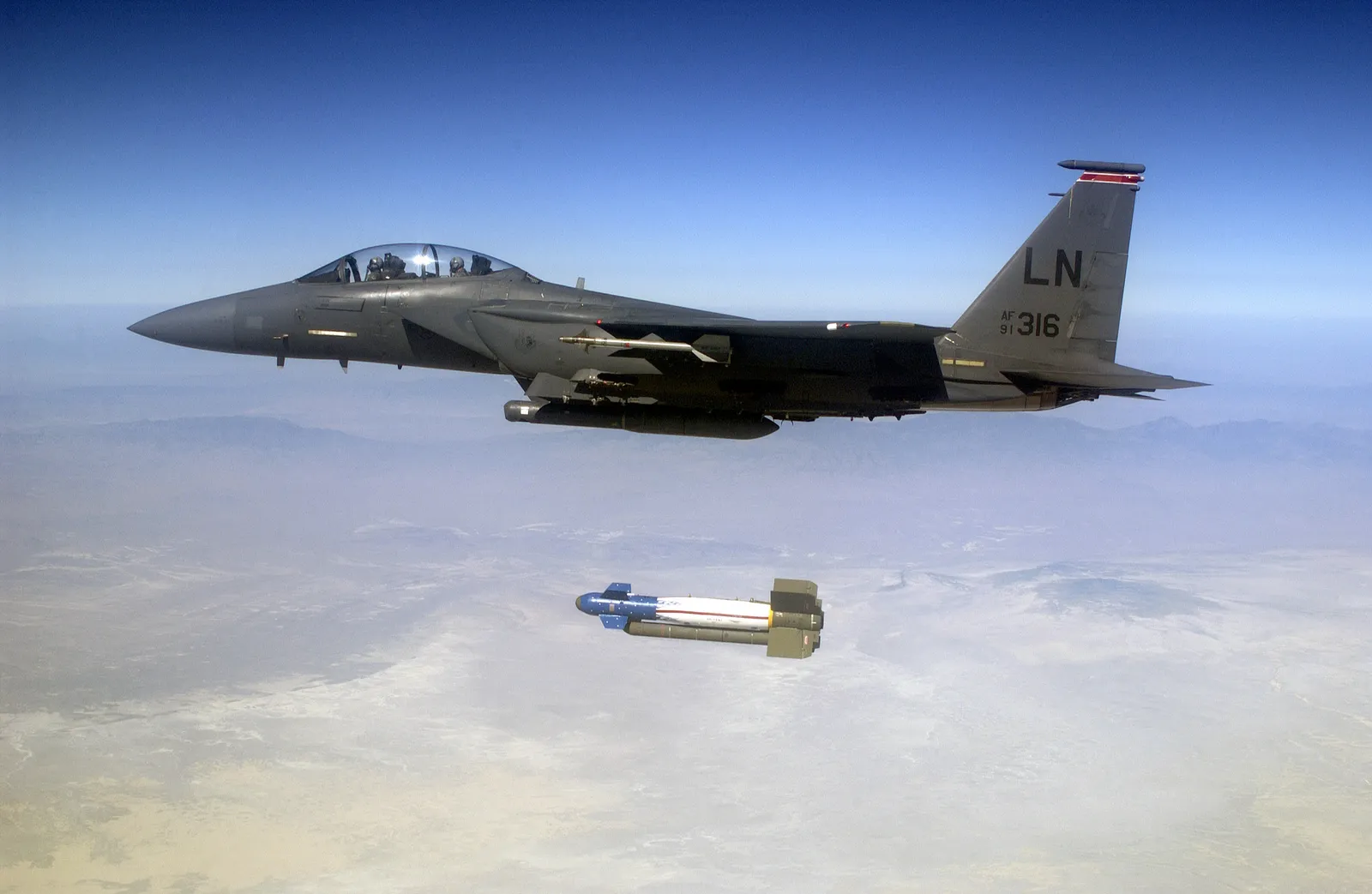
La Fuerza Aérea identifica el F-15E Strike Eagle como la vía de integración del AGM-130 en aeronaves.
| Carrier | Carrier type | Carriage evidence |
|---|---|---|
 | Caza de ataque | La ficha técnica de la Fuerza Aérea dice que el AGM-130 fue diseñado para su uso desde la aeronave F-15E. Sources: AGM-130 Missile Fact Sheet |
Compatibilidad con cuerpos de bomba
Las variantes del AGM-130 usaban el concepto modular de guiado de la GBU-15 con diferentes cuerpos de ojiva de clase 2,000 libras.
| Compatible item | Item type | Compatibility evidence |
|---|---|---|
 | Cuerpo de bomba de propósito general de 2,000 libras | Fuentes de la Fuerza Aérea y Designation-Systems identifican el AGM-130A como la versión de alto explosivo y fragmentación Mk 84. Sources: AGM-130 Missile Fact Sheet, Boeing AGM-130 Designation-Systems |
 | Ojiva penetradora de 2,000 libras | Fuentes de la Fuerza Aérea y Designation-Systems identifican el AGM-130C como la versión penetradora BLU-109. Sources: AGM-130 Missile Fact Sheet, Boeing AGM-130 Designation-Systems |
Timeline
AGM-130 Key Events
Comienza el desarrollo
La ficha técnica de la Fuerza Aérea dice que el desarrollo del AGM-130 comenzó en 1984 como una mejora de producto del sistema de bomba planeadora guiada GBU-15.
Sources: AGM-130 Missile Fact Sheet
Primera unidad operativa
La ficha técnica de la Fuerza Aérea afirma que la primera unidad AGM-130 se volvió operativa en 1994.
Sources: AGM-130 Missile Fact Sheet
Contrato de producción de Boeing North American
Forecast International registra que Boeing North American, Incorporated recibió un contrato de $31.3 millones para proporcionar 72 AGM-130 a partir de componentes suministrados por el gobierno.
Sources: Forecast International AGM-130
Ataque AGM-130 en zona de exclusión aérea
Un reporte de American Forces Press Service a través de DVIDS registra un AGM-130 disparado contra un sitio de radar iraquí durante la aplicación de la zona de exclusión aérea; el arma falló el blanco e impactó en una zona residencial cerca de Basora.
Sources: Pentagon Confirms Strike on Iraqi Neighborhood
Ataque contra puente durante Operation Allied Force
Human Rights Watch identifica un AGM-130 lanzado por un F-15E como el arma usada en el ataque de la OTAN contra el puente ferroviario de Grdelica durante Operation Allied Force.
Sources: Kosovo Civilian Deaths in the NATO Air Campaign
Retirado del inventario de la USAF
Designation-Systems informa que el AGM-130 fue retirado del inventario de la Fuerza Aérea de Estados Unidos en 2013.
Sources: Boeing AGM-130 Designation-Systems
Related Weapon Systems


Sources
AGM-130 Missile Fact SheetPublisher: U.S. Air Force | Note: Supports AGM-130 mission, GBU-15-derived design, F-15E carriage, variants, seeker/data-link description, GPS/INS upgrade, first operational unit, Boeing contractor attribution, specifications, unit cost, and official image provenance. | Accessed: 2026-07-13Forecast International AGM-130Publisher: Forecast International | Note: Supports Rockwell/Boeing AGM-130 production context, Boeing's purchase of Rockwell defense interests, the 1997 Boeing North American AGM-130 contract, production status, approximate production totals, variants, and technical data. | Accessed: 2026-07-13Boeing AGM-130 Designation-SystemsPublisher: Directory of U.S. Military Rockets and Missiles | Note: Corroborates the AGM-130 as a Boeing/Rockwell powered derivative of the GBU-15, its 1984 development award, IOC timing, guidance options, range class, variants, procurement range, and retirement context. | Accessed: 2026-07-13Kosovo Operation Allied Force After-Action ReportPublisher: U.S. Department of Defense | Note: Supports AGM-130 employment from Air Force F-15E aircraft during the 1999 Kosovo War / Operation Allied Force and describes its guidance and data-link concept. | Accessed: 2026-07-13Kosovo Civilian Deaths in the NATO Air CampaignPublisher: Human Rights Watch via Refworld | Note: Directly supports AGM-130 use by an F-15E in NATO's Grdelica railway bridge strike during the 1999 Kosovo War / Operation Allied Force. | Accessed: 2026-07-13Operation Iraqi Freedom By the NumbersPublisher: U.S. Central Command Air Forces / Assessment and Analysis Division | Note: Directly supports AGM-130 guided munition expenditure during the 2003 Iraq War air campaign. | Accessed: 2026-07-13Missile on its wayPublisher: U.S. Air Force | Note: Directly supports AGM-130 missiles fielded by U.S. Air Force ammunition specialists at a forward-deployed location supporting the 2003 Iraq War and provides official image provenance. | Accessed: 2026-07-13Pentagon Confirms Strike on Iraqi NeighborhoodPublisher: DVIDS / American Forces Press Service | Note: Directly supports AGM-130 launch against an Iraqi radar site during 1991 Iraqi No-Fly-Zone Conflict enforcement. | Accessed: 2026-07-13AGM-130 drop Wikimedia CommonsPublisher: Wikimedia Commons | Note: Supports public-domain image provenance for an F-15E releasing an AGM-130 during Combat Hammer at the Utah Test and Training Range. | Accessed: 2026-07-13