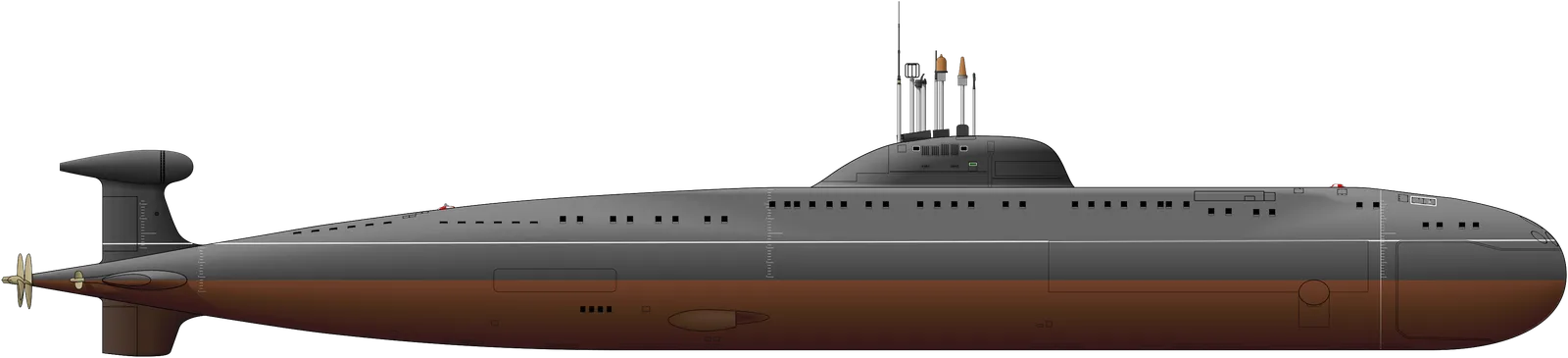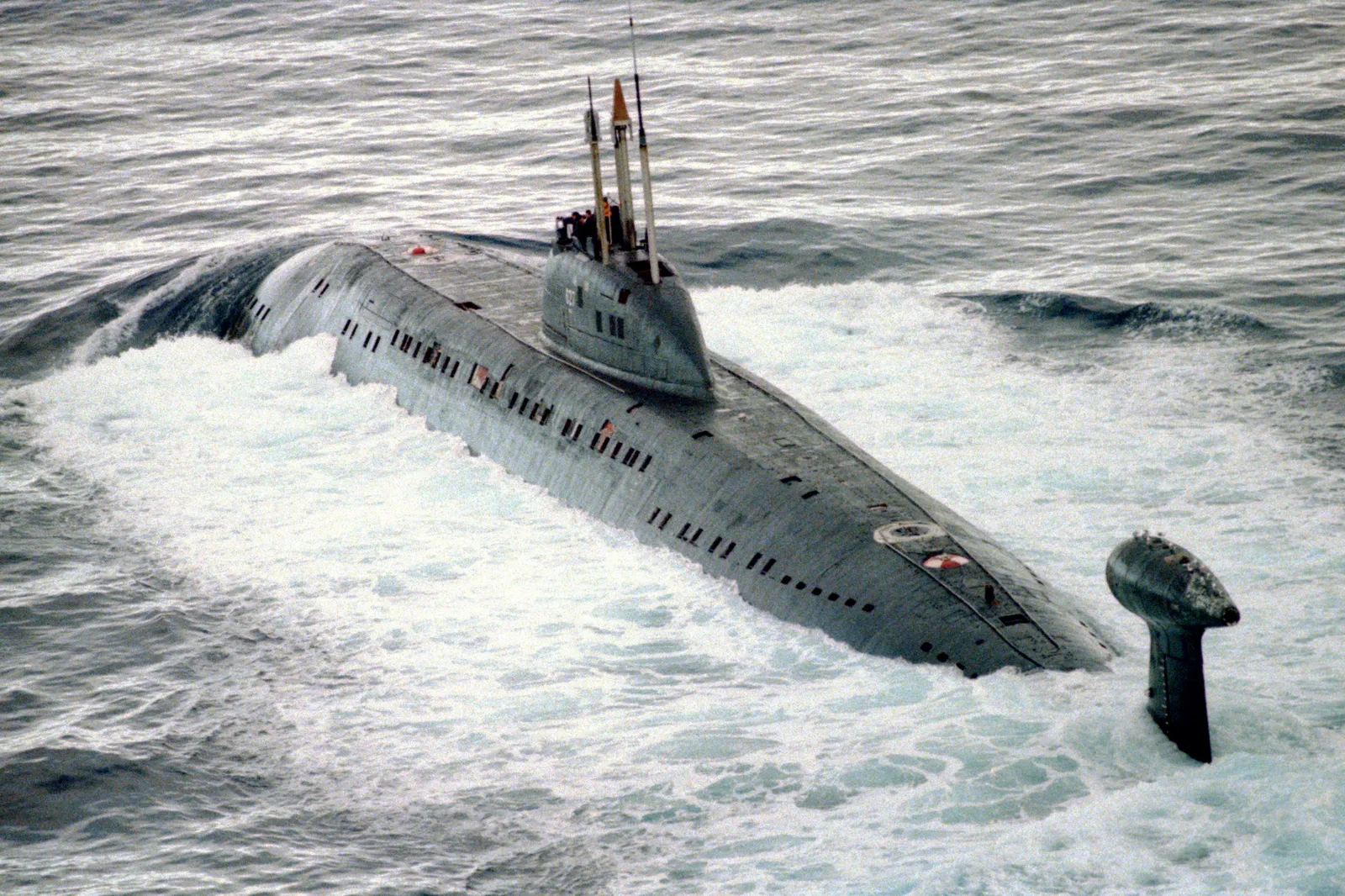
- Side
- Unconfirmed conflict context

The class remains in Russian Navy service, but open sources here do not tie it to a single named post-2015 conflict, so it stays in the 2015 Various Conflicts holding bucket.
The Victor III-class submarine is the NATO reporting name for the Soviet Project 671RTM/RTMK Shchuka nuclear-powered attack submarine. Built at Admiralty and Komsomolsk shipyards, it carried the Project 671 line into a quieter, missile-capable generation with updated combat electronics, a distinctive towed-array sonar pod, 533 mm and 650 mm bow tubes, and a loadout spanning torpedoes, RK-55 Granat cruise missiles, antisubmarine missiles, and mines. A small number of late boats remained tied to Russian Northern Fleet service decades after the Soviet collapse.
The class remains in Russian Navy service, but open sources here do not tie it to a single named post-2015 conflict, so it stays in the 2015 Various Conflicts holding bucket.
The class is best read as a late-Soviet multipurpose attack-submarine step between earlier Victor boats and newer post-Soviet SSNs. Admiralty Shipyards describes Project 671RTM as a new Project 671 modification with updated electronics and signature-reduction measures, while later reporting shows a small number of late hulls retained in Russian Northern Fleet service.
Admiralty Shipyards says Shchuka boats formed a basis of the Soviet multipurpose nuclear submarine fleet in the 1980s and early 1990s.
The shipyard account identifies updated radio-electronic, navigation, combat-information, communications, reconnaissance, and signature-reduction measures.
Open references identify the distinctive stern pod as housing a reelable towed passive sonar array, not a propulsion or weapon pod.
Admiralty Shipyards' 2023 note said Obninsk and Tambov continued Northern Fleet service, and Barents Observer separately reported Tambov's return after a long repair period.
Project 671RTM was the main Victor III/Shchuka production standard, while Project 671RTMK denotes the Granat-capable missile refit or late-build configuration described in open submarine references.
| Variant | Configuration | Designation notes |
|---|---|---|
| Project 671RTM Shchuka | Main Victor III production standard | Admiralty Shipyards identifies Project 671RTM Shchuka as a new Project 671 modification that formed a core Soviet multipurpose nuclear submarine type in the 1980s and early 1990s. |
| Project 671RTMK Shchuka | Missile-capable late or modernized boats | GlobalSecurity describes the 671RTMK group and upgraded 671RTM boats as Granat-capable, while CSIS lists Victor III / Project 671RTM among submarine launch platforms for the RK-55 Granat. |
| B-138 Obninsk and B-448 Tambov | Late Northern Fleet service examples | Admiralty Shipyards' 2023 Obninsk anniversary note said Obninsk and Tambov continued service with the Northern Fleet, while Barents Observer reported Tambov returning to Ura Guba after a long repair period. Sources: Admiralty Shipyards marks 35 years since Obninsk laying, Nuclear sub returns to Russian Arctic base after 7 years upgrade |
Open submarine references list the class with 533 mm and 650 mm bow tubes. The linked item below is the cataloged torpedo with a direct source-backed Victor III fit.
| Ammunition | Ammunition type | Firing evidence |
|---|---|---|
 | 533 mm wake-homing torpedo | RussianShips lists Project 671RTM/RTMK Victor III submarines with four 533 mm bow torpedo tubes and includes the 53-65K among the documented 533 mm torpedo load. Sources: Nuclear-powered submarines - Project 671RTM, 671RTMK |
Open references describe mines as an alternate load in place of torpedoes, so this relationship is carriage context rather than evidence of combat minelaying.
| Carried item | Item type | Carriage evidence |
|---|---|---|
 | Naval mine payload | NTI says Project 671RTM Shchuka / Victor III submarines can carry thirty-six mines in lieu of torpedoes, while RussianShips lists RM-2G Golets mines in the Project 671RTM/RTMK armament fit. Sources: Russia Submarine Capabilities, Nuclear-powered submarines - Project 671RTM, 671RTMK |
The Victor III fit combined heavy submarine torpedo tubes with missile and mine options, giving the class anti-submarine, anti-surface, land-attack, and area-denial paths depending on loadout.
| Loadout path | Documented detail |
|---|---|
| 533 mm tubes | NTI lists four 533 mm tubes with torpedoes, RK-55 Granat SLCMs, 3M51 Alfa SLCMs, and RPK-2 Tsakra missiles. |
| 650 mm tubes | NTI lists two 650 mm tubes with Type 86R Vodopad anti-ship cruise missiles. |
| Granat fit | GlobalSecurity describes the 671RTMK configuration and upgraded 671RTM boats as fitted for Granat strategic cruise missiles, and CSIS lists Victor III / Project 671RTM among RK-55 submarine carriers. |
| Mine carriage | NTI says the class could carry thirty-six mines in lieu of torpedoes. |
USNI says Admiralty completed the first Victor III in 1978, beginning the class's production run.
Sources: The Soviet Navy
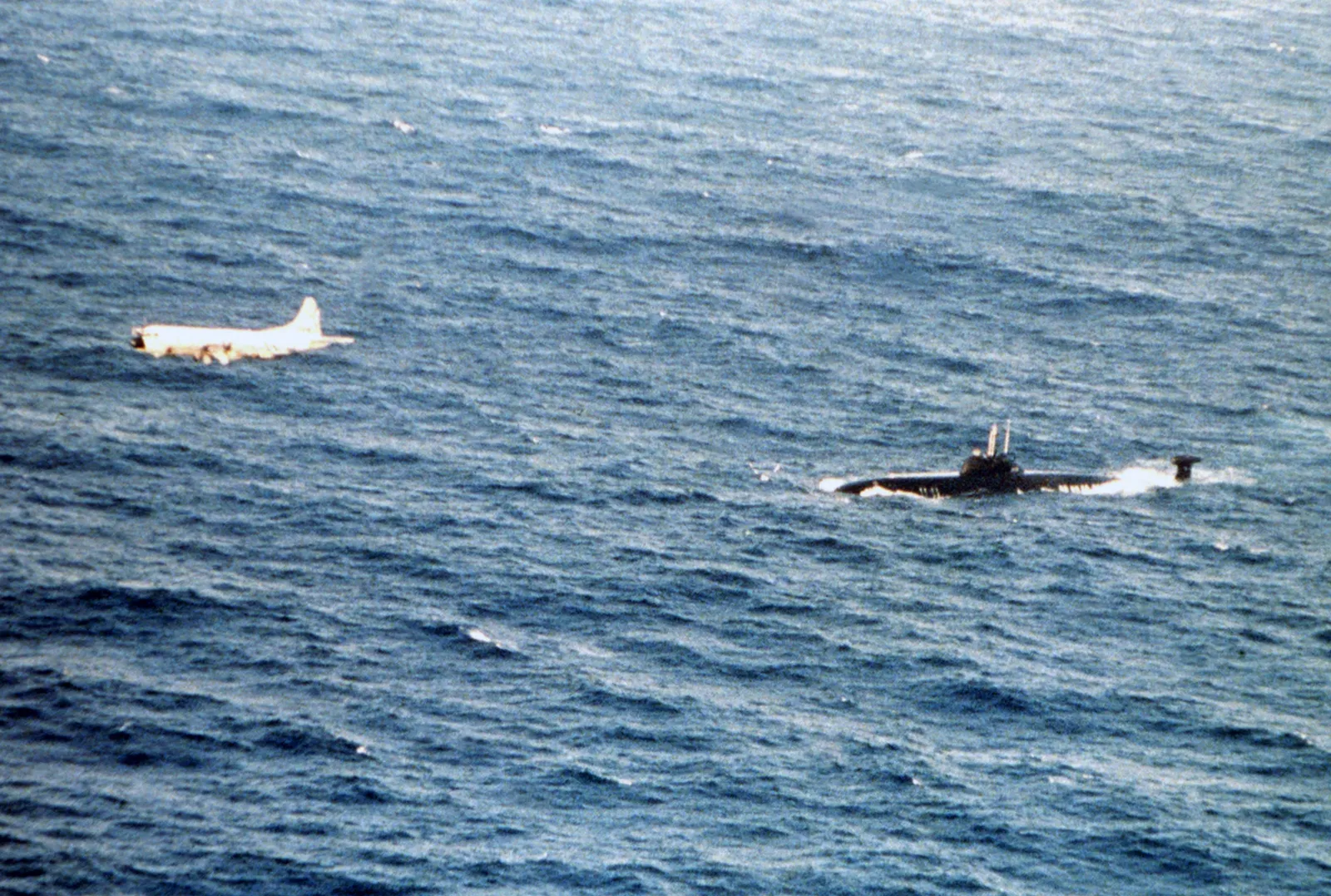
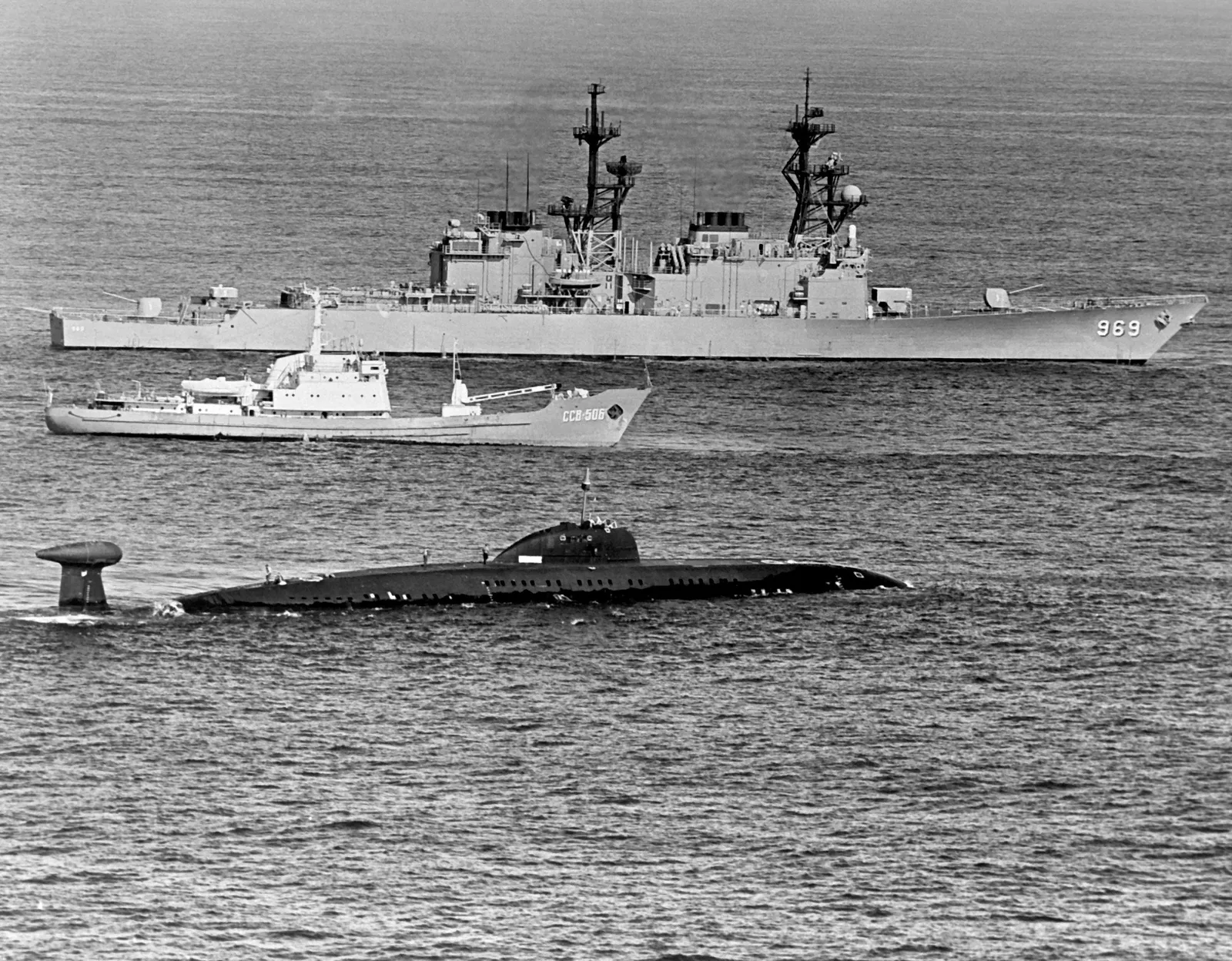
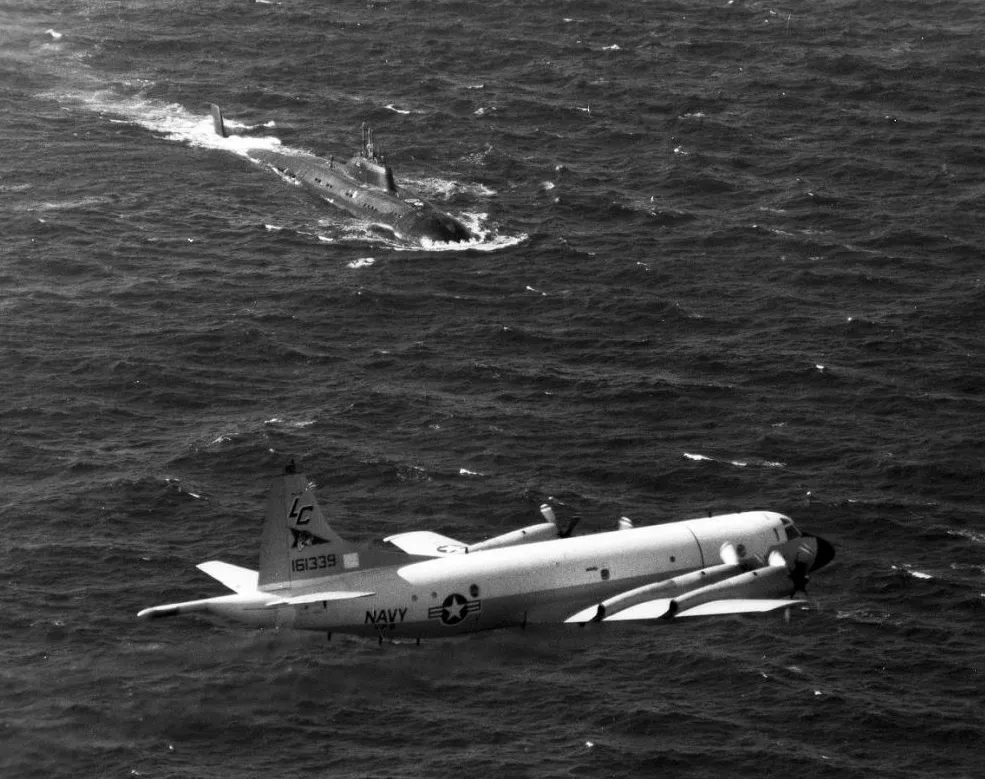
A U.S. Navy P-3C Orion photographed a Victor III submarine in the Atlantic after it was detected on the surface, illustrating how visible the class still was to NATO ASW patrols in the early 1980s.
Sources: P-3C VP-23 over Victor III sub over the Atlantic 1983.JPEG
NTI's 2024 Russia submarine capabilities review says the Russian Navy still possesses four Project 671RTM 'Shchuka' (Victor III) SSNs.
Sources: Russia Submarine Capabilities
CSIS Missile Threat lists Victor 3 / Project 671RTM among Russian submarine launch platforms for the RK-55 Granat and describes the submarine variant as operational.
Sources: RK-55 Granat (SS-N-21)