Naval Systems

Lada-class submarine

Also known as
  • Lada
  • Lada class submarine
  • Project 677
  • Project 677 Lada
  • Project 677 submarine
  • Sankt-Peterburg-class submarine

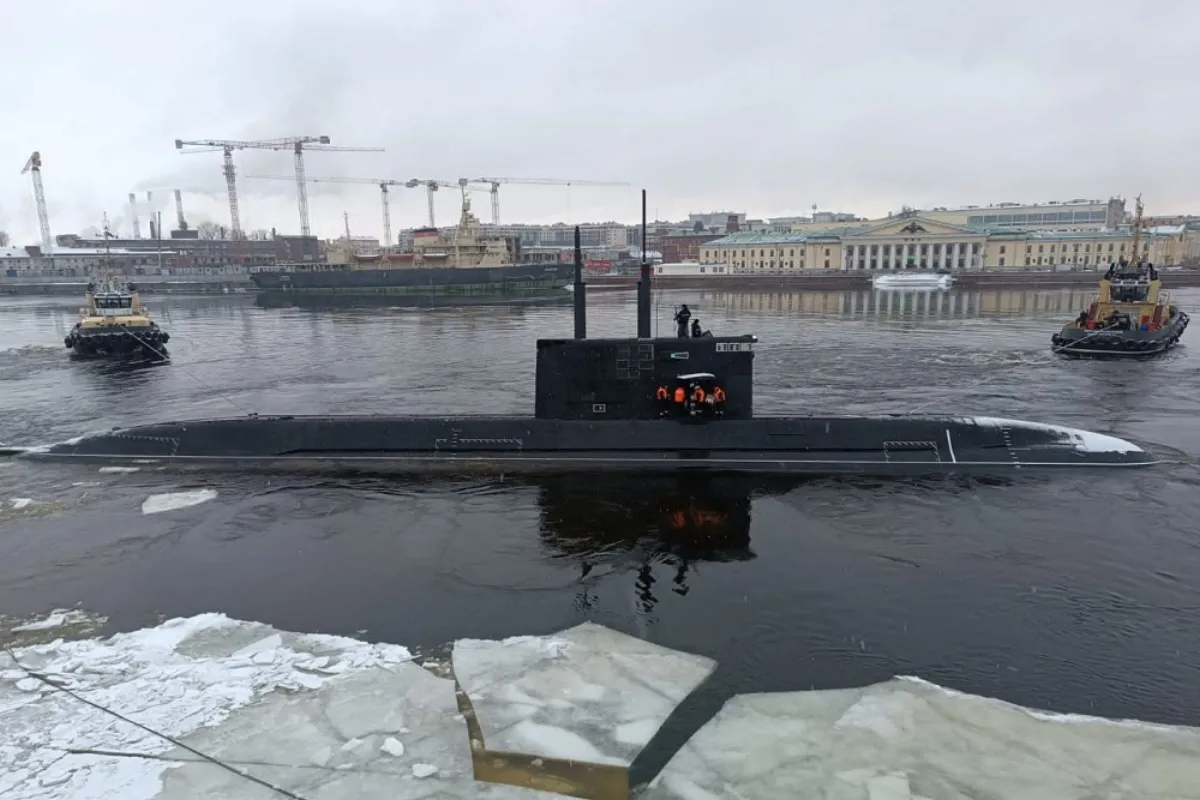
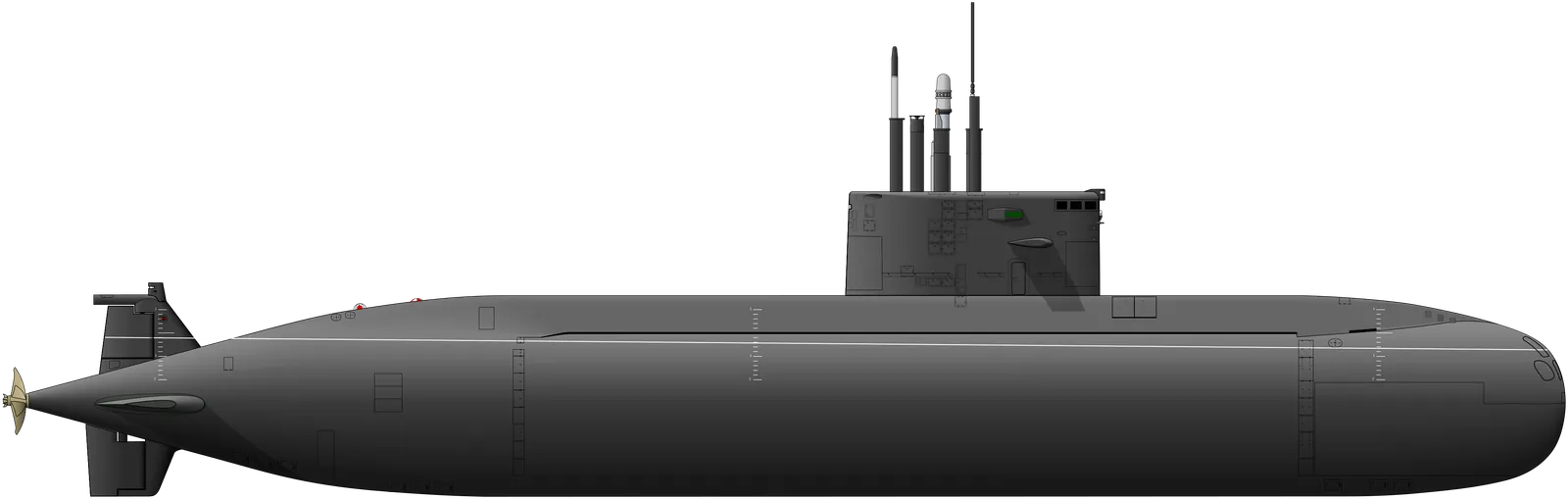
The Lada-class submarine is Russia's Project 677 diesel-electric attack submarine family, designed by Rubin and built by Admiralty Shipyards as a low-signature conventional boat for coastal, confined-water, and blue-water tasks. The class combines six 533 mm tubes with torpedo-missile armament, automated control, improved sonar, and optional air-independent-propulsion provisions; Russian sources reported a return to serial service with Kronstadt in 2024 and Velikiye Luki in 2025 after the troubled Sankt Peterburg prototype.

Role in Conflicts

Side
Unconfirmed conflict context

Open-source reporting confirms the Project 677/Lada class is actively fielded by the Russian Navy, including Kronstadt's commissioning and assignment to the Northern Fleet, but the available sources do not tie this page to a specific named conflict, so it remains in 2015 Various Conflicts.

Serial Production Status

The class is best read as a prototype-to-serial program rather than a large mature fleet: Rubin says trial-operation results changed the follow-on design, and later reporting tracks a slow restart around Kronstadt and Velikiye Luki.

Boat or groupStatus pointWhy it matters
B-585 Sankt PeterburgPrototype and trial-operation boatRubin says the follow-on technical design reflected lessons from trial operation.
B-586 KronstadtCommissioned January 2024Reported as the first serial boat and assigned to the Northern Fleet.
B-587 Velikiye LukiJoined the Russian Navy on 16 December 2025Rubin reported successful shipyard and state trials, including checks of torpedo-missile armament.
Vologda and YaroslavlUnder construction after June 2022 laying downThey show the continued Project 677 production line beyond the first serial pair.
Profile / Specs

Profile

Origin
Russia
Type
Diesel-electric attack submarine
Service note
1997-present
Designer
Rubin Central Design Bureau for Marine Engineering
Designed
1990s
Produced
1997-present
Number built
Three commissioned by December 2025, with Vologda and Yaroslavl under construction and two further boats contracted

Specifications

Displacement
1,765 tonnes surfaced; 2,650 tonnes submerged
Length
66.8 m
Beam
7.1 m
Speed
10 knots surfaced; 21 knots submerged
Operational depth
300 m
Endurance
45 days
Crew
35
Armament
Six 533 mm torpedo tubes with torpedo and missile systems for sea and land targets
Design features
Single-hull architecture, automated combat control, acoustic-protection measures, powerful sonar, and optional AIP provisions
Design Emphasis

Rubin and Admiralty Shipyards describe Project 677 as a compact fourth-generation conventional submarine built around automation, acoustic protection, a stronger sonar suite, and torpedo-missile armament. The official descriptions emphasize littoral and confined-water operations, but Rubin also describes the design as suitable for modern conventional-submarine missions in both littoral and blue-water areas.

  • Automation: Rubin says the integrated combat-control system supports high automation of submarine control and weapons use.
  • Signature reduction: Official sources describe a smaller single-hull architecture, acoustic-protection measures, and lower noise as central design features.
  • Strike options: The torpedo-missile armament is described as capable against sea and shore targets rather than only anti-ship torpedo work.
  • AIP provision: Both Rubin and Admiralty Shipyards describe an option for an air-independent propulsion plant, but the public record does not show that operational boats have received it.
Variants

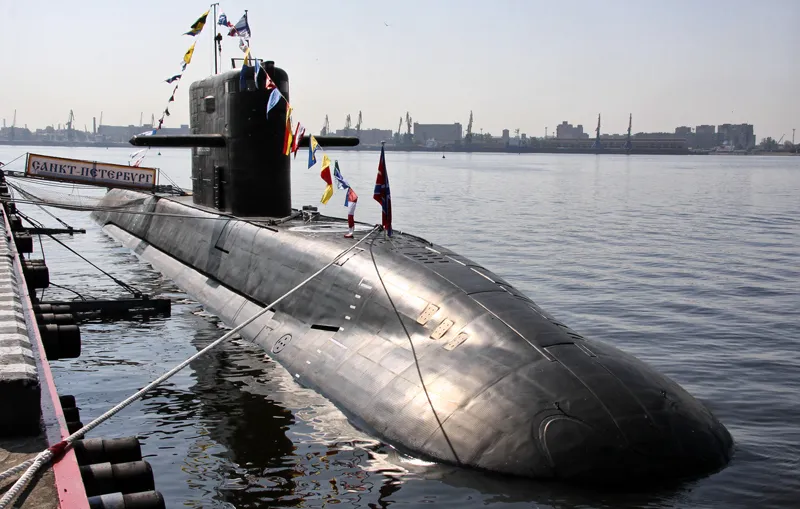
Project 677 began with the Sankt Peterburg prototype, then moved to modified serial boats after trial-operation changes were folded into the design.

VariantConfigurationDesignation notes
B-585 Sankt PeterburgPrototype Project 677 boat

Rubin describes Project 677 trial operation as the basis for a revised technical design used on follow-on submarines.

Sources: Project 677 - Rubin

B-586 KronstadtFirst serial Project 677 boat

Kronstadt was commissioned in January 2024 and reported assigned to the Northern Fleet after construction to a modified Project 677 design.

Sources: Russia commissions second Lada-class submarine, Russia Commissions First Serial Lada-class Submarine

B-587 Velikiye LukiSecond serial Project 677 boat

Admiralty Shipyards launched Velikiye Luki under an adjusted project in 2022, and Rubin reported the boat joined the Russian Navy after Baltic Sea state trials in December 2025.

Sources: Project 677 Velikiye Luki Launched by Admiralty Shipyards, The Third Lada Submarine Velikiye Luki Has Joined the Russian Navy

Vologda and YaroslavlFollow-on Project 677 boats

SeaWaves reported Admiralty Shipyards continued construction of the paired Vologda and Yaroslavl hulls after their June 2022 laying down.

Sources: Project 677 Velikiye Luki Launched by Admiralty Shipyards

Carried Missile System

Open reporting and Russian official statements describe the Lada class as carrying torpedo-missile armament through its bow tubes.

AmmunitionAmmunition typeFiring evidence
Kalibr, Sea-launched cruise missile family, MunitionsKalibrSea-launched cruise missile family

Baird Maritime reported that Velikiye Luki's armament includes Kalibr land-attack and anti-ship missiles, while TASS described Project 677 boats as armed with missile and torpedo systems for sea and land targets.

Sources: Russian Navy's third Lada-class submarine commissioned into service, Two Project 677 Lada submarines to be laid down in 2026 - TASS

Timeline

Lada-class submarine Key Events

  1. Kronstadt is launched

    Open reporting covered the launch of the second Project 677 boat after a long construction pause and redesign work.

    Sources: Russia commissions second Lada-class submarine

  2. Kronstadt is commissioned

    Janes and Naval News reported that the Russian Navy formally commissioned Kronstadt at Admiralty Shipyards in St Petersburg, confirming the class's return to active fielding.

    Sources: Russia commissions second Lada-class submarine, Russia Commissions First Serial Lada-class Submarine

  3. Vologda and Yaroslavl are laid down

    SeaWaves reported that Admiralty Shipyards continued construction of the Vologda and Yaroslavl Project 677 boats after their paired June 2022 laying down.

    Sources: Project 677 Velikiye Luki Launched by Admiralty Shipyards

  4. Velikiye Luki is launched

    Admiralty Shipyards launched Velikiye Luki under an adjusted Project 677 design that incorporated trial-operation changes from the lead boat.

    Sources: Project 677 Velikiye Luki Launched by Admiralty Shipyards

  5. Velikiye Luki joins the Russian Navy

    Rubin reported that the third Lada submarine joined the Russian Navy after shipyard and state trials in the Baltic Sea.

    Sources: The Third Lada Submarine Velikiye Luki Has Joined the Russian Navy, Russian Navy's third Lada-class submarine commissioned into service

Media
Related Weapon Systems
Project 636 / 636M / 636.3 Kilo-class submarine, Diesel-electric attack submarine, Naval SystemsNaval SystemsProject 636 / 636M / 636.3 Kilo-class submarineDiesel-electric attack submarineProject 636 is Russia's export-improved Kilo / Varshavyanka diesel-electric attack submarine line, derived from Project 877 and later split across export missile-capable variants and the Russian Navy Project 636.3 / 06363 Improved Kilo II branch. The family keeps six 533 mm bow tubes for torpedoes, mines, and tube-launched cruise missiles, while later 636.3 boats add Kalibr-PL strike capability and updated sensor, navigation, and combat-management equipment.
Victor III-class submarine, Nuclear-powered attack submarine, Naval SystemsNaval SystemsVictor III-class submarineNuclear-powered attack submarineThe Victor III-class submarine is the NATO reporting name for the Soviet Project 671RTM/RTMK Shchuka nuclear-powered attack submarine. Built at Admiralty and Komsomolsk shipyards, it carried the Project 671 line into a quieter, missile-capable generation with updated combat electronics, a distinctive towed-array sonar pod, 533 mm and 650 mm bow tubes, and a loadout spanning torpedoes, RK-55 Granat cruise missiles, antisubmarine missiles, and mines. A small number of late boats remained tied to Russian Northern Fleet service decades after the Soviet collapse.
Type 039B Yuan-class submarine, Chinese People's Liberation Army Navy Yuan-family diesel-electric AIP attack submarine variant, Naval SystemsNaval SystemsType 039B Yuan-class submarineChinese People's Liberation Army Navy Yuan-family diesel-electric AIP attack submarine variantThe Type 039B is an improved Yuan-family diesel-electric attack submarine variant associated with the People's Liberation Army Navy's Type 039A/B AIP line. Open sources describe the 039B as a revised Yuan boat with sail, hull, flank-sonar, and acoustic refinements, while U.S. defense reporting groups delivered Yuan-class AIP attack submarines under the broader Type 039A/B designation.
Type 039A / Yuan-class submarine, Chinese People's Liberation Army Navy air-independent-propulsion diesel-electric attack submarine family, Naval SystemsNaval SystemsType 039A / Yuan-class submarineChinese People's Liberation Army Navy air-independent-propulsion diesel-electric attack submarine familyThe Type 039A / Yuan-class is a Chinese diesel-electric attack submarine family with air-independent propulsion, built for the People's Liberation Army Navy and tracked in open sources as the Type 039A/B line with later Yuan-family variants. U.S. defense reporting counts the class among China's ASCM-capable conventional submarines, while specialist sources caution that older Type 041 naming and later Type 039C labels are open-source conventions rather than clean public PLAN designations.

Sources