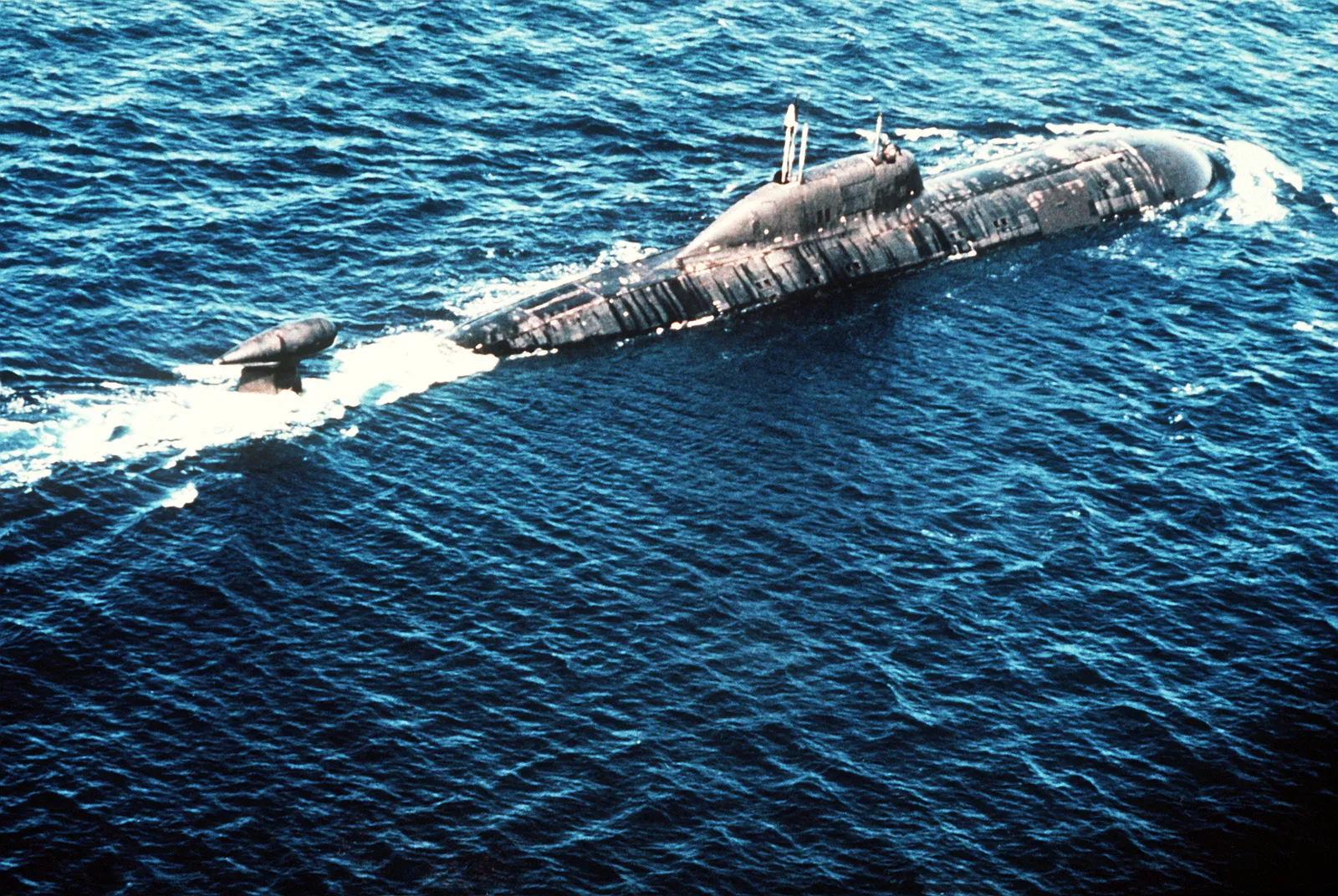

Reported with the Admiral Kuznetsov battlegroup heading toward Syria and the eastern Mediterranean in October 2016; the reviewed sources did not document an Akula-class submarine launching weapons in the Syrian campaign.
Role detailsNaval Systems
Akula-class submarine
Also known as
- Akula
- Akula-class
- Akula class submarine
- Project 971
- Project 971 Shchuka-B
- Shchuka-B
- Shchuka B
- NATO: Akula
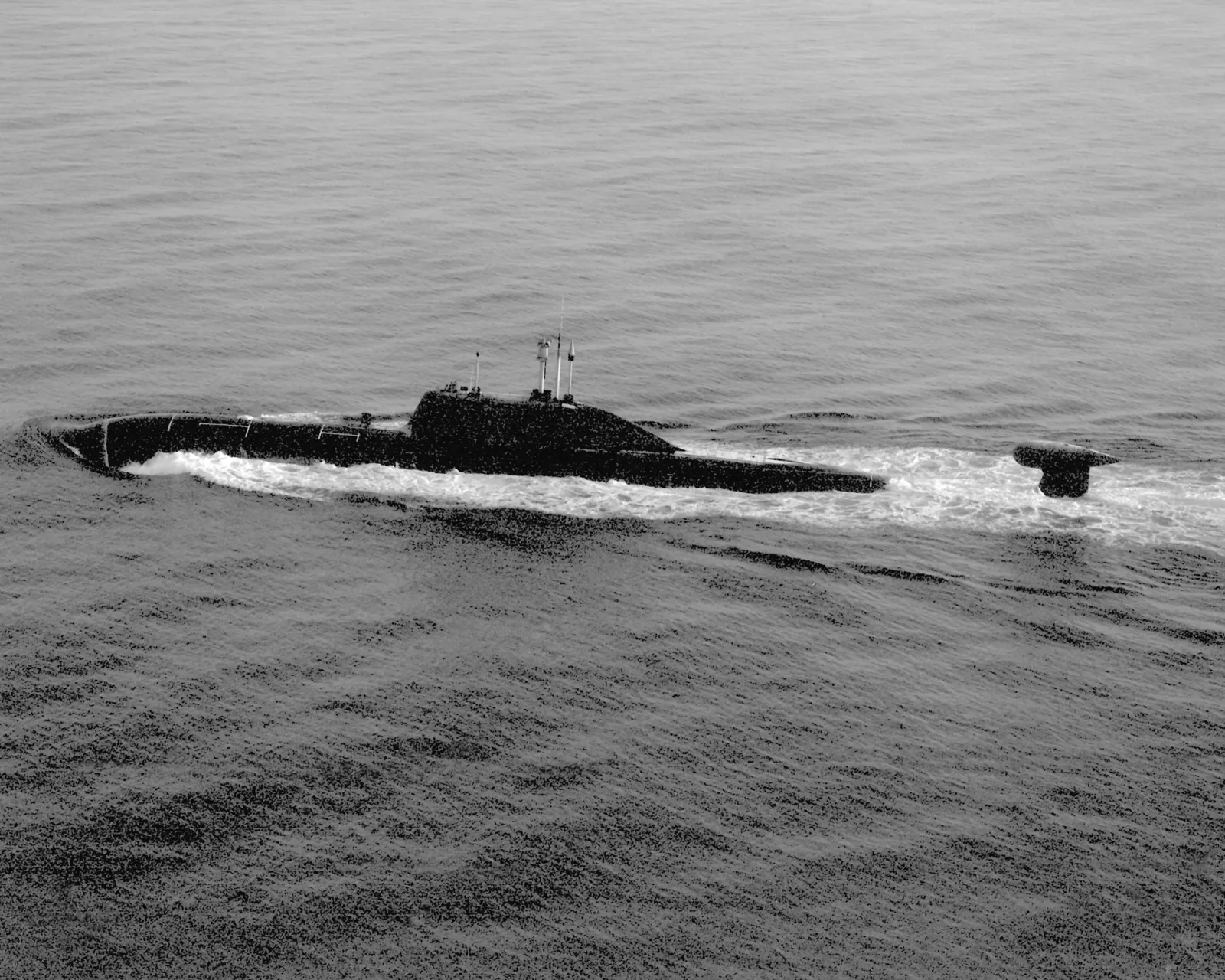
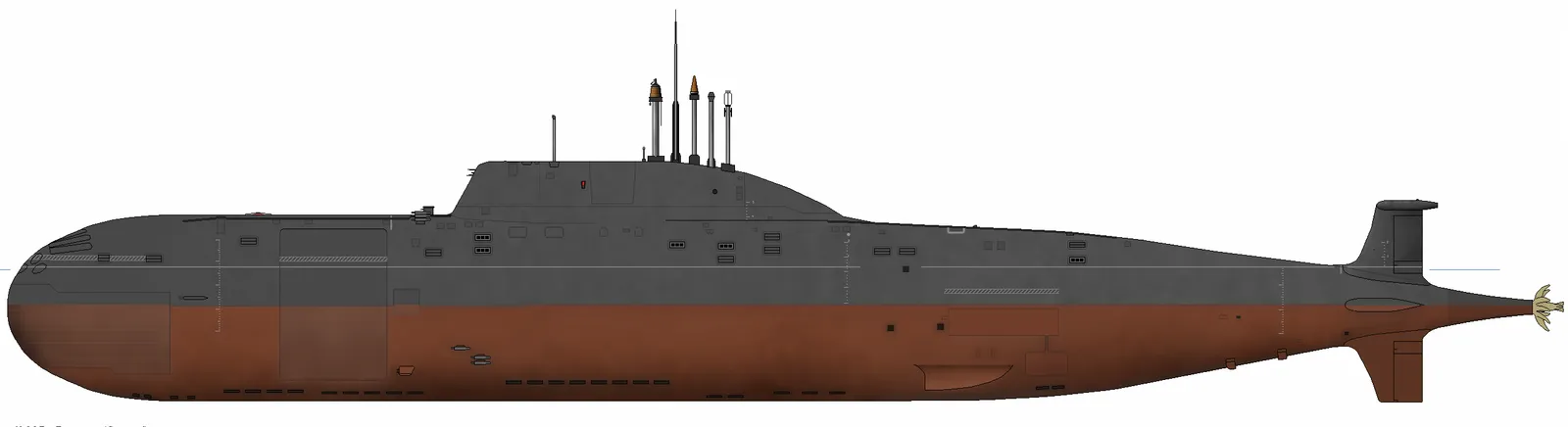
The Akula-class submarine is the NATO reporting name for the Soviet-designed Project 971 Shchuka-B nuclear-powered attack submarine. Built by Amur Shipbuilding Plant and Sevmash, the class used a double-hull design, combined torpedo and cruise-missile armament, and a mission set focused on anti-submarine and anti-shipping warfare.
Role in Conflicts
Design Notes
The Akula-class was built as a late-Soviet hunter-killer submarine rather than a strategic missile boat. Sevmash's own retrospective highlights the lead boat's unusually fast build and the class's "beast" series of hulls.
| Feature | Documented detail |
|---|---|
| Lead boat | K-480, later named Bars, opened the Project 971 series. |
| Build pace | Sevmash says the lead boat was completed in 3 years and 10 months. |
| Design bureau | Sevmash credits the project to St. Petersburg Marine Engineering Bureau Malachite. |
| Fleet context | NTI said Russia still retained six Project 971 boats in 2024, and K-152 Nerpa was leased to India as INS Chakra. |
Profile / Specs
Profile
- Origin
- Soviet Union
- Built in
- Soviet UnionRussia
- Type
- Nuclear-powered attack submarine
- Service note
- 1984-present
- Designer
- Malachite Design Bureau
- Unit cost
- Reported at 300 million rubles in 1984
- Produced
- 1984-1996
- Number built
- 16 built
Specifications
- Displacement
- 8,140 tonnes surfaced; 12,770 tonnes submerged
- Length
- 110.3 m
- Beam
- 13.6 m
- Draft
- 9.7 m
- Crew
- 73
- Diving depth
- 600 m
- Speed
- 33 knots submerged
- Propulsion
- 1 x 190 MW OK-650 pressurized-water reactor; 1 shaft
- Armament
- 4 x 533 mm and 4 x 650 mm torpedo tubes; torpedoes, mines, and Granat cruise missiles
Variants
- Project 971 Akula I
- Project 971I Improved Akula
- Project 971U Akula II
- Project 971M Akula III
Documented Ordnance
Open sources describe Project 971 boats as attack submarines with torpedoes, mines, and cruise missiles in their weapons fit.
| Carried item | Item type | Carriage evidence |
|---|---|---|
 | Cruise-missile payload | NTI lists cruise missiles among the Akula-class armament, and the class description also identifies a cruise-missile fit. Sources: Russia Submarine Capabilities, AKULA CLASS RUSSIAN NUCLEAR ATTACK SUBMARINES |
 | Mine payload | NTI and the Naval Submarine League source both describe mines as part of the class's armament. Sources: Russia Submarine Capabilities, AKULA CLASS RUSSIAN NUCLEAR ATTACK SUBMARINES |
Timeline
Akula-class submarine Key Events
Lead boat Bars is laid down
Sevmash's virtual photo exhibition says the lead Project 971 submarine K-480, later Bars, was laid down on 22 February 1985.
Sources: Sevmash virtual photo exhibition: Bars
Bars is accepted into service
Sevmash marked 29 December 1988 as the 35th anniversary of the lead boat's acceptance act, describing K-480 Bars as the ship that opened the class.
Sources: Sevmash: Lead Project 971 submarine turns 35
K-152 Nerpa is leased to India
NTI says Russia leased the Akula-class K-152 Nerpa to India as INS Chakra under a ten-year contract.
Sources: Russia Submarine Capabilities
Two Akula-class submarines are reported near Syria
Open-source reporting said two Northern Fleet Akula-class submarines joined the Russian battlegroup heading toward Syria and the eastern Mediterranean.
Sources: Two nuclear submarines from Kola sail into Mediterranean, Russian Submarines 'Join Battle Group Heading For Syria'
Media
Akula-class submarine Videos
Akula-class submarine Images
Related Weapon Systems


Sources
Russia Submarine CapabilitiesPublisher: Nuclear Threat Initiative | Note: Supports Akula-class background, dimensions, submerged speed, tasking, the Russian Navy's 2024 Shchuka-B inventory, and the K-152 Nerpa lease to India as INS Chakra. | Accessed: 2026-06-25Akula: The Russian Submarine The U.S. Navy Truly HatesPublisher: The National Interest | Note: Supports the Akula-class builder context, double-hull design, reactor family, cruise-missile fit, and general class background. | Accessed: 2026-06-25AKULA CLASS RUSSIAN NUCLEAR ATTACK SUBMARINESPublisher: Naval Submarine League | Note: Supports Project 971 background, the 1984-1996 production span, the 16-boat build count, the reported 300 million-ruble 1984 cost, design bureau and shipyard context, armament, propulsion, crew, depth, and tactical mission profile. | Accessed: 2026-06-25Sevmash virtual photo exhibition: BarsPublisher: Sevmash | Note: Supports the lead Project 971 submarine K-480 Bars laying down on 22 February 1985 and the class's opening as the first boat in the "beast" series. | Accessed: 2026-06-27Sevmash: Lead Project 971 submarine turns 35Publisher: Sevmash | Note: Supports the lead Project 971 submarine's 29 December 1988 acceptance act, the Malachite design bureau credit, the 3 years 10 months build time, and the class's seven-boat Sevmash series. | Accessed: 2026-06-27Two nuclear submarines from Kola sail into MediterraneanPublisher: The Barents Observer | Note: Supports 2011 Syrian Civil War fielded-by context: reported Akula-class submarines joined the Russian battlegroup heading toward Syria in October 2016. | Accessed: 2026-06-25Russian Submarines 'Join Battle Group Heading For Syria'Publisher: Forces News | Note: Supports 2011 Syrian Civil War fielded-by context: reported Akula-class submarines joining the Russian naval battle group heading toward Syria. | Accessed: 2026-06-25Akula class submarine starboard quarter view.JPEGPublisher: Wikimedia Commons | Note: Supports image provenance and public-domain context for the primary Akula-class submarine photo. | Accessed: 2026-06-25Akula submarine DN-SN-91-00616.JPGPublisher: Wikimedia Commons | Note: Supports image provenance and licensing context for an Akula-class gallery photo. | Accessed: 2026-06-25AkulaProjekt971K335.pngPublisher: Wikimedia Commons | Note: Supports image provenance and licensing context for the K-335 Akula-class diagram in the gallery. | Accessed: 2026-06-25AkulaSchema1.svgPublisher: Wikimedia Commons | Note: Supports image provenance and licensing context for the Akula-class schematic gallery image. | Accessed: 2026-06-25