Braunschweig-class / K130 corvette
Represents source-backed UNIFIL maritime-task-force coverage where German K130 corvettes are documented in patrol and interdiction-support tasks off Lebanon.
Naval Systems / Corvette classConflict side
Documented operators is a narrow catalog-side grouping for source-attributed systems in the 2015 Various Conflicts holding archive where the operator or activity is documented but the record does not yet resolve to a more precise named conflict side.
23 weapon systemsDocumented operators is not a state, coalition, armed movement, or command structure. It is a reviewed side grouping for weapon records in the 2015 Various Conflicts archive where public sources document a real operator, exercise, mission, patrol, intercept, deployment, or fielded-service context, but the record has not yet been assigned to a more precise conflict-side profile.
The linked equipment set is intentionally mixed. It includes German Navy K130 corvettes in UNIFIL maritime-task-force service, U.S. Coast Guard HC-130J surveillance aircraft, PLA Air Force J-16 intercept reporting, Russian special-purpose undersea systems, Chinese maritime law-enforcement vessels, North Korean border-artillery deployment reporting, and legacy or training aircraft whose sources support an operator or episode without fitting the current conflict taxonomy.
The grouping exists because the source record is stronger than the conflict taxonomy in several entries. Some sources document patrol or mission activity outside a conventional shooting war: Bundeswehr reporting places K130 corvettes in UNIFIL's maritime mission off Lebanon; U.S. Coast Guard material documents HC-130J long-range surveillance, maritime patrol, law-enforcement, search-and-rescue, and command-and-control roles; and Royal Navy material describes Archer-class patrol craft in policing, maritime-security, inshore-patrol, and nuclear-fleet-guarding tasks.
Other linked entries are state-force activity around contested or sensitive security environments. Australian and U.S. defense releases document PLA Air Force J-16 intercepts over the South China Sea in 2022 and 2023, while Taiwan Coast Guard and Chinese official or state-media reporting place Chinese government vessels in June 2026 activity east of Taiwan. Those records identify operators and incidents, but they remain in the holding archive until a reviewed conflict-side assignment is available.
A third cluster covers strategic, experimental, or opaque military systems whose public evidence confirms fielding, testing, repair, deployment planning, or service status without proving combat employment in a named conflict. The Russian Losharik and Kashalot special-purpose submarine records rely on open-source reporting about GUGI undersea capabilities and return-to-service or modernization activity. The Burevestnik record relies on arms-control and missile-analysis sources that describe the program, testing claims, safety concerns, and strategic signaling rather than battlefield use.
The side should therefore be read as an evidence boundary. It keeps source-backed systems discoverable while making clear that weapon-specific conflict-use claims still live in individual weapon records and that the correct long-term destination for many entries is a named state, coalition, operation, or conflict once direct sourcing supports that mapping.
Represents source-backed UNIFIL maritime-task-force coverage where German K130 corvettes are documented in patrol and interdiction-support tasks off Lebanon.
Naval Systems / Corvette class
Highlights documented U.S. Coast Guard long-range surveillance, maritime patrol, law-enforcement, search-and-rescue, and command-and-control service.
Aircraft & UAVs / Long-range surveillance, search and rescue, and maritime patrol aircraft
Represents opaque Russian special-purpose undersea systems where sources support fielding, repair, testing, and seabed-warfare context without a named conflict assignment.
Naval Systems / Nuclear-powered deep-water special-purpose submarine
Highlights strategic missile-program coverage where sources support nuclear-powered cruise-missile testing claims, deployment planning, safety caveats, and strategic signaling.
Munitions / Nuclear-powered nuclear-capable cruise missileThe side groups records whose sources identify operators or activity but do not yet support a stable named-conflict mapping. That distinction matters because the linked records include state services, maritime agencies, UN-mission naval deployments, exercises, intercept incidents, test programs, and legacy combat histories that should not be collapsed into one political side.
The strongest examples are entries where official or institutional sources name both the platform and the operating context. Bundeswehr sources describe K130 corvettes in UNIFIL maritime tasks off Lebanon; U.S. Coast Guard and Lockheed Martin sources describe the HC-130J's surveillance, maritime-security, and mission-system role; and defense releases from Australia and the United States document J-16 intercept incidents over the South China Sea.
The public value of the grouping is conservative: it keeps sourced records connected to a side facet while preserving the warning that a better mapping is needed. It should shrink as records are assigned to precise conflicts and canonical sides.
Several linked records involve maritime-security, naval patrol, seabed, survey, or coast-guard activity rather than conventional land combat. The K130 corvette record is anchored in German Navy UNIFIL service, while the HC-130J record is anchored in U.S. Coast Guard long-range surveillance and maritime patrol. Archer-class patrol vessels and French Antares-class sonar-towing vessels similarly sit in source-backed service contexts without a named combat-conflict assignment.
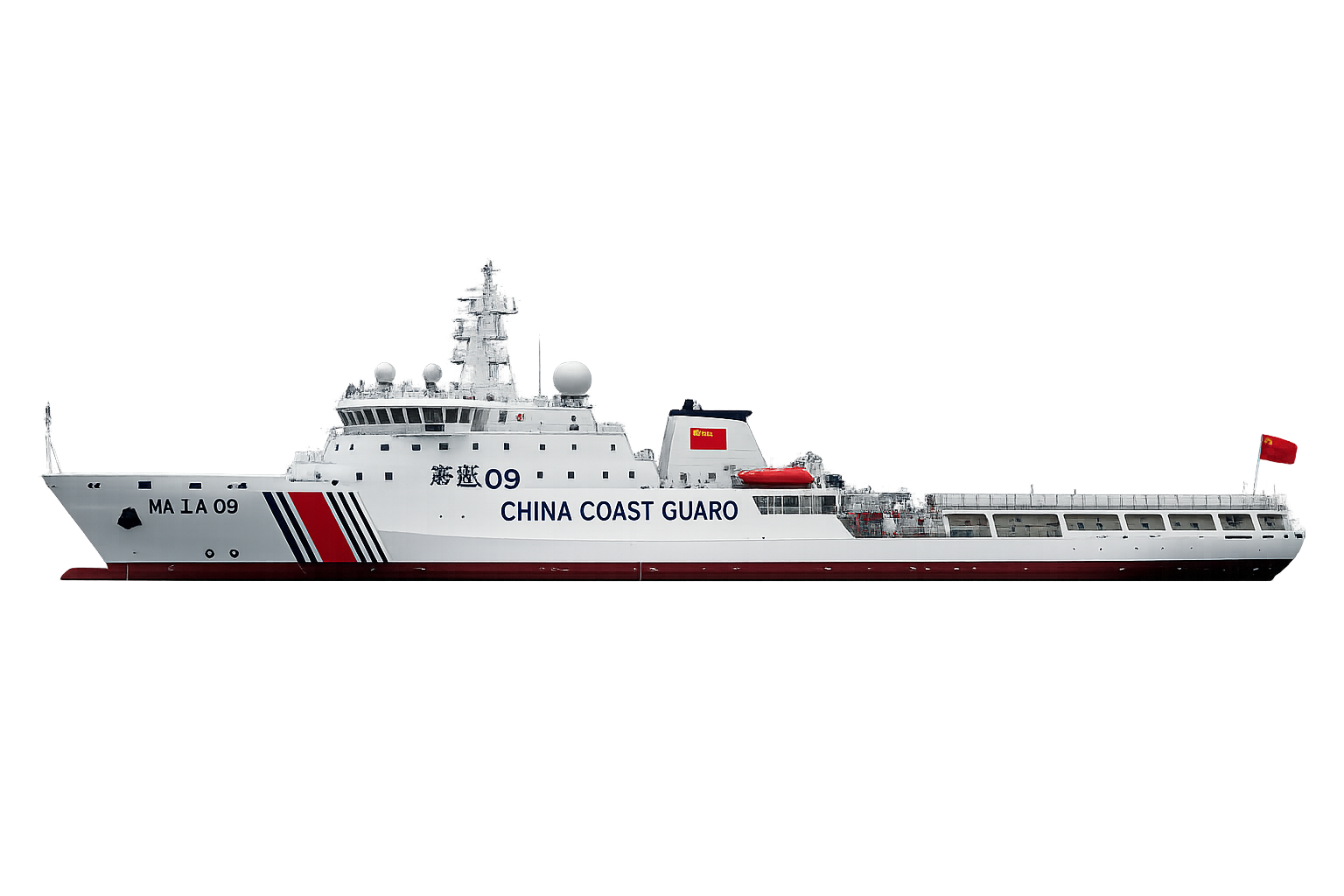
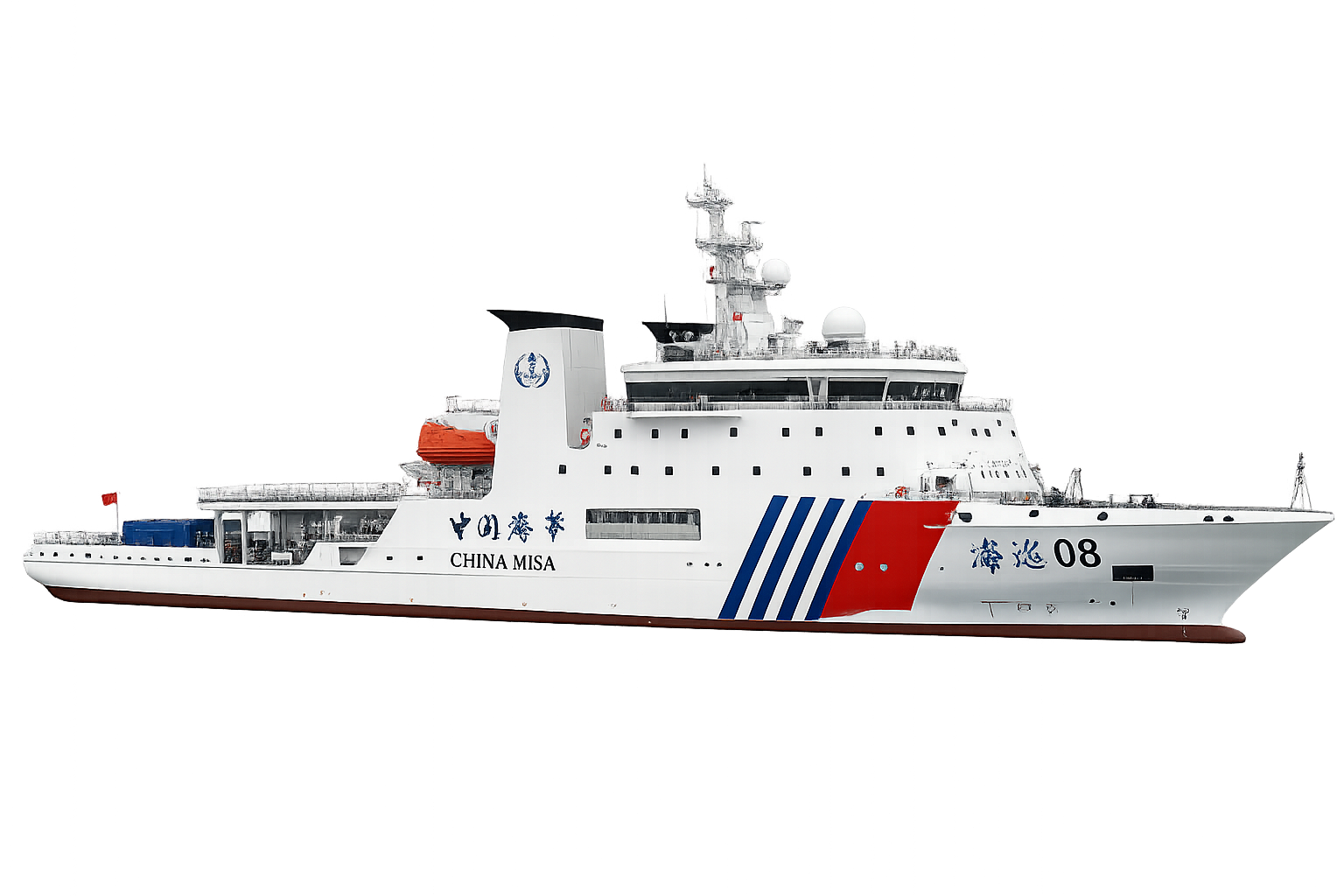
Chinese government-vessel entries form another maritime cluster. Taiwan's Coast Guard Administration and Chinese Ministry of Transport or state-media reporting identify ships such as Donghai Jiu 113, Haixun 06, Haixun 08, Haixun 09, and Haijing 2202 in June 2026 activity east of Taiwan or related patrol contexts. Those records need actor-specific handling because the vessels belong to different Chinese maritime or coast-guard institutions.
Russian special-purpose undersea records are more opaque. RUSI and specialist reporting place Losharik and Kashalot-type systems in the GUGI seabed-warfare ecosystem, while Reuters-linked and Barents Observer reporting support post-fire repair, testing, or return-to-service context for Losharik. That evidence supports modern fielding and capability context, not automatic combat-use claims.
The aircraft records show why the side cannot be treated as a single operator profile. The Shenyang J-16 entry concerns PLA Air Force intercept activity documented by Australian and U.S. defense sources. The Alpha Jet and MB-339 entries are linked through older West African and Horn of Africa combat-use histories that need more precise conflict-side resolution than the current holding archive provides.
The HC-130J and Archer-class examples sit closer to routine public-service and maritime-security missions than to combat. U.S. Coast Guard sources describe surveillance, search and rescue, law enforcement, maritime patrol, and command-and-control roles; Royal Navy sources describe coastal patrol and security missions for P2000 craft. These are operator-backed records, but the source context is not the same as a belligerent-side claim.
The Ship of the line entry is a legacy-history edge case: Royal Museums Greenwich material supports HMS Victory's historical combat and preservation context, while the current conflict assignment is a catalog placeholder. That kind of record should be remapped with caution because the real historical conflicts predate the modern holding bucket.
Strategic and developmental systems are included only where sources support the program or fielded context. CSIS, PISM, Arms Control Association, Russian official statements, and related reporting describe Burevestnik as a Russian nuclear-powered, nuclear-capable cruise-missile program with testing claims, safety concerns, deployment-planning statements, and missile-defense implications, while still leaving important details unresolved.
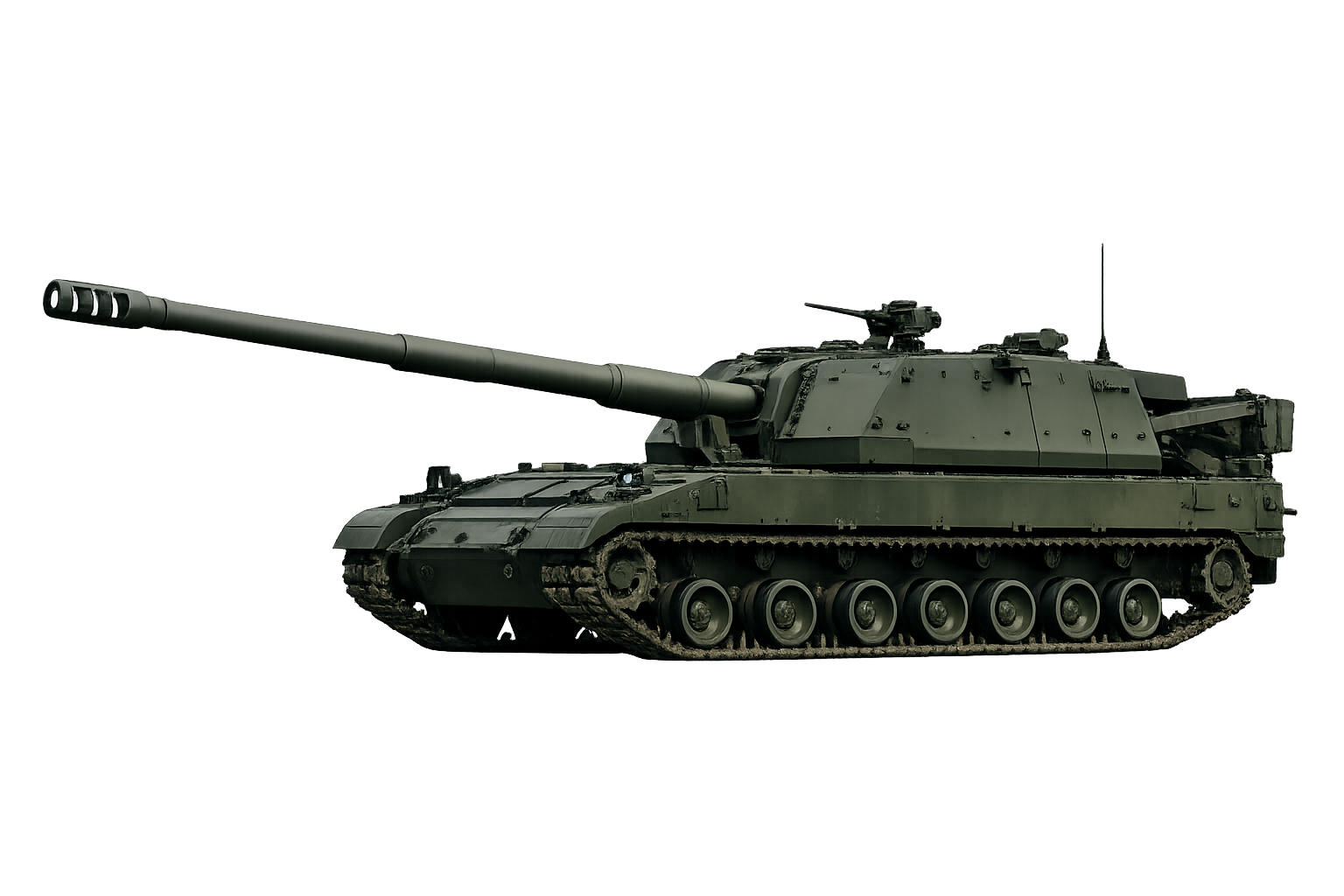
North Korean artillery coverage is another boundary case. State-media mirrors and AP/Yonhap reporting in the linked weapon record describe production, tests, and southern-border deployment context for a North Korean 155 mm self-propelled gun-howitzer, but the evidence supports deployment and testing rather than combat employment.
The Alpinist-class intelligence-ship entry illustrates a modern intelligence-activity case. Swedish Armed Forces and AP reporting identified Zhigulevsk in a February 2026 drone-observation incident near the French carrier Charles de Gaulle at Malmo, while Defense Express identifies the vessel class. That is enough for operator and episode context, not a named shooting-war assignment.
Defense News reporting cited imagery and service-introduction indicators for China's J-16, supporting the aircraft's modern PLAAF fielding context.
Australia's Defence Department reported that a Chinese J-16 intercepted a Royal Australian Air Force P-8A over the South China Sea.
The U.S. Department of Defense described an increase in risky Chinese intercepts and identified a J-16 intercept of a U.S. RC-135.
Taiwanese and Chinese reporting identified several Chinese maritime, coast-guard, or hydrographic vessels operating east of Taiwan in June 2026.
Documented operators is a taxonomy bucket. It should not be treated as a chain of command, alliance, legal belligerent, procurement network, or shared doctrine.
Entries should move to more precise canonical sides when direct sources support a named conflict, state actor, coalition, service branch, operation, or non-state participant.
This profile is an editorial grouping for heterogeneous operator-backed records in a holding conflict, not a real-world actor. Sources often document service status, patrol activity, tests, intercepts, deployment planning, or operator context without proving combat use in a named conflict; individual weapon records remain authoritative for weapon-specific conflict-use claims.
Category
Crewed aircraft, drones, and loitering munitions.


Category
Tube artillery, rocket artillery, and long-range ground fires.
Category
Standalone missiles, bombs, rockets, torpedoes, and guided or unguided explosive payloads.
Category
Warships, submarines, unmanned surface vessels, naval craft, and maritime combat systems.