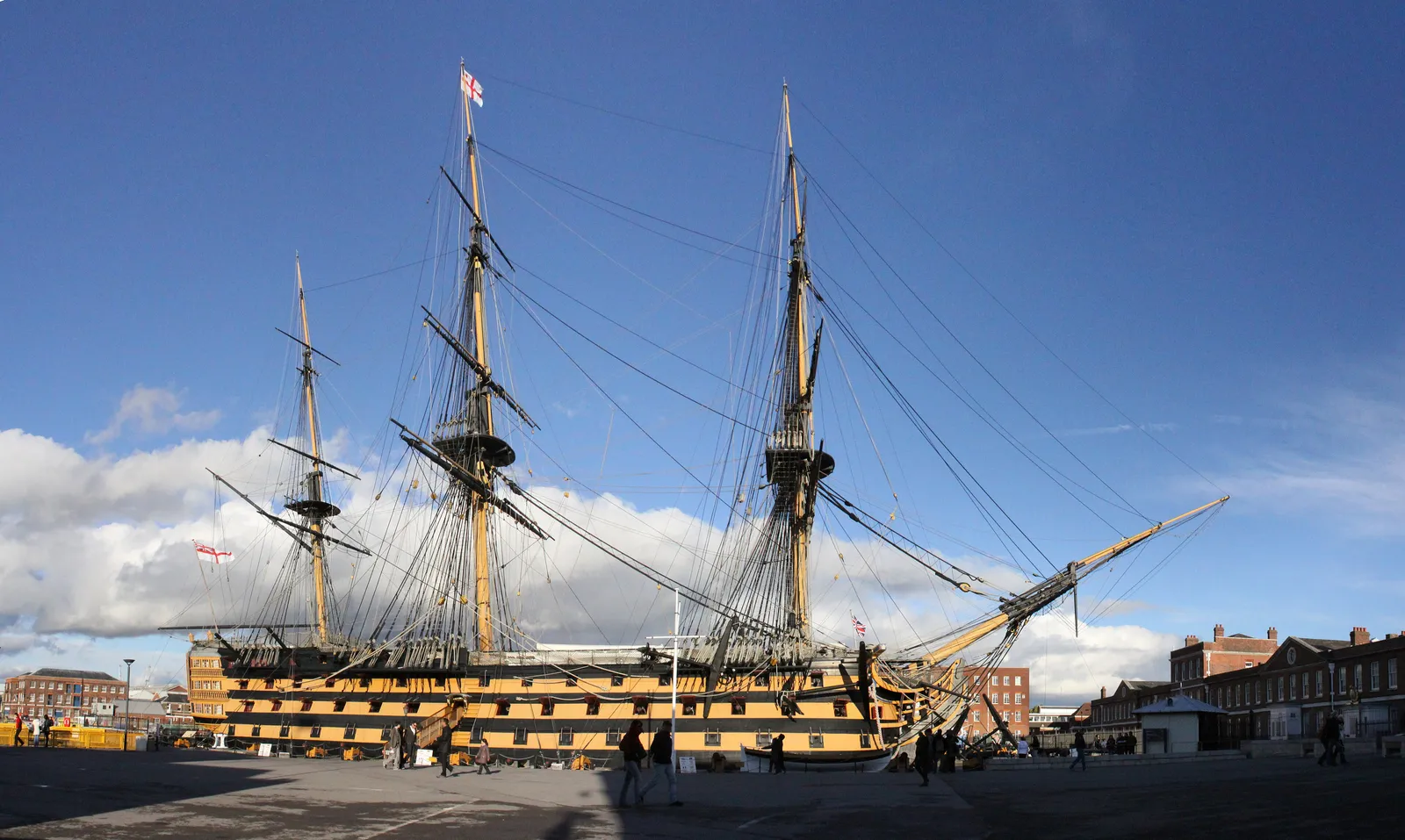

Royal Museums Greenwich, National Historic Ships UK, and Royal Navy Museums document Victory's Royal Navy combat service from the War of American Independence through French Revolutionary War actions and Nelson's Trafalgar flagship role; this row uses the catalog's existing holding bucket because the historical conflicts are not modeled as standalone conflict records.
Naval Systems
HMS Victory
Also known as
- HMS Victory (1765)
- Victory
- Victory (1765)
- HMS Victory 1765
- Nelson's flagship
- Lord Nelson's flagship
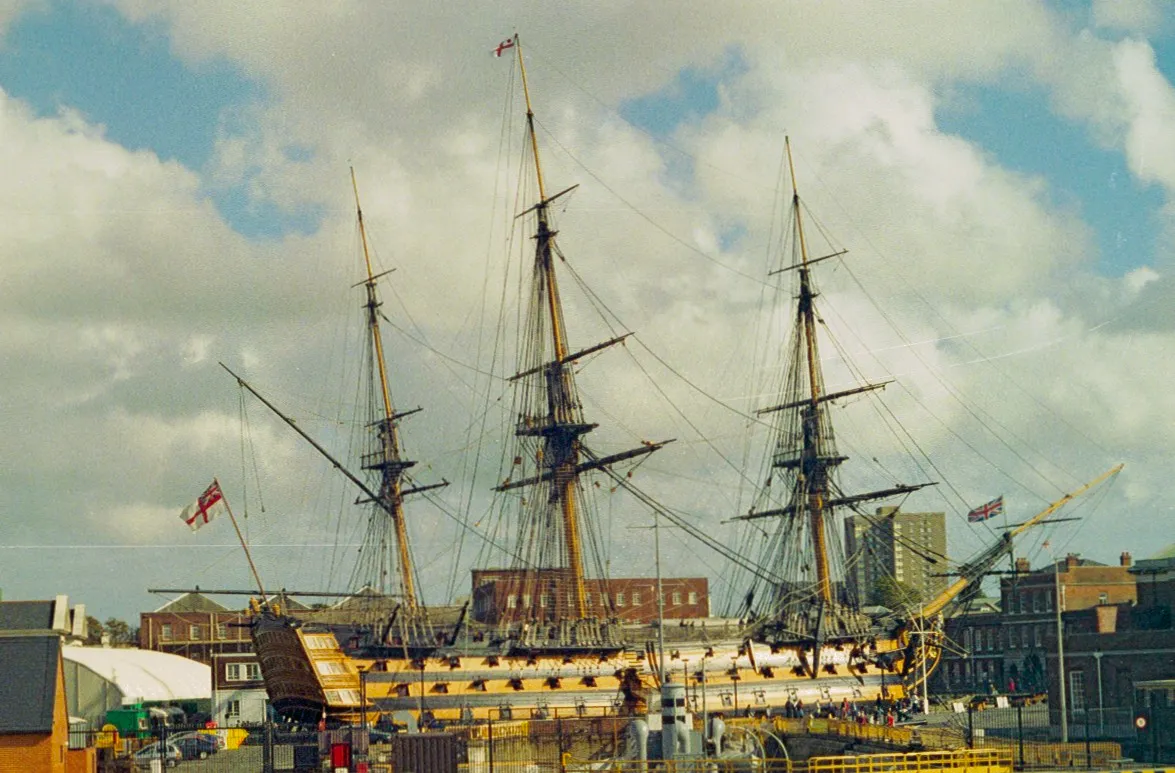
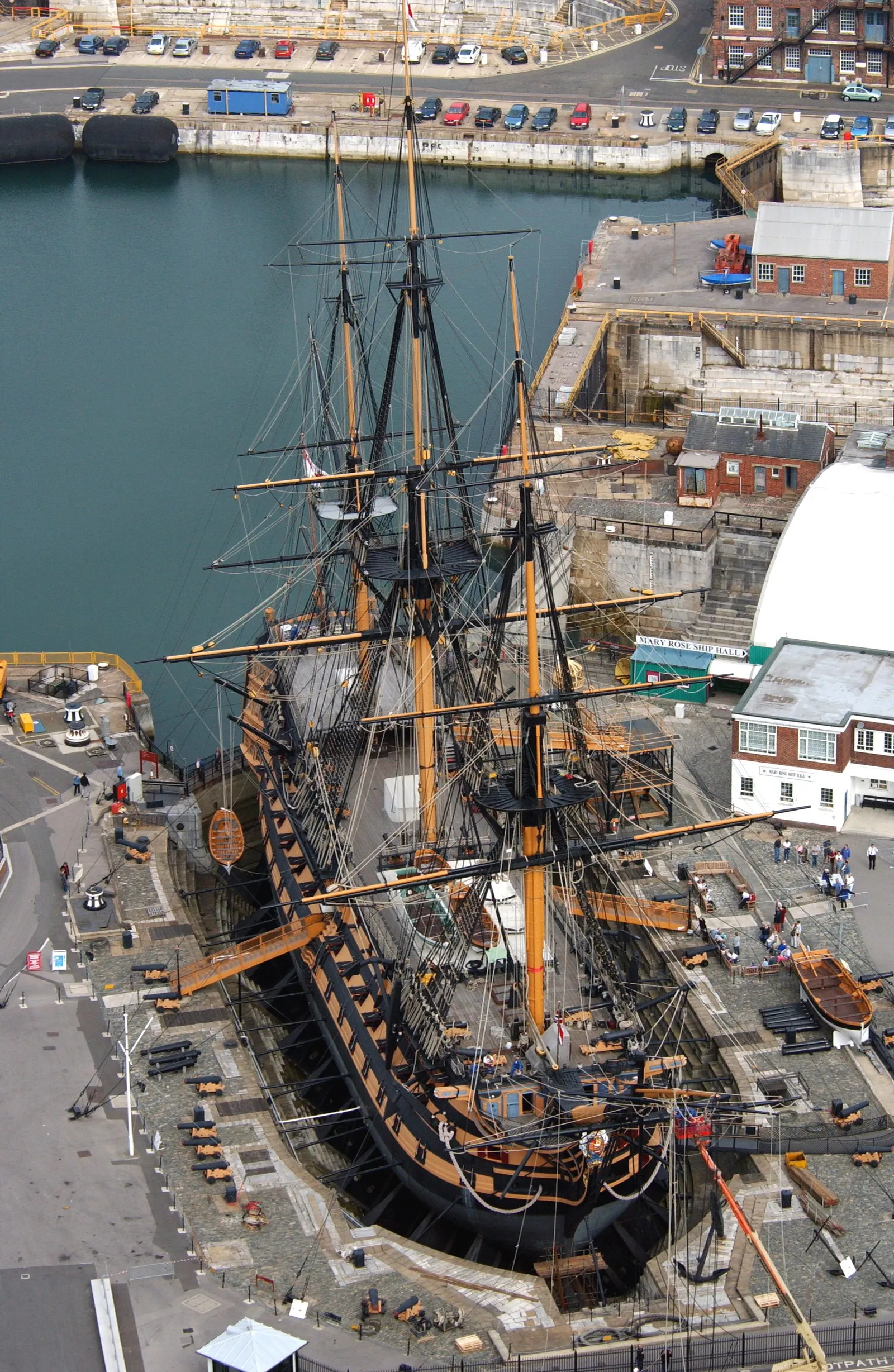
HMS Victory is the Chatham-built Royal Navy first-rate ship of the line launched in 1765, later made famous as Nelson's flagship at Trafalgar. The preserved warship anchors this page as a concrete example of the age-of-sail battle-line capital ship, with direct service evidence from the War of American Independence through the Napoleonic Wars.
Role in Conflicts
Profile / Specs
Profile
- Origin
- Great Britain
- Built by
- Chatham Dockyard
- Built in
- Kingdom of Great Britain
- Type
- First-rate ship of the line
- Service note
- Age of Sail
- Designer
- Sir Thomas Slade
- Designed
- 1759
- Produced
- 1759-1765
Specifications
- Role
- First-rate ship of the line, fleet flagship, and preserved commissioned Royal Navy warship
- Construction site
- Chatham Dockyard
- Order date
- 7 July 1759 Navy Board order for construction at Chatham
- Keel laid
- 23 July 1759 at Chatham's Old Single Dock
- Launch date
- 7 May 1765
- Commissioned
- March 1778 for active service in the War of American Independence
- Gun-deck length
- 186 ft in the Royal Museums Greenwich SLR0514 model record
- Beam
- 52 ft in the Royal Museums Greenwich SLR0514 model record
- Burden
- 2,162 tons in the Royal Museums Greenwich SLR0514 model record
- Armament
- Trafalgar-era 104-gun fit: 30 32-pounders, 28 24-pounders, 44 12-pounders, and two 68-pounder carronades
- Rigging
- 27 miles of rigging and four acres of sail in Royal Museums Greenwich's description
- Construction material
- Royal Museums Greenwich says more than 2,000 oak trees were used in the hull
Armament And Refit Context
Victory's public identity mixes a long service life with one especially well-documented configuration: Nelson's Trafalgar flagship. Royal Museums Greenwich collection records describe the ship as a 100-gun three-decker in model context, while the Trafalgar-era fit is documented as 104 guns after upperworks and carronade changes.
Battle-line role
As a first-rate ship of the line, Victory was built to carry a heavy broadside in fleet line-ahead fighting and to serve as an admiral's flagship.
Trafalgar battery
The documented Trafalgar-era armament combined 32-pounder lower-deck guns, 24-pounder middle-deck guns, 12-pounders above, and two 68-pounder carronades.
Refit identity
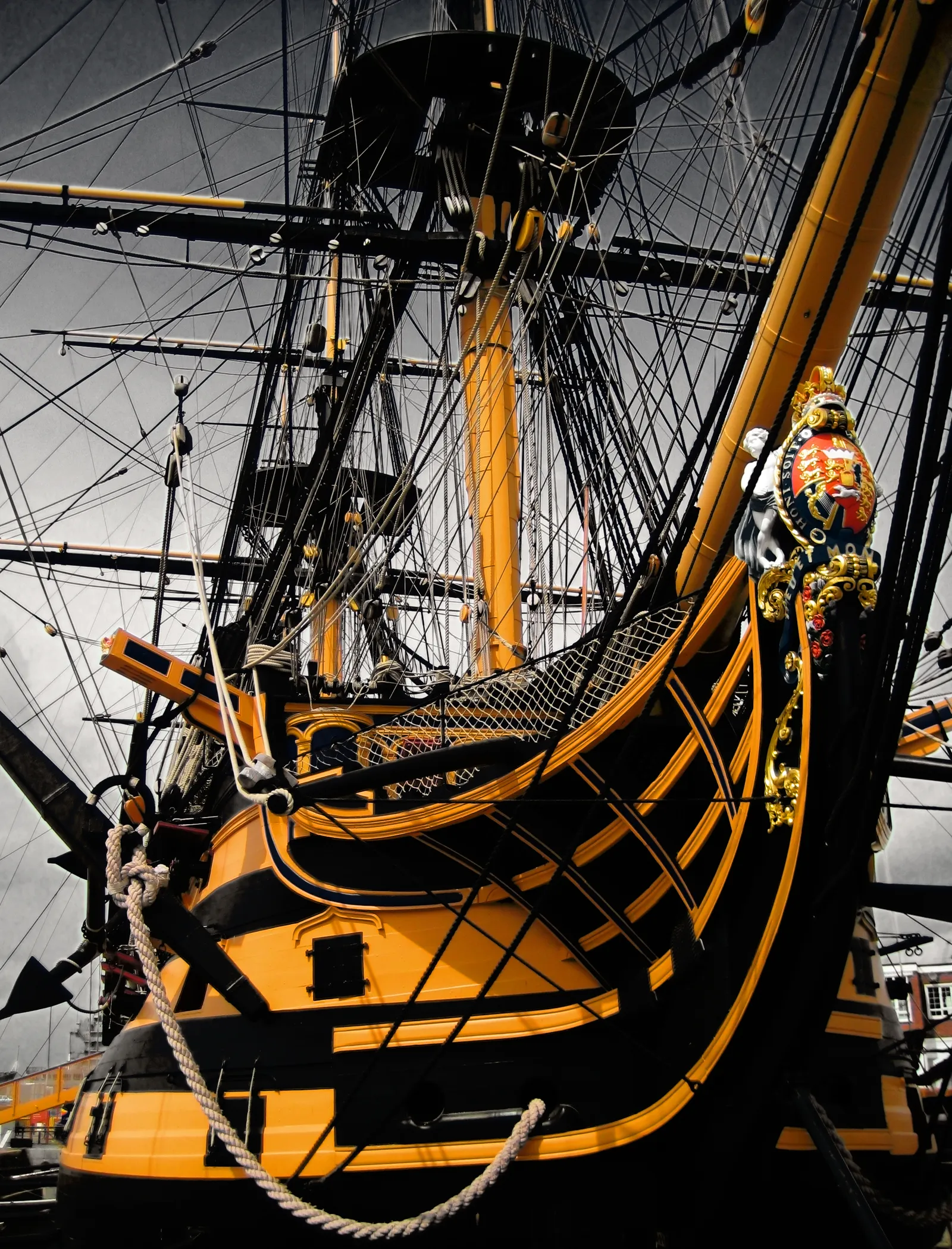
The 1800-1803 repair period changed visible details including the figurehead and the black-and-yellow hull scheme associated with Victory's preserved appearance.
Sources: HMS Victory; Victory (1765); Warship; First rate; 100 guns; Victory (1765) Model SLR0516; Model of HMS Victory (1765); HMS Victory | Royal Navy Museums.
Catalog Relationship
For the broader warship type, see the catalog's Ship of the line entry. Victory is the named first-rate example most directly documented by the museum and dockyard sources, while the family page covers the wider line-of-battle category.
Timeline
HMS Victory Key Events
Ordered for construction at Chatham
Chatham Historic Dockyard Trust records the Navy Board order for Victory to be built at Chatham on 7 July 1759.
Sources: Building HMS Victory
Keel timbers joined in Old Single Dock
Chatham Historic Dockyard Trust says the first timbers were brought together in Chatham's Old Single Dock on 23 July 1759.
Sources: Building HMS Victory
Launched
Royal Museums Greenwich records HMS Victory's launch on 7 May 1765.
Sources: HMS Victory
Commissioned for wartime service
Royal Museums Greenwich says Victory was commissioned for active service in March 1778 to take part in the War of American Independence.
Sources: HMS Victory
First combat service off Ushant
National Historic Ships UK lists Victory's First Battle of Ushant service in 1778, beginning the ship's documented fighting career.
Sources: National Historic Ships HMS Victory
Mediterranean flagship
Royal Museums Greenwich describes Victory being recommissioned in 1793 as Vice-Admiral Lord Hood's Mediterranean flagship, including Toulon and Corsica operations.
Sources: HMS Victory
Cape St Vincent
Royal Museums Greenwich says Victory, flying Sir John Jervis's flag, played a key role in the opening stages of the Battle of Cape St Vincent.
Sources: HMS Victory
Large repair before Nelson's command
Royal Museums Greenwich model notes tie Victory's later black-and-yellow appearance and changed figurehead to the extensive 1800-1803 repair period.
Sources: Victory (1765) Model SLR0516, Model of HMS Victory (1765)
Nelson's flagship at Trafalgar
Royal Museums Greenwich and Royal Navy Museums identify Victory as Nelson's flagship at Trafalgar, where her 104-gun first-rate configuration and crew fought in the decisive fleet action.
Sources: HMS Victory, HMS Victory | Royal Navy Museums
Withdrawn from active service
Royal Museums Greenwich's SLR0514 model record says Victory was withdrawn from active service in 1812.
Sources: Victory (1765); Warship; First rate; 100 guns
Permanent Portsmouth harbour ship
Royal Museums Greenwich says Victory lay permanently at anchor in Portsmouth harbour from 1823, helping ensure the ship's survival.
Sources: HMS Victory
Opened to the public
Royal Museums Greenwich says Victory was restored in dry dock and opened to the public by King George V in July 1928.
Sources: HMS Victory
Related Weapon Systems


Sources
Building HMS VictoryPublisher: Chatham Historic Dockyard Trust | Note: Supports the Navy Board order for HMS Victory to be built at Chatham, the 23 July 1759 start in Old Single Dock, and the Chatham construction context. | Accessed: 2026-07-13HMS VictoryPublisher: Royal Museums Greenwich | Note: Supports HMS Victory's Chatham Dockyard build background, Sir Thomas Slade design context, 1765 launch, March 1778 commissioning, 104-gun description, rigging and sail facts, preservation history, and public-opening context. For 2015 Various Conflicts, directly supports HMS Victory being used by the Royal Navy in the War of American Independence, Mediterranean French Revolutionary War service, Cape St Vincent, and Nelson's Trafalgar command context while those pre-modern conflicts are not modeled as standalone records. | Accessed: 2026-07-13National Historic Ships HMS VictoryPublisher: National Historic Ships UK | Note: For 2015 Various Conflicts, directly supports HMS Victory being fielded by the Royal Navy in documented combat actions including First Battle of Ushant, Second Battle of Ushant, Cape St Vincent, and Trafalgar. | Accessed: 2026-07-13HMS Victory | Royal Navy MuseumsPublisher: Royal Navy Museums | Note: For 2015 Various Conflicts, directly supports HMS Victory being used by the Royal Navy as Vice Admiral Lord Nelson's flagship at the Battle of Trafalgar; also supports the over-800 crew context and museum interpretation of the ship's 1805 configuration. | Accessed: 2026-07-13Victory (1765); Warship; First rate; 100 gunsPublisher: Royal Museums Greenwich | Note: Supports dimensions, burden, 100-gun first-rate model context, Trafalgar-era armament breakdown, fifth-name lineage context, and 1812 withdrawal from active service. | Accessed: 2026-07-13Victory (1765) Model SLR0516Publisher: Royal Museums Greenwich | Note: Supports model-based Victory configuration context and the 1800-1803 repair period's changed figurehead and appearance. | Accessed: 2026-07-13Model of HMS Victory (1765)Publisher: Royal Museums Greenwich | Note: Supports the 1790s model-display context and the black-and-yellow appearance associated with the 1800-1803 repair period. | Accessed: 2026-07-13HMSVictoryPortsmouthEngland.jpgPublisher: Wikimedia Commons | Note: Supports image provenance for the direct HMS Victory primary image, marked with a CC0 public-domain dedication on Commons. | Accessed: 2026-07-13HMS Victory 104-gun first-rate ship of the line 3,500 tons, Royal Navy. (11632271795).jpgPublisher: Wikimedia Commons | Note: Supports image provenance and Creative Commons context for the broadside HMS Victory photograph. | Accessed: 2026-07-13HMS Victory - bow.jpgPublisher: Wikimedia Commons | Note: Supports image provenance and Creative Commons context for the bow-view HMS Victory photograph. | Accessed: 2026-07-13HMS Victory viewed from a helicopter. MOD 45145664.jpgPublisher: Wikimedia Commons | Note: Supports image provenance for an official Ministry of Defence aerial HMS Victory image mirrored on Commons under the Open Government Licence. | Accessed: 2026-07-13