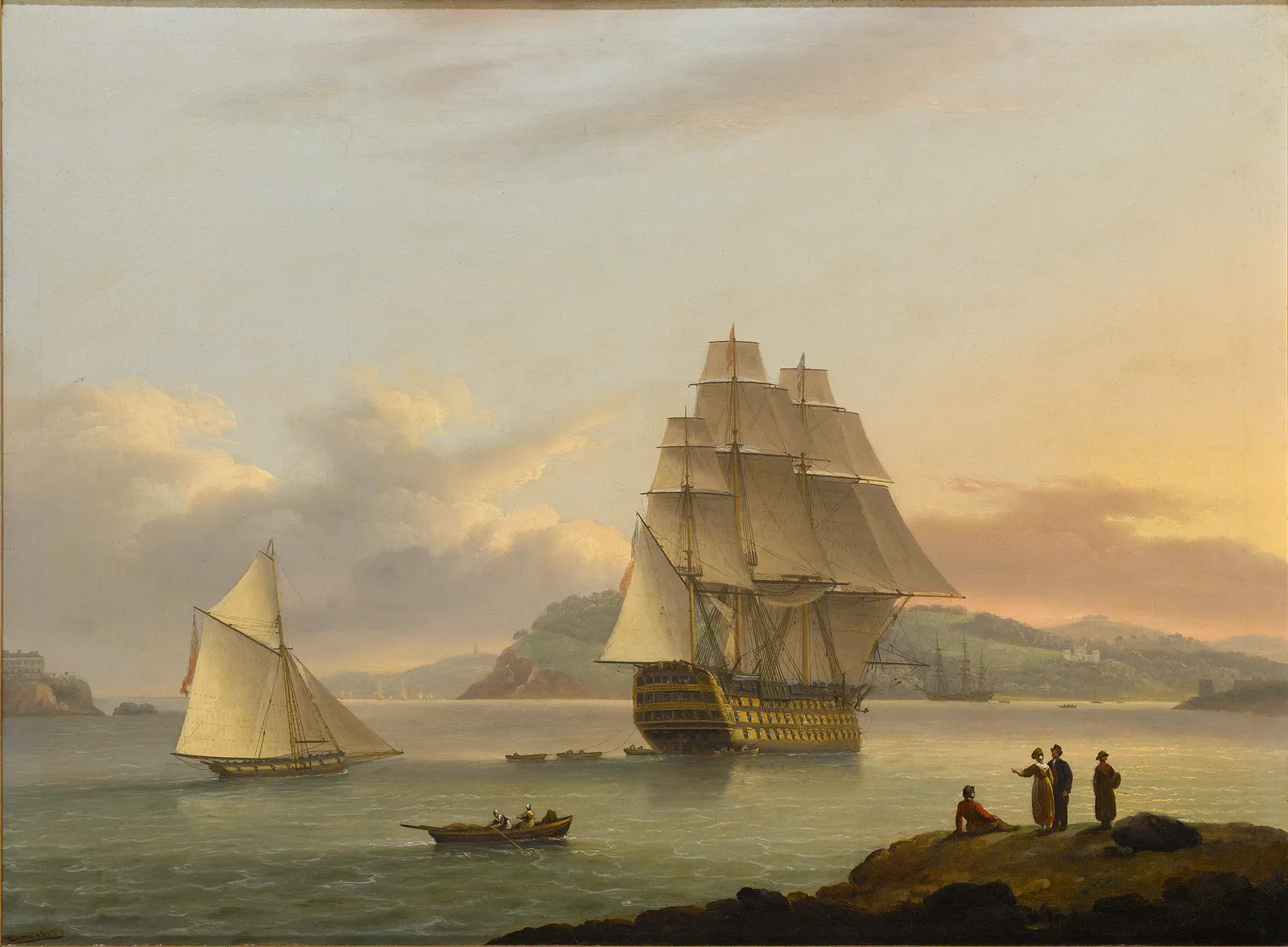

Royal Museums Greenwich and Royal Navy Museums document HMS Victory as an active ship of the line in the War of American Independence, Mediterranean operations, and Nelson's Trafalgar flagship; the record stays in this holding bucket because the catalog does not create pre-1995-only conflict pages.
Naval Systems
Ship of the line
Also known as
- ship-of-the-line
- line of battle ship
- line-of-battle ship
- line-of-battle warship
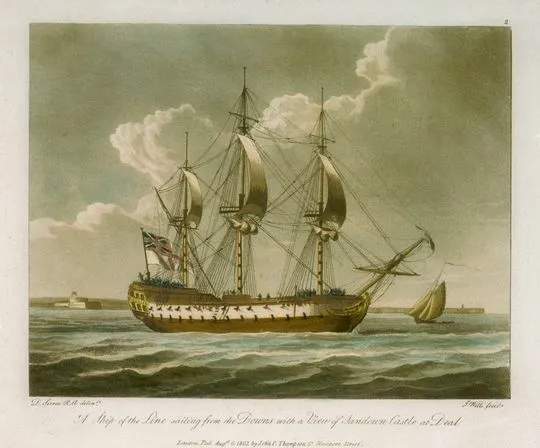
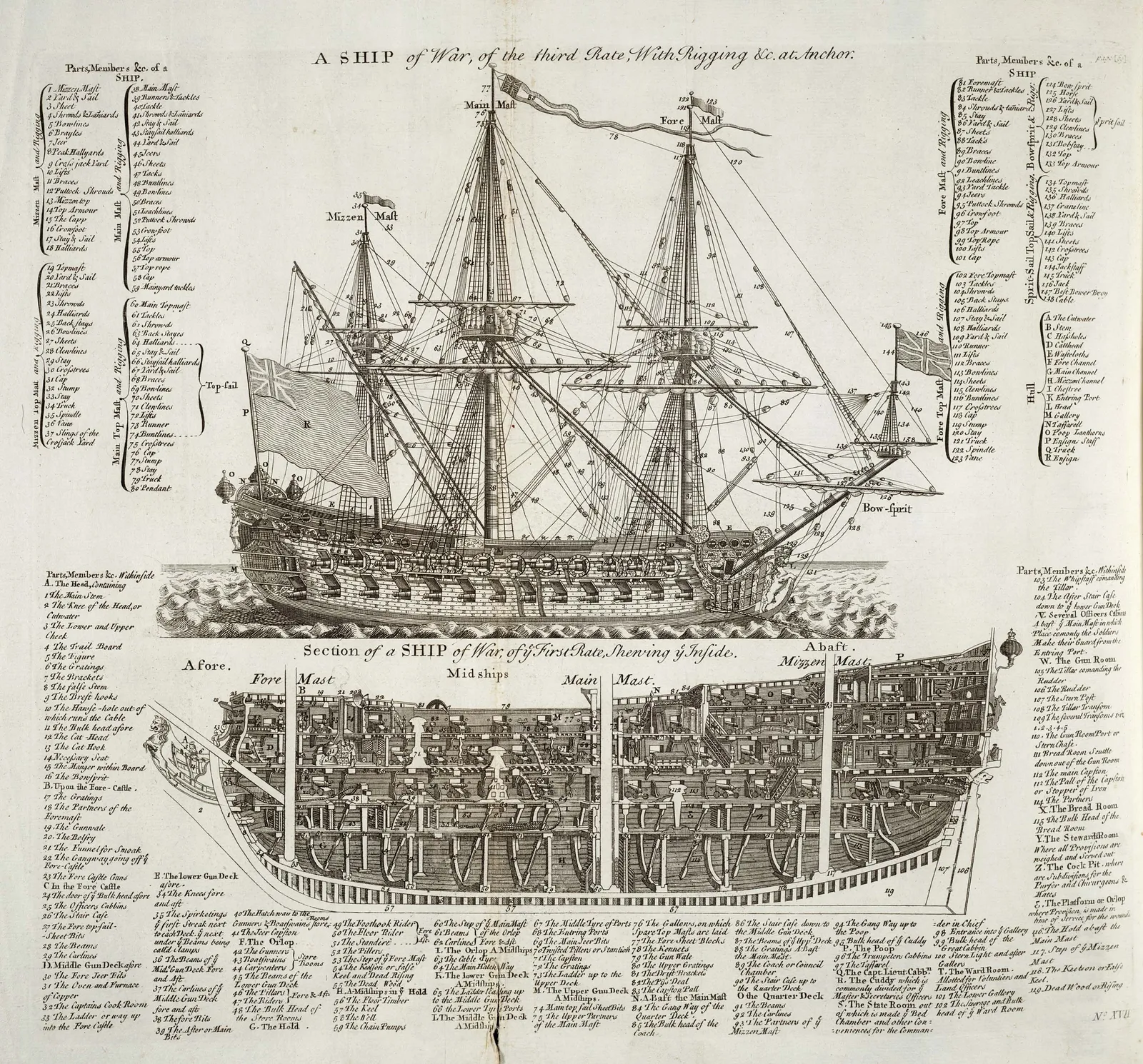
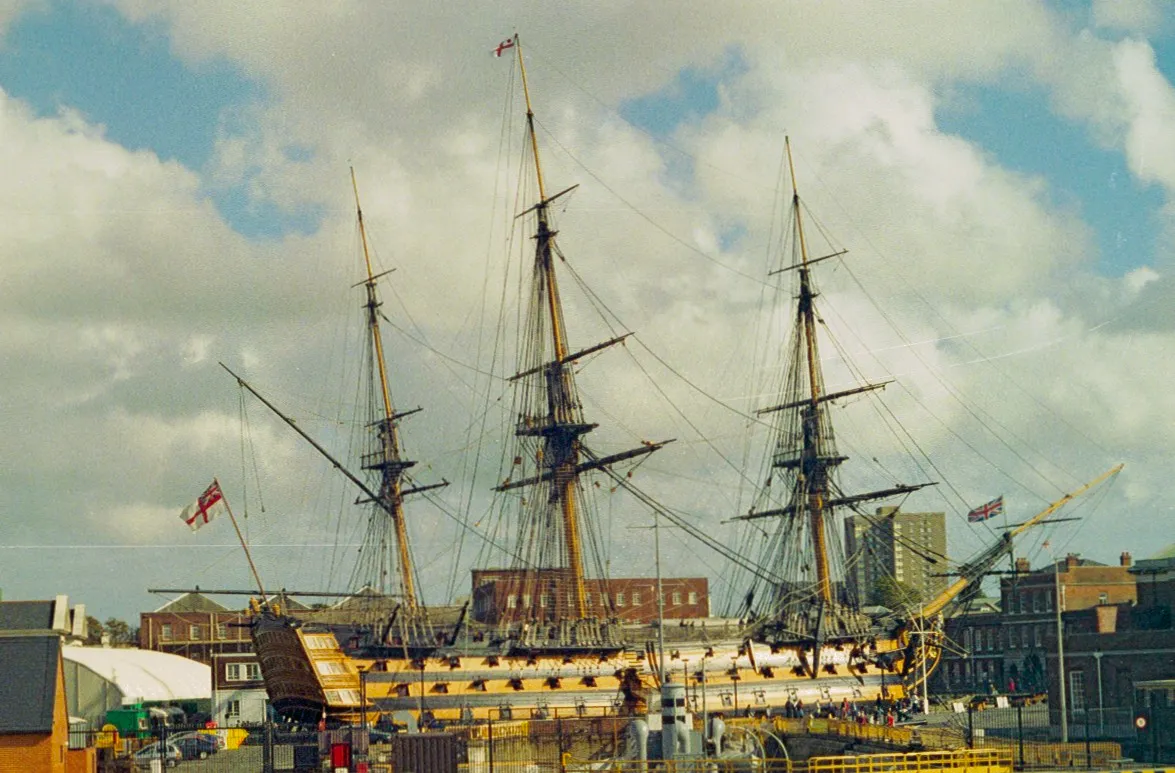
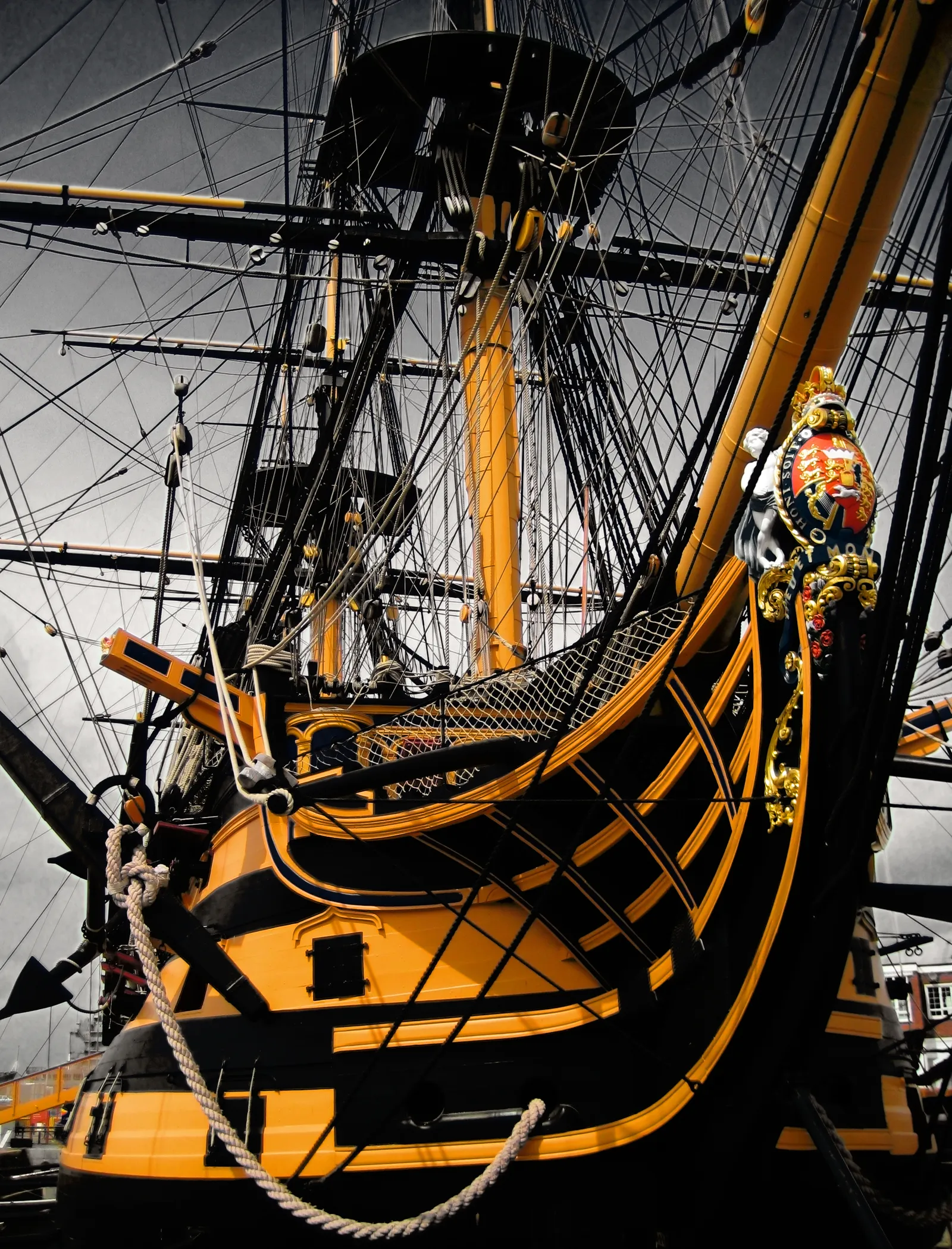
A ship of the line was the age-of-sail capital warship built to stand in a fleet battle line, keep heavy broadside batteries bearing, and survive close-range cannon fire from opposing capital ships. British rating practice put first-, second-, and third-rate ships at the center of this role, while HMS Victory remains the best-documented surviving example through her service from the War of American Independence to Trafalgar.
Role in Conflicts
Battle-Line Design Logic
Ships of the line traded speed, cost, and crew burden for the ability to fight as durable fleet units. The rating system placed the largest ships near the center of a battle line as flagships, while 74-gun third-rates became the everyday battle-fleet compromise.
Line role
The type was built around broadside fire in column formations, where friendly ships could keep firing without masking one another.
Fleet hierarchy
First-rates carried at least 100 heavy cannon and about 850 crew; third-rate 74s carried about 650 crew and formed the numerical core.
Close-range punch
By Trafalgar, Victory's upper works included 68-pounder carronades, a short-range weapon class valued for heavy close-range broadsides.
Sources: Ship of the line; HMS Victory; Rated Navy ships in the 17th to 19th centuries; The 74-the Perfect Age-of-Sail Ship; Carronades: The Smashers.
Profile / Specs
Profile
- Origin
- Great Britain
- Built by
- Chatham Dockyard
- Built in
- Kingdom of Great Britain
- Type
- Line-of-battle sailing warship
- Service note
- Mid-17th to mid-19th century
- Designed
- c. 1650
Specifications
- Role
- Fleet capital ship in line-of-battle warfare
- Hull
- Wooden sailing warship
- Tactics
- Line-ahead formations kept each ship's broadside available while reducing obstruction between friendly ships
- Rating span
- British first-, second-, and third-rate ships formed the normal line-of-battle core
- Firepower
- Broadside batteries; first-rates carried at least 100 heavy cannon, while the common third-rate 74 balanced cost, firepower, and sailing performance
- Rigging
- HMS Victory carried 27 miles of rigging
- Sail area
- HMS Victory carried four acres of sail
- Crew
- Royal Museums Greenwich gives about 850 crew for a first-rate and about 650 for a 74-gun third-rate; HMS Victory carried over 800 officers and crew at Trafalgar
- Example armament
- At Trafalgar, HMS Victory combined lower-deck long guns with 68-pounder carronades on the forecastle
- Service window
- The type dominated major fleet warfare from the mid-17th century into the mid-19th century
Variants
The Royal Navy rate system grouped ships by gun count and battlefield function; the rows below describe ship-of-the-line categories rather than separate catalog records.
| Variant | Configuration | Designation notes |
|---|---|---|
| First-rate ship of the line | Three-deck flagship | Royal Museums Greenwich describes first-rates as the fleet's largest line-of-battle ships, with at least 100 heavy cannon, about 850 crew, and frequent use as flagships. |
| Second-rate ship of the line | Three-deck line-of-battle ship | Second-rates were smaller three-deckers of about 90 to 98 guns and roughly 750 crew, often used as overseas flagships. |
| Third-rate 74-gun ship | Two-deck battle-fleet core | Royal Museums Greenwich calls the 74-gun third-rate an effective compromise of economy, fighting power, and sailing performance; USNI describes the 74 as the backbone of late-18th-century major navies. Sources: Rated Navy ships in the 17th to 19th centuries, The 74-the Perfect Age-of-Sail Ship |
| Fourth-rate ship | Former or marginal line ship | Royal Museums Greenwich notes that 50- to 60-gun fourth-rates were no longer fit for the main line of battle by the end of the 18th century, but remained useful for convoy, troopship, headquarters, and minor-station roles. |
Timeline
Ship of the line Key Events
Line-of-battle warfare takes shape
Britannica describes ship-of-the-line warfare as a British and Dutch development of the mid-17th century that organized fleets for broadside exchanges in column.
Sources: Ship of the line
Royal Navy adoption of the 74-gun type accelerates
USNI describes George Anson's push after 1751 to build the Royal Navy's fleet around 74-gun ships, which became the common two-deck backbone of later line-of-battle fleets.
Sources: The 74-the Perfect Age-of-Sail Ship
HMS Victory is built at Chatham Dockyard
Royal Museums Greenwich says Victory's building began in 1759 at Chatham Dockyard under Sir Thomas Slade, with more than 2,000 oak trees used in the hull.
Sources: HMS Victory
Victory is launched
Royal Museums Greenwich records Victory's launch on 7 May 1765 and notes that she later entered active service in 1778.
Sources: HMS Victory
Victory enters active service
Royal Museums Greenwich says Victory was commissioned for active service in March 1778, when the ship's 104-gun battery and heavy sail plan were put to work.
Sources: HMS Victory
Victory serves at Trafalgar
Royal Museums Greenwich and Royal Navy Museums describe Victory as Nelson's flagship at Trafalgar, where the 104-gun first-rate carried more than 800 officers and crew; USNI notes that her forecastle carronades fired into Bucentaure during the battle.
Sources: The Battle of Trafalgar: a timeline, HMS Victory | Royal Navy Museums, Carronades: The Smashers
Victory becomes a permanent harbour ship
Royal Museums Greenwich says Victory lay permanently at anchor in Portsmouth harbour from 1823, which helped ensure the ship's survival.
Sources: HMS Victory
Victory opens to the public
Royal Museums Greenwich says Victory was moved to drydock, restored, and opened to the public by King George V on 17 July 1928.
Sources: HMS Victory
Media
Ship of the line Videos
Related Weapon Systems


Sources
Ship of the linePublisher: Britannica | Note: Supports the ship-of-the-line definition, line-of-battle role, broadside tactics, mid-17th to mid-19th century service window, and typical ship characteristics. | Accessed: 2026-07-04HMS VictoryPublisher: Royal Museums Greenwich | Note: Supports HMS Victory's Chatham Dockyard build background, 1759 construction start, 1765 launch, 1778 commissioning for the War of American Independence, 104-gun fit, 27 miles of rigging, four acres of sail, 1790s Mediterranean operations, Trafalgar service, 1823 anchorage, and 1928 public-opening context. Also supports 2015 Various Conflicts holding-bucket context by documenting historical use while the catalog does not create pre-1995-only conflict pages. | Accessed: 2026-07-04The Battle of Trafalgar: a timelinePublisher: Royal Museums Greenwich | Note: Supports HMS Victory's direct Battle of Trafalgar use, including the British approach in two lines, Victory passing under Bucentaure's stern and firing a broadside, and Nelson's division splitting the opposing line. Also supports 2015 Various Conflicts holding-bucket context because the direct use is pre-1995. | Accessed: 2026-07-04Rated Navy ships in the 17th to 19th centuriesPublisher: Royal Museums Greenwich | Note: Supports the Royal Navy rate-class context, first-rate, second-rate, third-rate, and fourth-rate gun-count and crew distinctions, and the 74-gun third-rate's place as the common battle-fleet compromise. | Accessed: 2026-07-04The 74-the Perfect Age-of-Sail ShipPublisher: U.S. Naval Institute | Note: Supports 74-gun ship-of-the-line context, the balance of firepower, sailing qualities, and economy, the Royal Navy's adoption of the 74, and complement, sail, rigging, logistics, and fleet-backbone claims. | Accessed: 2026-07-04Carronades: The SmashersPublisher: U.S. Naval Institute | Note: Supports carronade design context, the Royal Navy's close-range use of carronades, and HMS Victory's 68-pounder carronades firing into Bucentaure at Trafalgar. Also supports 2015 Various Conflicts holding-bucket context because the direct use is pre-1995. | Accessed: 2026-07-04HMS Victory | Royal Navy MuseumsPublisher: Royal Navy Museums | Note: Supports Victory's role as Nelson's Trafalgar flagship, 104-gun context, and the over-800-crew context aboard a first-rate ship of the line. Supports 2015 Various Conflicts direct-use context by documenting HMS Victory used by Nelson's fleet at Trafalgar, while the catalog keeps pre-1995-only conflict use in the holding bucket. | Accessed: 2026-07-04Thomas Luny - A Ship of the Line off Plymouth - 1896 2 2.pngPublisher: Wikimedia Commons | Note: Supports image provenance and public-domain context for the primary ship-of-the-line painting. | Accessed: 2026-07-04Ship of the Line (74) Downs.jpgPublisher: Wikimedia Commons | Note: Supports image provenance and public-domain context for the primary ship-of-the-line artwork. | Accessed: 2026-07-04Warship diagram orig.jpgPublisher: Wikimedia Commons | Note: Supports image provenance and public-domain context for the 1728 warship diagram showing a third-rate ship of war and a section of a first-rate ship of war. | Accessed: 2026-07-04HMS Victory 104-gun first-rate ship of the line 3,500 tons, Royal Navy. (11632271795).jpgPublisher: Wikimedia Commons | Note: Supports image provenance and Creative Commons context for the broadside HMS Victory photograph. | Accessed: 2026-07-04HMS Victory - bow.jpgPublisher: Wikimedia Commons | Note: Supports image provenance and Creative Commons context for the bow-view HMS Victory photograph. | Accessed: 2026-07-04