Naval Systems

114 mm Vickers Mark 8

Also known as
  • 4.5-inch Mark 8 naval gun
  • 4.5 in Mk 8 naval gun
  • QF 4.5-inch Mark 8
  • 114 mm Mk 8 naval gun
  • 113 mm Mark 8 naval gun
  • Vickers Mk 8
  • Mark 8 Mod 0
  • Mark 8 Mod 1

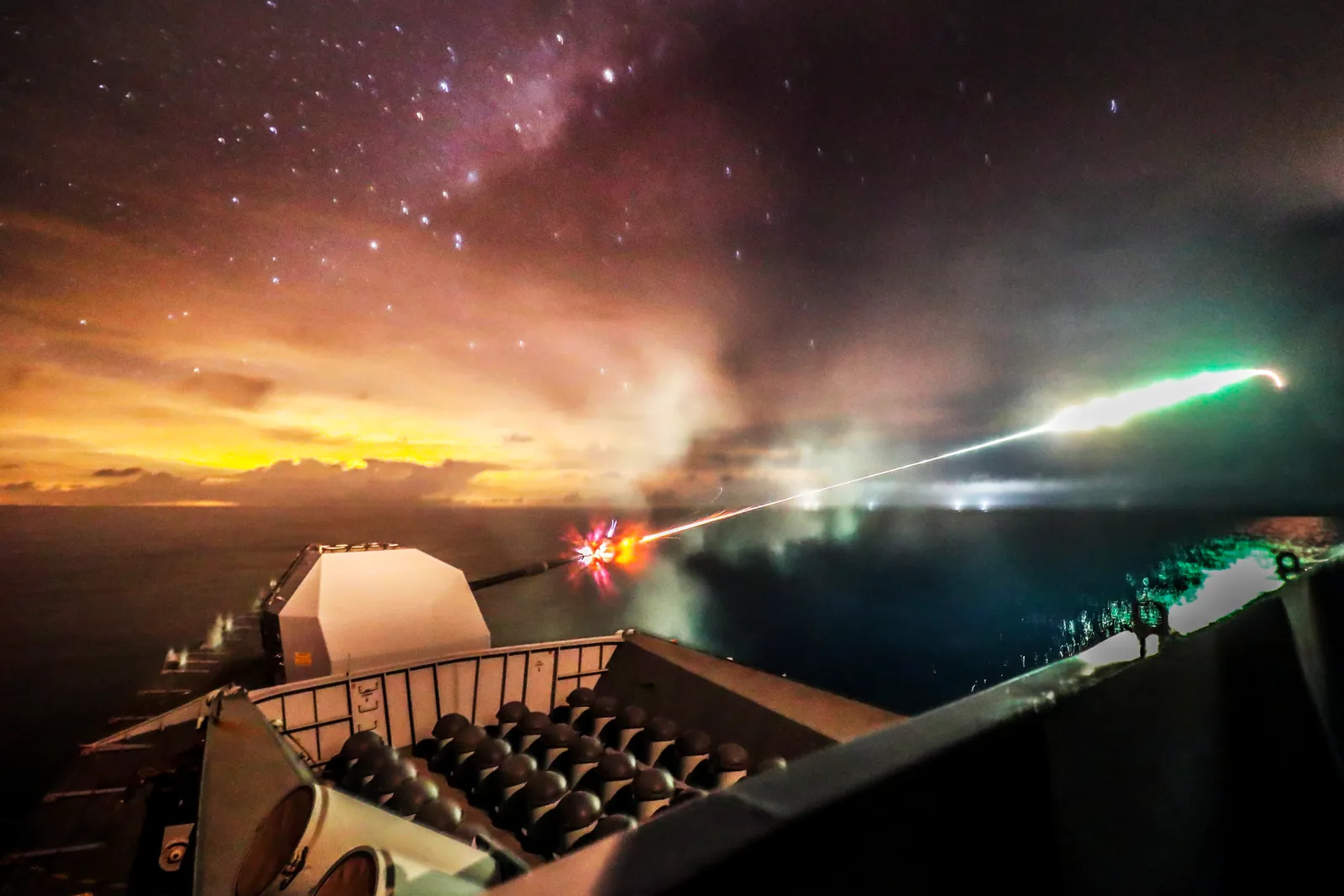
The 114 mm Vickers Mark 8 is the Royal Navy's post-1970s single-barrel 4.5-inch naval gun, replacing the heavier Mark 6 twin mounting with a 55-calibre automatic system for surface fire, naval gunfire support, and limited air or force-protection roles. It served on Type 21, Type 22, Type 23, Type 42, Type 45, and export warships, with Falklands War use followed by later Mod 1 low-observable gunhouse upgrades and 2011 Libya combat firings by Royal Navy ships.

Role in Conflicts

Side
United Kingdom

Royal Navy frigates and destroyers used Mark 8 4.5-inch guns during the Falklands campaign for naval gunfire support; HMS Arrow's Mark 8 is specifically documented in shore-support fire, and HMS Alacrity used her 4.5-inch gun to sink ARA Isla de los Estados.

Profile / Specs

Profile

Origin
United Kingdom
Type
Single-barrel dual-purpose naval gun
Service note
Cold War to modern Royal Navy service
Designer
Royal Armament Research and Development Establishment; Royal Ordnance for Mod 1 upgrade
Designed
About 1965 for Mod 0; 1995-1998 for Mod 1
Produced
1966-2000s

Specifications

Caliber
4.5 in nominal; 114 mm / 55-calibre class
Mounting
Single-barrel automatic naval gun turret
Entered Service
1971 for Mod 0; 2001 for Mod 1
Rate Of Fire
20-26 rounds per minute
Range
22 km with regular ammunition; 27.5 km with extended-range ammunition
Anti-Aircraft Ceiling
About 6 km
Muzzle Velocity
869 m/s
Barrel Length
6.22 m
Recoil
0.38 m
Ammunition Feed
Automatic loader with 16 shells in feed carousel
Crew
4
Traverse
-150 to +150 degrees; Mod 0 listed at 42 degrees per second
Elevation
-10 to +55 degrees; Mod 0 listed at 38 degrees per second
Fire Control
Sea Archer 30 / GSA 8 electro-optical fire-control system
Mount Weight
26.8 t empty for Mod 0; 23 t empty for Mod 1
Ship Classes And Service Context

The Mark 8 was designed for a smaller single-gun fit than the preceding Mark 6 twin turret. In Royal Navy service it equipped Type 21 frigates, later Type 22 and Type 23 frigates, Type 42 destroyers, the Type 82 destroyer HMS Bristol, and Type 45 destroyers; exported British ships also carried the mounting in foreign service.

Current Royal Navy context

DE&S identified the Mk 8 as arming Type 23 frigates and Type 45 destroyers during the 2018 life-extension firing trials.

Ammunition and handling

WeaponSystems.net lists fixed 114 mm 55-calibre ammunition, automatic loading, a 16-round feed carousel, and a four-person operating crew.

Replacement path

The Mark 8 remains tied to existing British escorts, while newer UK frigates are associated with the 127 mm Mark 45 gun rather than another 4.5-inch generation.
Variants

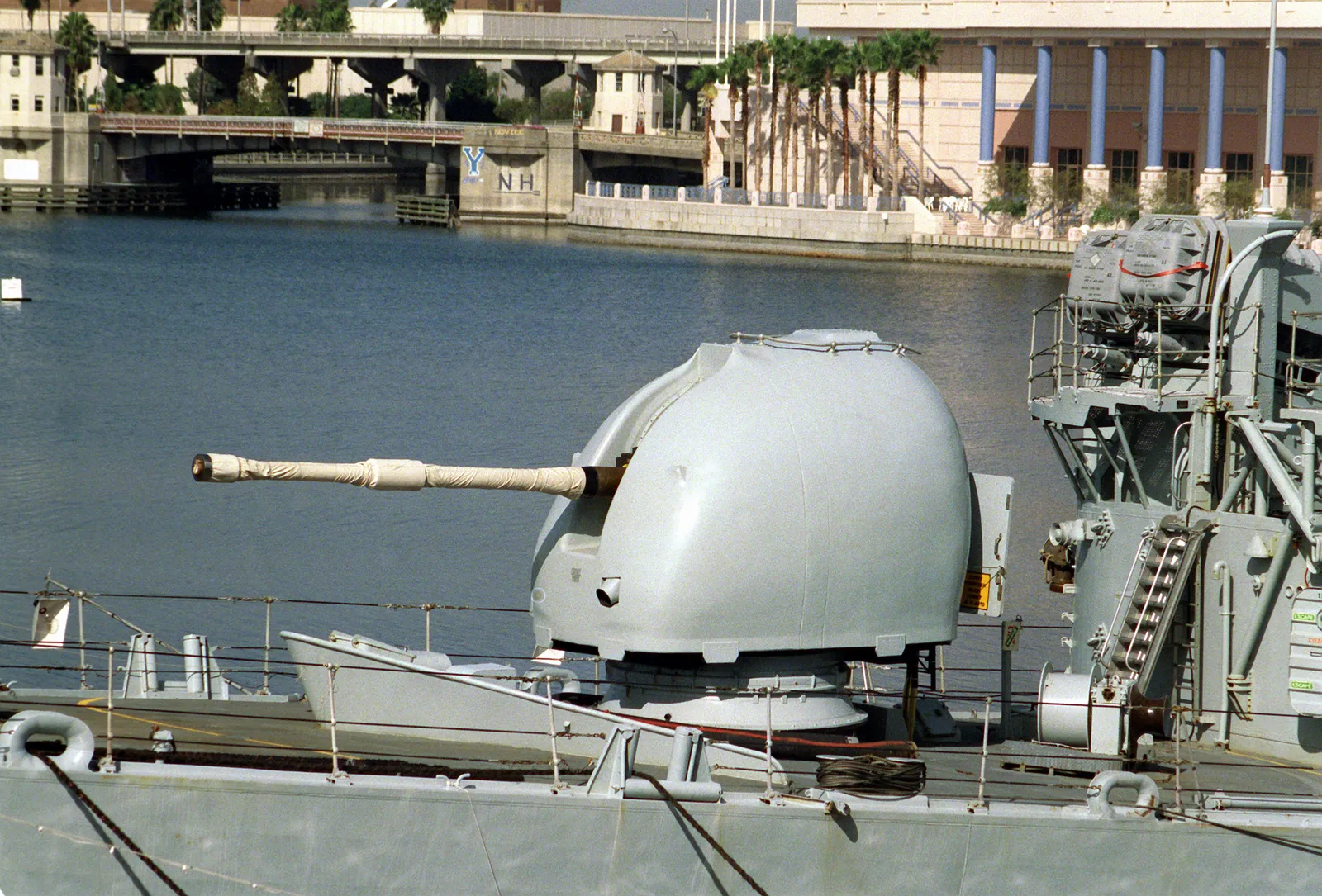
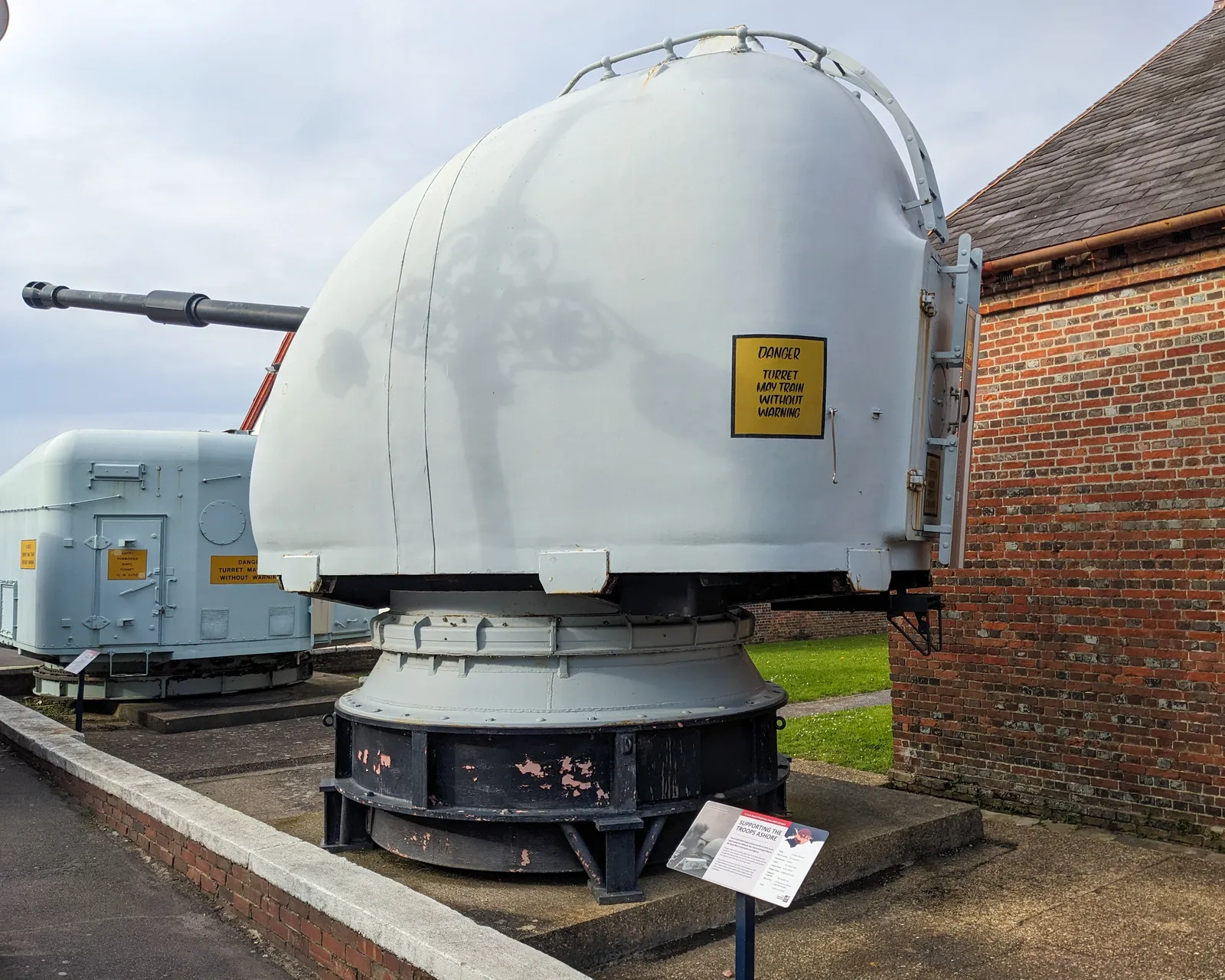
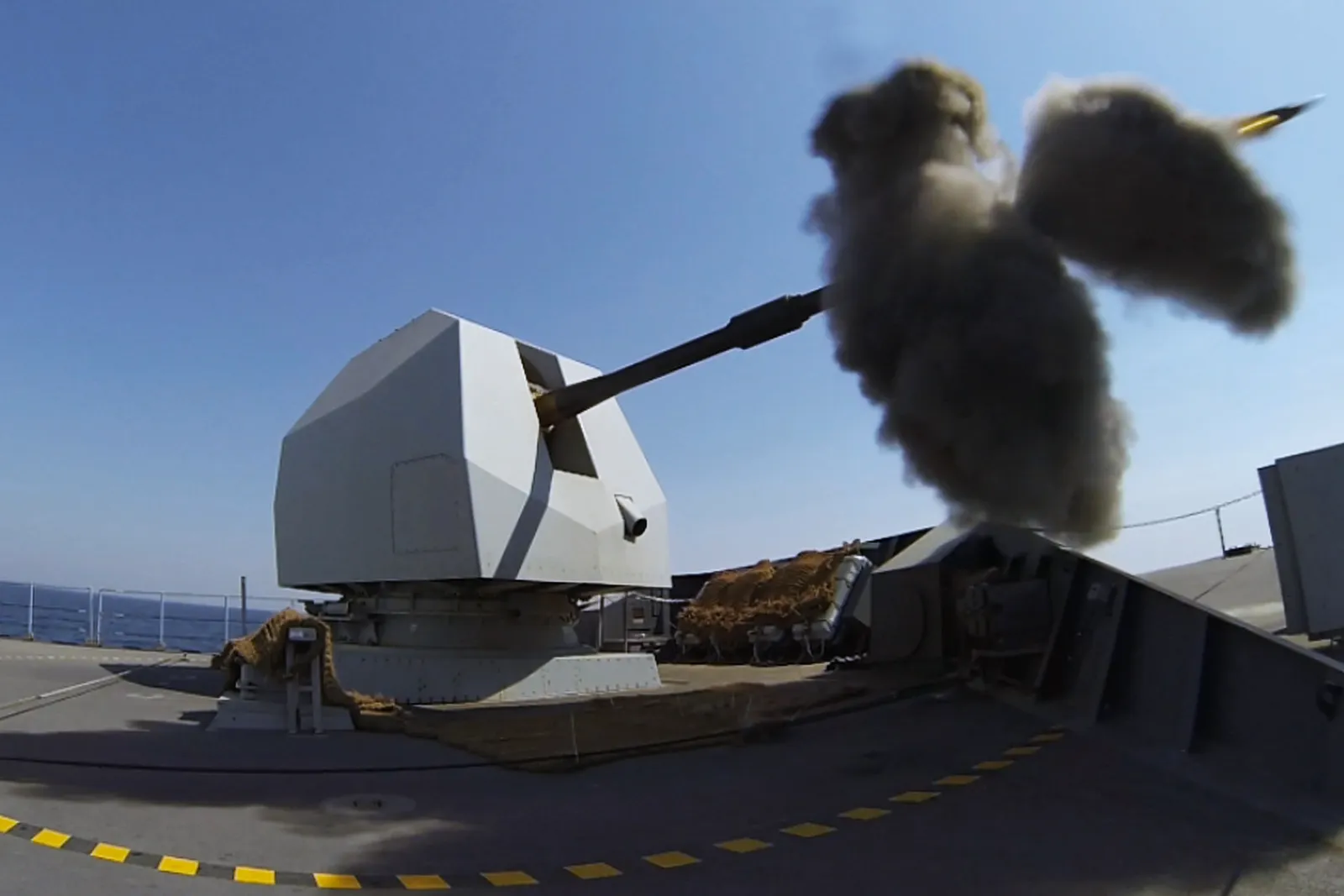
The Mark 8 family is commonly divided between the original round-housed Mod 0 mounting and the later Mod 1 upgrade with a faceted, lower-radar-cross-section gunhouse and revised electric systems.

VariantConfigurationDesignation notes
Mark 8 Mod 0Original production mounting

The initial 4.5-inch/55 single-gun mounting entered service in the early 1970s with the round gunhouse used on older Royal Navy and export ships.

Sources: WeaponSystems.net 114mm Vickers Mark 8

Mark 8 Mod 1Low-observable upgraded mounting

The Mod 1 introduced an angular gunhouse intended to reduce radar signature, revised electrical systems, and lower empty mounting weight.

Sources: WeaponSystems.net 114mm Vickers Mark 8, DE&S Mark 8 Gun Trials

Related Naval Guns

The Mark 8 sits between the older British 4.5-inch Mark 6 family and the 5-inch Mark 45 selected for later Royal Navy frigates.

Compatible itemItem typeCompatibility evidence
114 mm Vickers Mark 6, Dual-purpose naval gun turret, Naval Systems114 mm Vickers Mark 6Predecessor 4.5-inch naval gun

The Mark 8 succeeded the larger twin 114 mm Mark 6 mounting with a simpler single-barrel 55-calibre system.

Sources: WeaponSystems.net 114mm Vickers Mark 8

Mark 45 5-inch naval gun, Naval gun, ArtilleryMark 45 5-inch naval gunSuccessor medium-calibre naval gun

WeaponSystems.net notes that the latest UK frigates move away from the Mark 8 to the U.S. 127 mm Mark 45 gun.

Sources: WeaponSystems.net 114mm Vickers Mark 8

Timeline

114 mm Vickers Mark 8 Key Events

  1. Mod 0 development period

    WeaponSystems.net places Mark 8 Mod 0 development around 1965, before production from 1966.

    Sources: WeaponSystems.net 114mm Vickers Mark 8

  2. Initial service entry

    The Mark 8 Mod 0 entered service in 1971 according to WeaponSystems.net.

    Sources: WeaponSystems.net 114mm Vickers Mark 8

  3. Falklands War gunfire use

    Mark 8 4.5-inch guns were used for Royal Navy naval gunfire support and surface engagements during the Falklands War.

    Sources: Paget Falklands Naval Gunfire Support, BritishEmpire ARA Isla de los Estados

  4. Mod 1 service entry

    WeaponSystems.net records the Mod 1 variant entering service in 2001 after a 1995-1998 development period.

    Sources: WeaponSystems.net 114mm Vickers Mark 8

  5. Operation Telic firing

    A UK MOD disposal report records HMS Chatham firing about 60 rounds from her 4.5-inch gun during Operation Telic.

    Sources: UK MOD Type 22 Recycling Report, SeaForces Type 22 Class

  6. Libya combat firing

    GOV.UK accounts document HMS Liverpool and HMS Iron Duke firing 4.5-inch guns during operations off Libya in 2011.

    Sources: GOV.UK HMS Liverpool Shore Battery, GOV.UK HMS Liverpool Boats, GOV.UK HMS Iron Duke Libya

  7. Life-extension test firings

    DE&S reported shore-based Mark 8 firings at MOD Eskmeals under a Babcock support contract intended to sustain Royal Navy service.

    Sources: DE&S Mark 8 Gun Trials

Media
Related Weapon Systems
114 mm Vickers Mark 6, Dual-purpose naval gun turret, Naval SystemsNaval Systems114 mm Vickers Mark 6Dual-purpose naval gun turretThe 114 mm Vickers Mark 6 was the postwar designation for the QF 4.5-inch Mark V gun carried in the Mark VI twin mounting, a British dual-purpose naval turret built around high-angle fire, remote power control, and rapid surface, air, and shore engagement. It entered service in 1947, equipped British and Commonwealth destroyers and frigates, and remained relevant in the 1982 Falklands War as Royal Navy escorts used 4.5-inch naval gunfire for shore support and surface engagements.

Sources