- Side
- United Kingdom

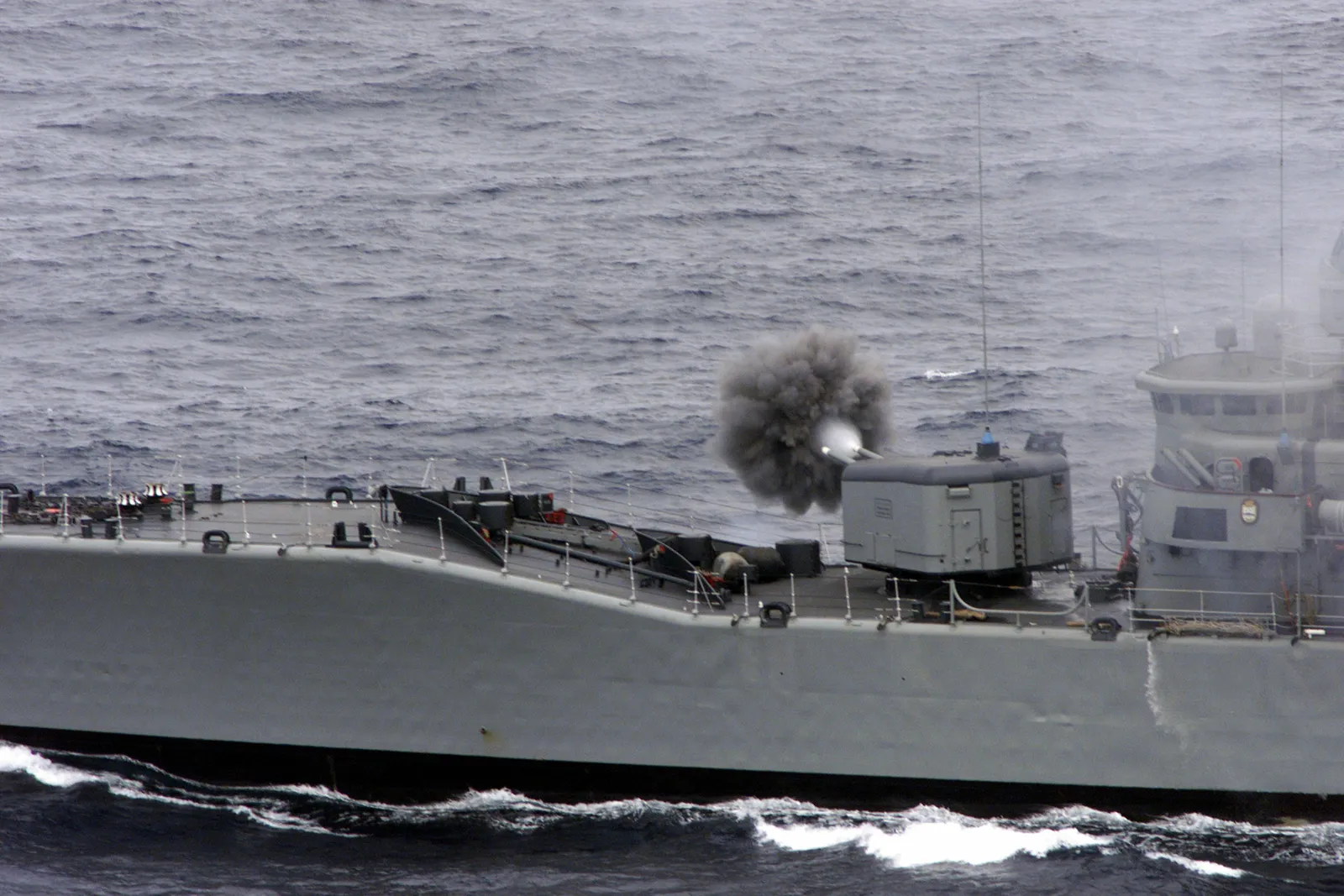
Royal Navy HMS Plymouth carried the Mark 6-era 4.5-inch gun family during the Falklands campaign and used 4.5-inch naval gunfire in shore-support missions, including the Fox Bay mission and broader operations ashore.
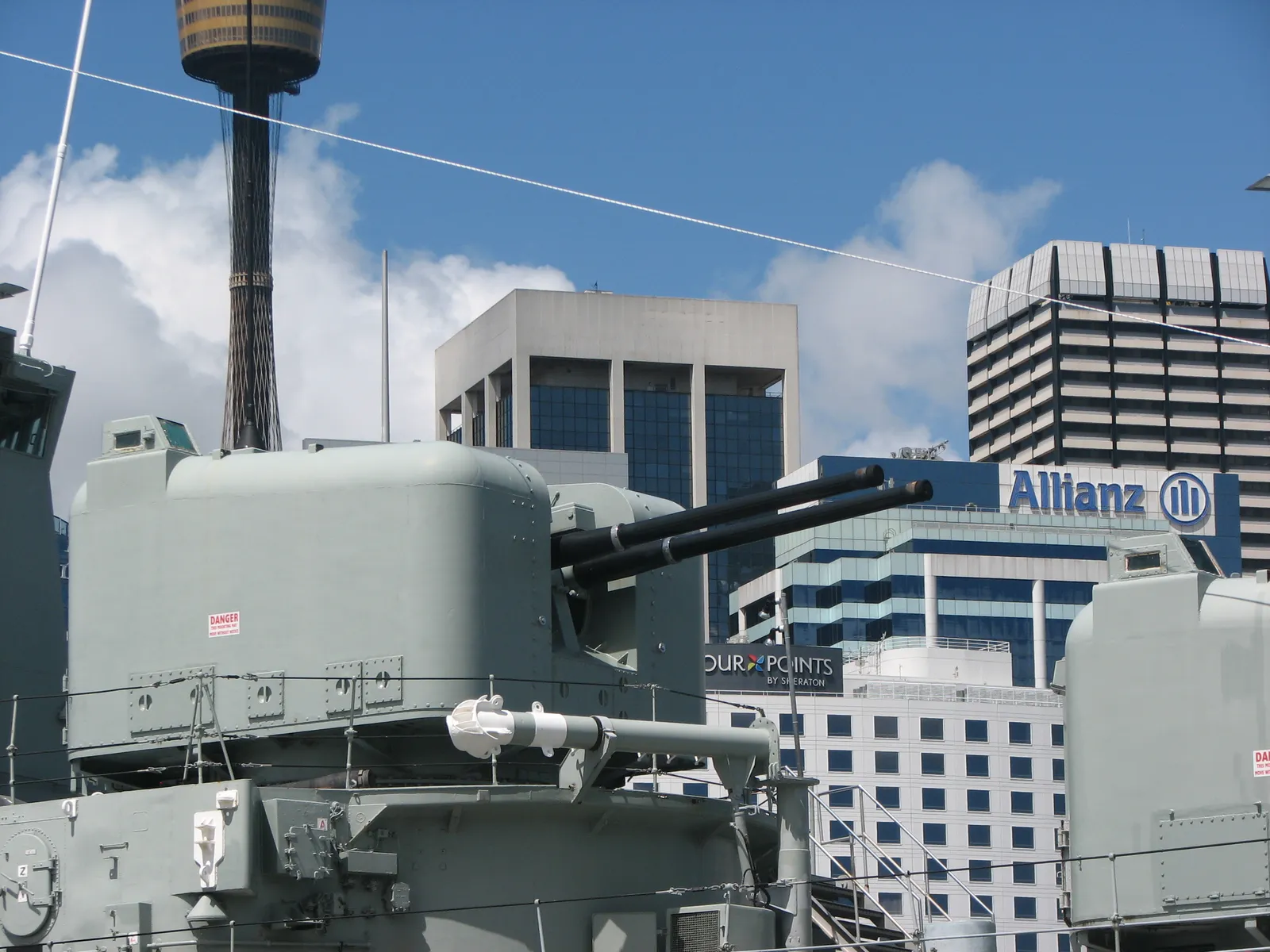
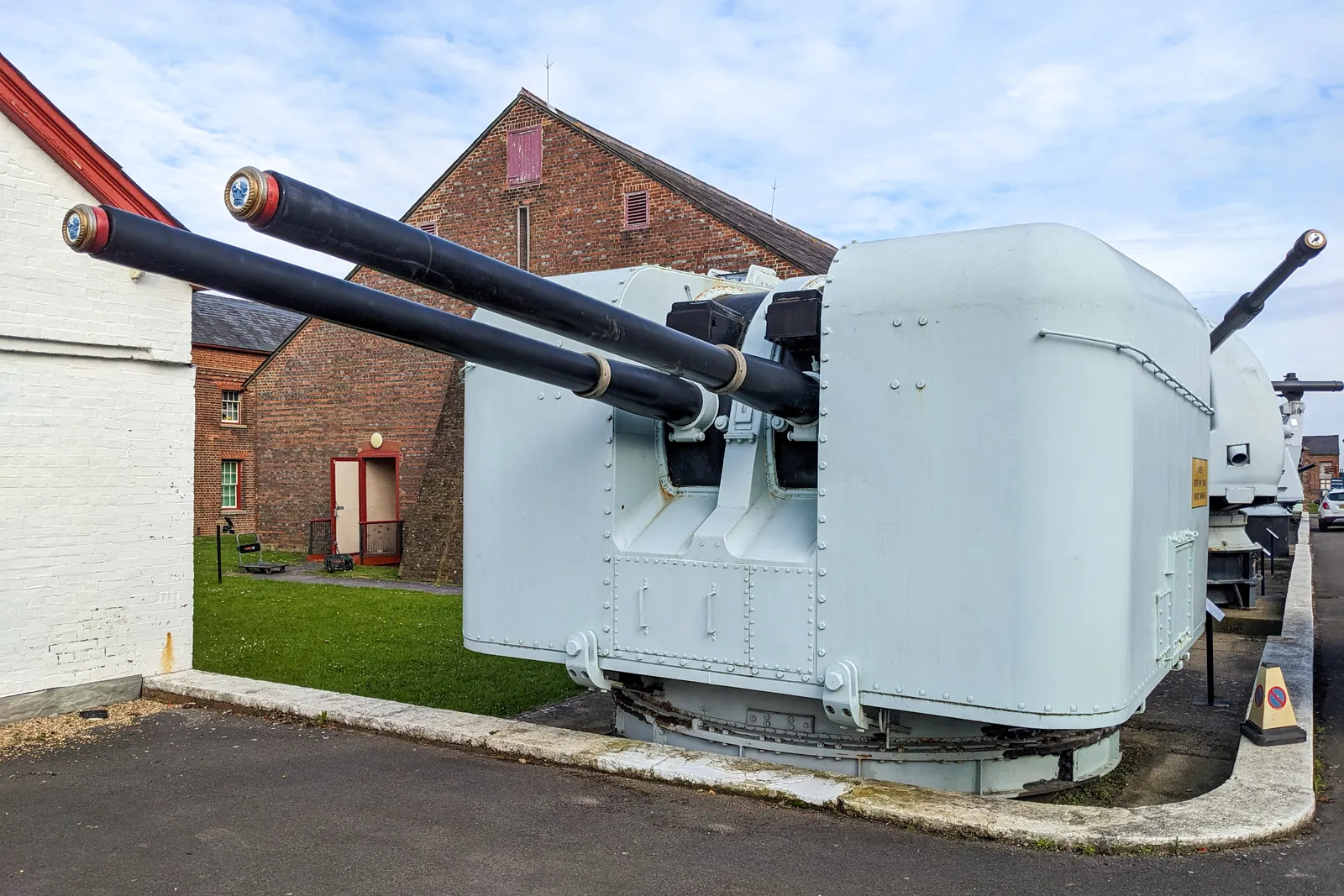
The 114 mm Vickers Mark 6 was the postwar designation for the QF 4.5-inch Mark V gun carried in the Mark VI twin mounting, a British dual-purpose naval turret built around high-angle fire, remote power control, and rapid surface, air, and shore engagement. It entered service in 1947, equipped British and Commonwealth destroyers and frigates, and remained relevant in the 1982 Falklands War as Royal Navy escorts used 4.5-inch naval gunfire for shore support and surface engagements.
Royal Navy HMS Plymouth carried the Mark 6-era 4.5-inch gun family during the Falklands campaign and used 4.5-inch naval gunfire in shore-support missions, including the Fox Bay mission and broader operations ashore.
The Mark 6 designation belongs to a gun-and-mount combination rather than a single-ship weapon. NavWeaps lists the QF Mark V gun in RP 41 Mark VI twin mountings on British Daring, County, Leander, Whitby, Rothesay, Leopard, and Salisbury classes, with Australian River and Daring classes and Dutch Van Speijk and Chilean Condell export fits.
Daring, County, Leander, Whitby, Rothesay, Leopard, and Salisbury classes.
Australian Modified Battle, Daring, and River destroyer escorts; Dutch Van Speijk frigates; Chilean Condell-class frigates.
The Australian National Maritime Museum describes HMAS Vampire as a Daring-class destroyer retaining three twin 4.5-inch Mark 6 gun mountings.
The 45-calibre 4.5-inch family ended with the Mark V gun / Mark 6 mounting and was replaced by the unrelated 55-calibre 114 mm Vickers Mark 8 generation.
Sources: NavWeaps 4.5-inch Mark V; Australian National Maritime Museum HMAS Vampire; WeaponSystems.net 114mm Vickers Mark 8.
British nomenclature shifted in the 1950s from gun marks to mounting-based designations, so the QF 4.5-inch Mark V gun in a Mark VI twin mounting became known as the 4.5-inch Mark 6 gun mounting.
| Variant | Configuration | Designation notes |
|---|---|---|
| QF 4.5-inch Mark V | Gun component | The 45-calibre gun used in the Mark VI twin mounting; designed for high elevation, remote power control, and higher firing rate than earlier destroyer weapons. Sources: NavWeaps 4.5-inch Mark V |
| RP 41 Mark VI | Twin turret mounting | The service twin mounting behind the Mark 6 designation, fitted to Daring, County, Leander, Whitby, Rothesay, Salisbury, Leopard, Australian River, Van Speijk, and Condell classes. Sources: NavWeaps 4.5-inch Mark V |
| RP 41 Mark VII | Unbuilt carrier mounting | A planned mounting for Malta-class aircraft carriers that would have used the same Mark V gun barrel as the Mark 6 mounting, but it was not produced. Sources: NavWeaps 4.5-inch Mark V |
NavWeaps lists 1944 as the design date for the QF 4.5-inch Mark V / Mark 6 family.
Sources: NavWeaps 4.5-inch Mark V
The gun entered service in 1947, initially on Australian Modified Battle-class destroyers before British Daring-class use.
Sources: NavWeaps 4.5-inch Mark V, WeaponSystems.net 114mm Vickers Mark 6
British nomenclature shifted from gun-based Roman-numeral marks to mounting-based Arabic-numeral designations, making the Mark V gun in Mark VI mounting the Mark 6 mounting.
Sources: NavWeaps 4.5-inch Mark V
Royal Navy escorts used 4.5-inch naval gunfire during the Falklands campaign; HMS Plymouth accounts record 909 4.5-inch shells fired, including naval gunfire support around Fox Bay.
Sources: RNWA HMS Plymouth Falklands account, Royal Marines History Fox Bay NGS, Paget Falklands Naval Gunfire Support