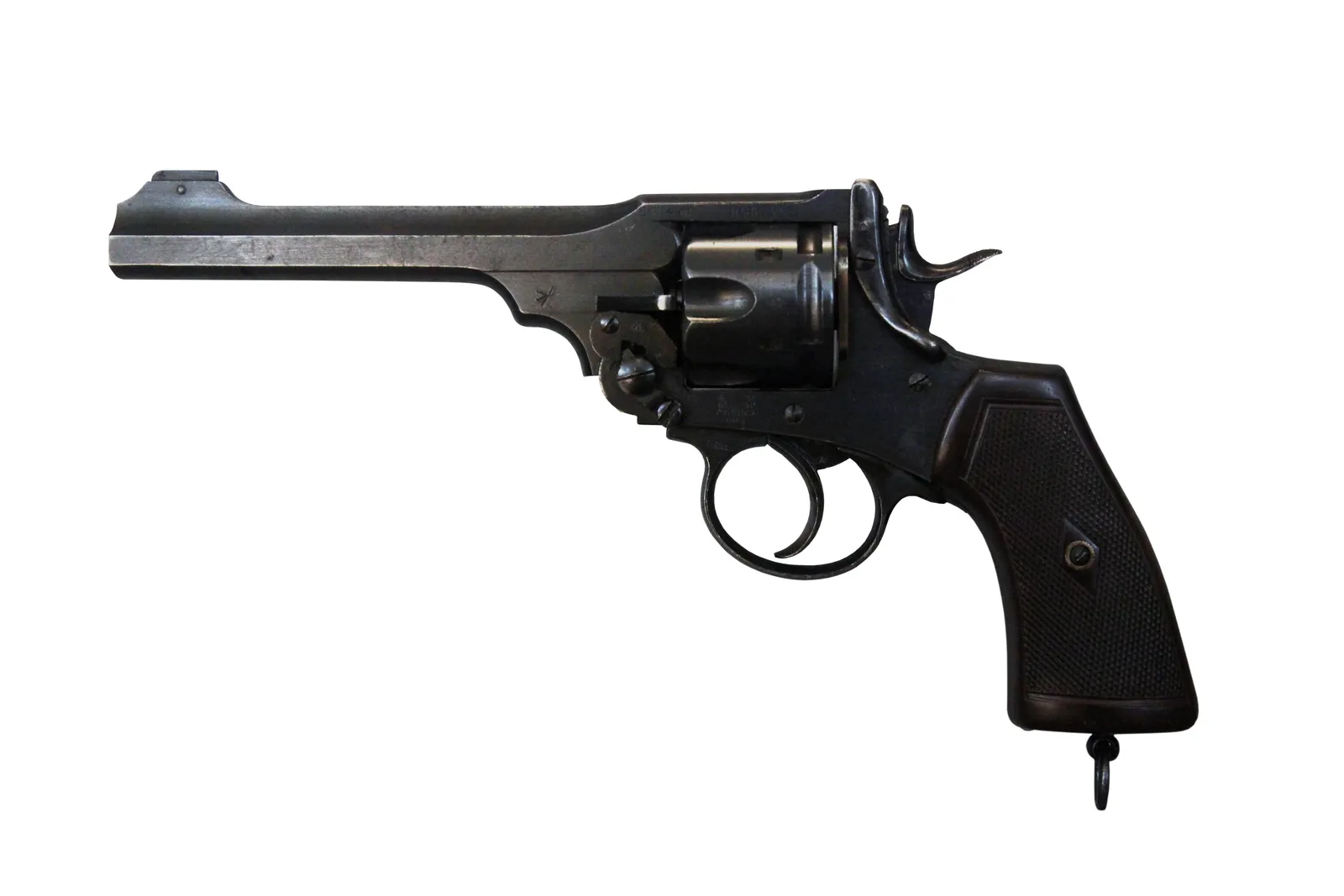
British and Commonwealth officers carried .455 Webley Mark IV, V, and VI revolvers during the First World War; Mk VI examples were also issued to machine-gun crews, tank crews, airmen, naval boarding parties, and trench-raiding troops.
Infantry Weapons
Webley Mk VI revolver
Also known as
- Webley Mark VI revolver
- Webley Mk. VI
- Webley .455 Mk VI
- Pistol, Revolver, Webley, No. 1 Mk VI
- Pistol, Revolver, No. 1 Mk VI
- Webley No. 1 Mk VI
- Webley .455 Mark 6
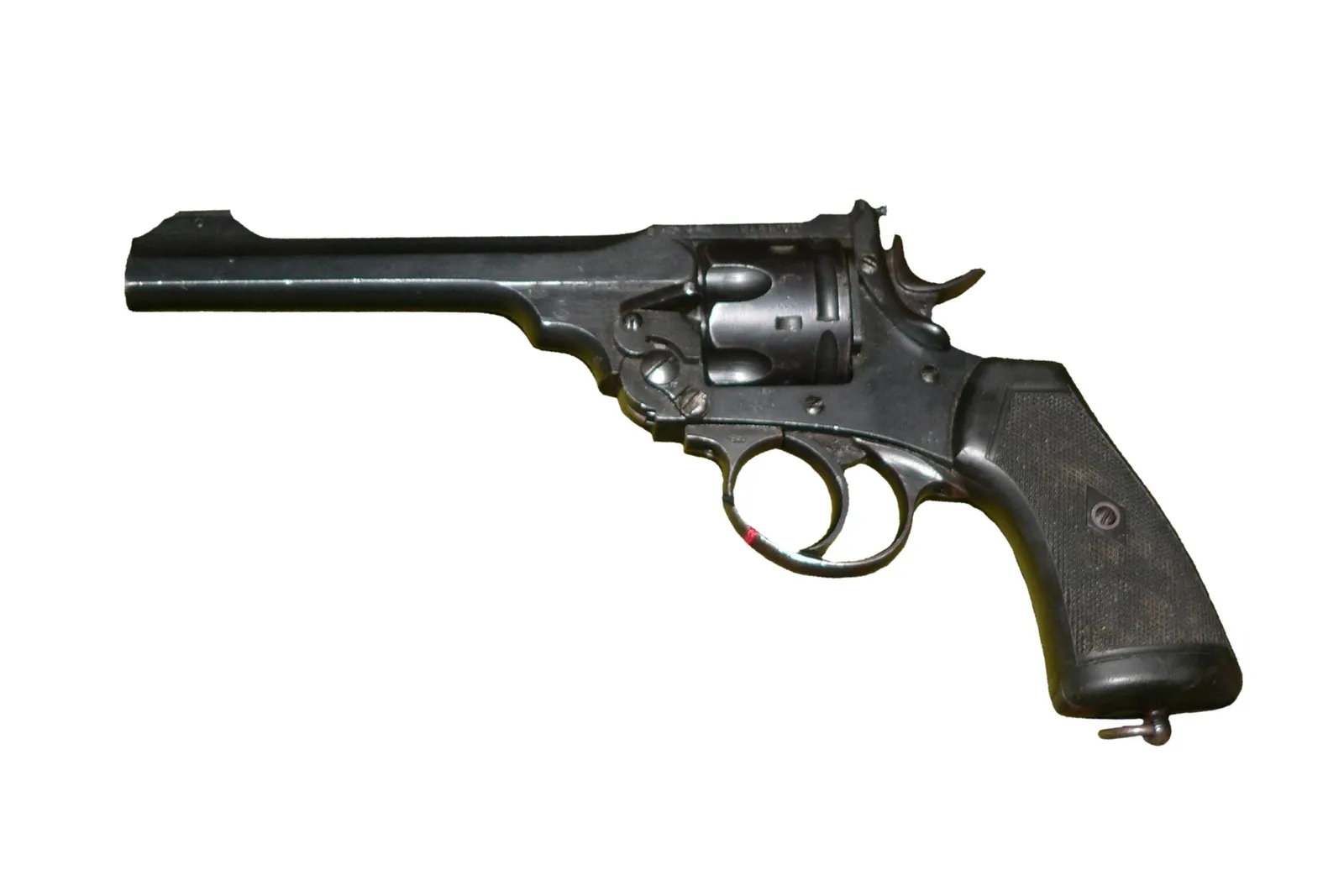
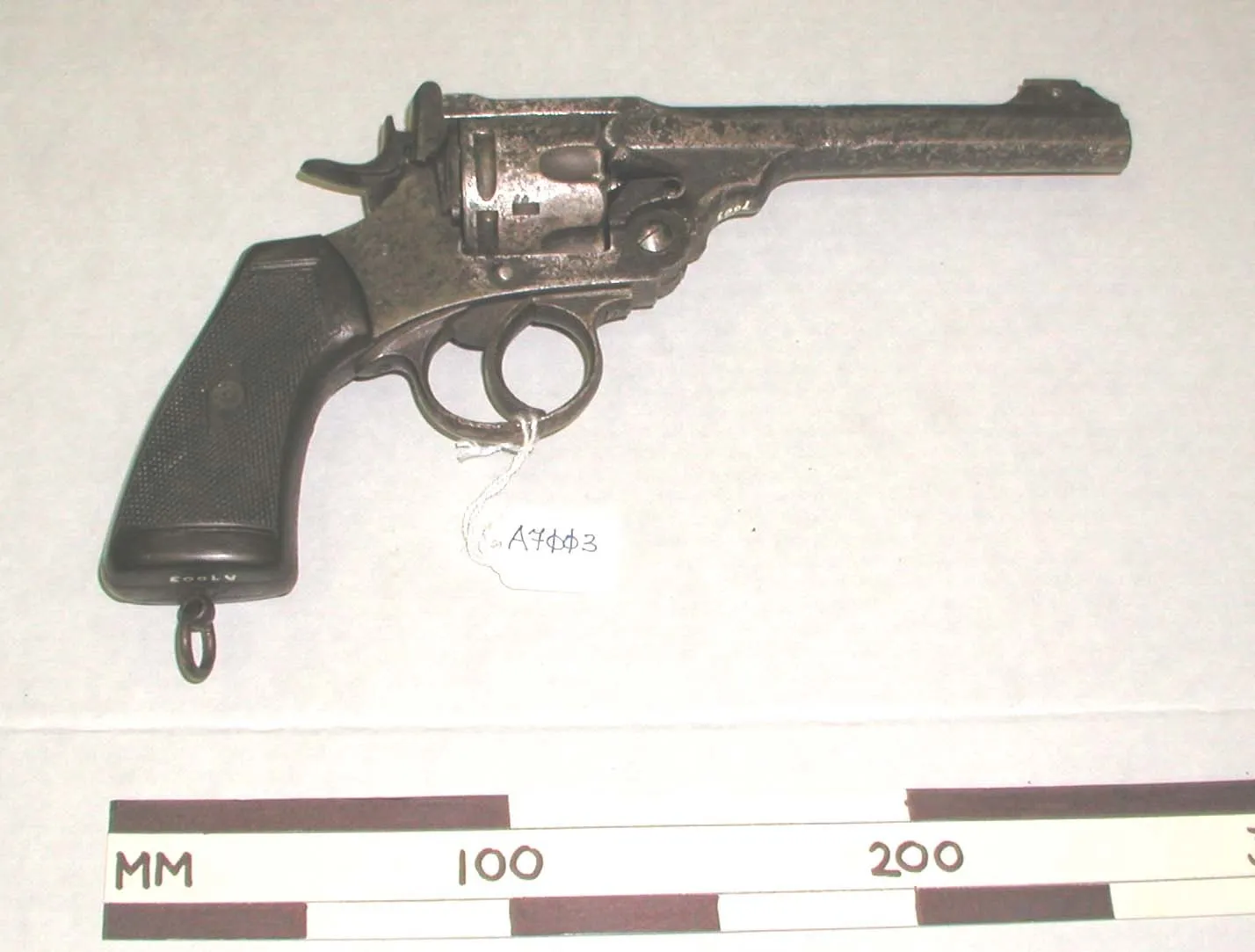
The Webley Mk VI was Britain's definitive .455 top-break service revolver of the later First World War: adopted in 1915, built by Webley & Scott before Enfield No. 1 Mk VI production, and carried by British and Commonwealth officers, crews, airmen, and raiding parties. Museum sources tie Mk VI examples to First World War service, while NRA Museums notes continuing British troop use through the Second World War.
Role in Conflicts
NRA Museums describes the rugged Mark VI as seeing action with British troops through the Second World War, including European, North African, Italian, and Pacific theaters.
Profile / Specs
Profile
- Origin
- United Kingdom
- Built by
- Webley & Scott
- Type
- Service revolver
- Service note
- First World War British service revolver adopted in 1915 and used through the interwar .455 service-revolver period
- Designer
- Webley & Scott
- Designed
- 1915 Mark VI pattern adopted by the British military
- Produced
- Webley & Scott manufacture to 1921; British official adoption from 1915 to 1923
- Number built
- 310,000 Mark VI revolvers reported by Webley & Scott for First World War production
Specifications
- Action
- Double-action top-break revolver
- Caliber
- 11.5 mm / .455 in
- Cartridge
- .455 Webley service-revolver cartridge
- Feed system
- 6-round cylinder
- Barrel length
- 6 in reported by Imperial War Museums
- Overall length
- 28.6 cm / 11.25 in reported by Royal Armouries
- Weight
- 1.1 kg / 2 lb 4 oz reported by Royal Armouries
- Muzzle velocity
- 190 m/s / 620 fps reported by Royal Armouries
Variants
The Mk VI was the late .455 service-revolver mark in Webley's top-break line; sources distinguish Webley & Scott wartime manufacture from later Enfield No. 1 Mk VI production.
| Variant | Configuration | Designation notes |
|---|---|---|
 | Earlier Webley service-revolver mark | NRA Museums describes the Mk IV as the 1899 Webley & Scott service-revolver mark that preceded the Mk V and wartime Mk VI in the .455 Webley line. |
| Webley Mk V revolver | Immediate predecessor | The Mk V was adopted on the eve of the First World War with a larger cylinder for smokeless-powder cartridges; Royal Armouries and NRA Museums place the Mk VI after this pattern. Sources: NRA Museums Webley Mk VI First World War, Royal Armouries Arms of the First World War |
| Pistol, Revolver, Webley, No. 1 Mk VI | Enfield production designation | NRA Museums says British government production began at the Royal Small Arms Factory, Enfield Lock, in 1921 and was externally identical apart from markings. |
Timeline
Webley Mk VI revolver Key Events
Mark VI adopted
Royal Armouries states that the British military officially adopted the Webley Mark VI revolver in 1915.
Sources: Royal Armouries Arms of the First World War
Tolkien's Somme-linked Mk VI
Imperial War Museums records a 1915 Webley Mark VI as the service weapon of J R R Tolkien, who served with the 11th Battalion Lancashire Fusiliers on the Somme before contracting trench fever.
Sources: IWM Tolkien Webley Mk VI
Webley and Scott manufacture period closes
Royal Armouries says Webley and Scott developed and manufactured the Webley top-break service revolvers until 1921.
Sources: Royal Armouries Arms of the First World War
Enfield No. 2 replacement
Imperial War Museums says the .455 Webley service revolvers were replaced by the Enfield No. 2 revolver in 1932.
Sources: IWM Webley .455 Mark 6 FIR 55
Media
Webley Mk VI revolver Videos
Webley Mk VI revolver Images
Related Weapon Systems


Sources
Royal Armouries Arms of the First World WarPublisher: Royal Armouries | Note: Supports First World War direct-use context through British Mark VI adoption in 1915, trench and Eastern Front performance, Prideaux speed-loader context for trench fighting, and Webley and Scott development and manufacture of the Mark VI until 1921. | Accessed: 2026-07-13IWM Webley .455 Mark 6 FIR 55Publisher: Imperial War Museums | Note: Supports Mark VI adoption in 1915, .455 Webley service-revolver lineage, replacement by the Enfield No. 2 in 1932, double-action hinged-frame extractor description, 6-inch barrel, .455 calibre, and First World War Western Front association. | Accessed: 2026-07-13National Army Museum Webley Mk VIPublisher: National Army Museum | Note: Supports a Webley and Scott Limited Mk VI revolver manufactured in 1916 and general First World War British officer carriage of .455 Webley revolvers. | Accessed: 2026-07-13National Army Museum 1918 Webley Mk VIPublisher: National Army Museum | Note: Supports First World War direct use: British and Commonwealth officers carried .455 Webley Mark IV, V, and VI variants during the First World War, with issue also to machine-gun crews, tank crews, airmen, naval boarding parties, and trench-raiding troops. | Accessed: 2026-07-13IWM Tolkien Webley Mk VIPublisher: Imperial War Museums | Note: Supports First World War direct use through a 1915 Webley Mark VI associated with J R R Tolkien, the Lancashire Fusiliers, the Somme, and British Army Western Front service. | Accessed: 2026-07-13NRA Museums Webley Mk VI First World WarPublisher: NRA National Firearms Museum | Note: Supports Mark VI adoption in 1915, primary British handgun service through 1932, Mk IV/Mk V/Mk VI designation context, Enfield No. 1 Mk VI production, .455 cartridge context, and British troop action in the First World War. | Accessed: 2026-07-13NRA Museums Webley Mk VI Second World WarPublisher: NRA National Firearms Museum | Note: Supports Second World War direct use: the source says the Mark VI saw action with British troops through the Second World War, including European, North African, Italian, and Pacific theaters. | Accessed: 2026-07-13Webley & Scott official historyPublisher: Webley & Scott | Note: Supports Webley & Scott lineage and the company's reported First World War production of 310,000 Mark VI revolvers. | Accessed: 2026-07-13Webley Mk VI white-background imagePublisher: Wikimedia Commons | Note: Supports the primary image; the file page identifies a Webley Mk VI revolver and lists Creative Commons license options. | Accessed: 2026-07-13Webley Mk VI p1030100 imagePublisher: Wikimedia Commons | Note: Supports an additional gallery image; the file page identifies a Webley & Scott Mk VI in .455 calibre and lists reusable Creative Commons/CeCILL licensing. | Accessed: 2026-07-13Auckland Museum Webley Mk VI imagePublisher: Wikimedia Commons / Auckland War Memorial Museum | Note: Supports an additional gallery image; the file page identifies a circa-1918 Webley Mk VI .455-inch six-chamber break-open revolver and lists Creative Commons Attribution 4.0 licensing. | Accessed: 2026-07-13