Infantry Weapons

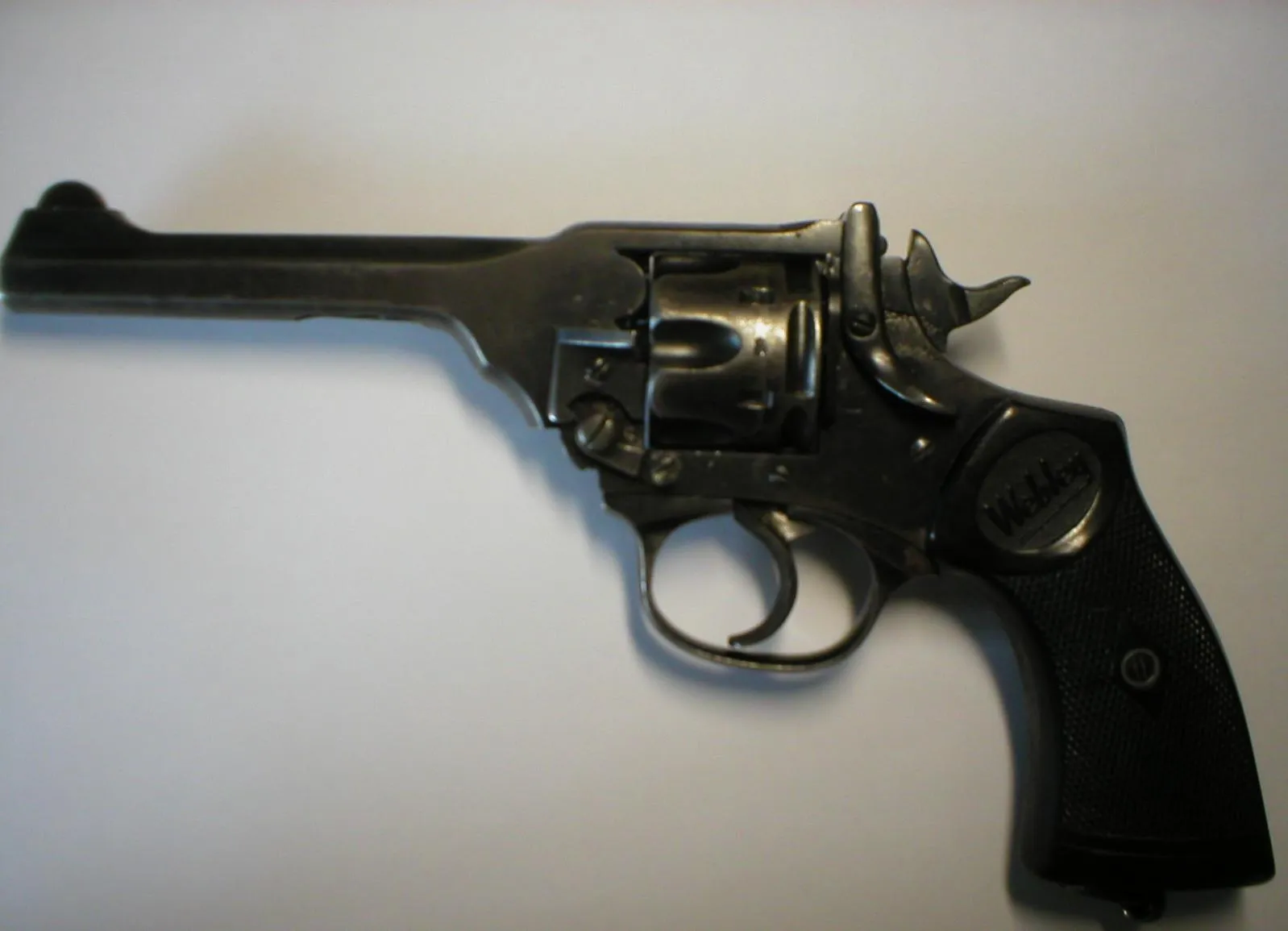
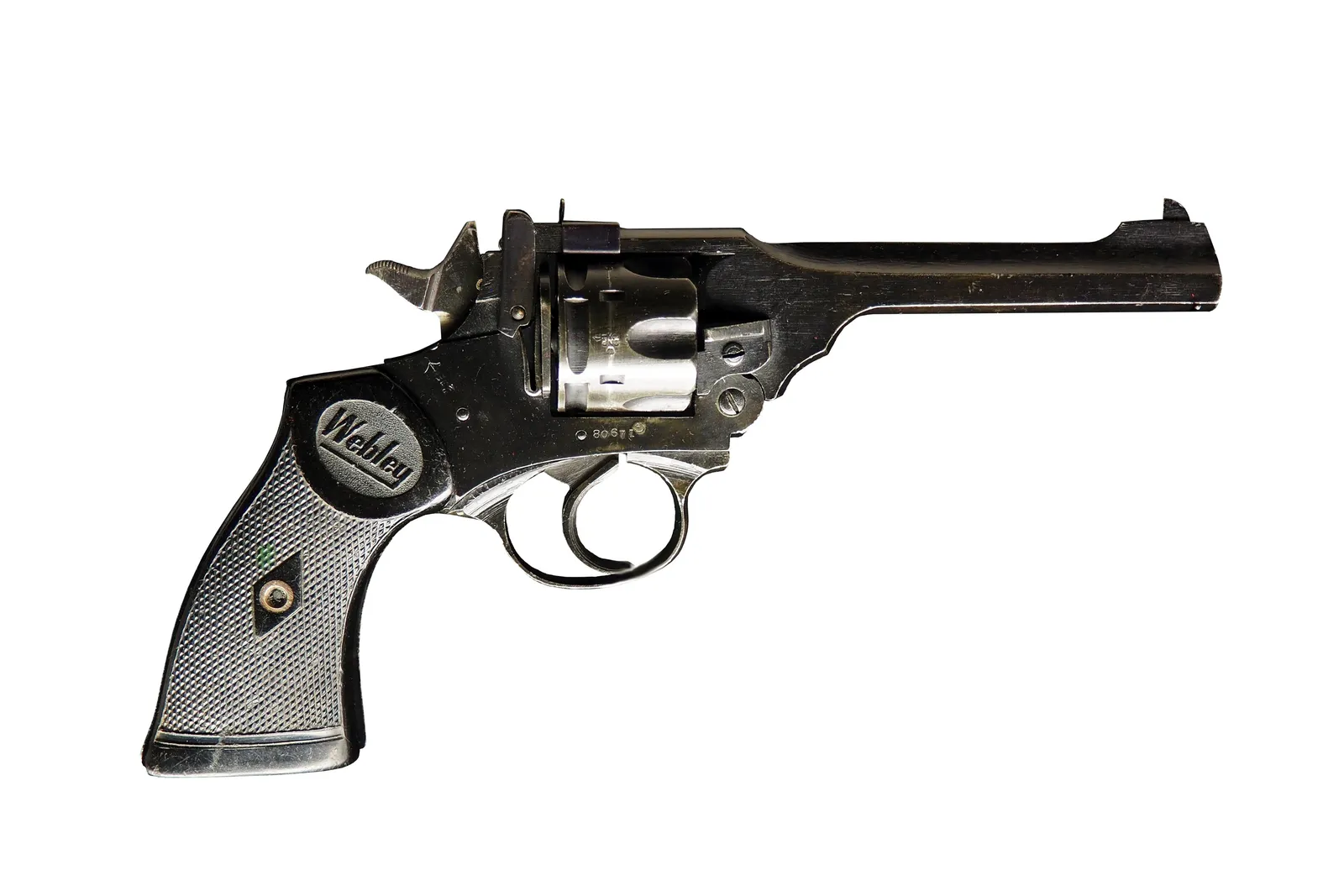
Webley Mk IV revolver

Also known as
  • Webley Mark IV revolver
  • Webley Mk IV .38
  • Webley .38/200 Service Revolver
  • Webley Mk IV .455
  • Boer War Model

The Webley Mk IV name covers two closely related British top-break revolver lines: the 1899 .455 pattern associated with the South African War and the later .38/200 revolver that Webley & Scott built for service and police users. The .38/200 model was bought in large numbers by Britain's Ministry of Supply from 1940 and remained visible in Myanmar police stocks when an example was captured from police in Monywa in 2021.

Role in Conflicts

Side
State Administration Council and allied forces
Role in conflict
Police sidearm

A Webley Mk IV revolver was shown as a Myanmar police sidearm and described as captured by anti-government forces in Monywa in 2021.

Profile / Specs

Profile

Origin
United Kingdom
Type
Service revolver
Service note
1899 .455 Mk IV service pattern; early-1920s .38/200 design with wartime and postwar police use
Designer
Webley & Scott
Designed
1899
Produced
.455 Mk IV: 1899-1913; .38/200 Mk IV: 1929-1968 reported
Number built
.38/200 Mk IV: about 500,000 reported; around 126,000 bought by Britain's Ministry of Supply from 1940

Specifications

Pattern
Top-break revolver
Action
Single-action/double-action
Feed system
6-round cylinder
Caliber
.38/200 (.38 S&W) for the later Mk IV; .455 Webley for the 1899 Mk IV pattern
Barrel length
127 mm for the .38/200 service revolver; 4 in on the .455 standard military model
Weight
1.1 kg empty for the .38/200 service revolver
Muzzle velocity
190 m/s reported for the .38/200 service revolver
Variants

The Mk IV label is unusually easy to misread because Webley used it for an 1899 .455 service revolver and later for a smaller .38/200 service revolver.

VariantConfigurationDesignation notes
1899 .455 service pattern.455 service-revolver pattern

Introduced in 1899 and widely known as the Boer War Model after British officers bought examples for service in the South African conflict.

Sources: National Army Museum Webley Mk IV .455 revolver, NRA Museum Webley Mk IV revolver

Later .38/200 service pattern.38/200 service and police revolver

Developed in the early 1920s for a lighter British service pistol requirement, then produced commercially and bought in quantity during the Second World War pistol shortage.

Sources: IWM Webley .38 Mk4 war finish, WeaponSystems Webley Mk IV

Timeline

Webley Mk IV revolver Key Events

  1. Mk IV enters service

    Webley introduced the Mk IV revolver family in 1899, making the design part of the late Victorian British service-revolver line.

    Sources: NRA Museum Webley Mk IV revolver, National Army Museum Webley Mk IV .455 revolver

  2. .38 Mk IV wartime purchase begins

    Britain's Ministry of Supply began buying Webley Mk IV .38 revolvers from 1940 as wartime expansion created a pistol shortage.

    Sources: IWM Webley .38 Mk4 war finish

  3. British revolvers enter Burmese sidearm stocks

    Postwar British revolvers, including .38/200 Webley Mk IV examples, formed part of Burma's early sidearm inventory after independence.

    Sources: Myanmar Webley in postwar police capture

  4. Captured from Myanmar police

    A Webley Mk IV revolver appears in a 2021 Myanmar photo captioned as being captured by anti-government forces from police in Monywa.

    Sources: Myanmar Webley in postwar police capture

Media
Related Weapon Systems
.40 S&W cartridge, Semi-automatic pistol cartridge, MunitionsMunitions.40 S&W cartridgeSemi-automatic pistol cartridge.40 S&W is an American centerfire semi-automatic pistol cartridge introduced by Smith & Wesson and Winchester Ammunition in 1990. It packaged the FBI's reduced-velocity 10mm service-load concept into a shorter cartridge suitable for 9mm-size duty pistols, while SAAMI and C.I.P. standards define the cartridge's pressure and dimensional limits. The strongest documented context is design history, specifications, and firearm compatibility rather than conflict-specific battlefield use.
140mm BL 5.5-inch gun, Towed medium gun-howitzer, ArtilleryArtillery140mm BL 5.5-inch gunTowed medium gun-howitzerThe 140mm BL 5.5-inch gun was a British towed medium artillery piece built around a split-trail carriage, separate-loading ammunition, and a 10-person detachment. British units received the gun in 1941, Australian War Memorial and Royal Artillery sources place its first operational service in May 1942, and the type served with British and Commonwealth forces in North Africa, Italy, and northwest Europe before later South African G2 use in the Border War.
Craft-produced firearm, Locally fabricated small arm, Infantry WeaponsInfantry WeaponsCraft-produced firearmLocally fabricated small armCraft-produced firearms in Nigeria are locally fabricated small arms made outside formal industrial production, ranging from muzzle-loading Dane guns and break-action shotguns to self-loading pistols, sub-machine guns, and AK- or G3-style rifle copies. Small Arms Survey documented craft-produced weapons in a Boko Haram cache captured in 2018, and UNIDIR reports their wider use by community-security actors in northeast Nigeria during the 2009 Boko Haram Insurgency.

Sources