Naval Systems

120 mm Bofors M1950

Also known as
  • Bofors 120 mm M1950
  • 120 mm/50 Model 1950
  • 120 mm/50 Mark 10
  • 120mm Mk 10
  • Bofors 120 mm Naval Automatic Gun L/50
  • Bofors 120mm Automatic Gun L/50 In Naval Twin Turret
  • Bofors 120 mm Automatic Gun L/50 in Naval Twin Turret
  • 12 cm automatkanon M/50
  • 12 cm akan M/50
  • 12 cm torndubbelautomatpjäs M/50
  • 12 cm tdblapjäs M/50
  • Bofors kanon van 12 cm
  • Bofors kanon van 12 cm nummer 10

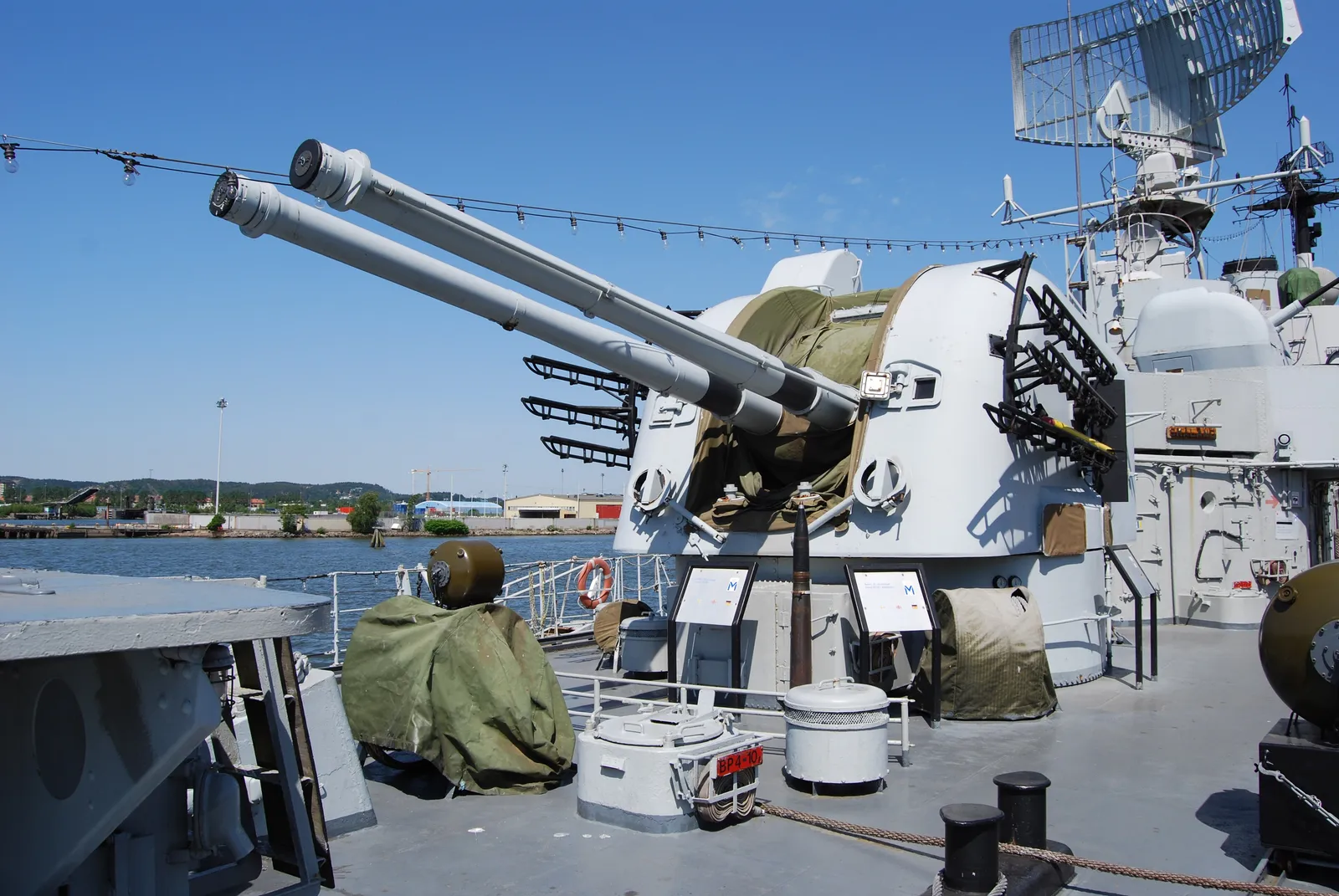
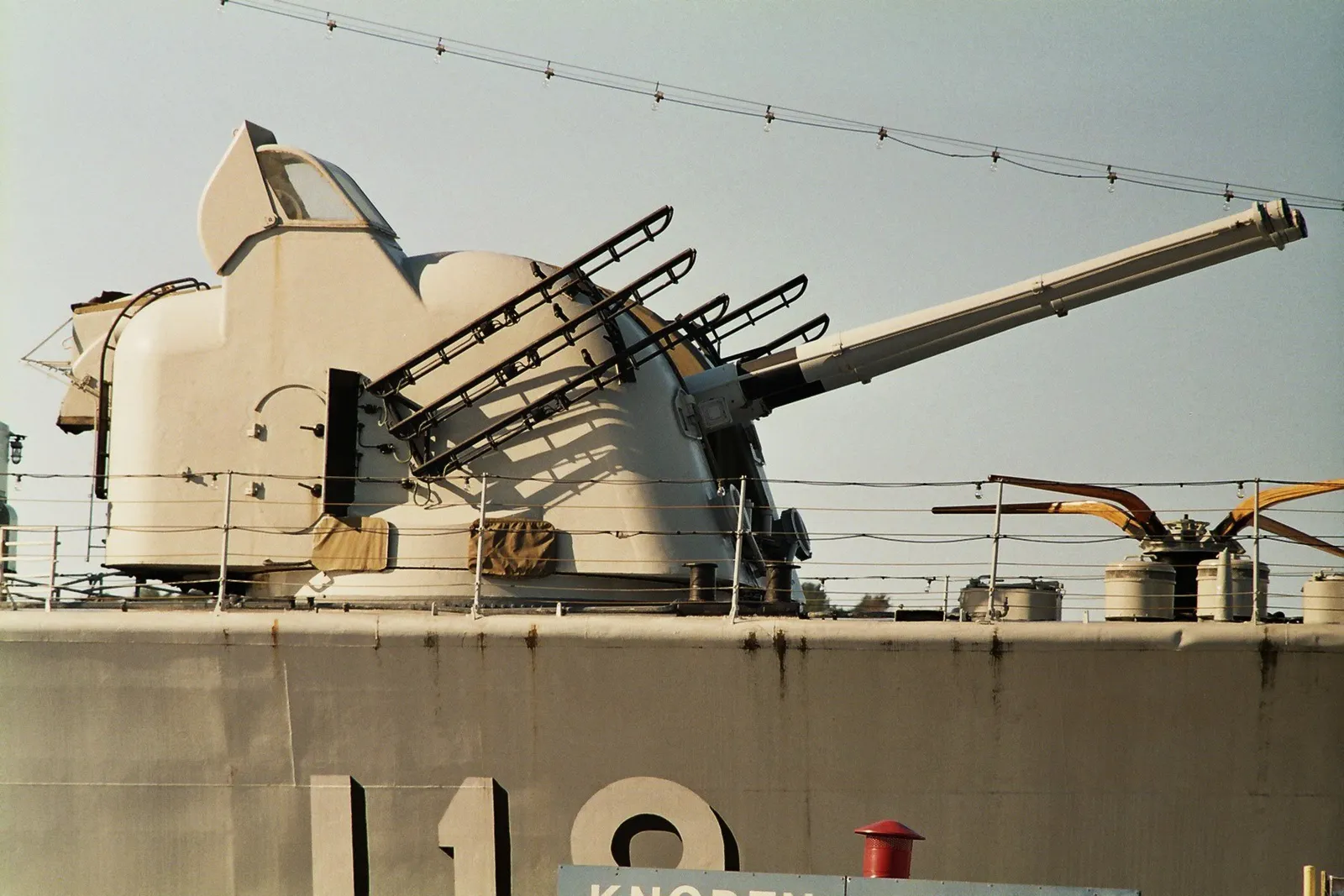
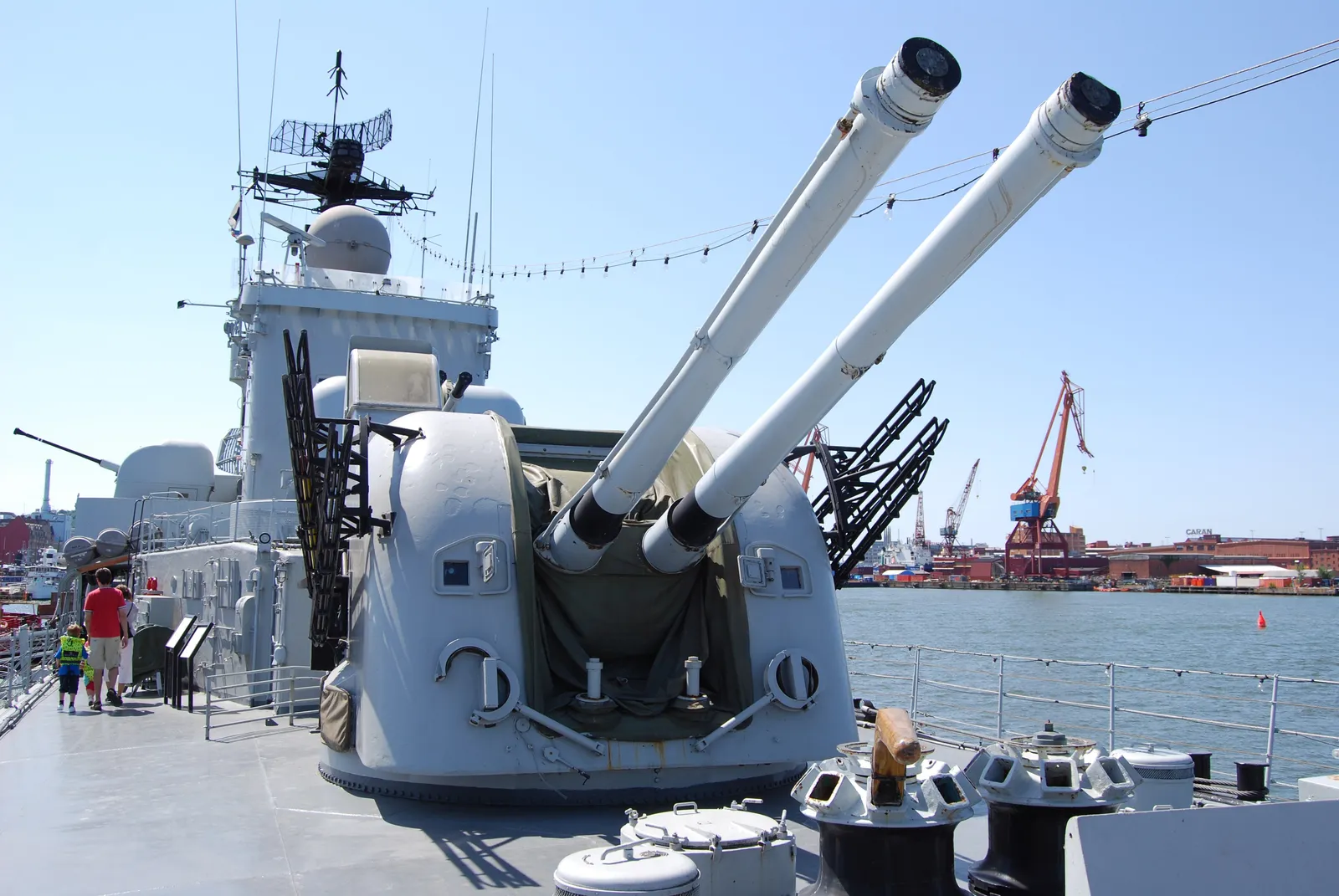
The 120 mm Bofors M1950 was a Swedish twin-barrel automatic naval gun turret developed by Bofors for postwar destroyers and frigates. NavWeaps and Dutch Ministry material describe a high-rate pendulum-loader mounting used by Swedish, Dutch, Colombian, and Peruvian ships, with the Dutch Mark 10 installation serving from 1954 to 2001 and later reused on Tromp-class guided-weapon frigates.

Profile / Specs

Profile

Origin
Sweden
Type
Twin 120 mm/50 automatic dual-purpose naval gun turret
Service note
Early Cold War naval gun introduced around 1950
Designer
Bofors
Designed
1944-1950
Produced
1950s; Dutch Mark 10 service ran from early 1954 to 2001
Number built
At least 24 twin turrets were built for Dutch Holland- and Friesland-class destroyers, with additional Swedish and Colombian installations reported in naval references

Specifications

Caliber
120 mm/50
Mount
Twin automatic naval turret
Role
Dual-purpose naval gun for surface and anti-aircraft fire
Service designations
Sweden: 120 mm/50 Model 1950; Netherlands: 120 mm/50 Mark 10
Rate of fire
Selectable between 12 and 42 rounds per minute
Muzzle velocity
850 m/s
Maximum surface range
About 20,500 m with 23.5 kg HE shell at 45 degrees
Dutch maximum range
Netherlands Ministry of Defence technical data gives 18,000 m effective maximum and 21,600 m maximum firing distance
Anti-aircraft ceiling
About 9,000 m
Complete round weight
About 44.4-47 kg depending on source and service data
Ammunition feed
Dutch service article describes four interchangeable lifts and four interchangeable magazines, each magazine/lift set holding up to 27 rounds per gun
Elevation
-10 to +85 degrees
Elevation rate
40 degrees per second
Traverse
+140 to -140 degrees
Training rate
25 degrees per second
Loading system
Pendulum loader and flick rammer with water-cooled barrels in a common cradle
Turret weight
About 52,000 kg after later weight reductions
Dutch service weight
Netherlands Ministry of Defence gives about 60,000-70,000 kg during Dutch service, depending on modifications
Crew
12 crew in NavWeaps technical data; Dutch service practice identifies turret, lower-turret, lift, and magazine crews
Ship Installations

The reviewed sources document shipboard installations and service history for the M1950 rather than direct conflict employment by this exact turret. The strongest public evidence ties the gun to Swedish, Dutch, Colombian, and Peruvian ship classes.

Ship or classOperatorDocumented gun relationship
Halland classSwedenNavWeaps lists the Halland class with two twin M1950 turrets; the Smaland museum-ship association identifies HMS Smaland as a Halland-class destroyer with 2 x 2 12 cm automatkanon M/50 as main artillery.
Holland classNetherlandsDefensie.nl says the gun first served with Holland- and Friesland-class submarine-hunter destroyers, and NavWeaps lists Holland-class ships with two twin Mark 10 turrets.
Friesland classNetherlands / PeruDefensie.nl documents the Dutch Friesland-class installation. NavWeaps separately lists Peru's Colonel Bolognesi class as ex-Friesland ships carrying the same 120 mm/50 Model 1950 gun.
Tromp classNetherlandsDefensie.nl says the Tromp-class guided-missile frigates reused Bofors 12 cm guns from HNLMS Gelderland; NavWeaps likewise notes Tromp-class mounts salvaged from the Holland-class destroyer.
20 de Julio classColombiaNavWeaps lists the Colombian 20 de Julio class as an ex-Halland-class user of the 120 mm/50 Model 1950 gun. The Smaland association also notes the canceled Halland sister ships reappeared in Colombian service as Siete de Agosto and Veinte de Julio.

Sources: NavWeaps 120 mm Model 1950; Defensie 12 cm Bofors article; J19 Smaland About the Destroyer.

Variants

Open sources use different designations for the same Bofors 120 mm/50 automatic twin-turret family, with Swedish service labels, the Dutch Mark 10 label, and later modified Dutch reuse on Tromp-class frigates.

VariantConfigurationDesignation notes
120 mm/50 Model 1950Swedish designation

NavWeaps uses Model 1950 for the Swedish gun and lists the Halland-class installation.

Sources: NavWeaps 120 mm Model 1950

12 cm automatkanon M/50Swedish service name

The Smaland museum-ship association identifies HSwMS Smaland's main artillery as 2 x 2 12 cm automatkanon M/50.

Sources: J19 Smaland About the Destroyer

120 mm/50 Mark 10Netherlands designation

NavWeaps identifies Mark 10 as the Netherlands designation; Netherlands Defence reporting says Dutch guns were license-built at Wilton-Fijenoord Rotterdam.

Sources: NavWeaps 120 mm Model 1950, Defensie 12 cm Bofors article

Tromp-class reused Mark 10 mountingModified Dutch reuse

The Royal Netherlands Navy reused 12 cm Bofors guns from HNLMS Gelderland on Tromp-class frigates with modifications including longer ammunition lifts.

Sources: Defensie 12 cm Bofors article

Timeline

120 mm Bofors M1950 Key Events

  1. Bofors development period begins

    NavWeaps gives the gun's design period as 1944 to 1950, placing it in the immediate postwar generation of automatic naval gun projects.

    Sources: NavWeaps 120 mm Model 1950

  2. Model 1950 enters service

    NavWeaps lists 1950 as the in-service date and identifies Swedish Halland-class, Dutch Holland/Friesland/Tromp-class, Colombian 20 de Julio-class, and Peruvian ex-Friesland-class ship use.

    Sources: NavWeaps 120 mm Model 1950

  3. Dutch naval service begins

    The Dutch Ministry of Defence says the 12 cm Bofors gun entered Royal Netherlands Navy service at the beginning of 1954, first on Holland- and Friesland-class submarine-hunter destroyers.

    Sources: Defensie 12 cm Bofors article

  4. HMS Smaland delivered with M/50 main guns

    The Smaland museum-ship association identifies HMS Smaland as the second Halland-class destroyer, delivered to the Swedish Navy in 1956 with 2 x 2 12 cm automatkanon M/50 as main artillery.

    Sources: J19 Smaland About the Destroyer

  5. Gelderland turrets reused on Tromp class

    The Dutch Ministry of Defence reports that Bofors 12 cm guns removed from HNLMS Gelderland were adapted and installed on Tromp-class guided-weapon frigates during their construction period.

    Sources: Defensie 12 cm Bofors article

  6. Dutch Mark 10 service ends

    Dutch Ministry material gives 2001 as the end of Royal Netherlands Navy service for the 12 cm Bofors gun after its destroyer and Tromp-class frigate service.

    Sources: Defensie 12 cm Bofors article

Media
Related Weapon Systems
120mm TAK-120, Single 120 mm/46 dual-purpose naval automatic gun turret, Naval SystemsNaval Systems120mm TAK-120Single 120 mm/46 dual-purpose naval automatic gun turretThe 120mm TAK-120 is a Swedish Bofors single-gun naval turret that adapted the linked FAK-120/Lvakan 4501 automatic field-gun line for fast attack craft and small corvettes. NavWeaps and WeaponSystems.net describe it as a water-cooled, automatically loaded dual-purpose gun with Finnish Turunmaa/Pohjanmaa and Indonesian Fatahillah-class service, but no source reviewed directly ties the turret to a cataloged armed conflict.
MK 110 57 mm Gun, 57 mm naval gun, Naval SystemsNaval SystemsMK 110 57 mm Gun57 mm naval gunThe MK 110 57 mm Gun is the U.S. designation for BAE Systems' Bofors 57 Mk3 naval gun, a fully automatic 57 mm / 70-caliber mount assembled in Louisville, Kentucky for U.S. service. U.S. Navy, Coast Guard, and BAE Systems sources place the gun on Navy Littoral Combat Ships, including both Freedom and Independence variants, and on Coast Guard National Security Cutters; BAE also describes immediate ammunition-type switching and six-mode programmable 57 mm Mk 295 Mod 0 / Bofors 3P ammunition for air, surface, and shore targets.
130 mm SM-2-1, 130 mm/58 twin dual-purpose naval gun mount, Naval SystemsNaval Systems130 mm SM-2-1130 mm/58 twin dual-purpose naval gun mountThe 130 mm SM-2-1 was a Soviet twin 130 mm/58 naval gun mount developed by TsKB-34 for postwar destroyers and treated in open references as a stabilized dual-purpose weapon for surface and air targets. Serial production centered on Bolshevik Plant No. 232, with additional Starokramatorsk-built mounts, and the system armed Project 41 Neustrashimy and Project 56 Kotlin destroyers before informing China's Type 76 twin 130 mm mount. Checked open sources support service, platform, and production context but not a direct combat-use claim for a specific conflict.
114 mm Vickers Mark 8, Single-barrel dual-purpose naval gun, Naval SystemsNaval Systems114 mm Vickers Mark 8Single-barrel dual-purpose naval gunThe 114 mm Vickers Mark 8 is the Royal Navy's post-1970s single-barrel 4.5-inch naval gun, replacing the heavier Mark 6 twin mounting with a 55-calibre automatic system for surface fire, naval gunfire support, and limited air or force-protection roles. It served on Type 21, Type 22, Type 23, Type 42, Type 45, and export warships, with Falklands War use followed by later Mod 1 low-observable gunhouse upgrades and 2011 Libya combat firings by Royal Navy ships.
Bofors 375 mm rocket launcher, Shipboard anti-submarine rocket launcher, Naval SystemsNaval SystemsBofors 375 mm rocket launcherShipboard anti-submarine rocket launcherThe Bofors 375 mm rocket launcher is a Swedish shipboard anti-submarine rocket-depth-charge system developed after World War II and fielded in two-, four-, and six-tube forms. The M/50 family tied sonar-directed fire control to an unmanned powered mount, below-deck ammunition handling, and 375 mm rockets, while license and derivative production by Creusot-Loire and Mitsubishi spread the system across French, Japanese, German, Dutch, Swedish, and export warship fits.
Bofors 40 mm L/70, 40 mm towed anti-aircraft autocannon, Air DefenseAir DefenseBofors 40 mm L/7040 mm towed anti-aircraft autocannonThe Bofors 40 mm L/70 is a Swedish postwar anti-aircraft autocannon developed by AB Bofors as a higher-velocity, faster-firing successor to the wartime 40 mm L/60 family. Its towed and naval variants remained in service through upgrades, with source-backed modern use including Lithuanian-supplied guns in Ukrainian air defense and Indian upgraded L/70 guns used as a short-range counter-drone layer during the 2025 India-Pakistan Conflict.

Sources