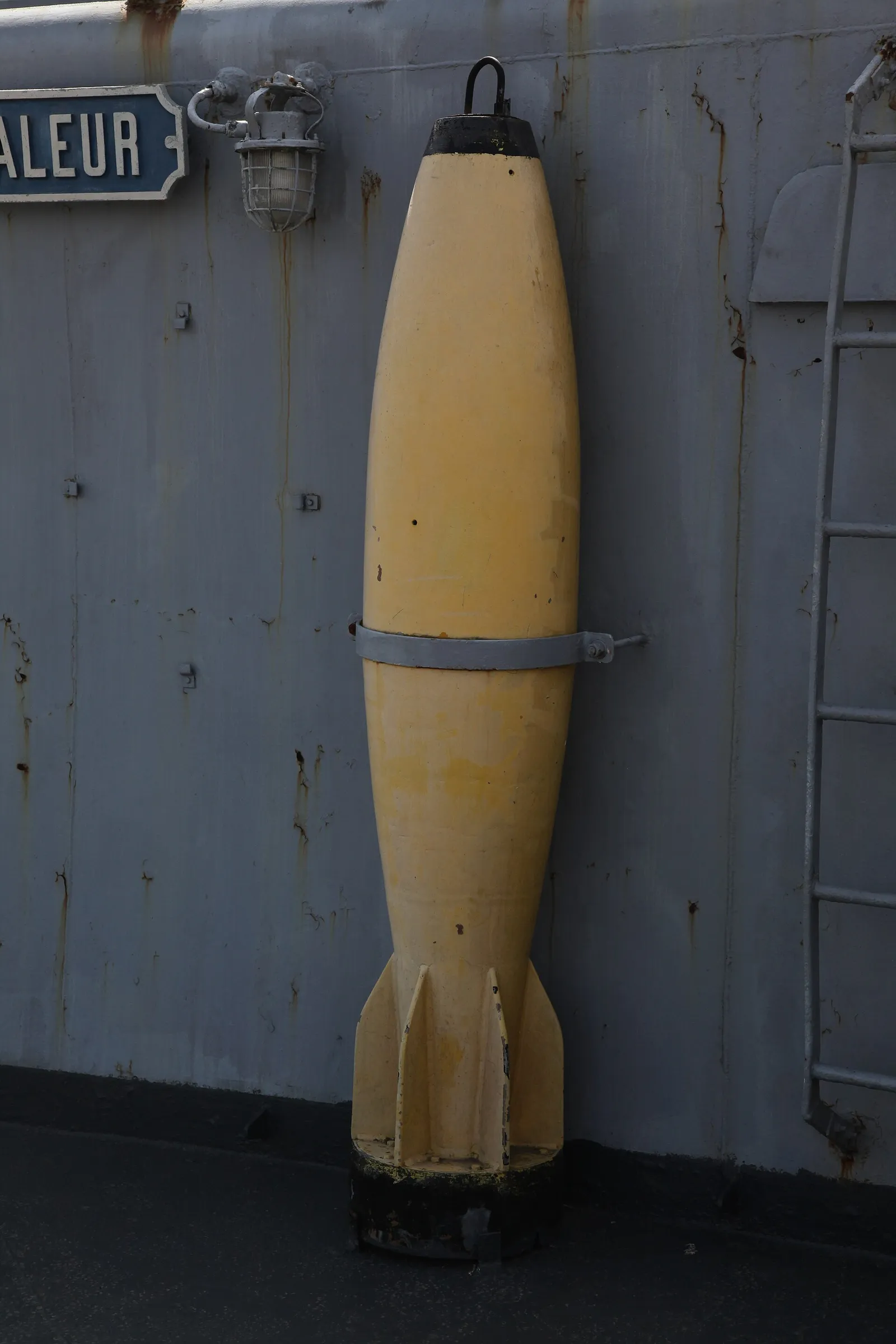
Profile
- Origin
- Sweden
- Type
- Shipboard anti-submarine rocket launcher
- Service note
- Cold War
- Designed
- 1948-1954
- Produced
- 1956-mid-1980s
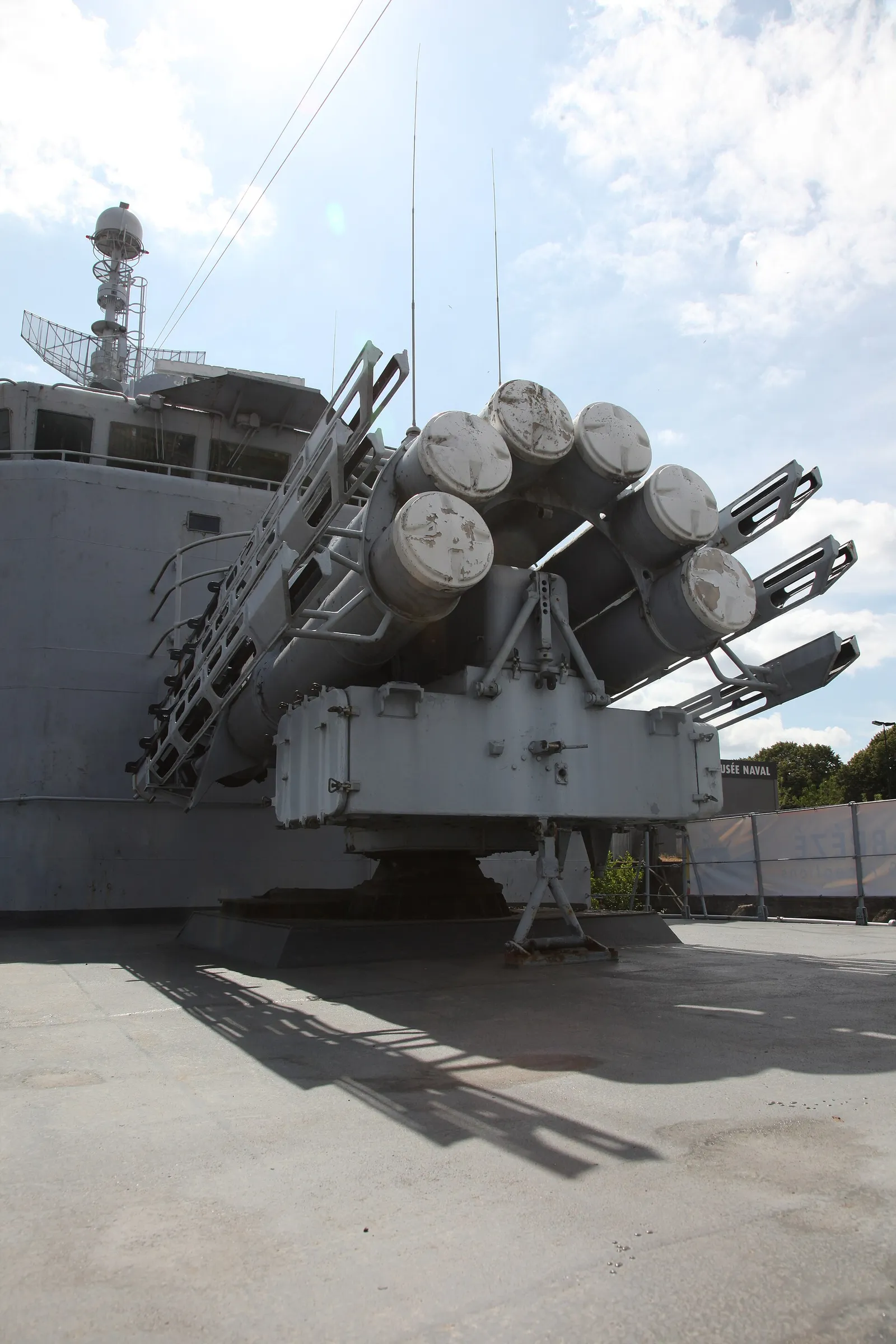
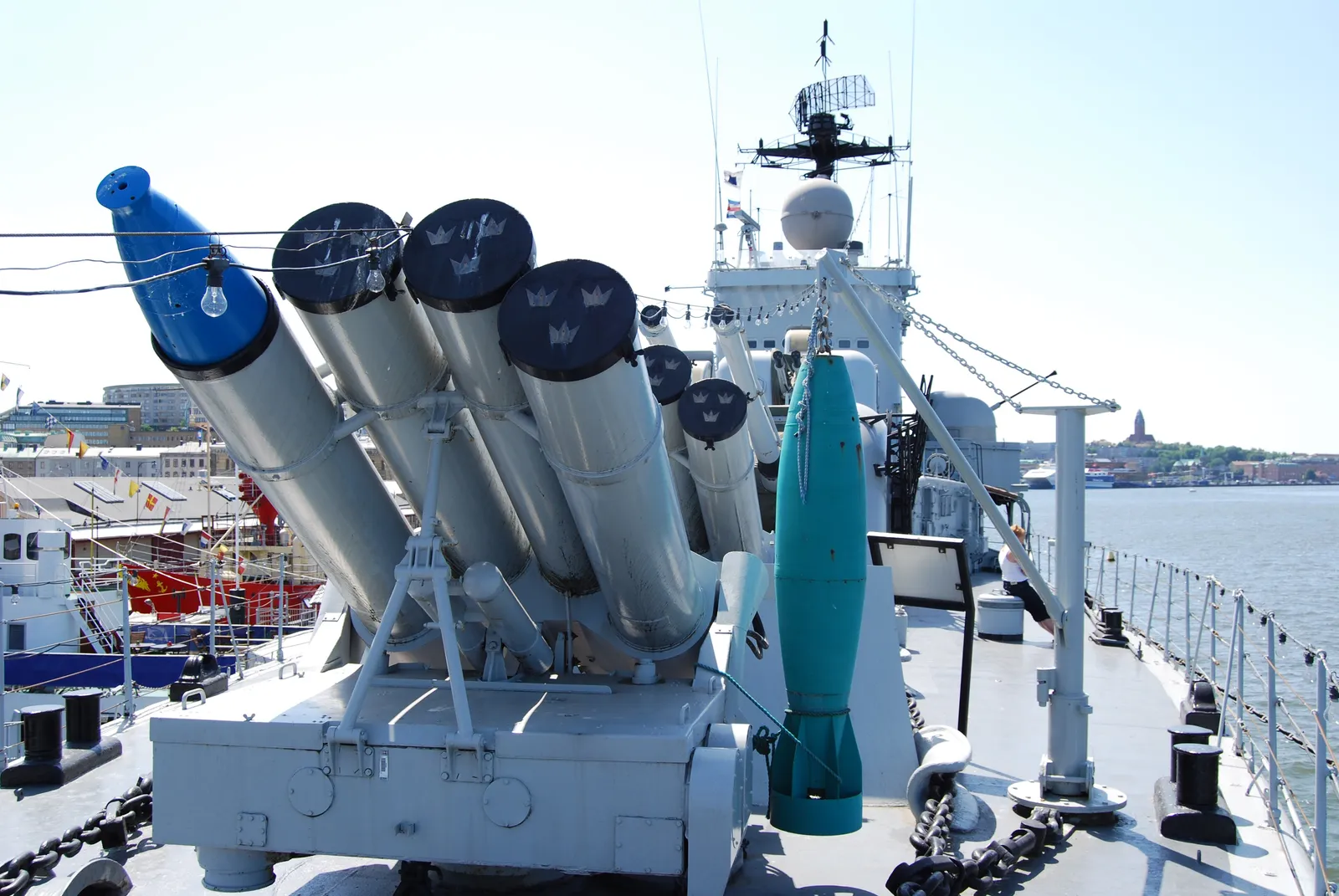
The Bofors 375 mm rocket launcher is a Swedish shipboard anti-submarine rocket-depth-charge system developed after World War II and fielded in two-, four-, and six-tube forms. The M/50 family tied sonar-directed fire control to an unmanned powered mount, below-deck ammunition handling, and 375 mm rockets, while license and derivative production by Creusot-Loire and Mitsubishi spread the system across French, Japanese, German, Dutch, Swedish, and export warship fits.
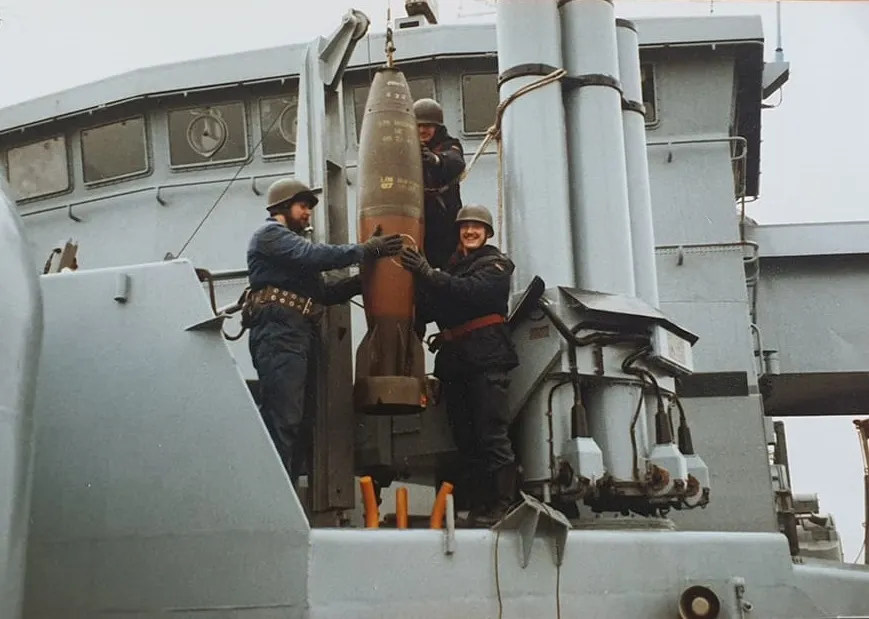
The launcher family was built around ahead-thrown 375 mm rocket depth charges rather than guided torpedoes. Ship sonar fed the fire-control system, the powered mount laid the tubes in train and elevation, and the reload machinery below deck fed the unmanned launcher after firing.
Sonar input drove electro-mechanical predictors in early systems and digital fire-control equipment in later installations, with range set by launcher elevation and the selected rocket type.
Mimmi, Erika, Flora, and Nelli rockets shared the 375 mm launcher family while differing in range, weight, warhead, and fuse arrangements; Nelli added a longer-range profile and proximity fuse.
The visible mount was only part of the system; the ammunition room and loading gear below deck shaped whether a ship carried the B4, B2, or French sextuple installation.
The launcher family fired several 375 mm rocket-depth-charge types. Range depended on rocket type and launcher elevation, while later ammunition improved fuzing and reach.
| Rocket | Range | Warhead and fuse notes |
|---|---|---|
| Mimmi / M/50 | About 0.38-0.83 km | Original 250 kg rocket-depth charge; public reference data lists a high-explosive warhead over 100 kg and probable impact fuzing. |
| Erika | About 0.65-1.63 km | 250 kg rocket with a 107 kg Hexotonal warhead and Stidar time/impact fuse. |
| Flora | About 1.4-2.2 km | Intermediate-range rocket listed in launcher-family range tables; the checked sources do not publish a consistent warhead and fuse description. |
| Nelli | About 1.58-3.62 km | 230 kg rocket with an 80 kg Hexotonal warhead and Zambo proximity/impact fuse. |
The Bofors M/50 family used the same 375 mm rocket-depth-charge concept across launcher mounts tailored for different ship sizes and navies.
| Variant | Configuration | Designation notes |
|---|---|---|
| Bofors B4 | Quadruple launcher | The original Bofors launcher entered service in 1956 as the M/50 and later B4, with four tubes, a below-deck semi-automatic loader, nominal storage of 48 rockets per launcher, and a three-minute reload cycle for all four tubes. Sources: Weaponsystems: Bofors M/50 |
| Creusot-Loire Modèle 54 | French sextuple launcher | Creusot-Loire developed the six-tube Modèle 54 for French ships, using one mount to approach the firepower of two B4 launchers and carrying ammunition loads that varied by class. Sources: Weaponsystems: Bofors M/50 |
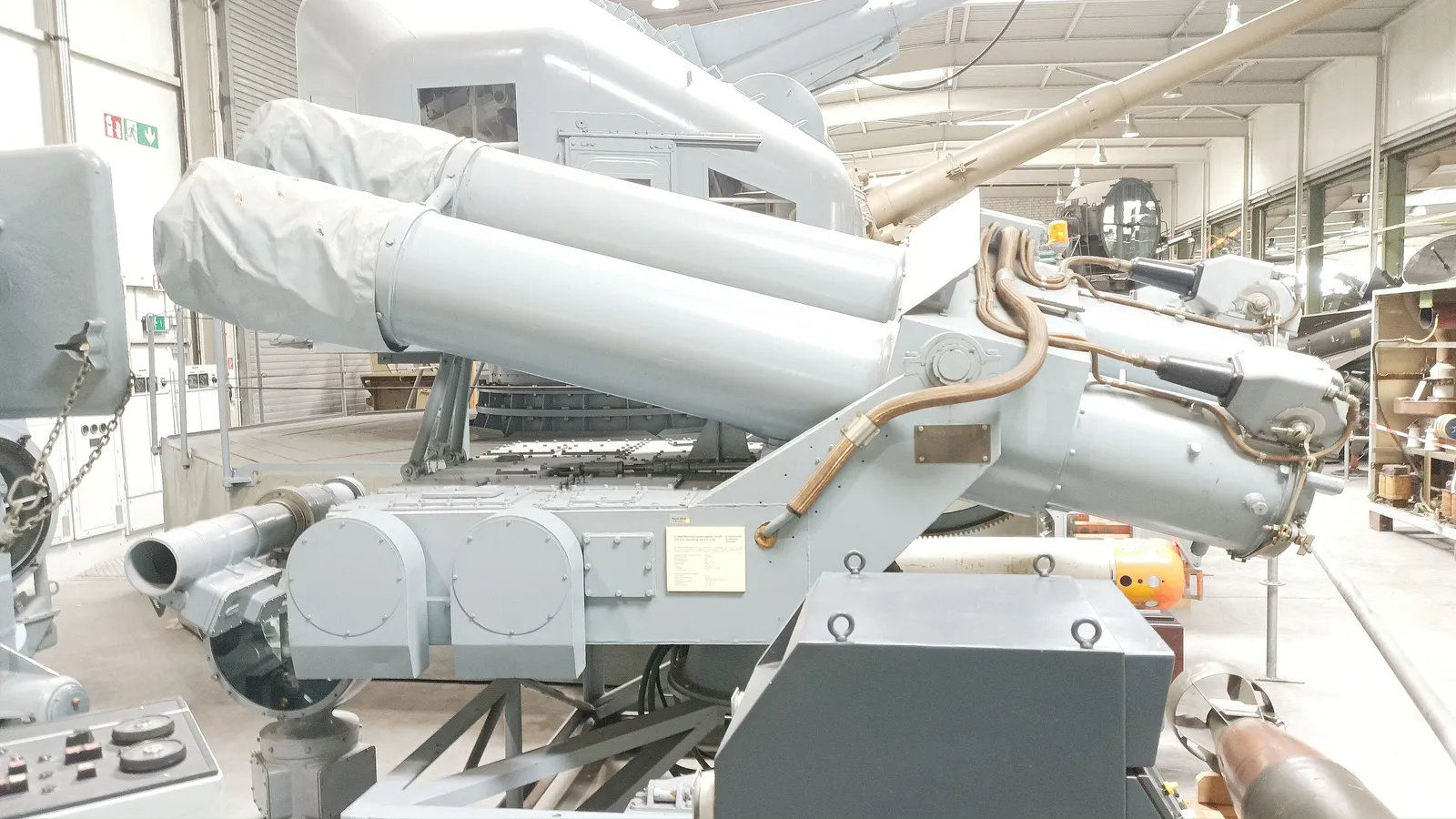
| Bofors B2 / SR-375A | Twin launcher | The compact B2 twin launcher, also identified by Weaponsystems.net as SR-375A, appeared in the early 1970s with 360-degree traverse, 24-round ammunition storage, and a two-round reload cycle of about 30 seconds for smaller combatants. Sources: Weaponsystems: Bofors M/50 |
| Mitsubishi Type 71 | Japanese licensed B4 launcher | Japan licensed the B4 launcher through Mitsubishi Heavy Industries; Weaponsystems.net lists Type 71 as the Japanese-service designation for the B4 mount. Sources: Weaponsystems: Bofors M/50 |
The launcher is documented aboard D'Estienne d'Orves-class avisos in a remote-controlled sextuple fit with below-deck reloads.
| Carrier | Carrier type | Carriage evidence |
|---|---|---|
 | Aviso / light corvette | Seaforces says the class mounts one remote-controlled sextuple 375 mm rocket launcher with 30 reloads carried in a magazine beneath the aft deckhouse. Sources: Seaforces: D'Estienne d'Orves class Corvette Aviso French Navy Marine |
Public naval references tie the launcher family to several Cold War surface-combatant branches. Sweden and the Netherlands used B4 quadruple launchers on destroyers; France used the sextuple Modèle 54 on D'Estienne d'Orves-class and other ships; Japan used Mitsubishi-built Type 71 launchers; and the lighter B2/SR-375A appeared on smaller corvette and frigate classes.
Weaponsystems.net lists Swedish Halland, Dutch Friesland and Holland, German Hamburg, and multiple Japanese destroyer or training-ship classes among B4 or Type 71 users.
The Modèle 54 fit is documented on D'Estienne d'Orves-class avisos and other French or Belgian classes, with the A69 fit later removed from French ships during patrol conversion.
The twin launcher is listed for smaller designs including Fatahillah, Kasturi, Niterói, Descubierta, Erinomi, and later Nilgiri-class fits.
Weaponsystems.net places the launcher-family development period from 1948 to 1954, with the related 375 mm rocket-depth-charge work beginning in the same postwar period.
Sources: Weaponsystems: Bofors M/50, Weaponsystems: Bofors 375mm M/50
The B4/M/50 quadruple launcher entered service in 1956 and became the baseline Bofors mount used by early Swedish and Dutch destroyer fits.
Sources: Weaponsystems: Bofors M/50
Creusot-Loire introduced the Modèle 54 sextuple launcher for French service, creating the six-tube branch later associated with A69 avisos and other French ships.
Sources: Weaponsystems: Bofors M/50
Missilery.info states that Mitsubishi contracted with Bofors in 1968 to manufacture the complex under license for Japanese naval service.
Sources: Missilery.info: 375mm Bofors anti-submarine reactive complex
Bofors introduced the B2 twin launcher for smaller ships, reducing mount weight while improving the reload cycle compared with the older four-tube installation.
Sources: Weaponsystems: Bofors M/50
The Nelli 375 mm rocket-depth-charge variant brought a longer range band and proximity-fuse option while using a lighter high-explosive warhead.
Sources: Weaponsystems: Bofors 375mm M/50
Japanese-service Type 71 launchers, locally produced by Mitsubishi Heavy Industries, replaced Weapon Alpha on some JMSDF destroyer classes during 1970s refits.
Sources: Weaponsystems: Bofors M/50, Gyrodyne Helicopters: JMSDF Destroyers