
Used by Houthi-aligned forces in at least one documented 2018 configuration with the gun removed from its carriage and mounted on a Toyota pickup.
Role detailsArtillery
ZiS-2 57 mm anti-tank gun
Also known as
- 57 mm anti-tank gun model 1941
- 57 mm anti-tank gun model 1943
- 57-mm anti-tank gun M1943
- 52-P-271
- 5.7 cm Pak 208(r)
- B-22
- ZiS-2 obr. 1941
- ZiS-2 obr. 1943
- Type 55
- 57-мм противотанковая пушка образца 1941 года (ЗиС-2)
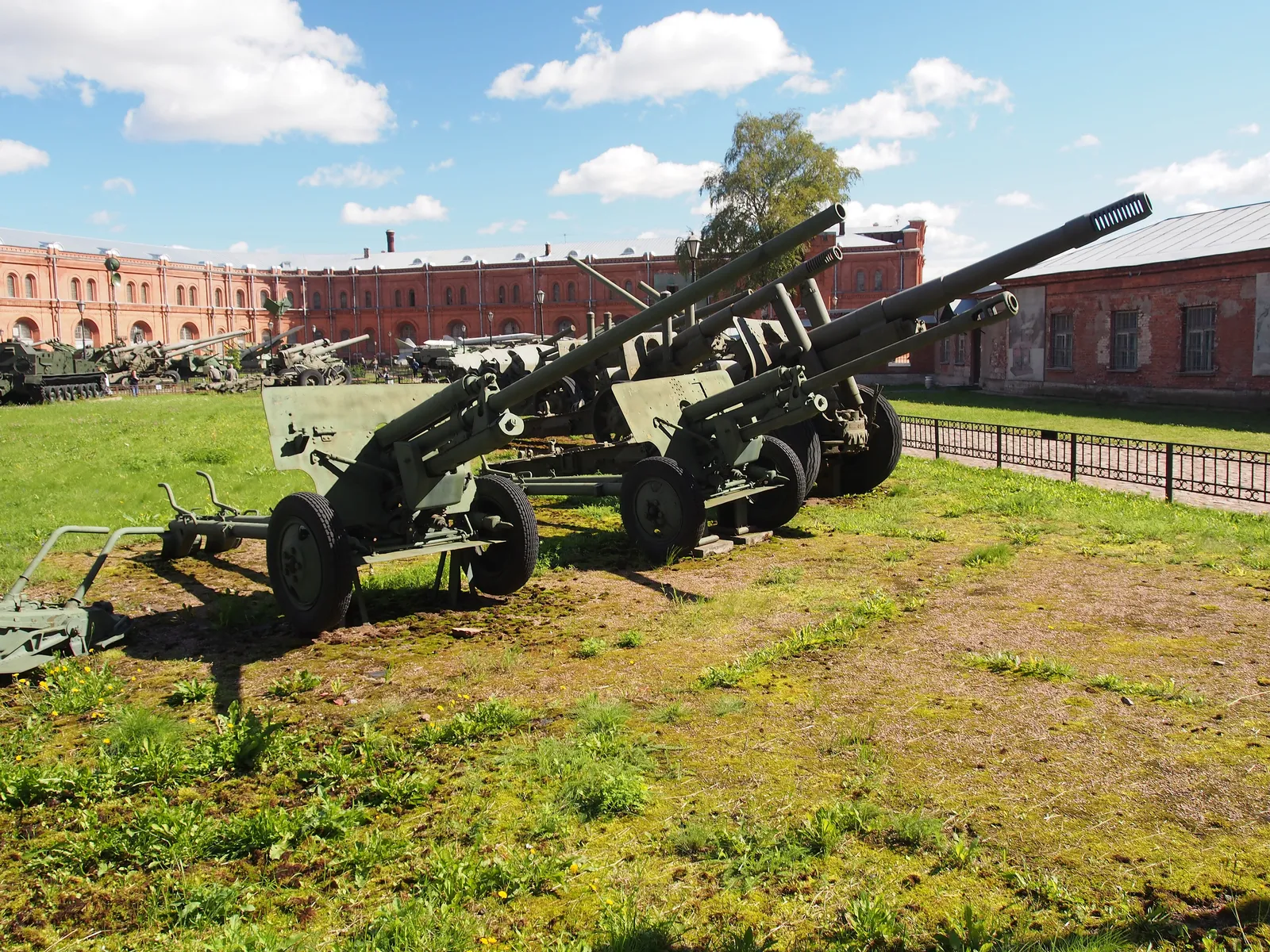
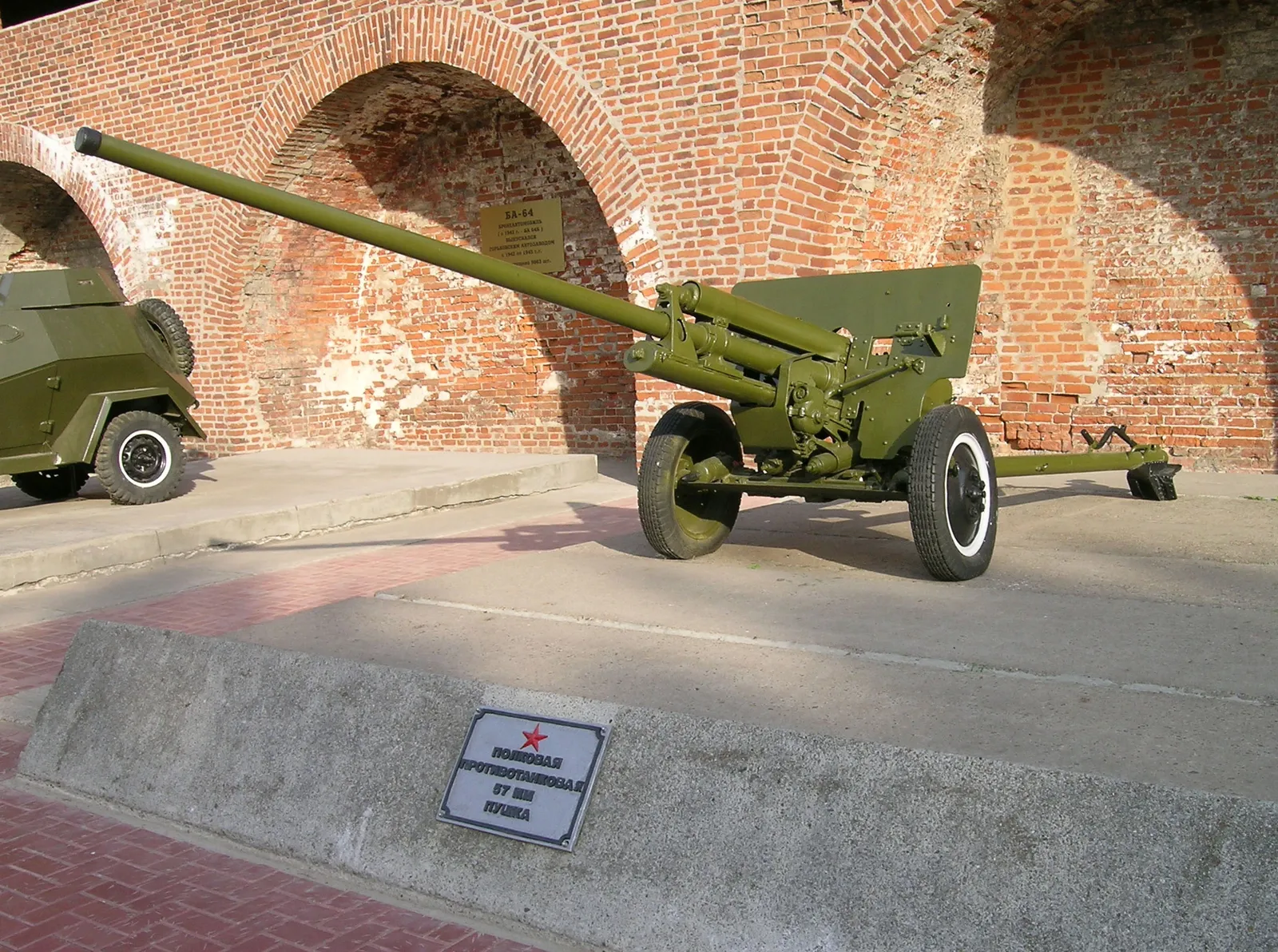
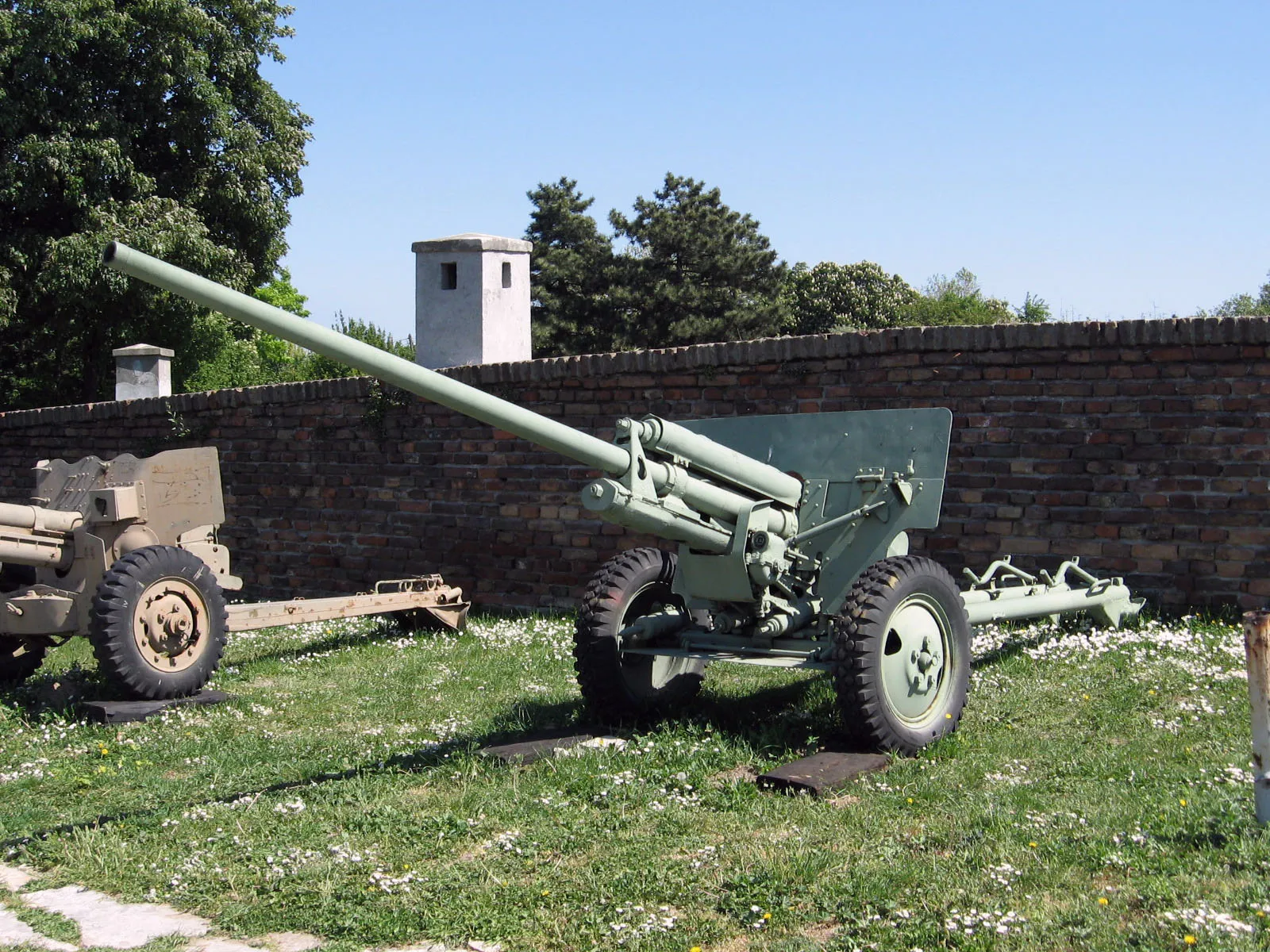
The ZiS-2 is a Soviet 57 mm towed anti-tank gun developed under V. G. Grabin at Factory No. 92 and built around a high-velocity armor-piercing round. Production began in 1941, paused after a short run, and resumed in 1943; its modern catalog record is tied to a Houthi-aligned Yemen example adapted in 2018 as a pickup-mounted direct-fire weapon.
Role in Conflicts
Profile / Specs
Profile
- Origin
- Soviet Union
- Built by
- Artillery Factory No. 92
- Type
- Towed 57 mm anti-tank gun
- Service note
- World War II; postwar Soviet and export service
- Designer
- V. G. Grabin design bureau, Artillery Factory No. 92
- Designed
- 1940; adopted March 1941
- Produced
- 1941; 1943-1949
- Number built
- 13,710 total (371 in 1941; 9,645 in 1943-1945; 3,694 in 1946-1949)
Specifications
- Caliber
- 57 mm
- Cartridge
- 57x480 mmR
- Weight
- 1,250 kg in firing position
- Overall length
- 7.03 m
- Barrel length
- 4,160 mm (3,950 mm rifled)
- Crew
- 5
- Rate of fire
- 25 rounds/minute
- Maximum range
- 8,400 m
- Direct fire range
- 1,120 m
- Muzzle velocity
- About 1,000 m/s
- Carriage
- Two-wheeled split-trail carriage with gun shield
- Traverse
- 54 degrees total
- Elevation
- -5 to +25 degrees
Design And Adaptations
The ZiS-2 remained useful in unusual postwar settings because its basic package was compact for a high-velocity anti-tank gun: a 57 mm barrel on a split-trail carriage, a semi-automatic breech, and a crew-served layout that could be towed, manhandled short distances, or adapted to vehicles.
Towed-gun family
The 1941 and 1943 marks share the same anti-tank role, with the later production model tied to resumed 1943 manufacturing and ZiS-3 carriage features.
Vehicle branches
The ZiS-4 tank-gun branch and BTR-50 prototype firing trials show how the 57 mm gun family was tested beyond a standard towed carriage.
Irregular reuse
The Yemen example shows the gun surviving as an improvised direct-fire weapon long after its Second World War anti-tank role had become obsolete.
Sources: Victory Museum ZiS-2 Model 1943; WeaponSystems.net 57mm ZiS-2; Tank Archives Soviet 57 mm Guns; WWII Weapons in Yemen's Civil War.
Variants
The ZiS-2 family includes the original 1941 towed gun, the revised 1943 production model, postwar sight upgrades, and the related ZiS-4 tank-gun adaptation.
| Variant | Configuration | Designation notes |
|---|---|---|
| ZiS-2 obr. 1941 | Original production model | First accepted as the 57 mm anti-tank gun model 1941; production was stopped after 371 guns. Sources: Victory Museum ZiS-2 Model 1943, WeaponSystems.net 57mm ZiS-2 |
| ZiS-2 obr. 1943 | Resumed wartime production model | Reaccepted on 15 June 1943 after German Panther and Tiger tanks exposed the limits of common 45 mm and 76 mm guns; the 1943 model used a more production-friendly configuration with ZiS-3 carriage features. Sources: Victory Museum ZiS-2 Model 1943, WeaponSystems.net 57mm ZiS-2 |
| ZiS-2N | Night-sight modernization | A 1957 modernization of existing guns with APN-57 or APN3-55 night sights. Sources: Victory Museum ZiS-2 Model 1943, WeaponSystems.net 57mm ZiS-2 |
| ZiS-4 | Tank-gun adaptation | A shorter ZiS-2-derived 57 mm gun fitted experimentally and in limited numbers to T-34 tanks. Sources: Tank Archives Soviet 57 mm Guns, ZiS-2 (M1941 / M1943) 57mm Towed Anti-Tank Gun |
| 5.7 cm Pak 208(r) | German captured-service designation | German Beutewaffen designation for captured ZiS-2 guns. Sources: WeaponSystems.net 57mm ZiS-2 |
Gun Carriers
The BTR-50 connection is a carrier and firing-trial relationship, not evidence of a standard self-propelled ZiS-2 production variant.
| Firing weapon | Weapon type | Firing evidence |
|---|---|---|
 | Tracked amphibious APC | Tank Encyclopedia describes Object 750/BTR-50 trials firing a 57 mm ZiS-2 mounted on top while afloat; GlobalSecurity describes the BTR-50P as able to transport 57 mm guns in its fighting compartment. Sources: BTR-50, BTR-50P Amphibious Armored Personnel Carrier |
Timeline
ZiS-2 57 mm anti-tank gun Key Events
Design work begins
Factory No. 92's Grabin design bureau developed the 57 mm anti-tank gun in response to expectations that heavier armor would require more penetration than earlier Soviet anti-tank guns could provide.
Sources: Victory Museum ZiS-2 Model 1943
Model 1941 accepted
The Red Army accepted the gun as the 57 mm anti-tank gun model 1941, better known as the ZiS-2.
Sources: Victory Museum ZiS-2 Model 1943, WeaponSystems.net 57mm ZiS-2
Production halted
Production was stopped late in 1941 after 371 guns, with sources citing excessive performance for then-current targets and the need to prioritize easier-to-produce anti-tank weapons.
Sources: Victory Museum ZiS-2 Model 1943, WeaponSystems.net 57mm ZiS-2
Production model returns
The State Defense Committee accepted the gun again as the 57 mm anti-tank gun model 1943 after Panther and Tiger armor made many existing Soviet anti-tank guns less effective.
Sources: Victory Museum ZiS-2 Model 1943
ZiS-2N modernization
The ZiS-2N modernization added APN-57 or APN3-55 night sights to existing guns.
Sources: Victory Museum ZiS-2 Model 1943, WeaponSystems.net 57mm ZiS-2
Yemen pickup mount documented
WWII After WWII documented a Houthi-aligned ZiS-2 in 2018 after removal from its carriage and installation on a Toyota pickup.
Sources: WWII Weapons in Yemen's Civil War
Media
ZiS-2 57 mm anti-tank gun Images
Related Weapon Systems


Sources
Victory Museum ZiS-2 Model 1943Publisher: Victory Museum | Note: Supports ZiS-2 technical specifications, 1941 adoption, 1941 production halt, 15 June 1943 reacceptance, 1943 production changes, 1957 ZiS-2N modernization, and 13,710-gun total production from 1941 to 1949. | Accessed: 2026-07-03WeaponSystems.net 57mm ZiS-2Publisher: WeaponSystems.net | Note: Supports ZiS-2 designations and aliases, Factory No. 92 producer attribution, variant labels, German 5.7 cm Pak 208(r) captured designation, and cross-checked specifications. | Accessed: 2026-07-03Tank Archives Soviet 57 mm GunsPublisher: Tank Archives | Note: Supports the ZiS-4 relationship: a shorter ZiS-2-derived 57 mm gun fitted to T-34 tanks, with 1941 and 1943 development context from translated Soviet archival material. | Accessed: 2026-07-03ZiS-2 (M1941 / M1943) 57mm Towed Anti-Tank GunPublisher: Military Factory | Note: Supports ZiS-2 background, design origin, Artillery Factory No. 92 contractor attribution, ZiS-4 relation, German captured designation, and specifications. | Accessed: 2026-07-03BTR-50Publisher: Tank Encyclopedia | Note: Supports Object 750/BTR-50 prototype trial context for firing a 57 mm ZiS-2 while afloat and broader BTR-50P light-gun transport context. | Accessed: 2026-07-03BTR-50P Amphibious Armored Personnel CarrierPublisher: GlobalSecurity.org | Note: Supports BTR-50P transport provisions for 57 mm, 76 mm, or 85 mm guns in the fighting compartment. | Accessed: 2026-07-03WWII Weapons in Yemen's Civil WarPublisher: WWII After WWII | Note: Supports 2014 Yemen Civil War conflict use: used by Houthi-aligned forces in 2018 after the ZiS-2 was removed from its carriage and mounted on a Toyota pickup; also supports older Egyptian and royalist North Yemen context without adding a pre-1995 conflict row. | Accessed: 2026-07-03Commons ZiS-2 Saint Petersburg Museum ImagePublisher: Wikimedia Commons | Note: Supports image provenance for a ZiS-2 photographed at the Military-historical Museum of Artillery, Engineer and Signal Corps; the uploader released the image into the public domain. | Accessed: 2026-07-03Commons ZiS-2 Nizhny Novgorod Memorial ImagePublisher: Wikimedia Commons | Note: Supports image provenance for a ZiS-2 at the Nizhny Novgorod Kremlin memorial under CC BY-SA 3.0 / GFDL licensing. | Accessed: 2026-07-03Commons ZiS-2 Belgrade Military Museum ImagePublisher: Wikimedia Commons | Note: Supports image provenance for a ZiS-2 at the Belgrade Military Museum under CC BY-SA / GFDL licensing. | Accessed: 2026-07-03